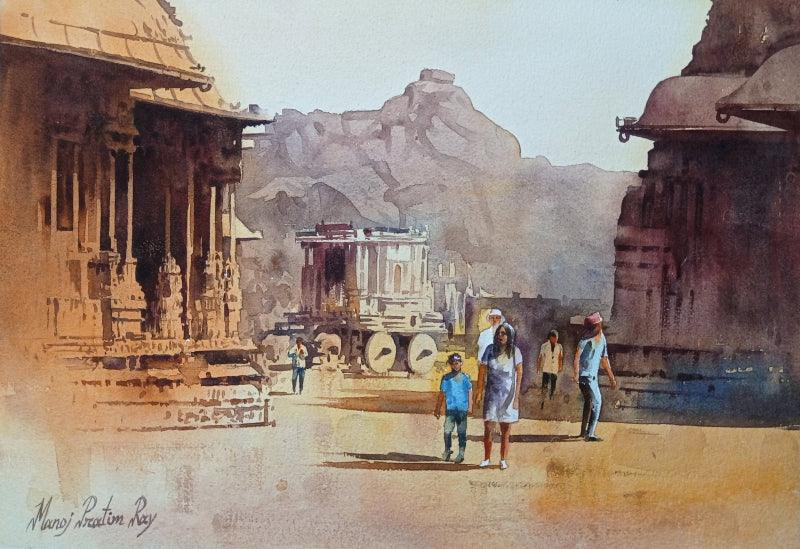
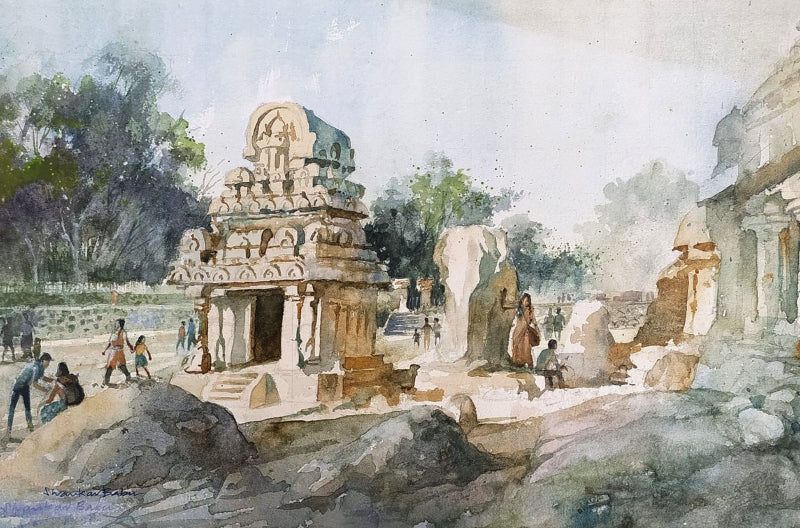
Indian Architecture (Bustling Bazaar)
₹110,000
● In stockchecking live price…
Size
14x20Type
OriginalMaterial
PaperFramed by weathered temple walls, the scene opens like a quiet corridor of time where warm washes of ochre and dust soften stone into memory, and the mountains beyond dissolve into pale, breath-like distance. The figures—small yet vividly present—move through the sunlit void as living measures of scale, their shadows anchoring them to a ground that feels both sacred and everyday. Light is treated less as illumination than as atmosphere, bleaching details into silence and allowing architecture, landscape, and passing human life to share a single, contemplative rhythm. In this gentle compression of monumentality and ordinary passage, the work suggests heritage not as spectacle, but as a space continually re-inhabited by the present.
Delivery
You may also like
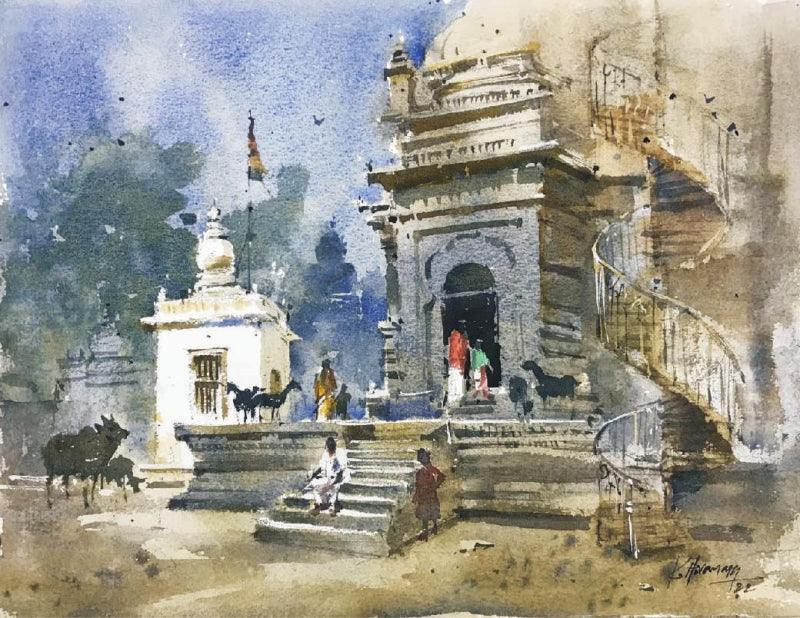
Temple (Tranquility at the Temple)
Artzolo
₹20,000
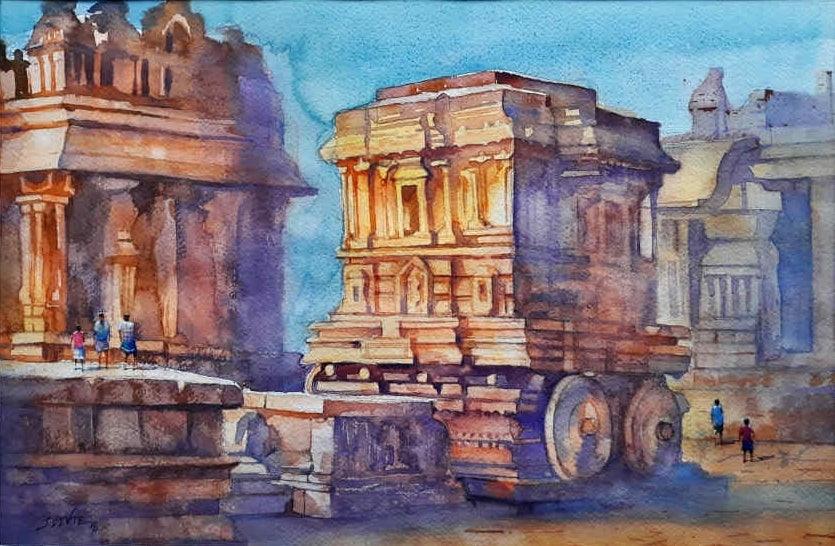
Stone Chariot (Timeless Chariot)
Artzolo
₹35,000
★ 5.0 (8)
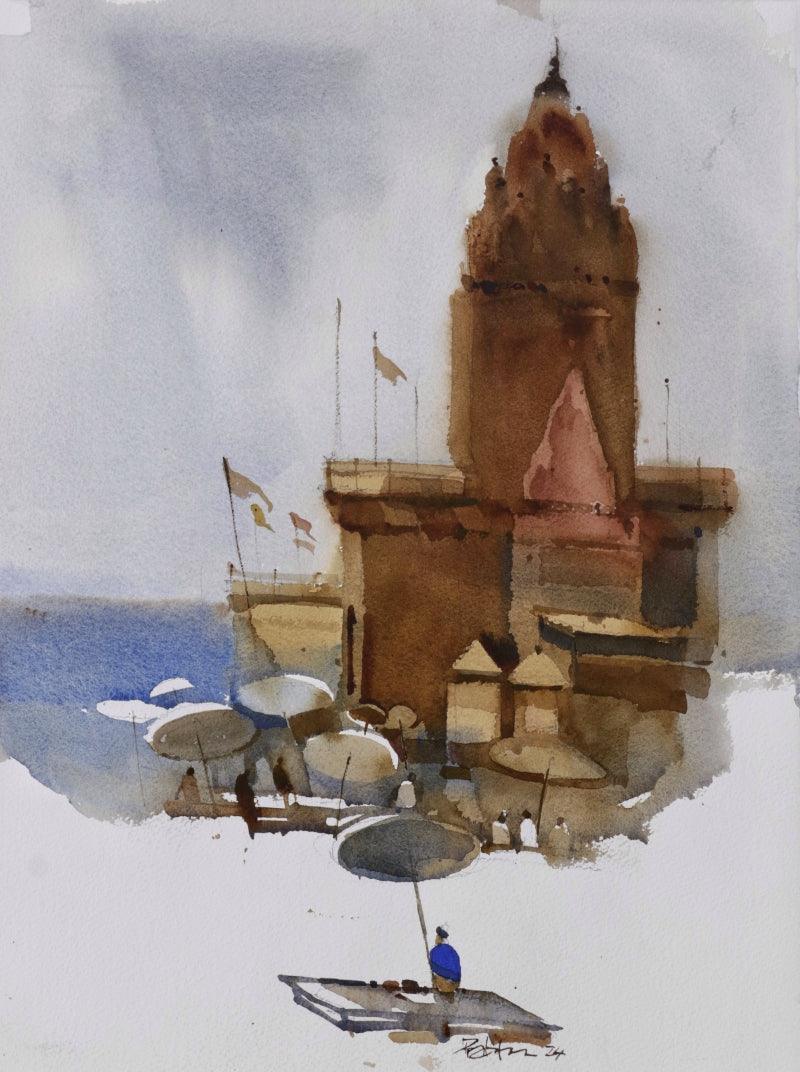
Searching Peace Amidst Chaos 2 (Temple by the Ghat)
Artzolo
₹48,000
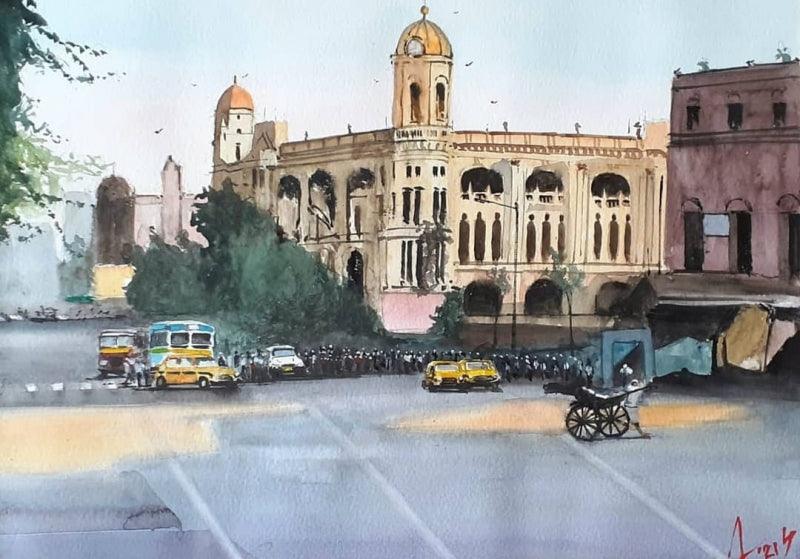
Kolkata Series 22 (Bustling Kolkata Street Scene)
Artzolo
₹8,000
out of stock
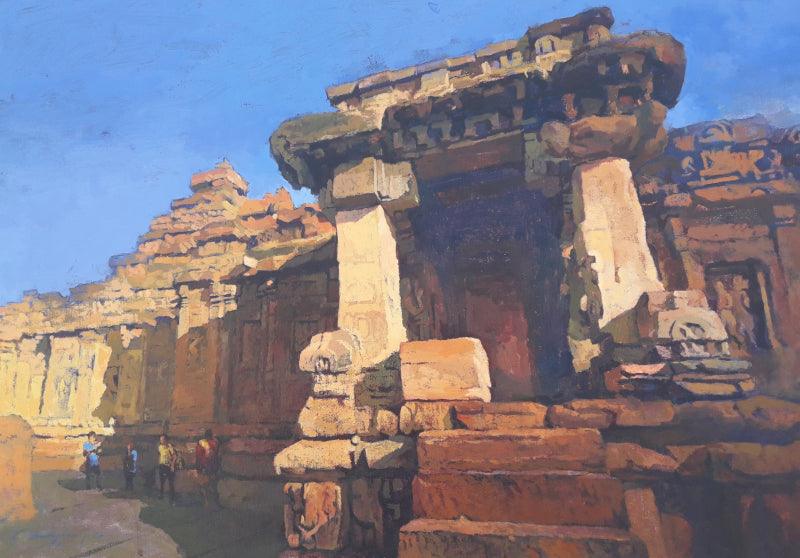
Ruins Of Chalukyan Empire (Echoes of the Past)
Artzolo
₹52,500
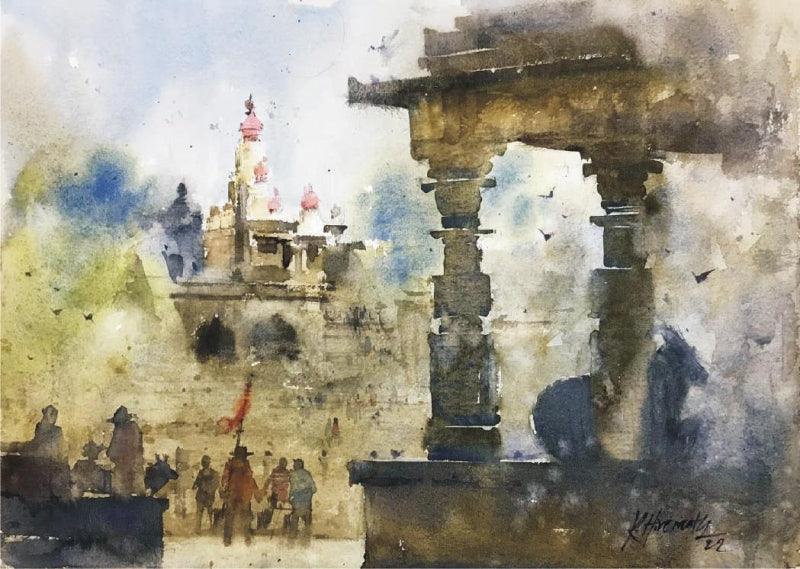
Nandi 8 (Sacred Passage)
Artzolo
₹20,000
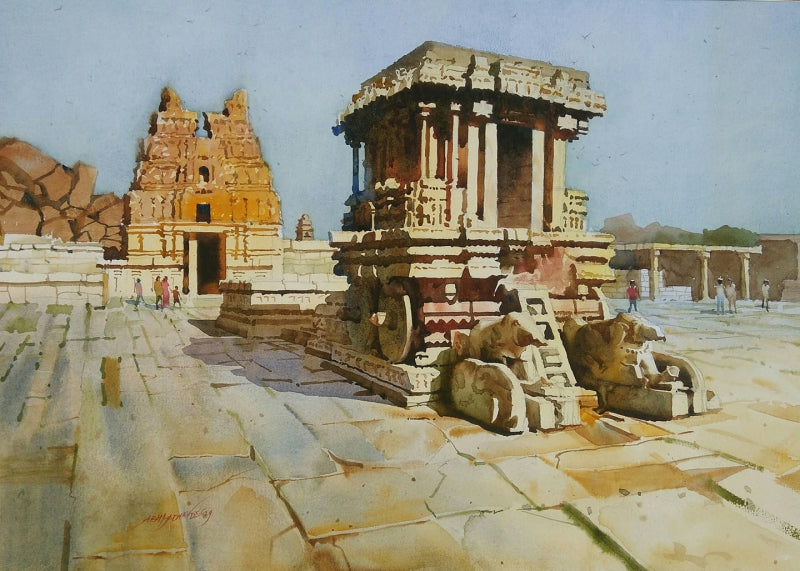
Chariot At Afternoon
Artzolo
₹80,000
Mahabalipuram
Artzolo
₹14,000