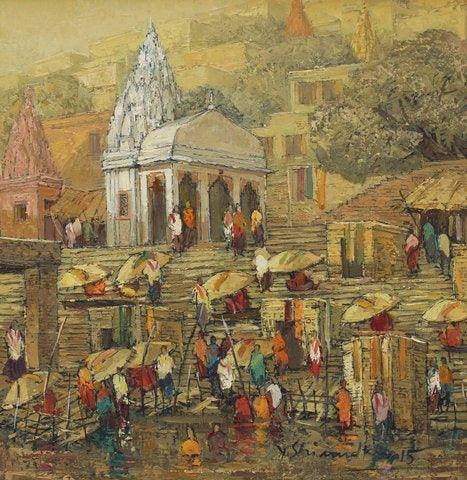
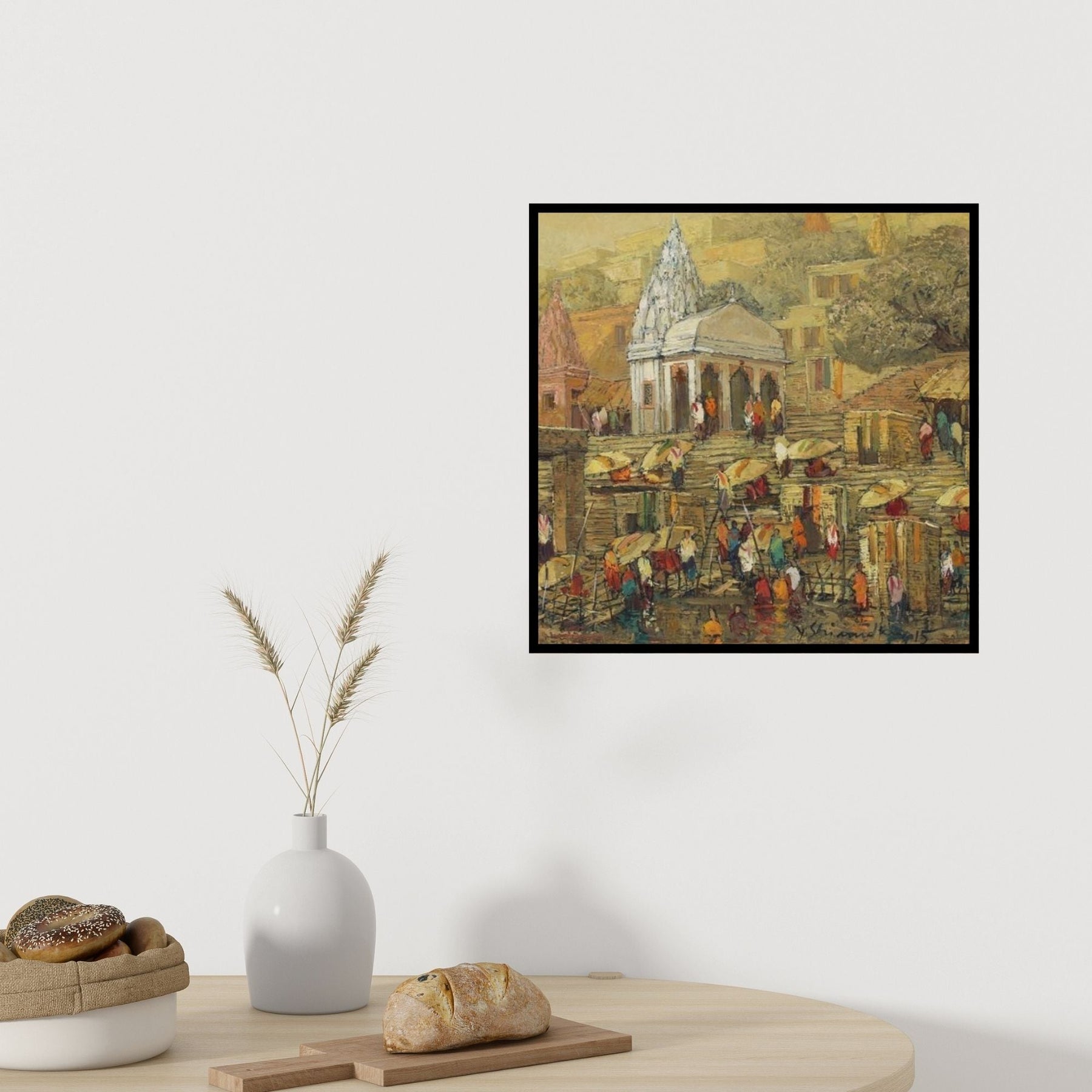
Banaras 7 (Ganges Reverie)
₹0
Out of stock · ★ 5.0 (5)checking live price…
Size
24x24Type
OriginalMaterial
CanvasThis riverside scene arranges its temples, ghats, and clustered dwellings like a slow-cadenced hymn, where architecture rises not as monument but as spiritual punctuation within the everyday. Warm, dusty ochres and saffrons are softened by a veiled light, while the water below gathers broken reflections—turning figures, umbrellas, and steps into a trembling mirror of communal life. The composition moves in layered terraces from ritual to labor, suggesting a city that perpetually renews itself through repetition, faith, and the quiet choreography of crowds. In the gentle congestion of forms, the painting holds a tender paradox: permanence in stone and transience in human passage.
Delivery
You may also like
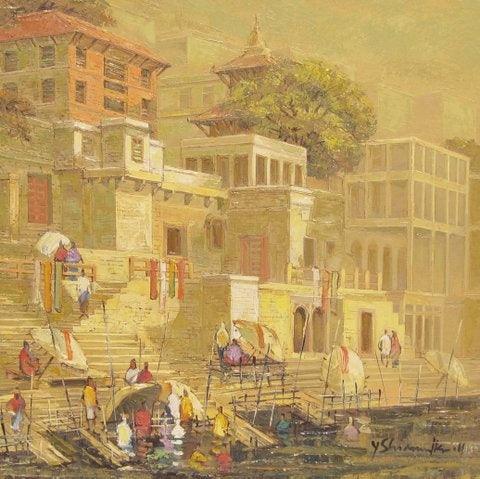
Banaras 4 (Steps to the Sacred)
Artzolo
₹0
out of stock
★ 5.0 (12)
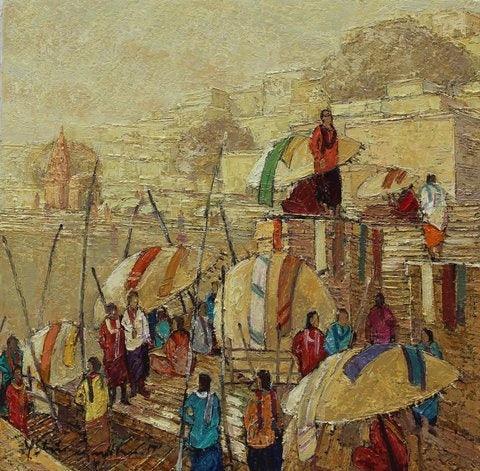
Banaras 2 (Sacred Shores)
Artzolo
₹0
out of stock
★ 5.0 (10)
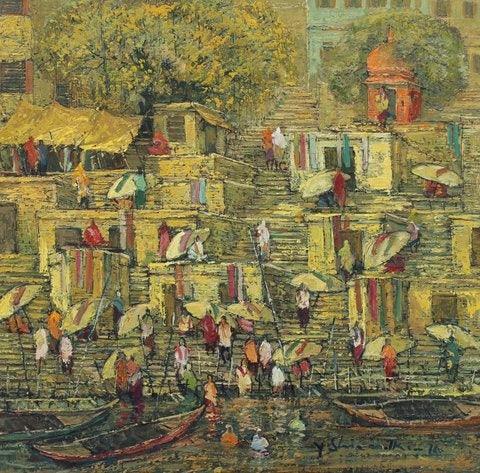
Banaras 5 (Passage to the Ganges)
Artzolo
₹0
out of stock
★ 4.0 (14)
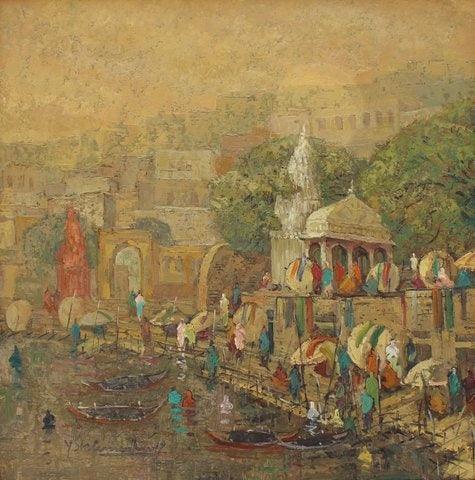
Banaras 8 (Ganges Mosaic)
Artzolo
₹0
out of stock
★ 4.0 (7)
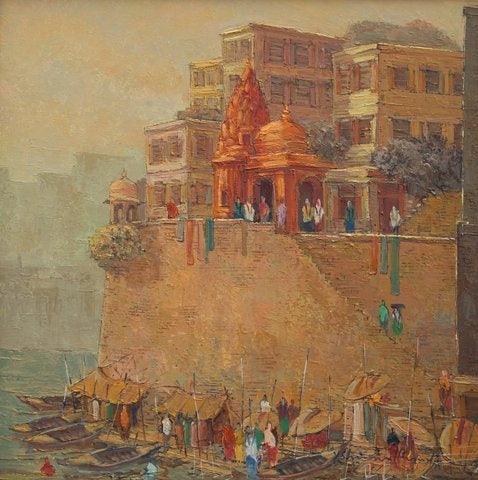
Banaras 1 (Sacred Shores)
Artzolo
₹0
out of stock
★ 5.0 (11)
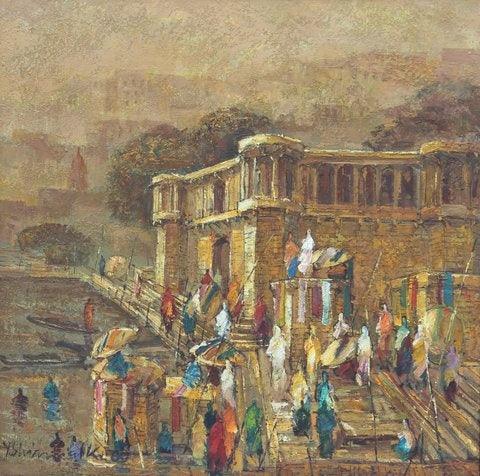
Banaras 6 (Crossing the Ganges)
Artzolo
₹0
out of stock
★ 4.0 (5)
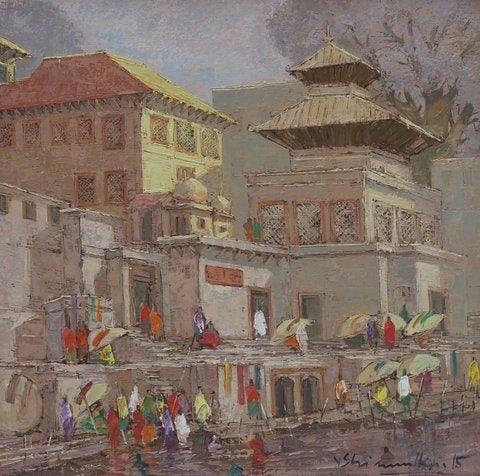
Banaras 3 (Varanasi Vista)
Artzolo
₹0
out of stock
★ 4.0 (12)
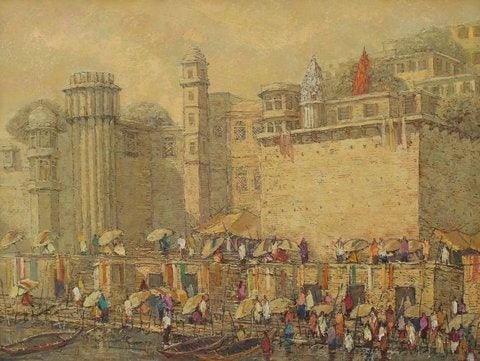
Banaras 10 (Ganges Grandeur)
Artzolo
₹0
out of stock
★ 4.0 (14)