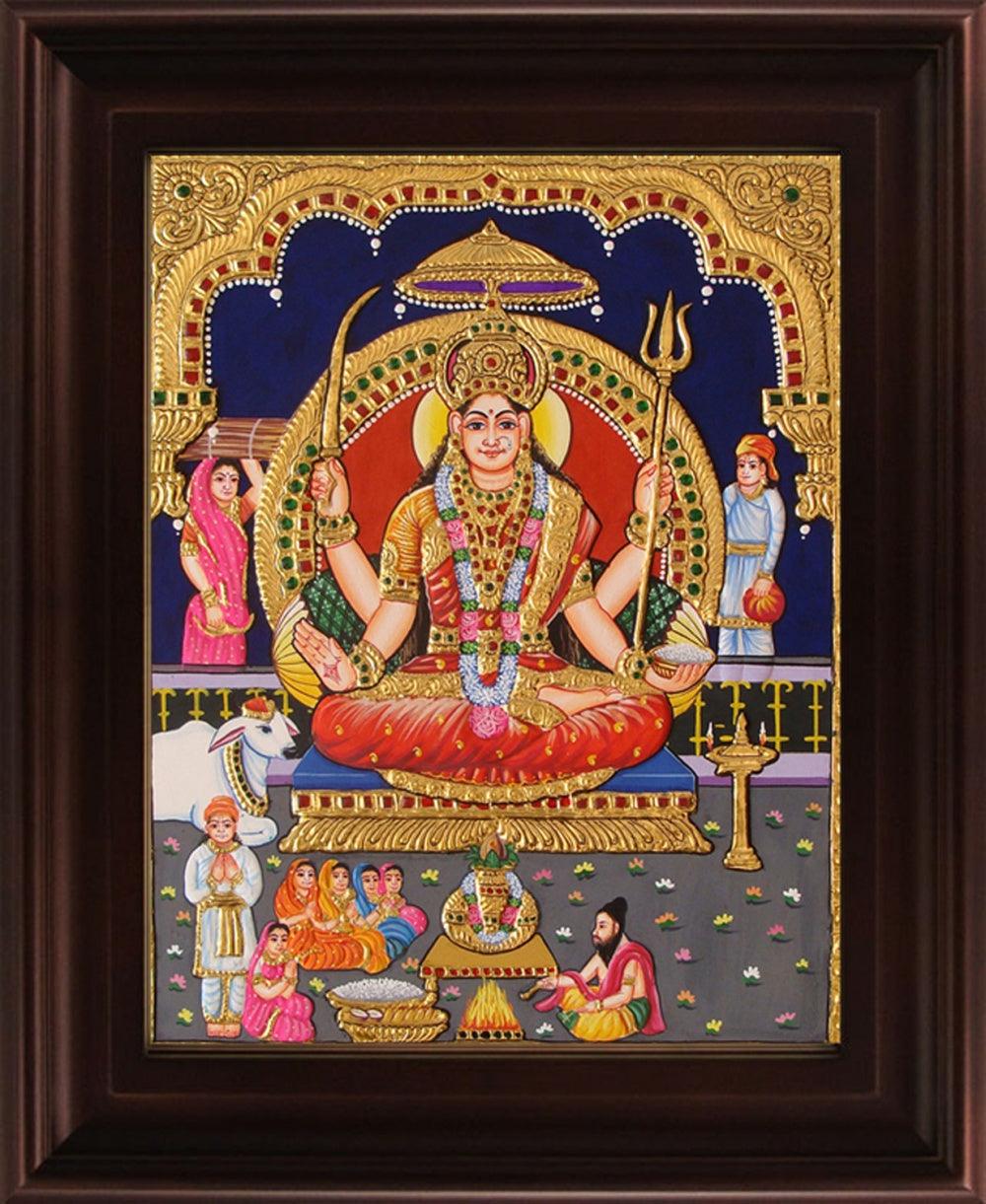
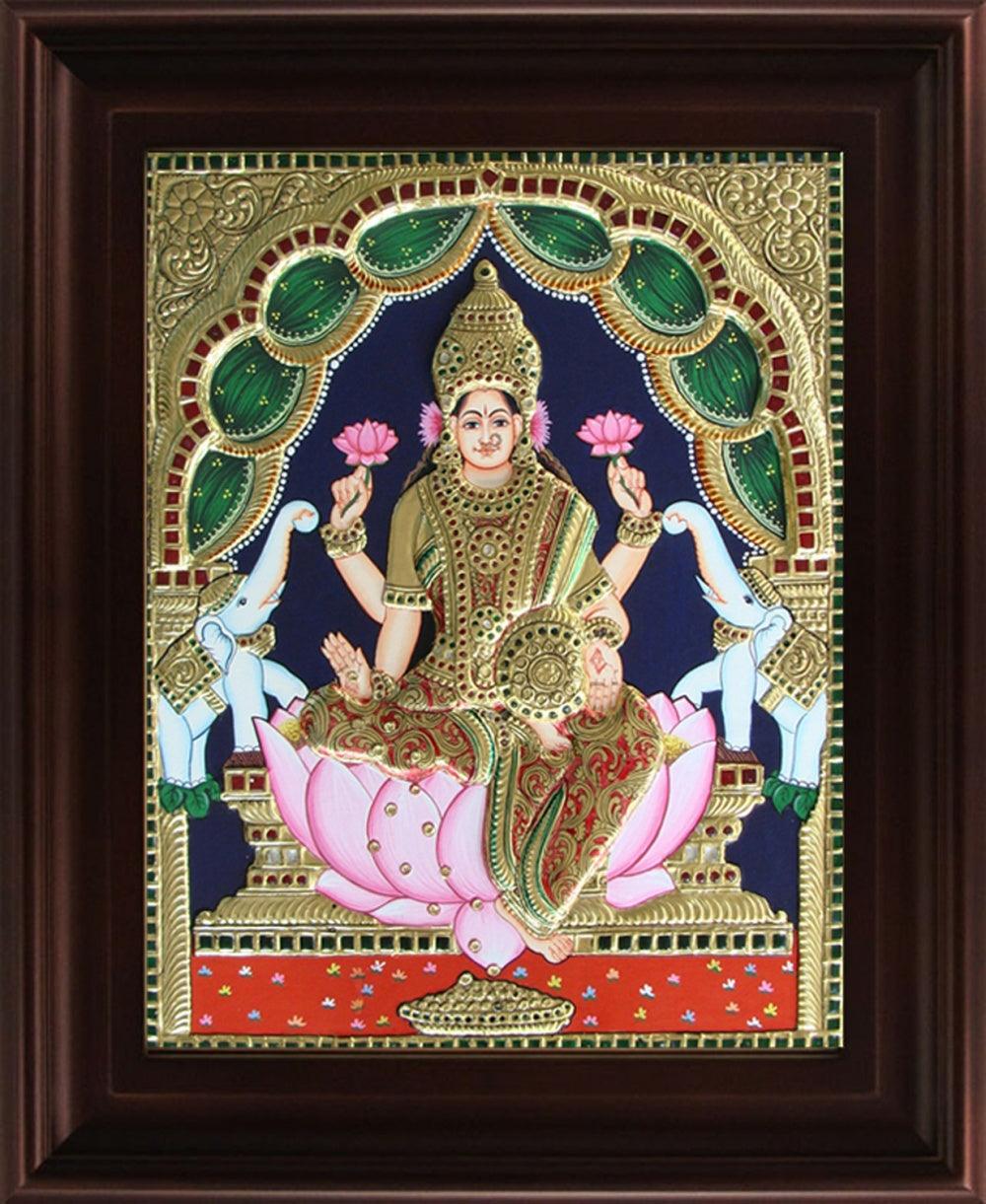
Santhoshi Maata Tanjore Painting (Goddess Santoshi Mata)
₹21,000
● In stock · ★ 5.0 (9)checking live price…
Size
24x18Type
OriginalMaterial
PlywoodSeated at the compositional center like a living axis mundi, the goddess radiates a composed authority, her many arms balancing blessing and weaponry to suggest protection that is inseparable from power. The painting’s jewel-like palette—vermillion, lapis, and an opulent gold filigree—casts the shrine as a luminous threshold where the earthly devotees at the margins are gently drawn into a larger, ritual cosmos. Symmetry and ornamental density create a sense of timeless order, while the surrounding attendants, offerings, and sacred emblems weave a narrative of communal surrender and intimate petition. What emerges is not merely iconography, but a visual theology: devotion as architecture, and divinity as a steady, encompassing light.
Delivery
You may also like
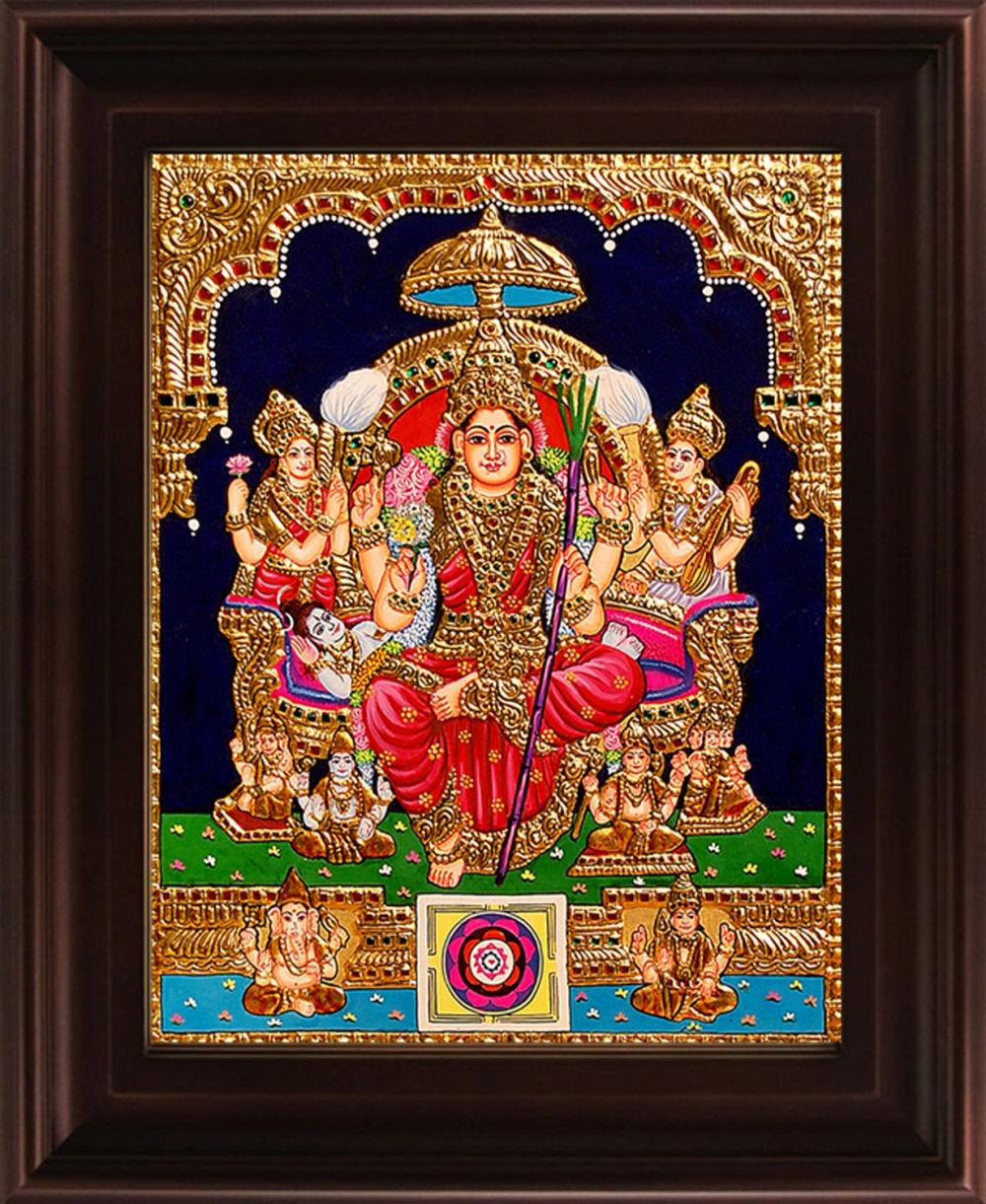
Lalithambigai Tanjore Painting (Goddess Akilandeshwari)
Artzolo
₹21,000
★ 5.0 (12)
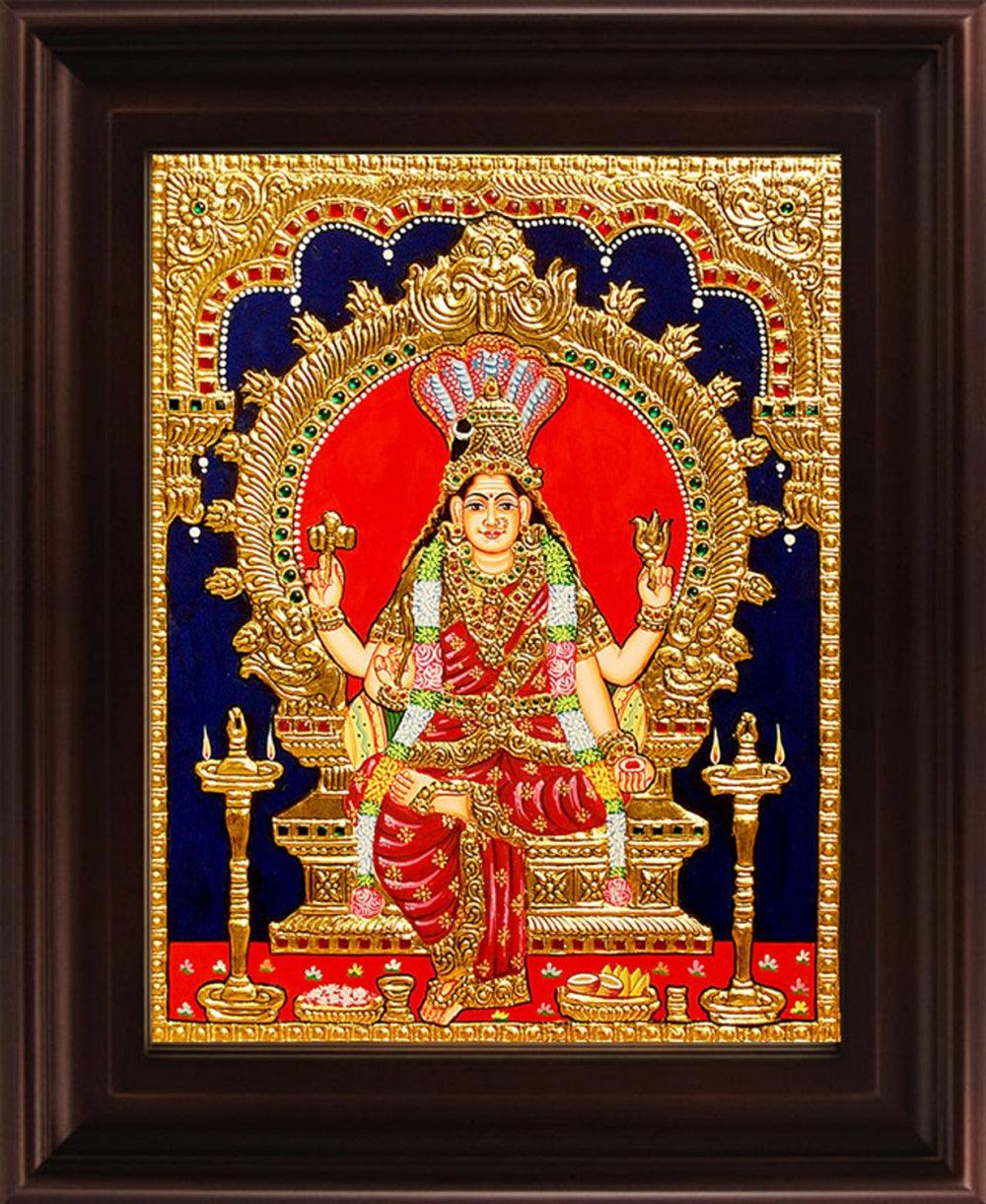
Renuka Devi Tanjore Painting (Goddess Renuka Devi)
Artzolo
₹21,000
★ 5.0 (5)
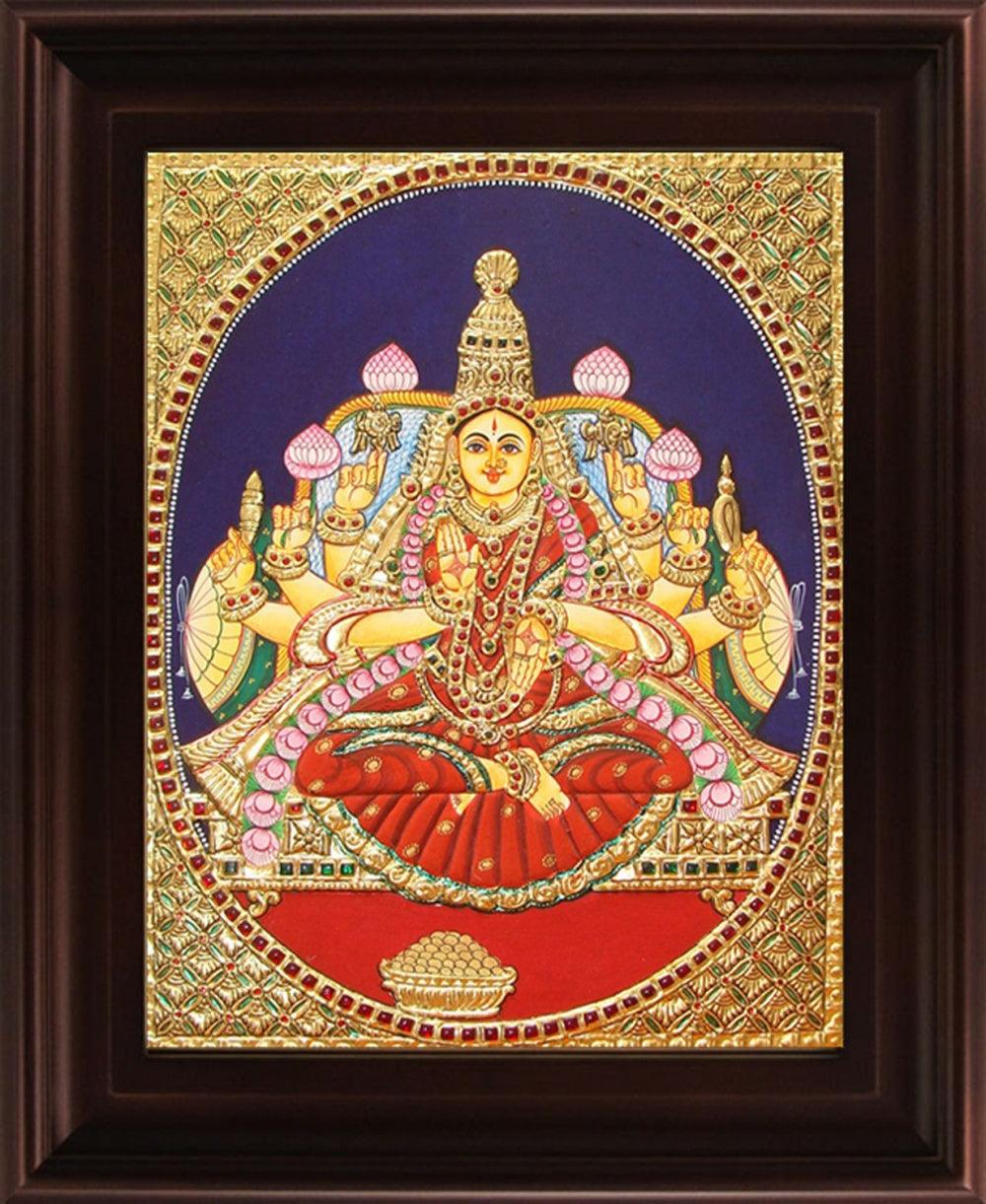
Dhana Lakshmi Tanjore Painting 3 (Lakshmi, Bestower of Blessings)
Artzolo
₹21,000
★ 4.0 (13)
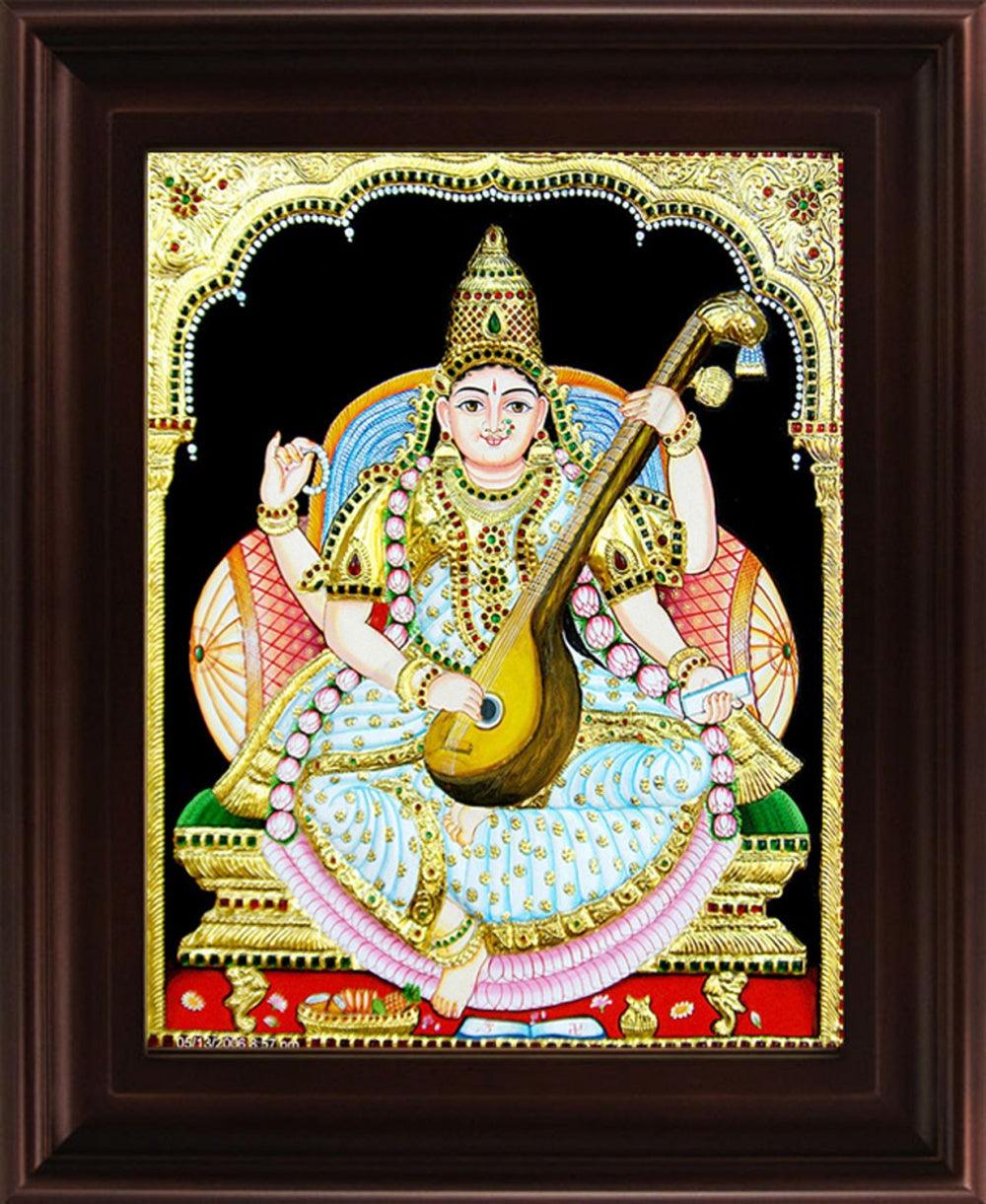
Saraswathi Tanjore Painting 2 (Saraswati with Veena)
Artzolo
₹21,000
★ 5.0 (8)
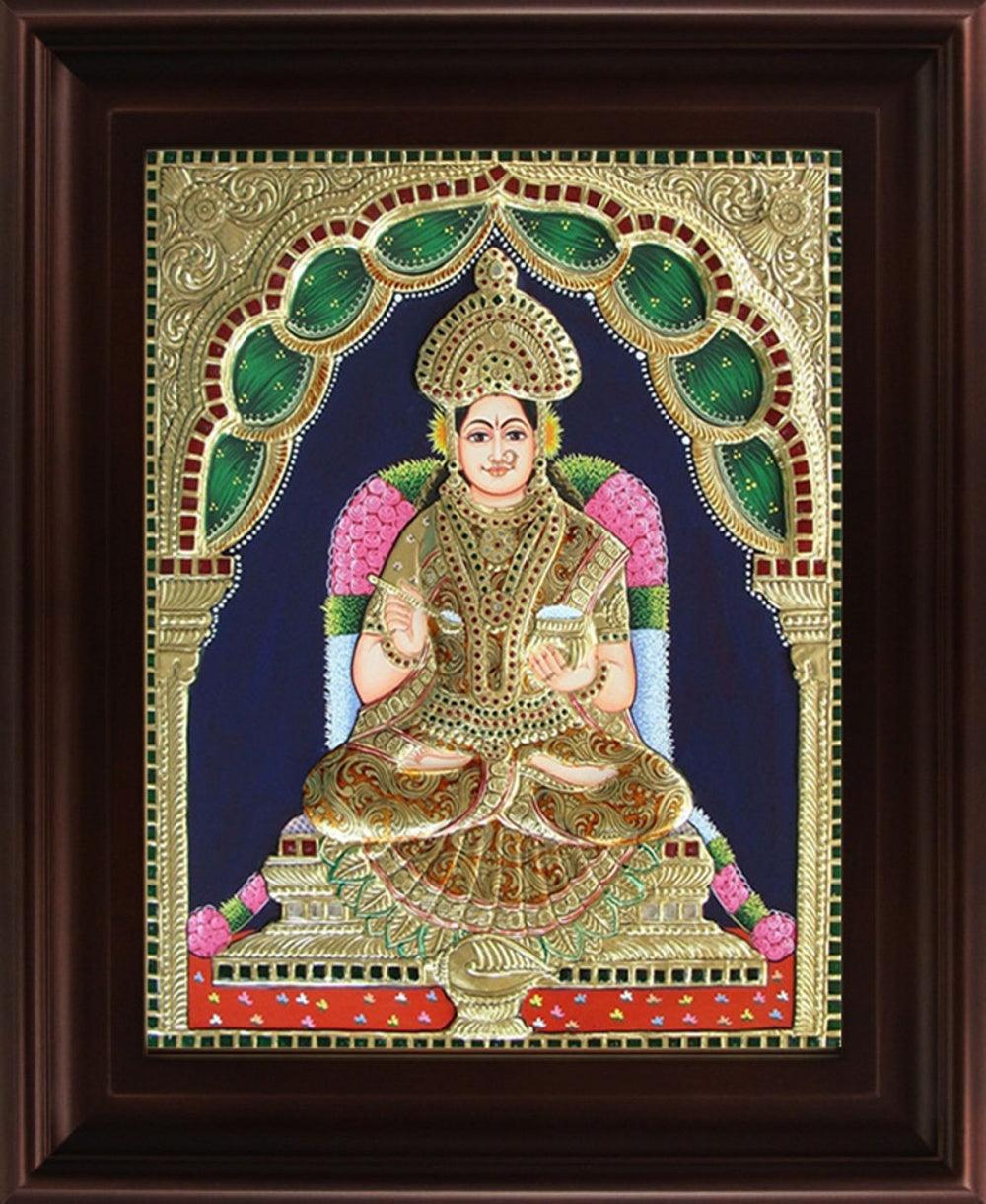
Goddess Annapoorani Tanjore Painting (Goddess Vishalakshi)
Artzolo
₹21,000
★ 4.0 (9)
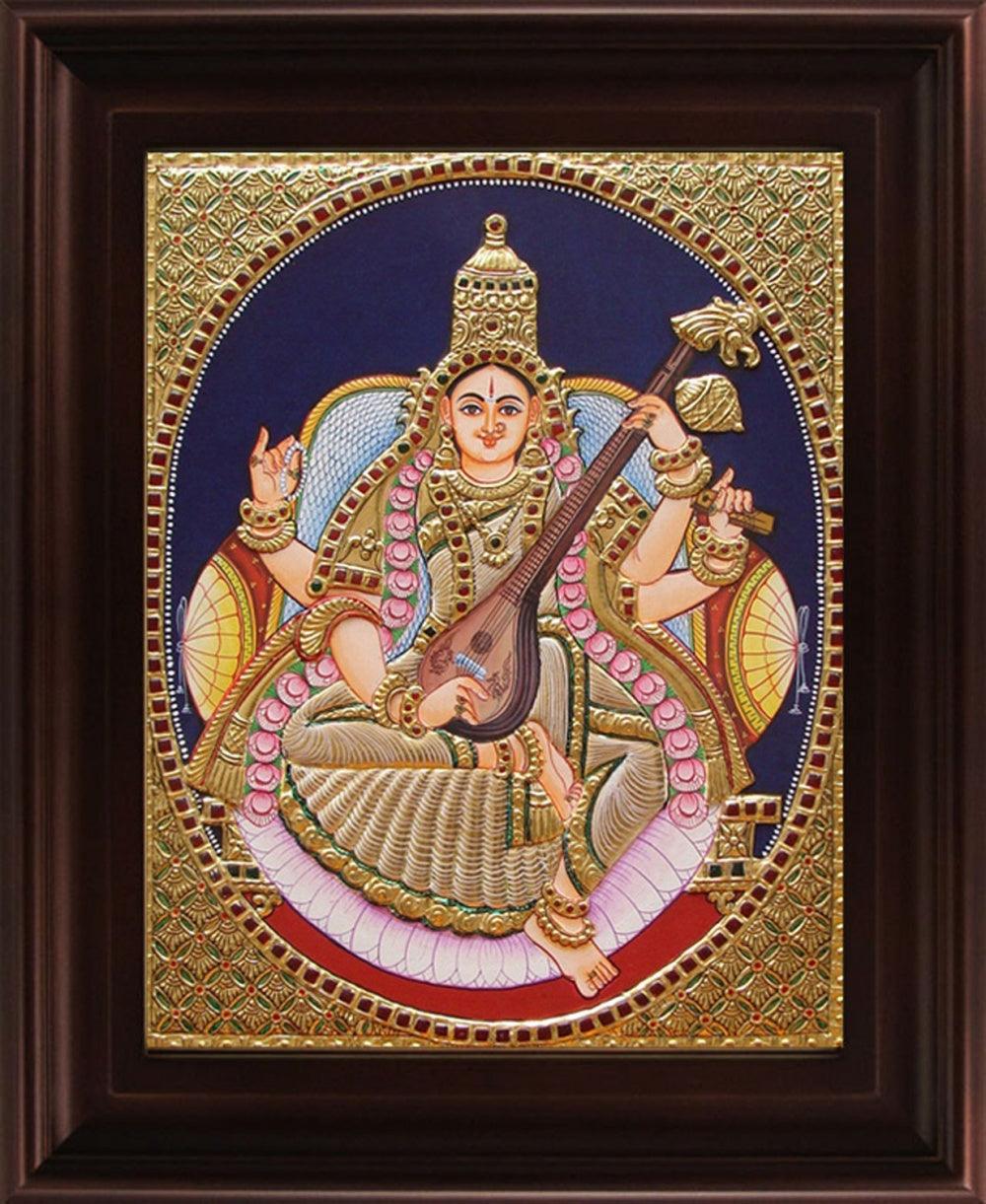
Saraswathi Oval Tanjore Painting (Goddess Saraswati)
Artzolo
₹21,000
★ 4.0 (7)
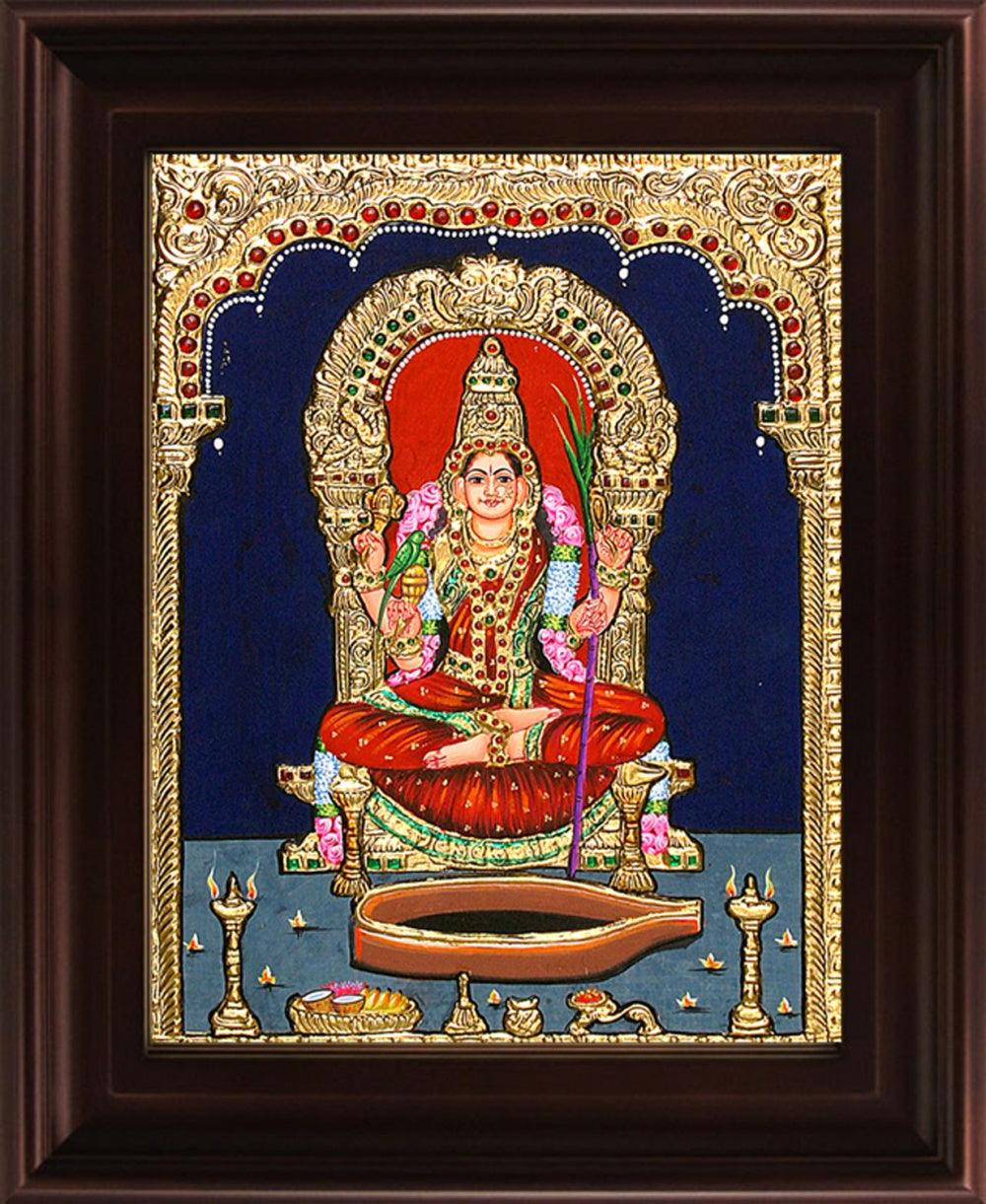
Kamatchi Devi Tanjore Painting (Goddess Annapurna)
Artzolo
₹21,000
★ 4.0 (15)
Gaja Lakshmi Tanjore Painting 2 (Goddess Lakshmi on Lotus)
Artzolo
₹21,000
★ 5.0 (14)