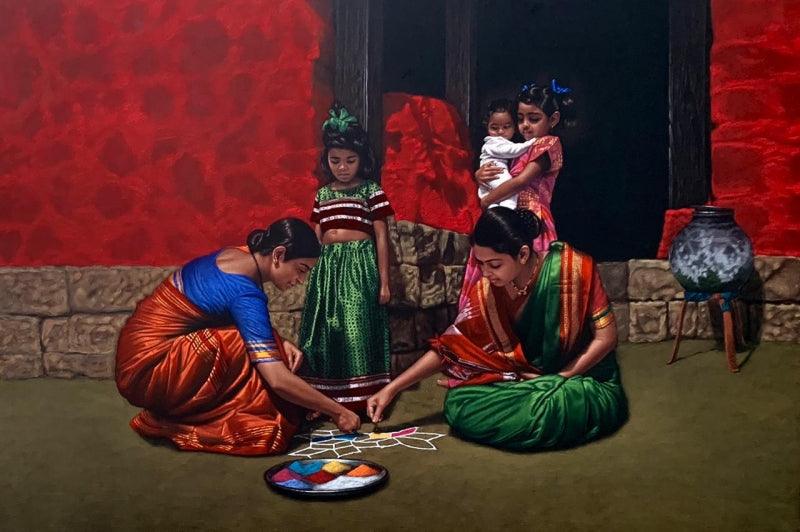
Untitled 2
₹0
Out of stock · ★ 5.0 (6)checking live price…
Size
40x60Type
OriginalMaterial
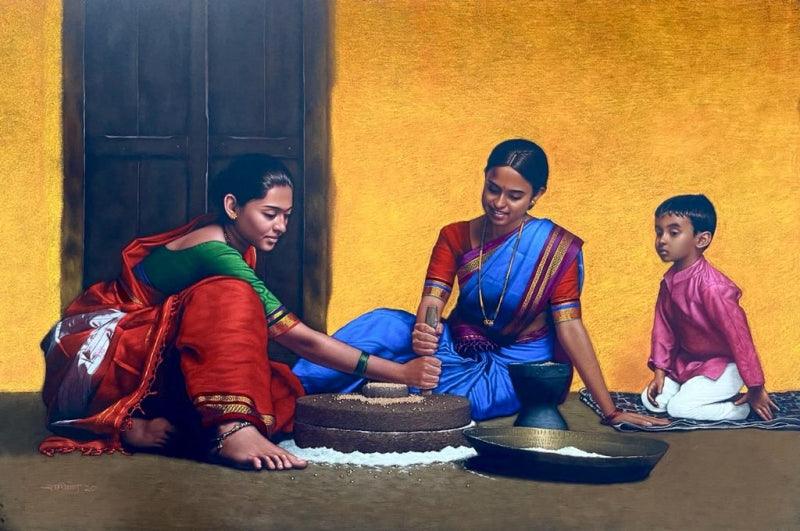
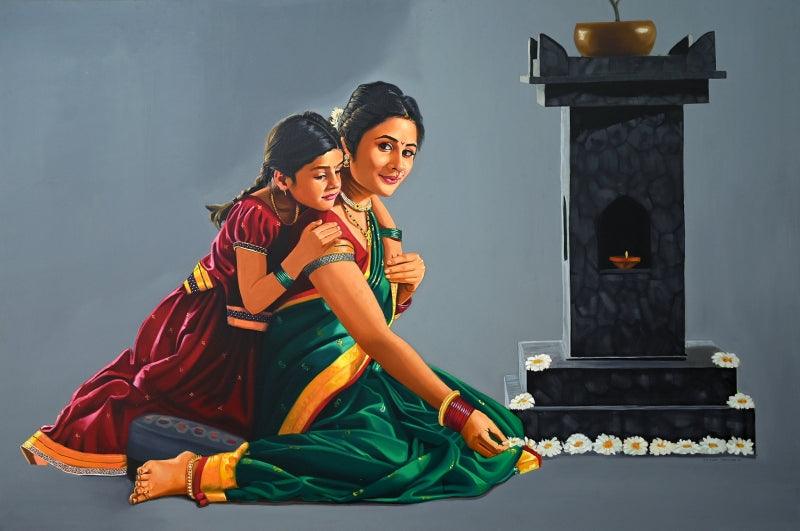
PaperSet against a saturated crimson wall, the scene gathers its quiet gravity around the rangoli-in-progress, where two women bend low as if stitching order and blessing into the threshold itself. The painting’s chromatic dialogue—emerald and vermilion silks against earthen floor—turns domestic labor into ceremony, while the children, half-observers and half-inheritors, anchor the work’s tender sense of continuity. Light falls softly across bodies and patterned textiles, suggesting not spectacle but a lived intimacy in which tradition becomes both shelter and language, spoken through hands. The still pot at the edge reads as a mute witness, reinforcing the idea of home as a vessel that holds memory, care, and communal rhythm.
You may also like
Untitled 1
Artzolo
₹0
out of stock
★ 5.0 (10)
Untitled
Artzolo
₹0
out of stock
★ 5.0 (15)
Untitled 3
Artzolo
₹950,000
out of stock
Family
Artzolo
₹950,000
out of stock
Untitled 6
Artzolo
₹950,000
out of stock
Godhadi
Artzolo
₹0
out of stock
★ 4.0 (11)
Happiness
Artzolo
₹950,000
out of stock
Mother And Child (The Red Turban)
Artzolo
₹200,000
★ 4.0 (6)