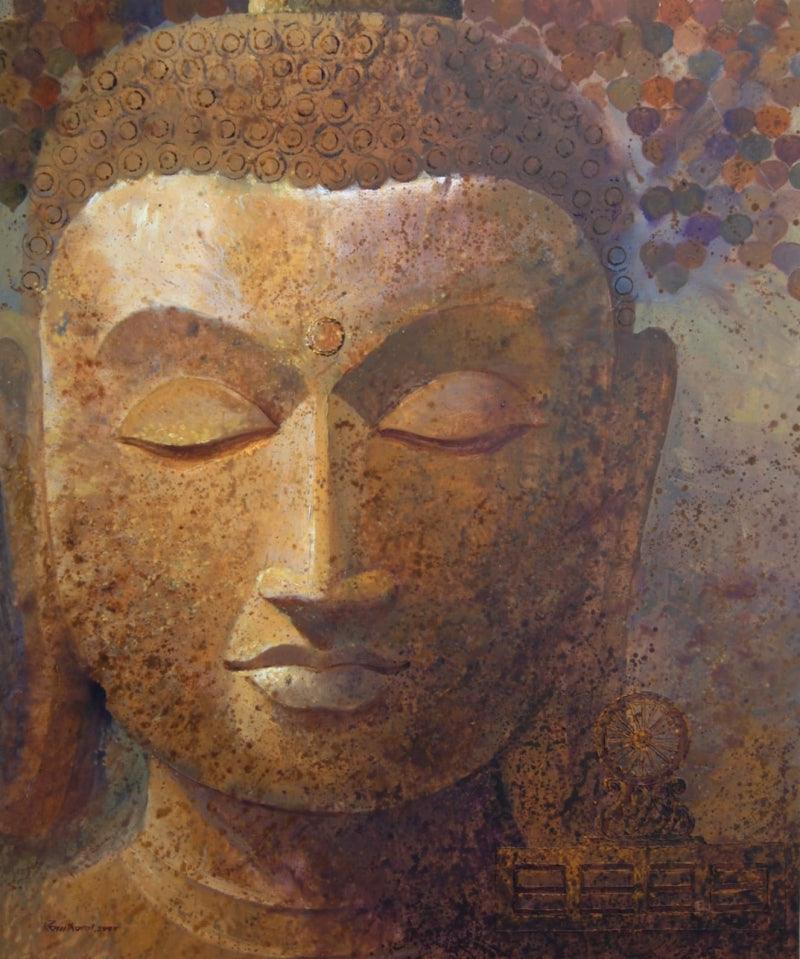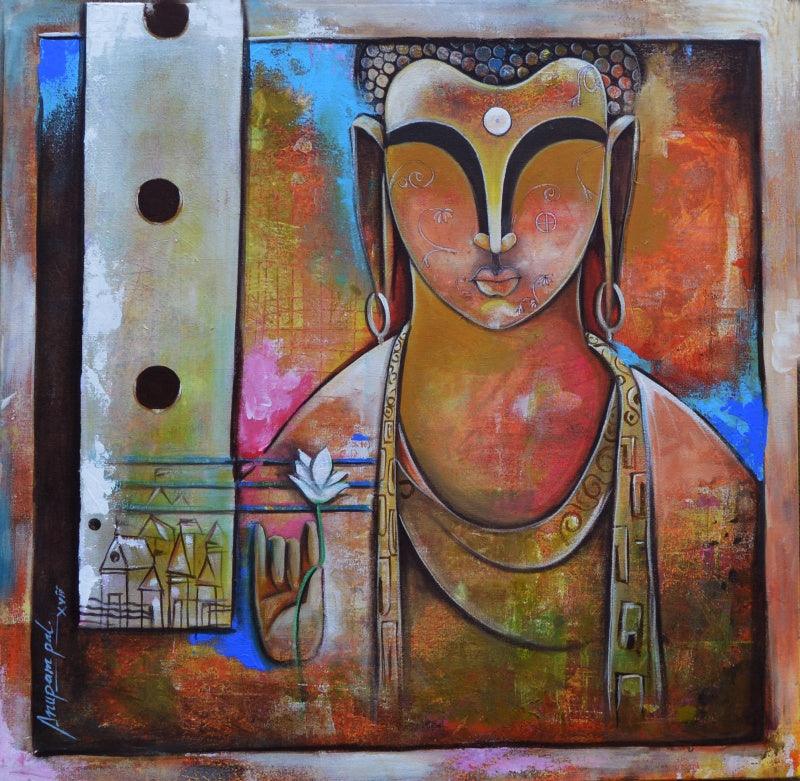
Buddha (Buddhas Grace)
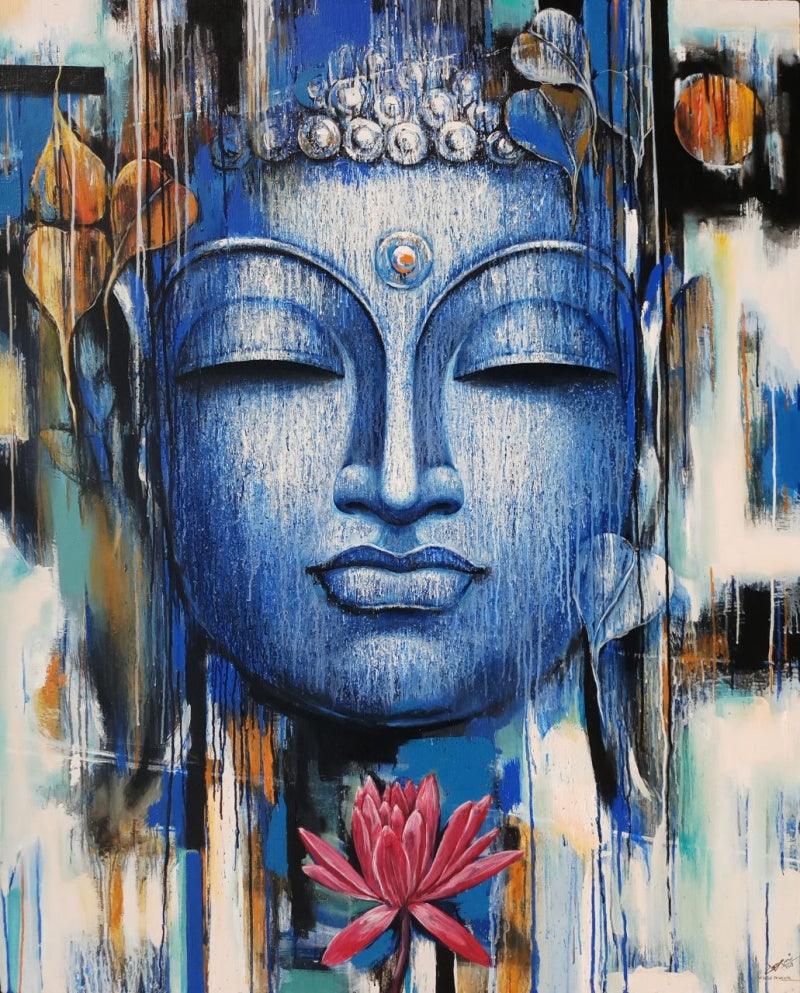
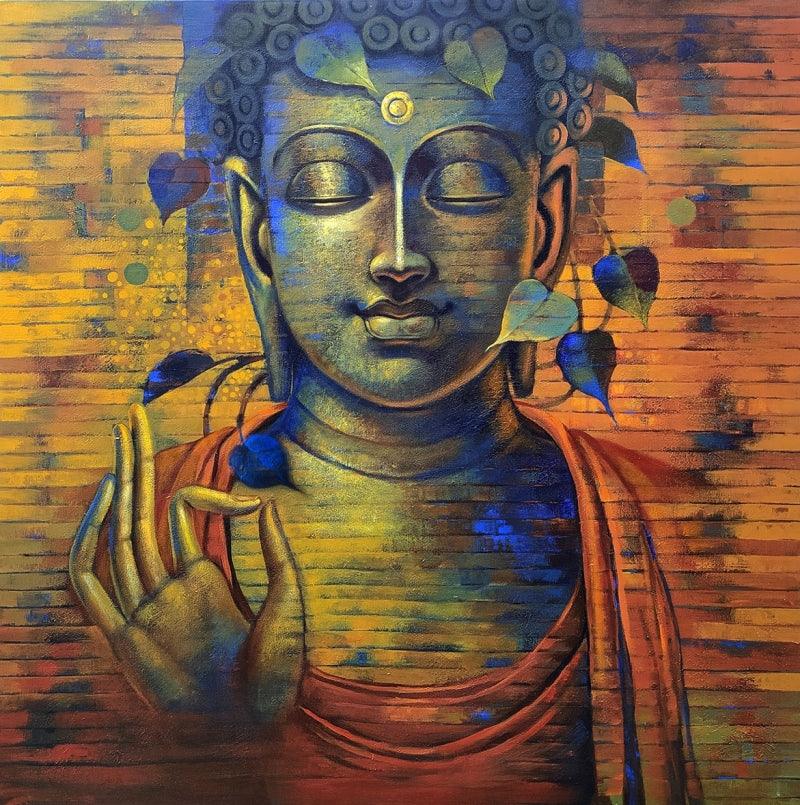
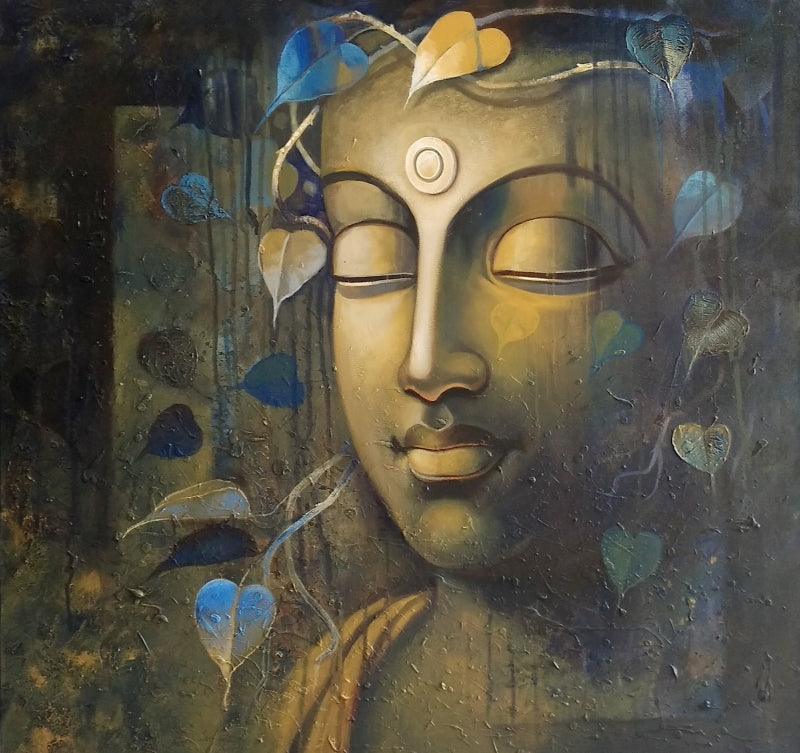
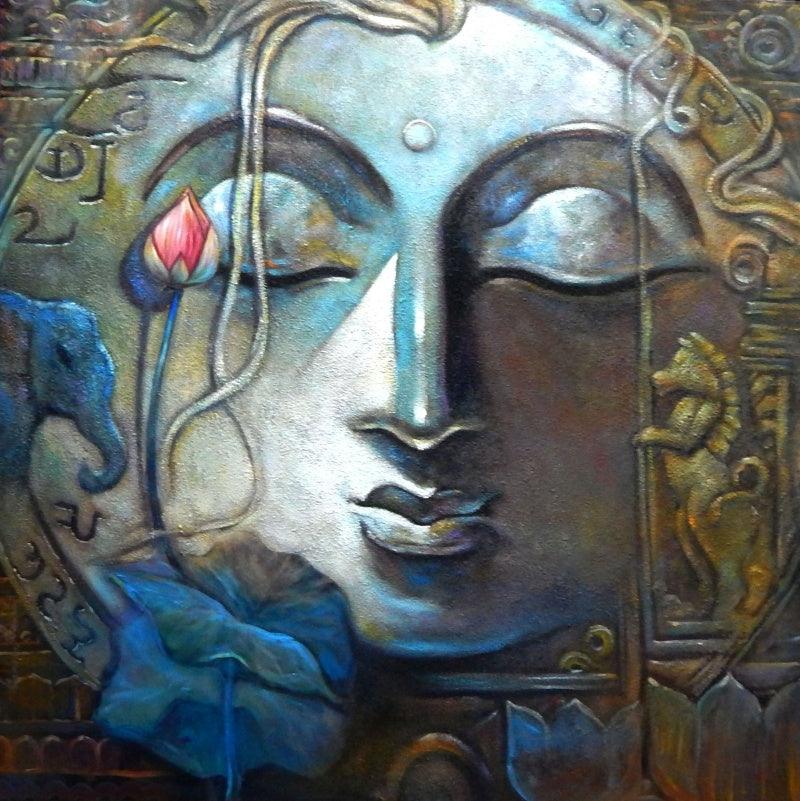
The painting presents a serene, monumental Buddha visage emerging from a weathered tapestry of ochres, rusts, and electric blues, where the patina-like surface suggests time as a spiritual medium rather than mere decay. A stark vertical panel punctuated by circular voids anchors the composition like a ritual threshold, while the softened facial geometry and closed gaze radiate inwardness, turning stillness into the work’s true luminosity. The raised hand offering a white lotus becomes a quiet axis of compassion, set against faint architectural lines that read as the worldly city—present, yet gently subordinated to contemplation. In this interplay of sacred icon and urban trace, the work proposes peace not as escape, but as a disciplined presence that holds chaos without absorbing it.
Delivery
You may also like