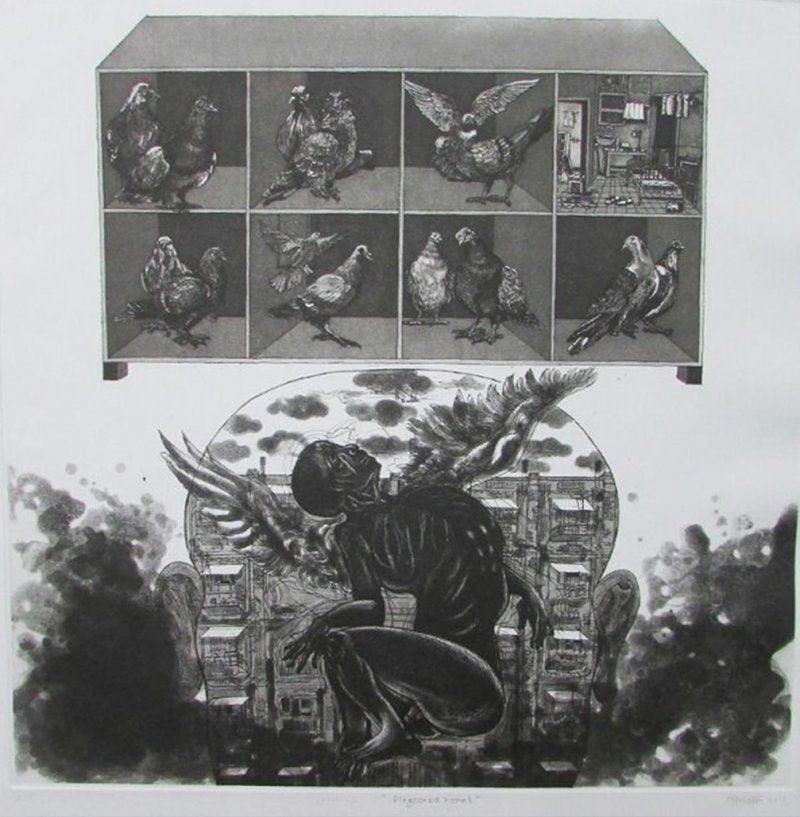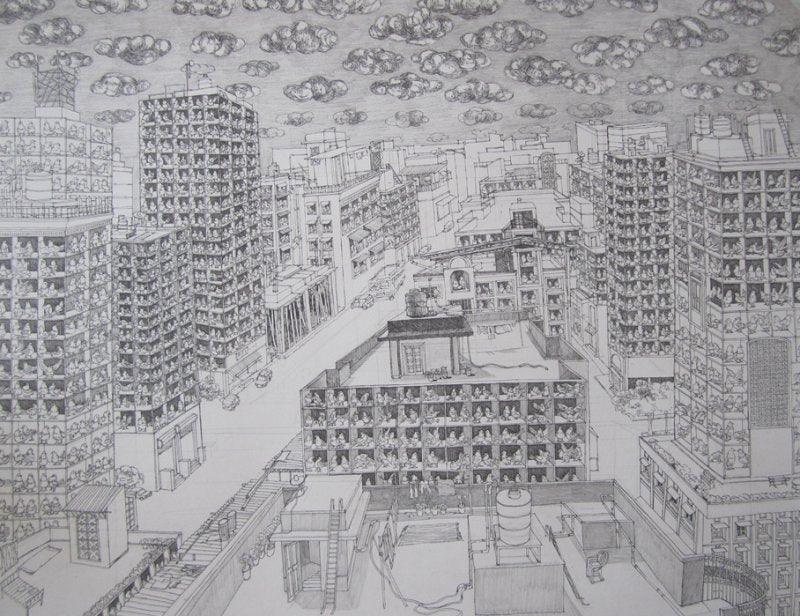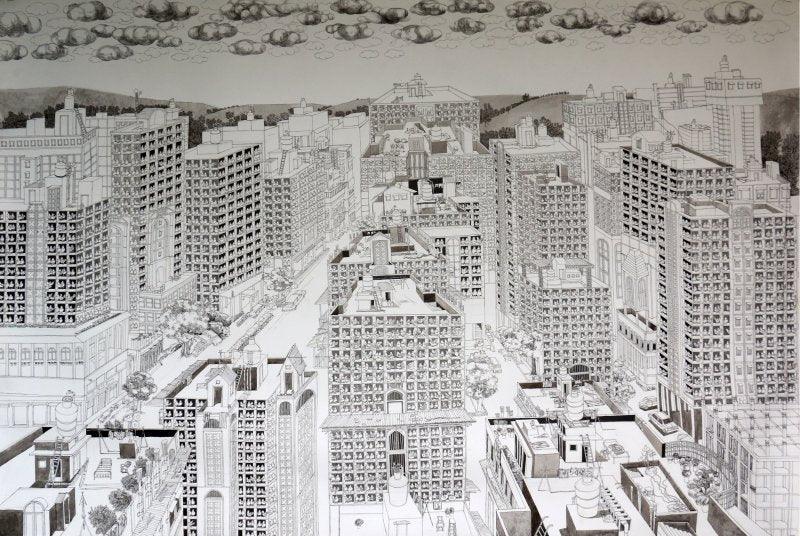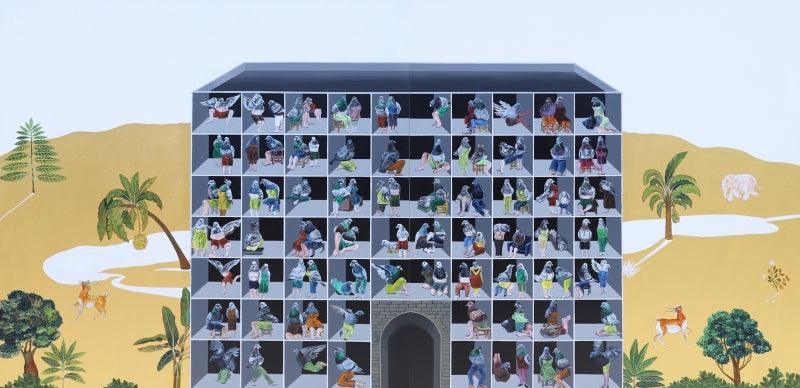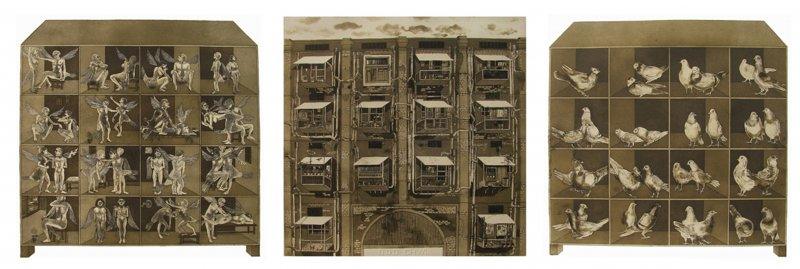
Pigeoned Home (Triptych of Existence)
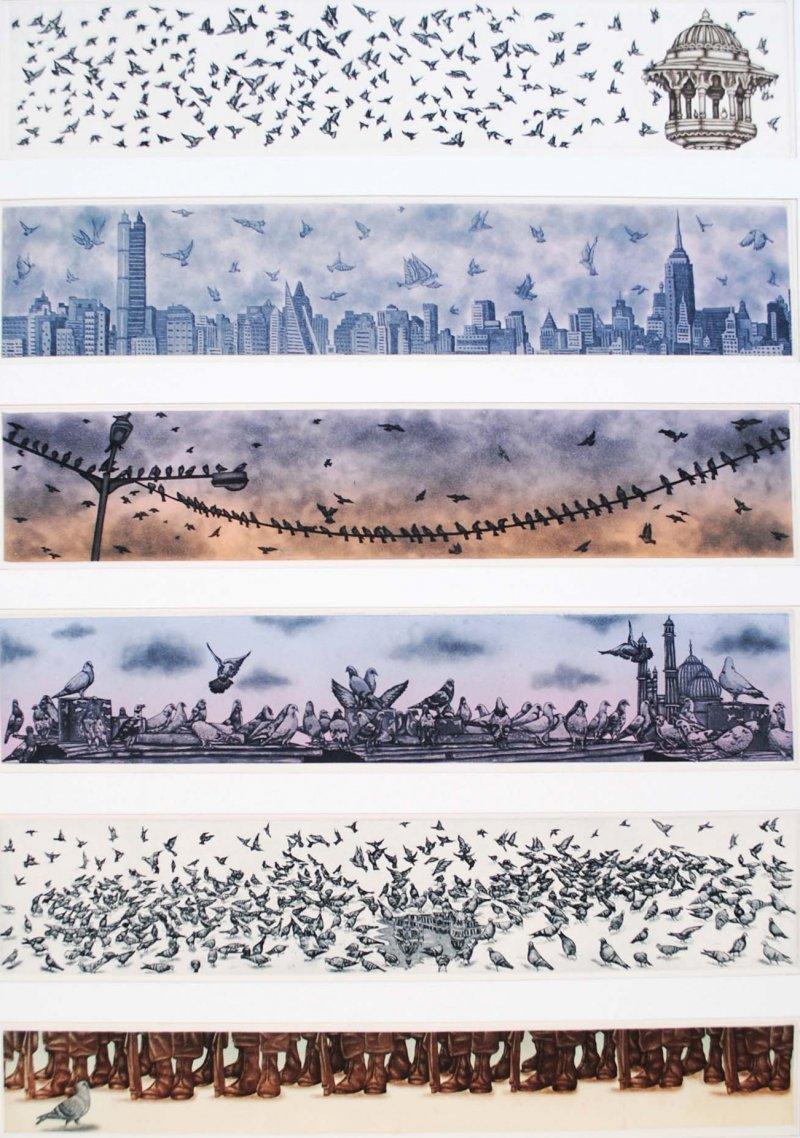
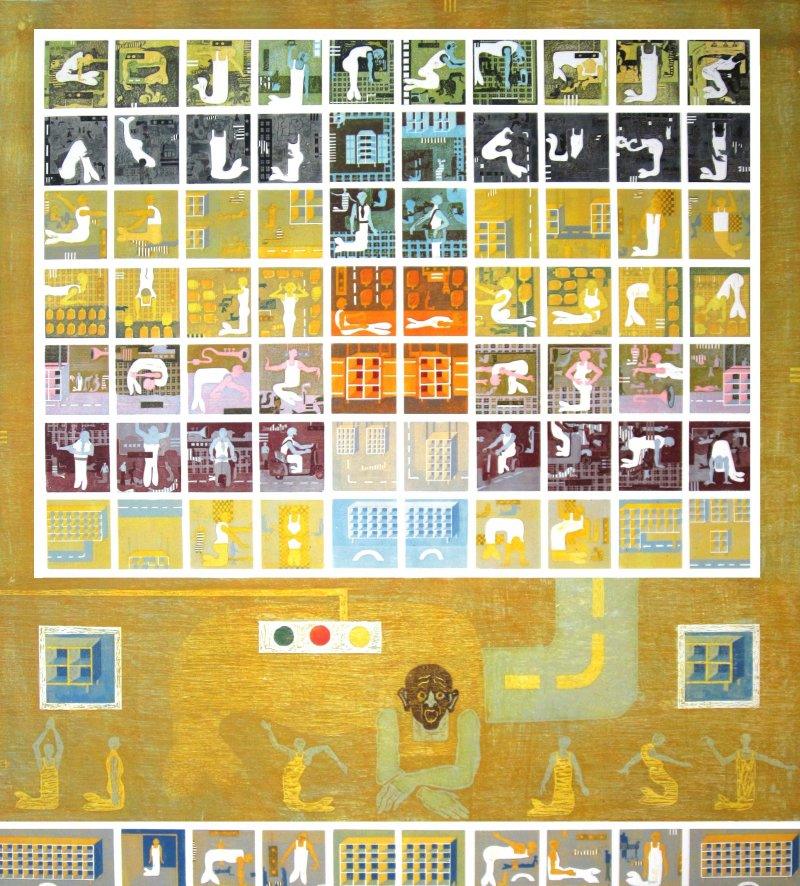
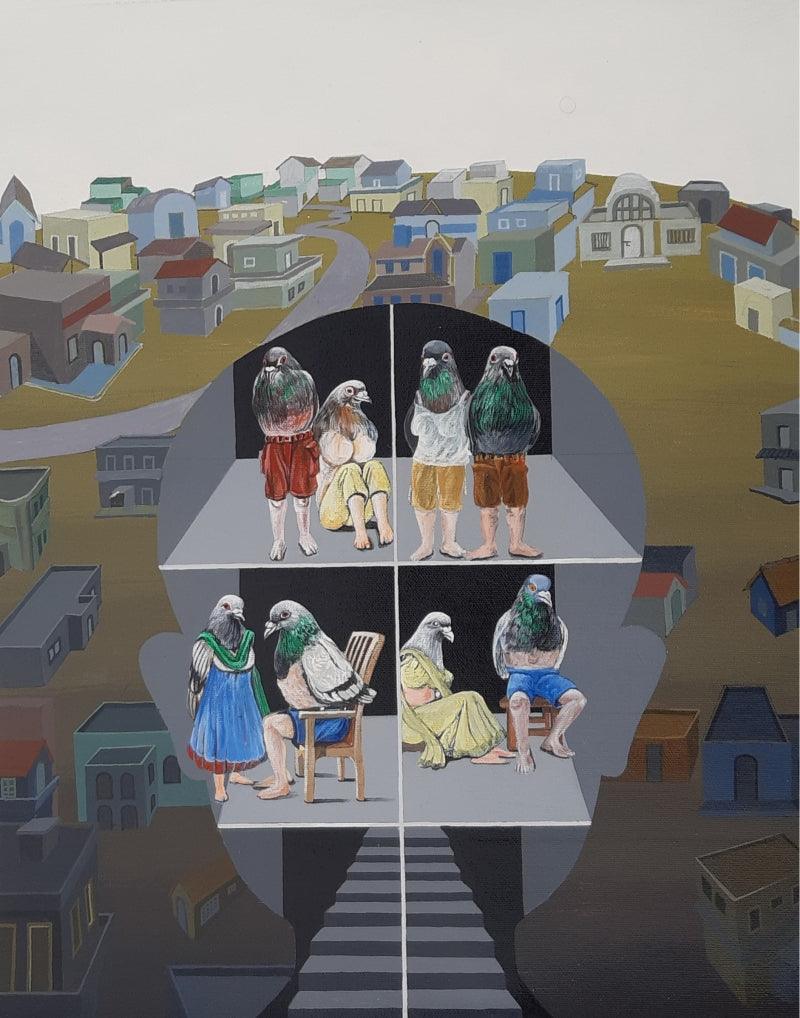
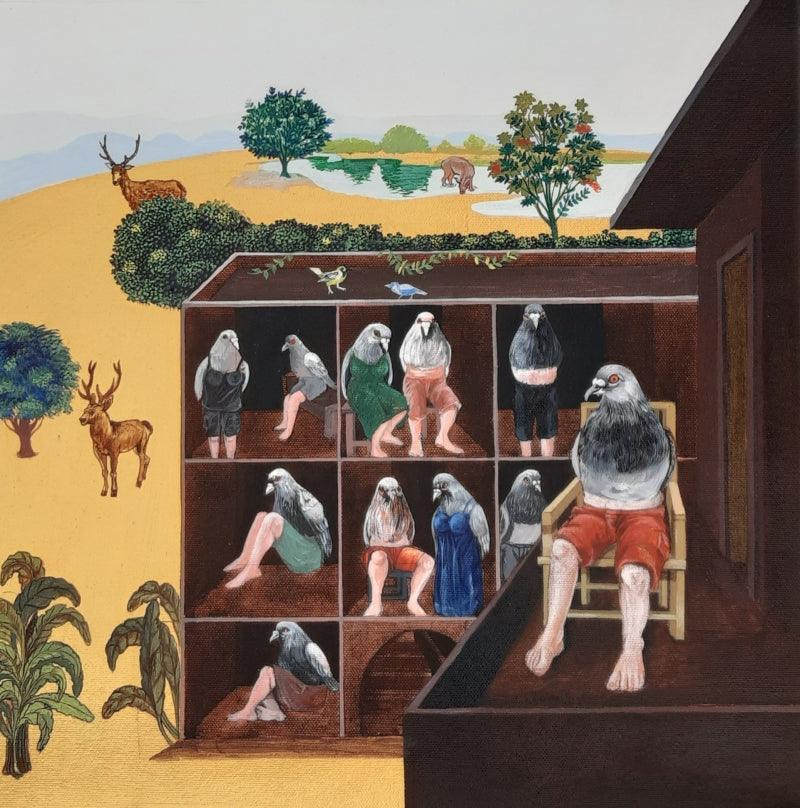
This triptych stages a quiet theater of order and instinct: gridded compartments become both domestic architecture and a taxonomic display, where human gestures on one side and birds on the other are choreographed into comparable units of attention. The central façade—stern, repetitive, and almost bureaucratic in its symmetry—anchors the work like a civic ledger, suggesting that everyday life is measured through windows, cages, and cells. In the muted sepia palette, light feels archival rather than radiant, as if memory itself has browned at the edges, turning intimacy into evidence and habit into a kind of collection. Between the structured grids and the living bodies they contain, the piece presses on a paradox: the desire to classify and control is inseparable from the unruly vitality it seeks to frame.
Delivery
You may also like