Untitled 2
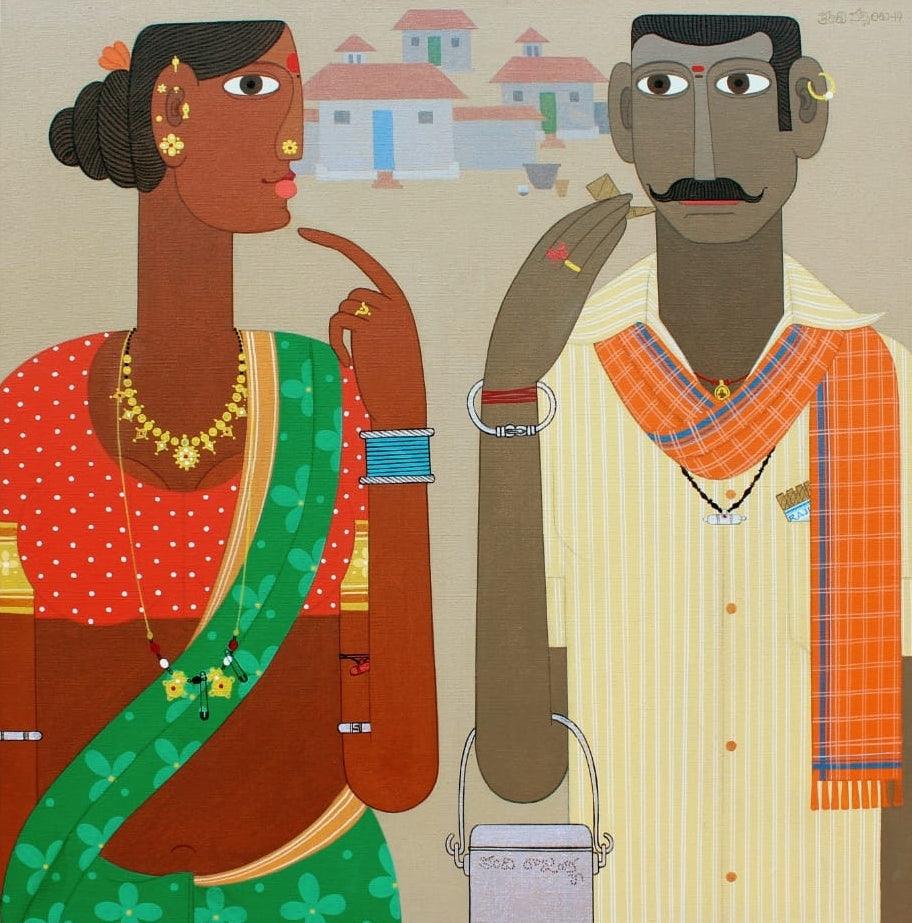
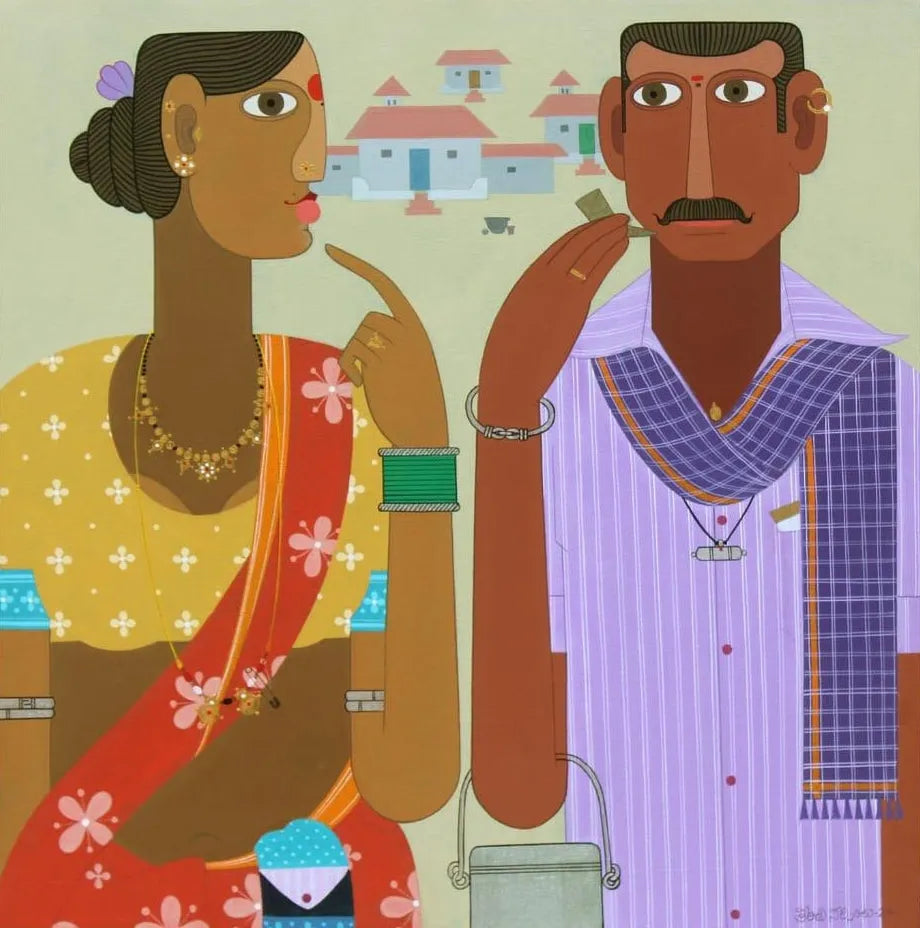
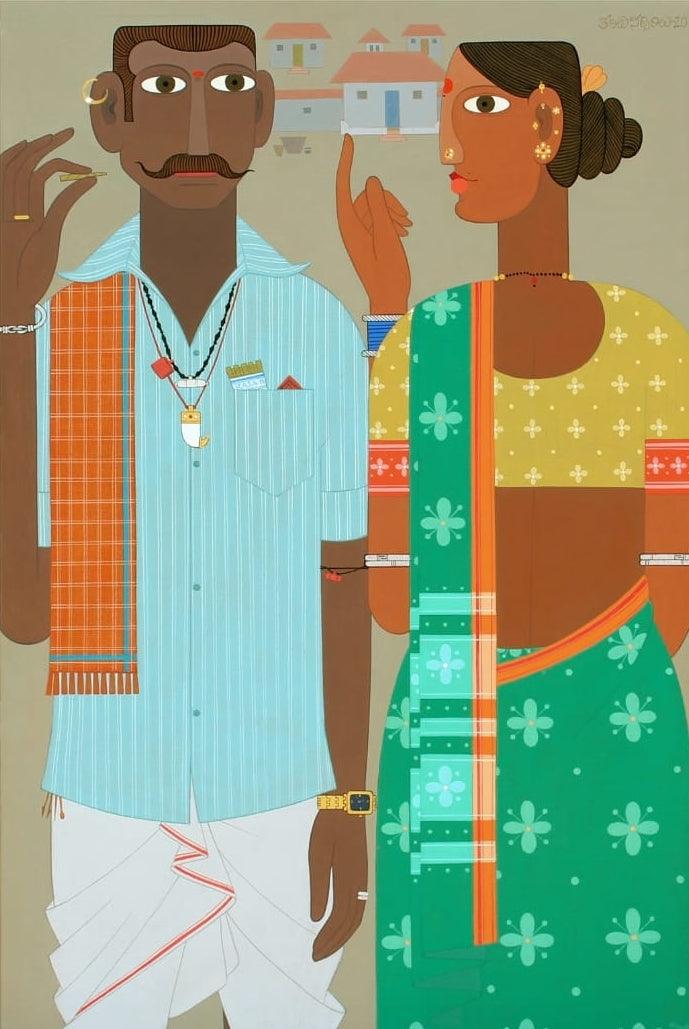
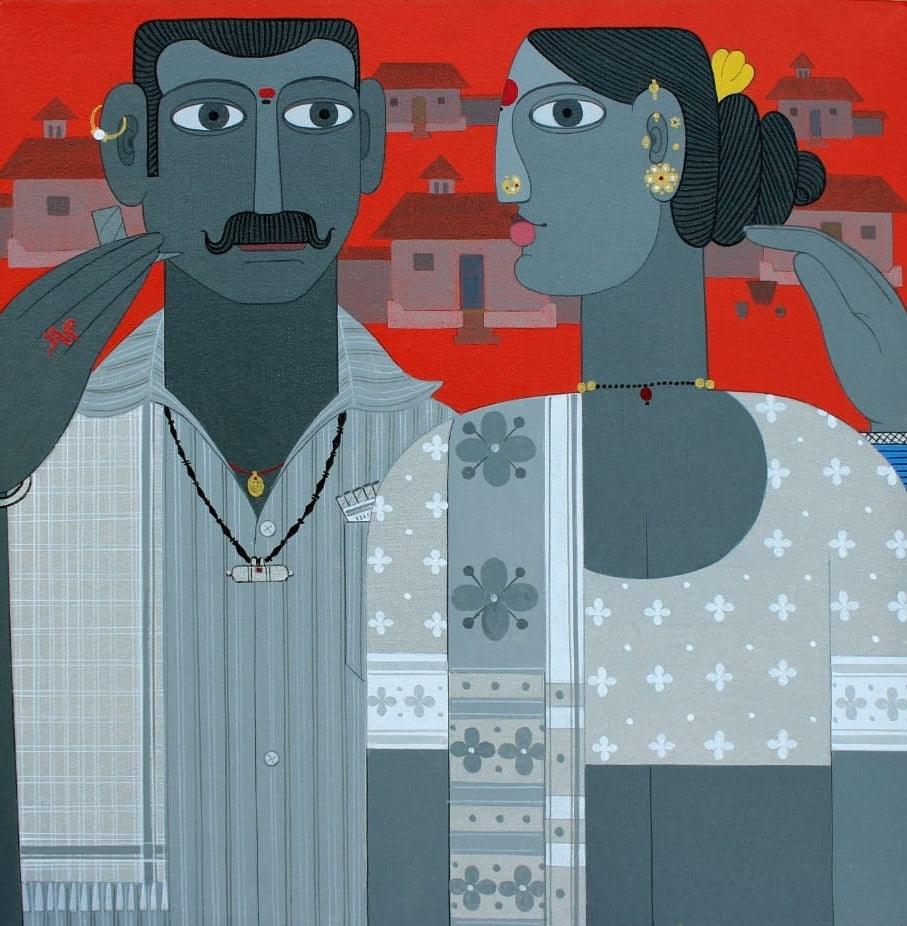
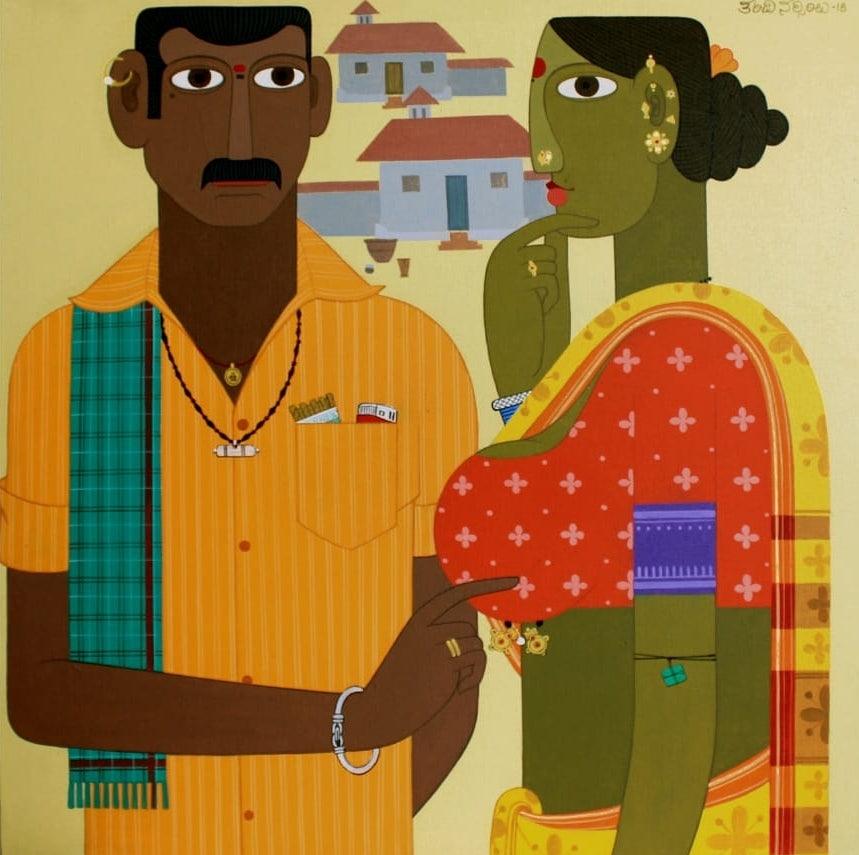
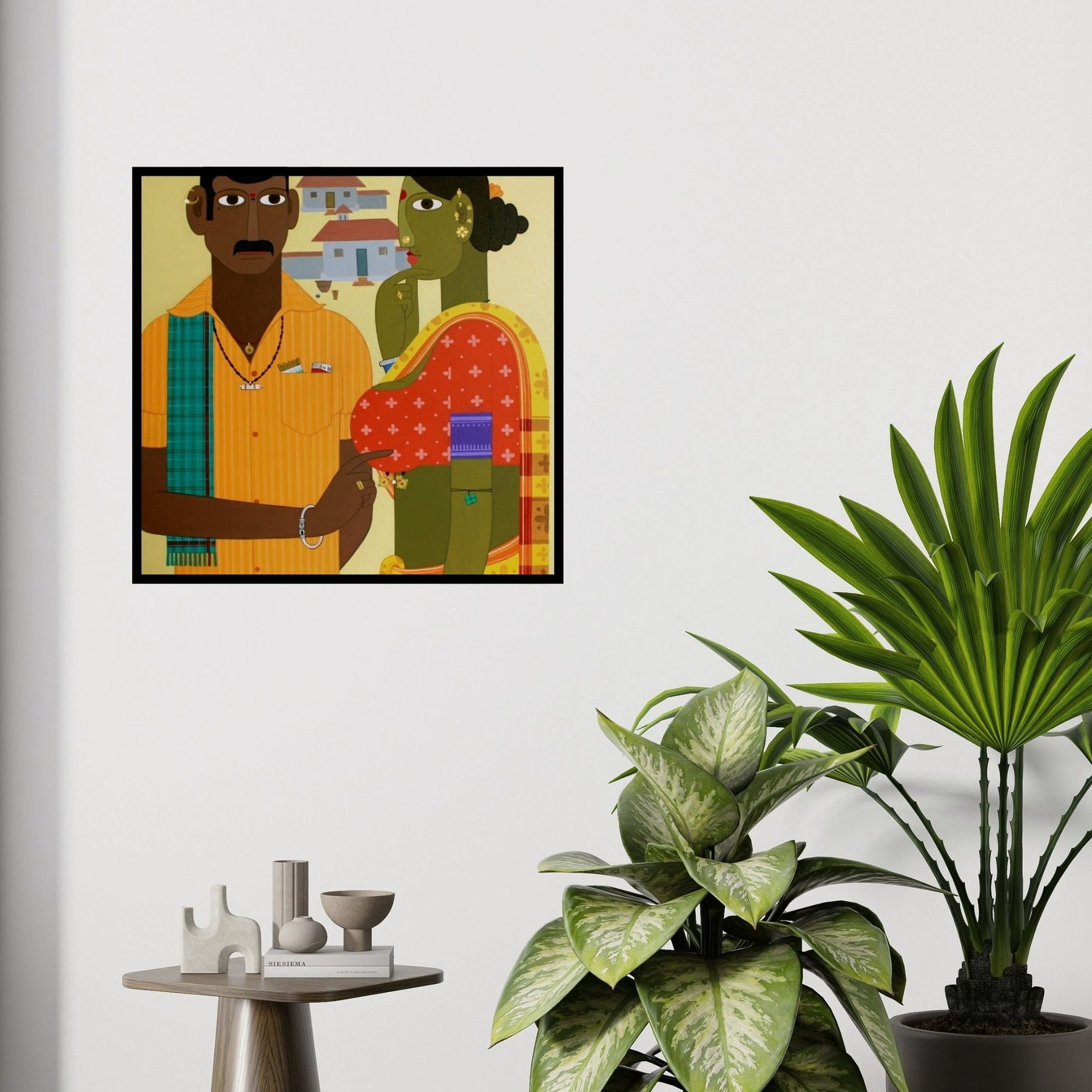
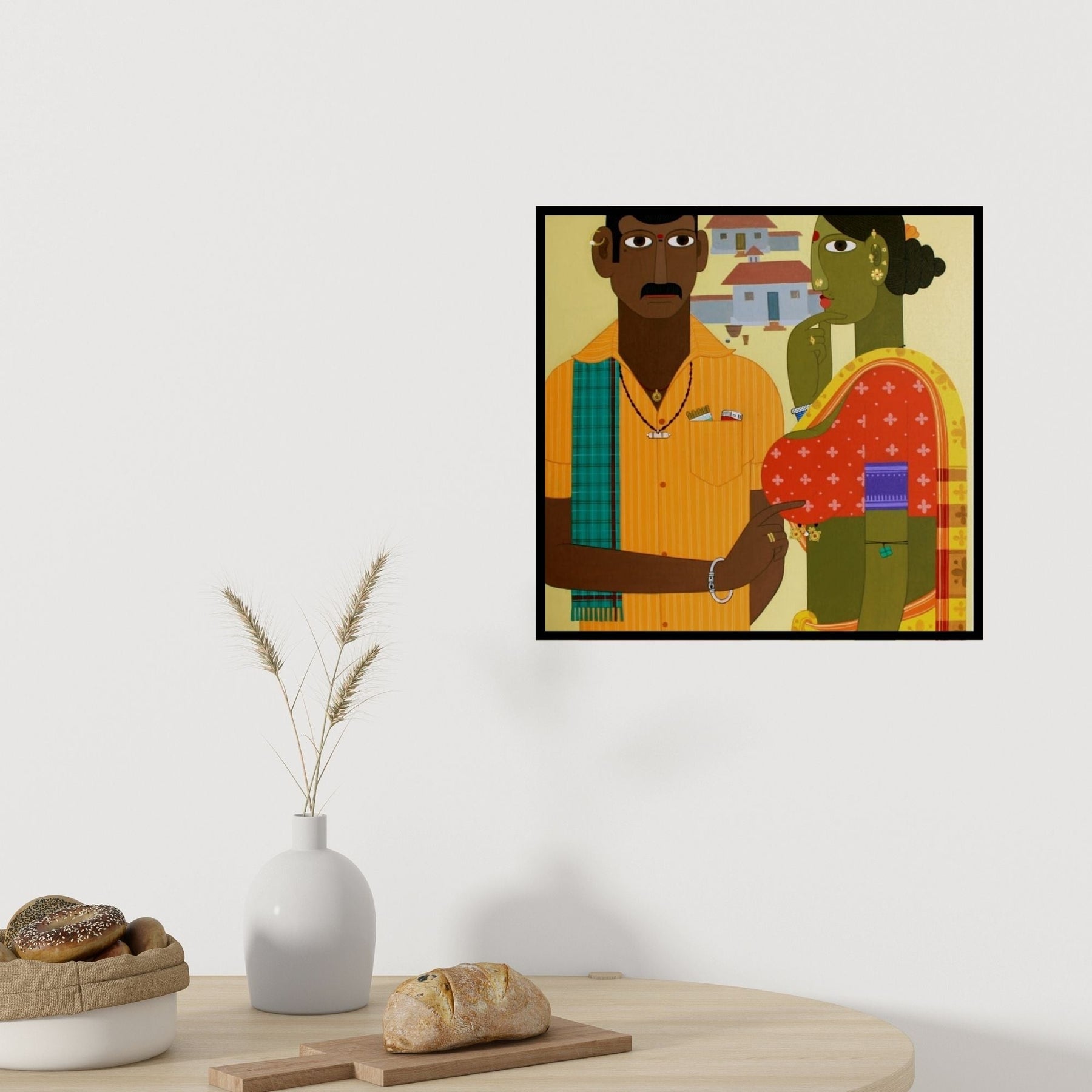
Flattened into iconic profiles, the couple stands like two monuments of everyday life, their enlarged eyes holding a quiet tension between intimacy and distance. Warm ochres and earthen browns anchor the man in blunt certainty, while the woman’s green figure—ornamented with small floral motifs and a vivid red sari—suggests an interior world of memory, fertility, and withheld speech. The clustered houses behind them compress space into a domestic emblem, turning the background into a shared fate rather than a place, as the pointing gesture becomes both accusation and touch—an ambiguous choreography of desire, duty, and negotiation. In its deliberate simplicity, the work elevates the ordinary into a folk-modern allegory of partnership, where love is measured not by romance but by the weight of routine and the politics of being seen.
Delivery
You may also like