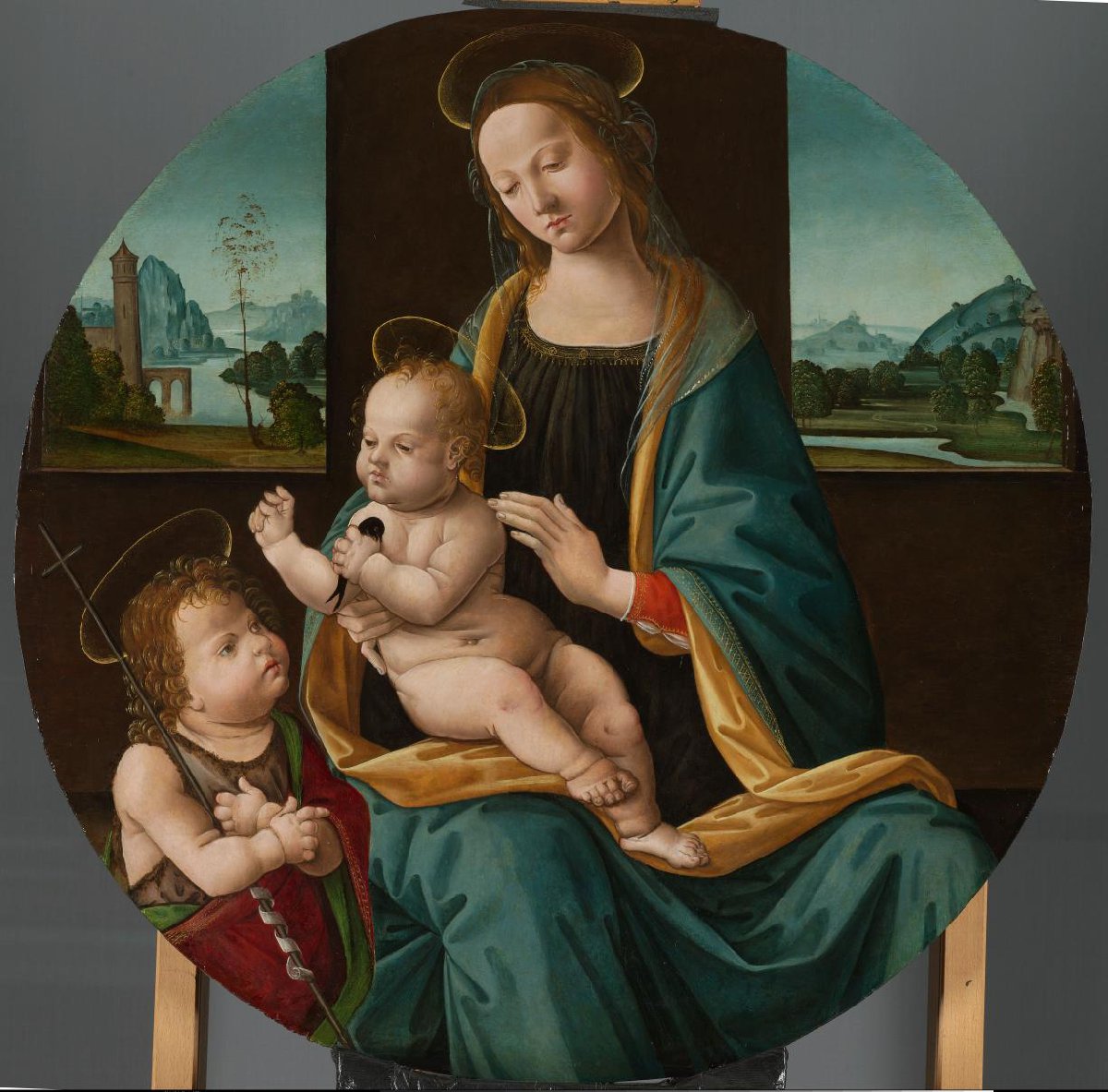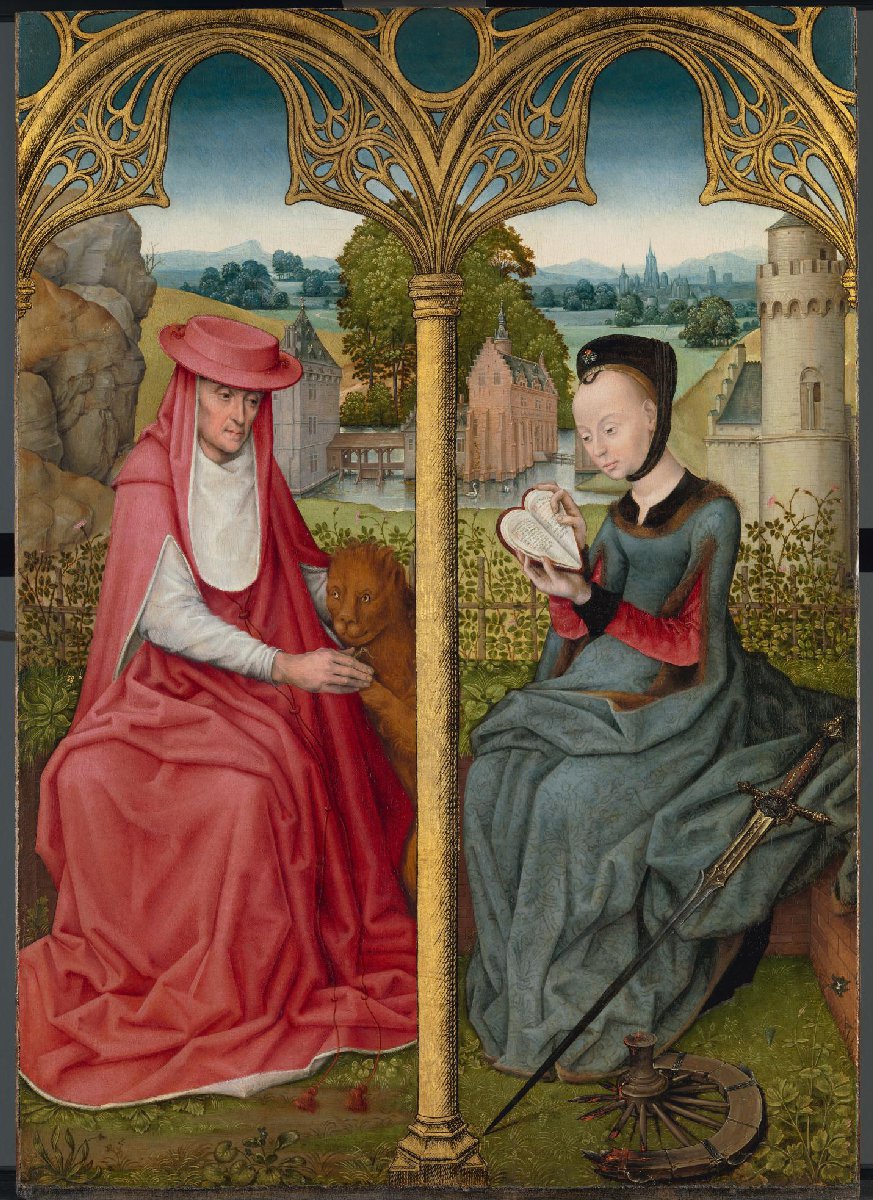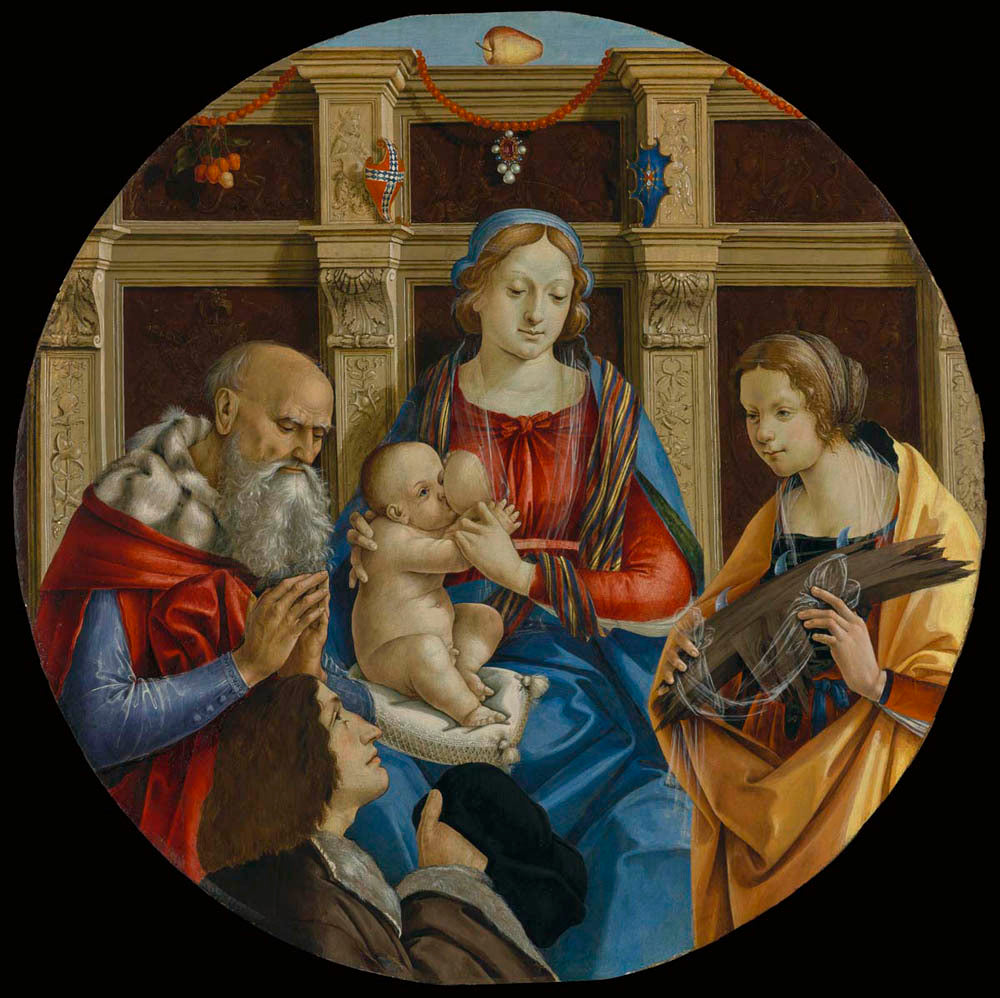
Madonna and Child with a Male Saint, Catherine of Alexandria and a Donor Gm-00054901
The focus of this meditative scene is the Virgin nursing the infant Christ. An elderly gentleman on the left bows his head in prayer. Though he is without definitively identifying attributes, his red cloak may indicate that he is Saint Jerome, who is often shown wearing the red robes of a cardinal. The coats of arms of two noble families of the city of Lucca hang from the pilasters which flank the Madonna: the Guinigi to the left, the Buonvisi to the right. The painting may have been commissioned to celebrate the union of these prominent Italian families. Directly below Saint Jerome, a donor gazes up at the Virgin and Child, his hat removed and hands clasped in reverence. He may be Michele Guinigi, a member of a wealthy merchant family who was pledged to marry Caterina Buonvisi. Caterina herself perhaps appears on the right, in the guise of her namesake Saint Catherine of Alexandria, who holds a broken wheel, the symbol of her martyrdom.
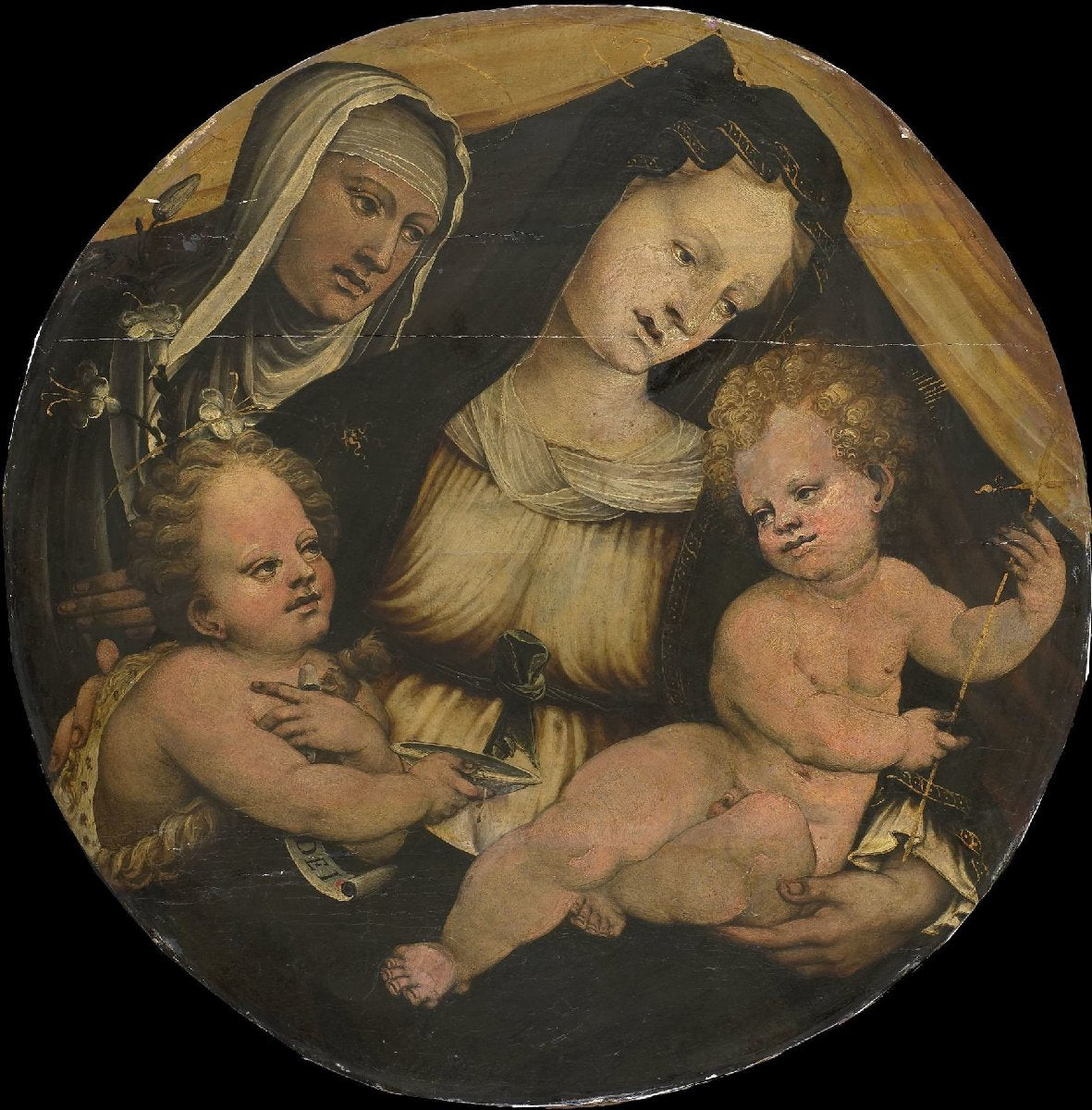
A tondo, derived from the Italian word rotondo, meaning round, was a type of painting that was circular in format which enjoyed particular popularity for display in domestic settings in central Italy in the second half of the fifteenth century. Its shape is thought to derive, in part, from the so-called desco da parto or “birth tray”—a circular decorative tray on which sweetmeats were presented to new mothers. The round format soon migrated to paintings which were produced to celebrate a marriage union or the birth of a child, to express hope for a pregnancy or the safe delivery of a child.
The painting’s authorship was uncertain at the time it entered the Getty collection, when the artist was known as “Master of the Lathrop Tondo,” in reference to the painting’s former location in the Lathrop collection in New York. By 1985, a body of work of approximately thirty paintings was attributed to the unknown artist, who was later identified as Lucchese painter Michelangelo di Pietro Membrini.
Delivery
You may also like