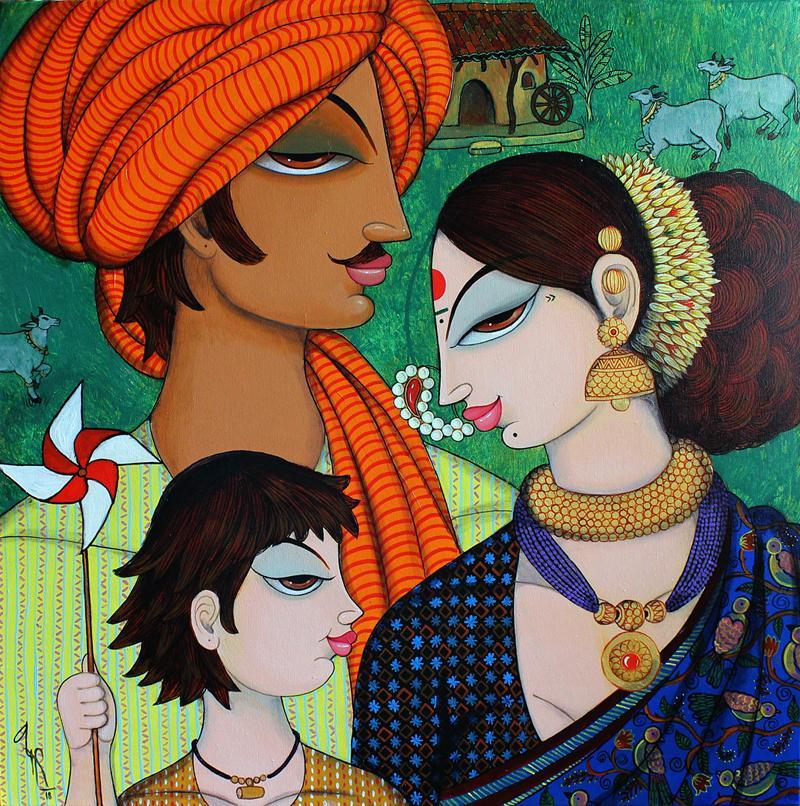
Family
₹70,000
Out of stock · ★ 4.0 (9)checking live price…
Size
30x30Type
OriginalMaterial
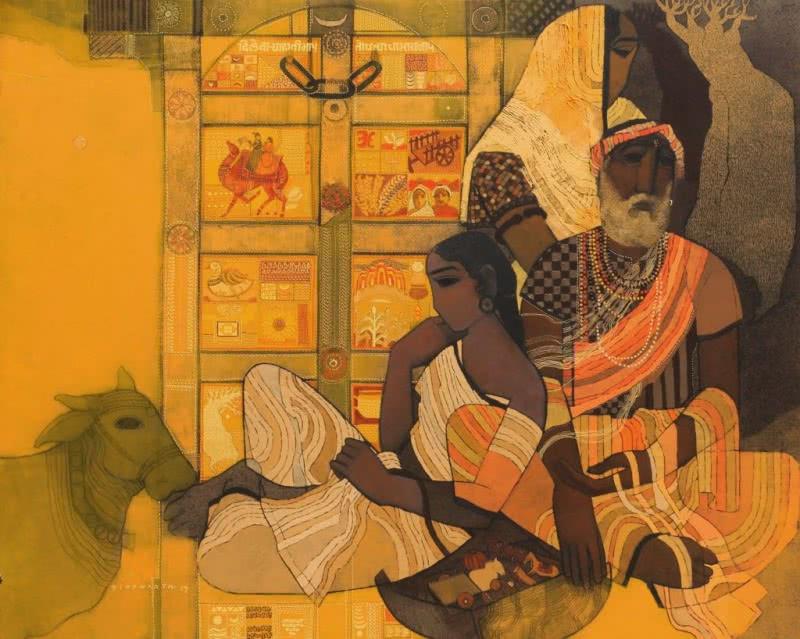
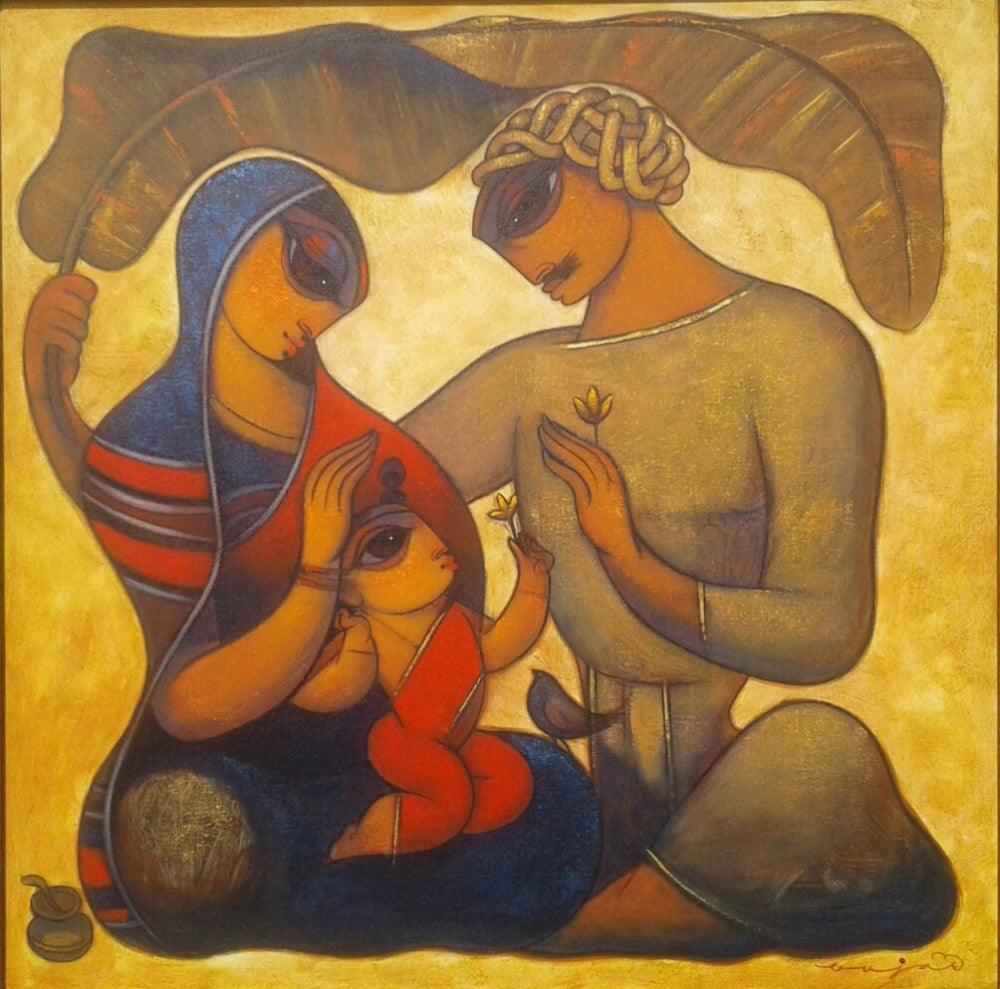
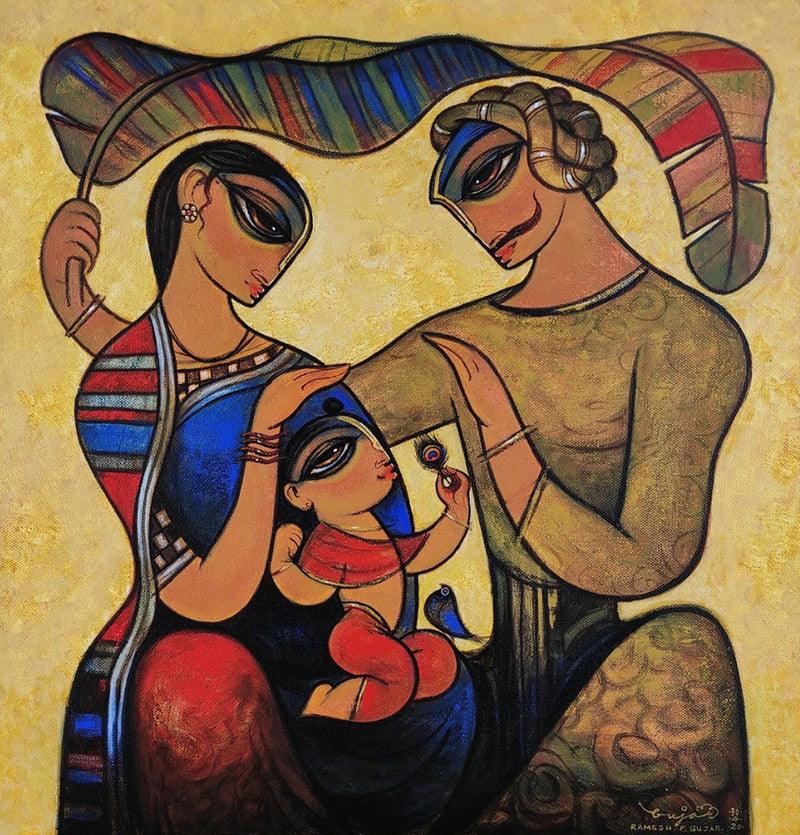
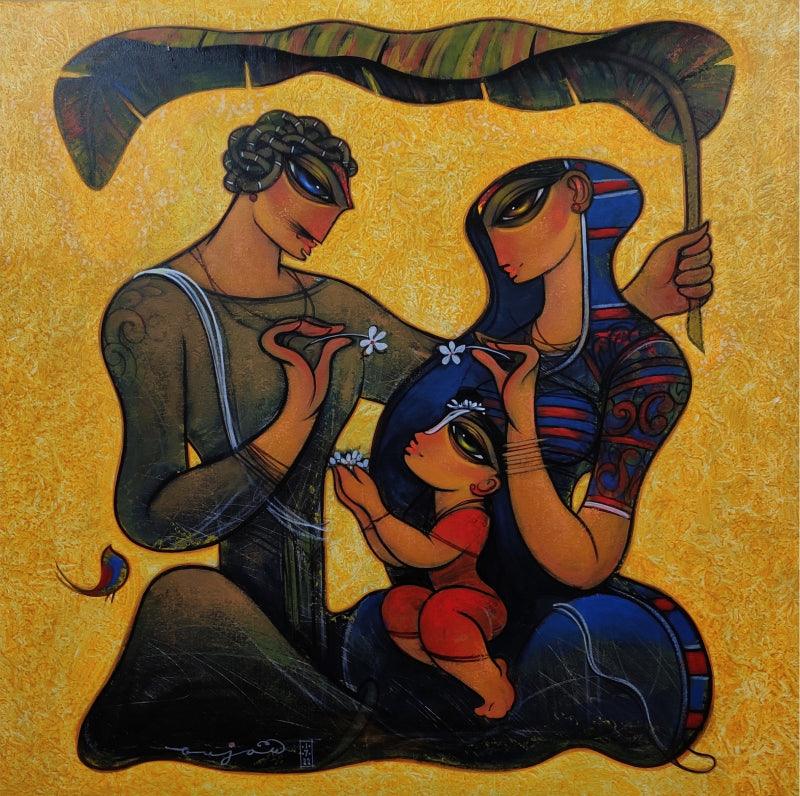
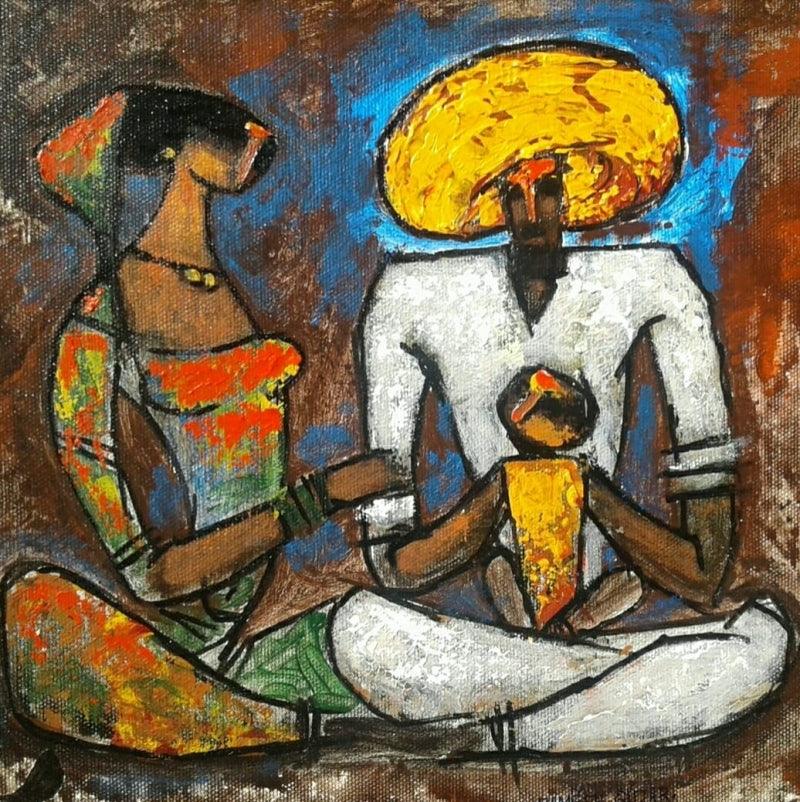
CanvasThis tender tableau stages intimacy as a quiet architecture: three faces align in close profile, their half-lidded gazes and softened smiles forming a single, interdependent rhythm of trust. Saturated oranges and deep blues declare a domestic richness, while the flattened space and patterned textiles turn lived experience into ornament—suggesting that identity is woven from ritual, attire, and shared memory. Behind them, the spare village motifs and grazing cattle act like distant witnesses, widening the scene into a pastoral myth where family becomes both shelter and legacy. The pinwheel held by the child introduces a note of gentle motion, a symbol of time and innocence turning within the stillness of belonging.
Delivery
You may also like
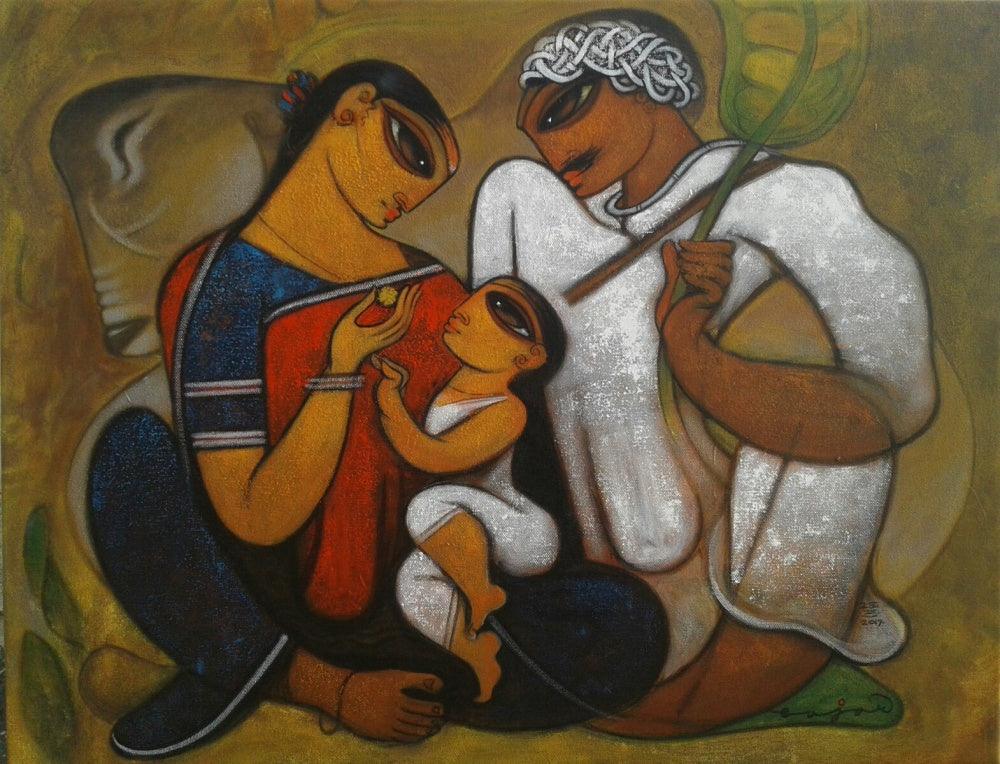
Family 4
Artzolo
₹72,000
out of stock
★ 4.0 (12)
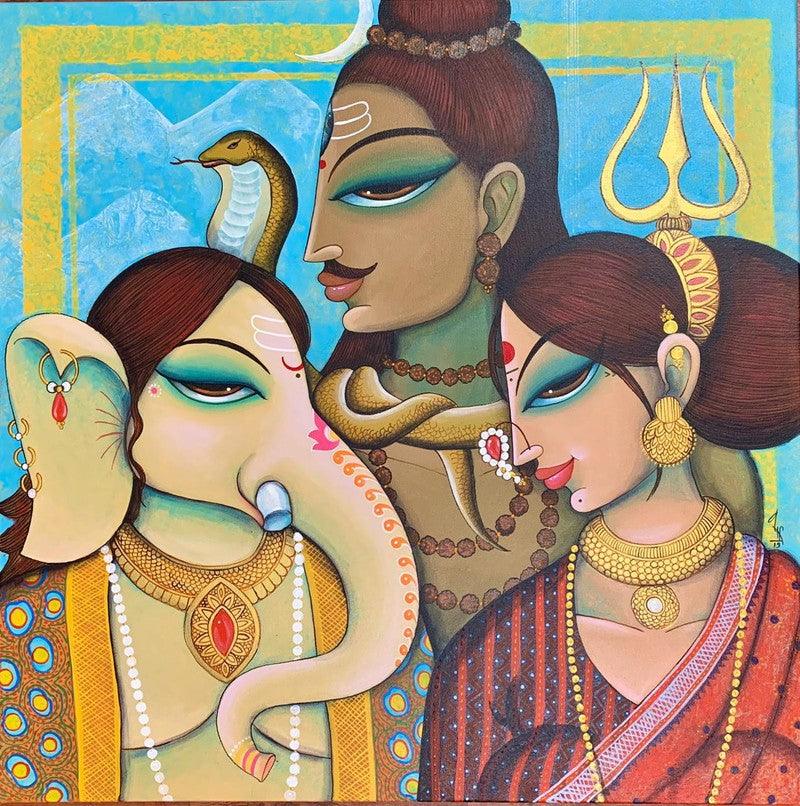
Family (Shiva Family)
Artzolo
₹75,000
★ 5.0 (12)
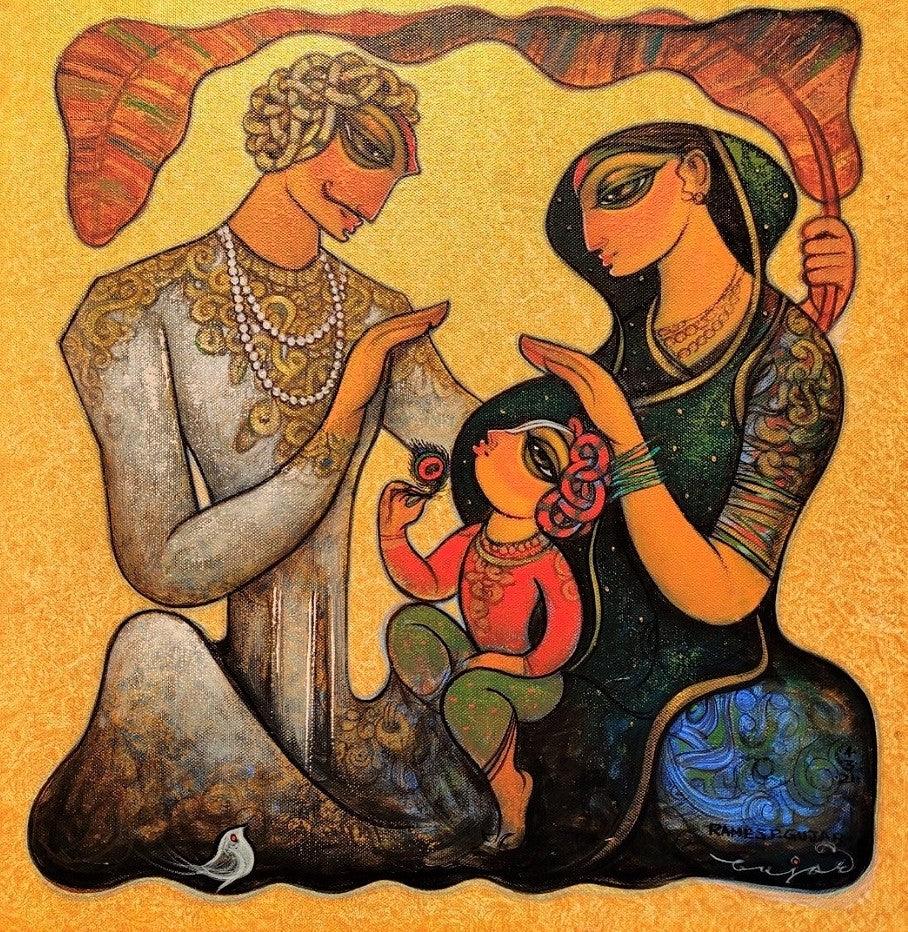
Family 9
Artzolo
₹40,000
out of stock
★ 5.0 (9)
Family 1
Artzolo
₹286,000
out of stock
★ 5.0 (14)
Family 3
Artzolo
₹120,000
out of stock
★ 4.0 (14)
Family 6 (Family Portrait)
Artzolo
₹40,000
out of stock
★ 5.0 (15)
Family 2 (Family Bonds)
Artzolo
₹110,000
out of stock
★ 4.0 (11)
Family 2
Artzolo
₹35,000
out of stock
★ 5.0 (14)