Samudramanthana (Churning of the Ocean)
₹150,000
Out of stockchecking live price…
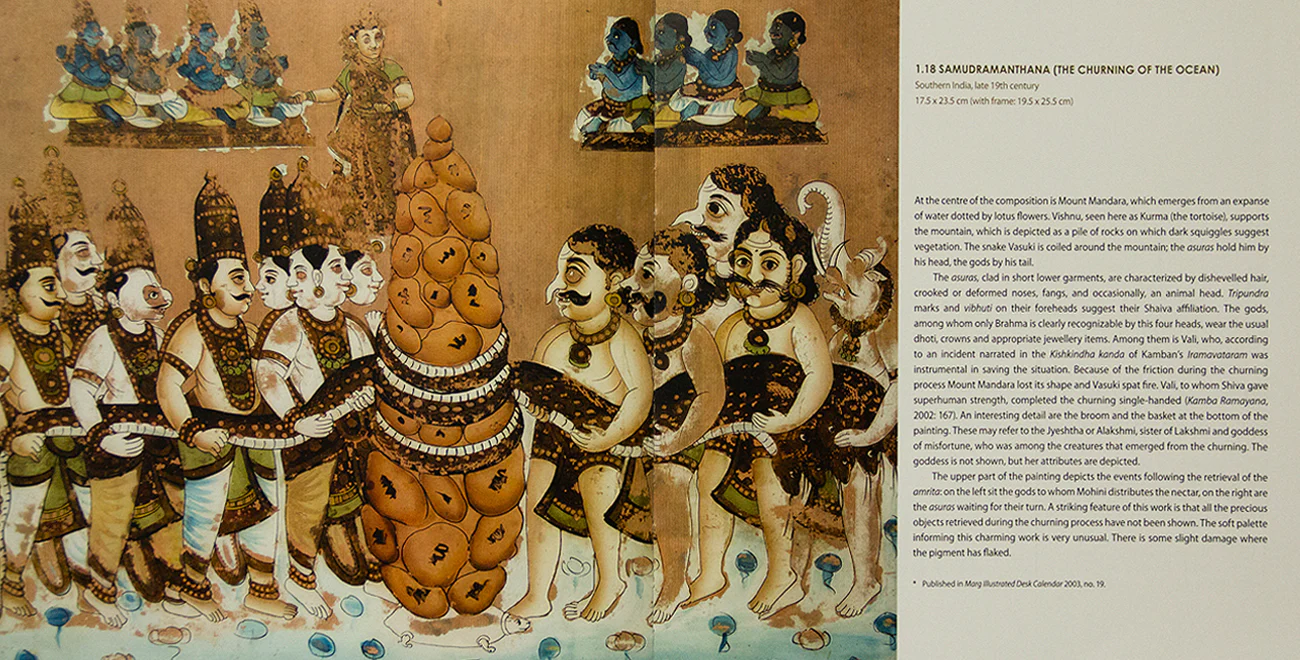
View on Artisera store ↗This is a reverse glass painting from southern India. According to a description of the painting published on page 71 of the book ‘Reverse Glass Painting in India’ by Professor Anna L. Dallapiccola:
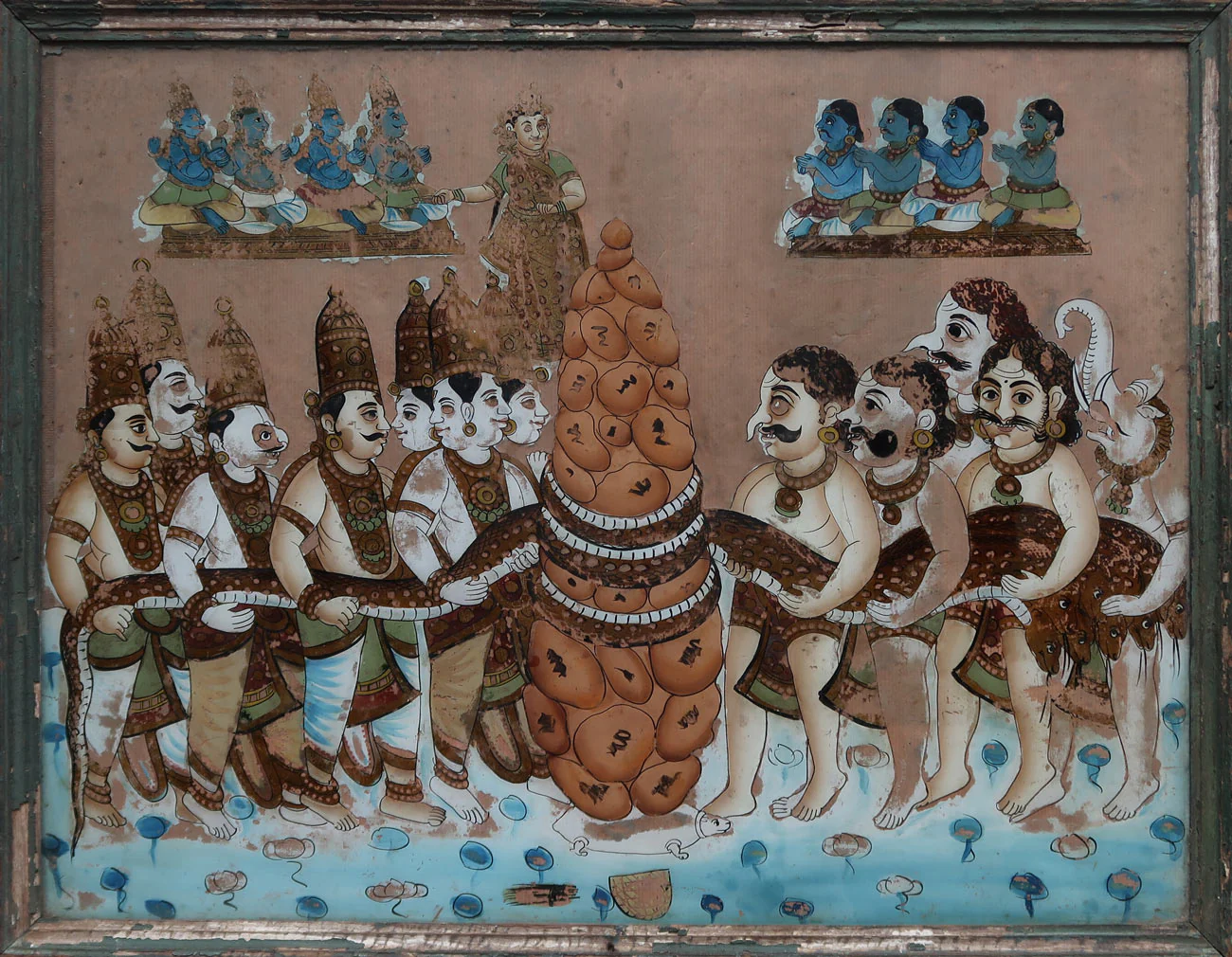
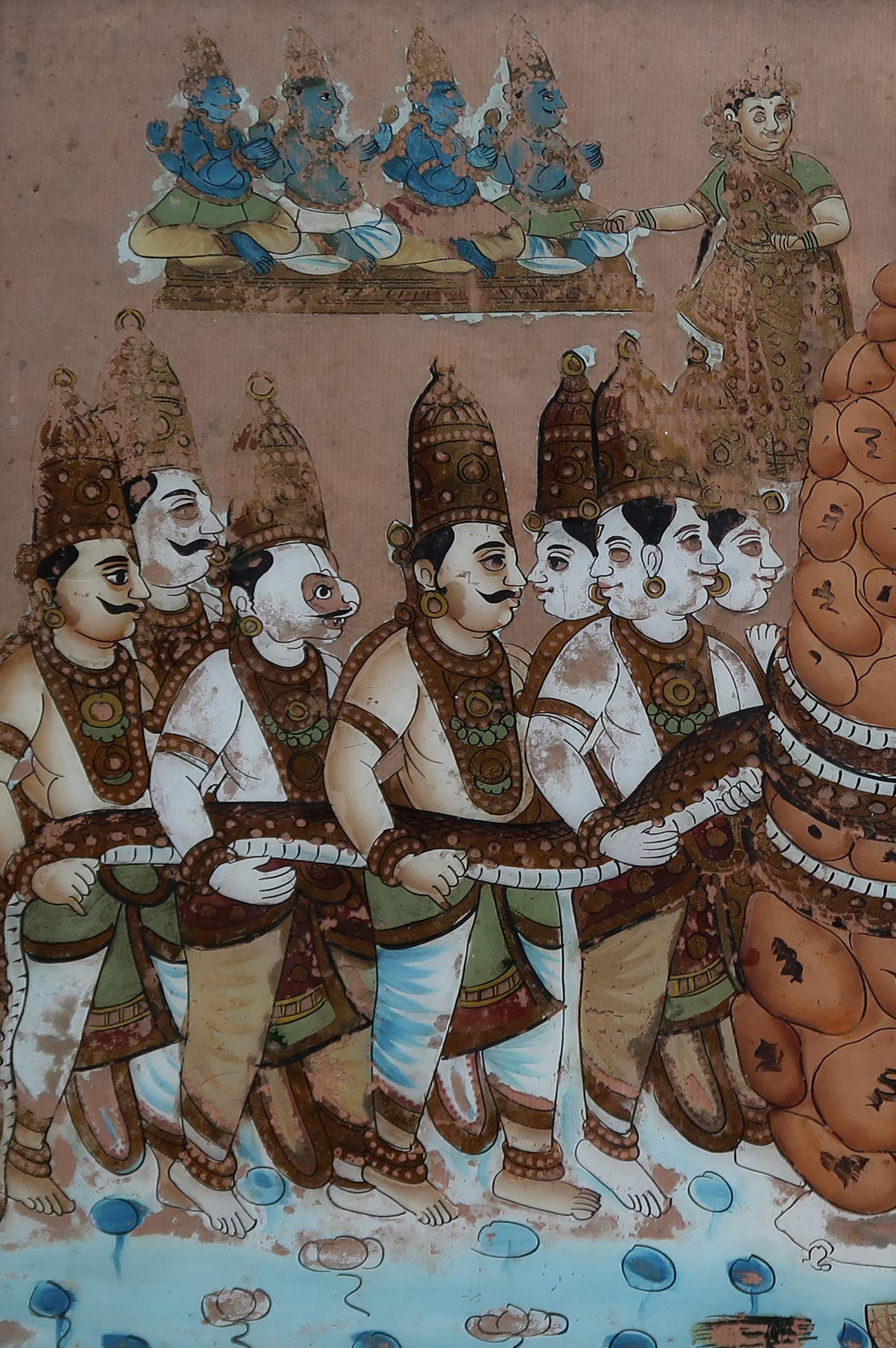
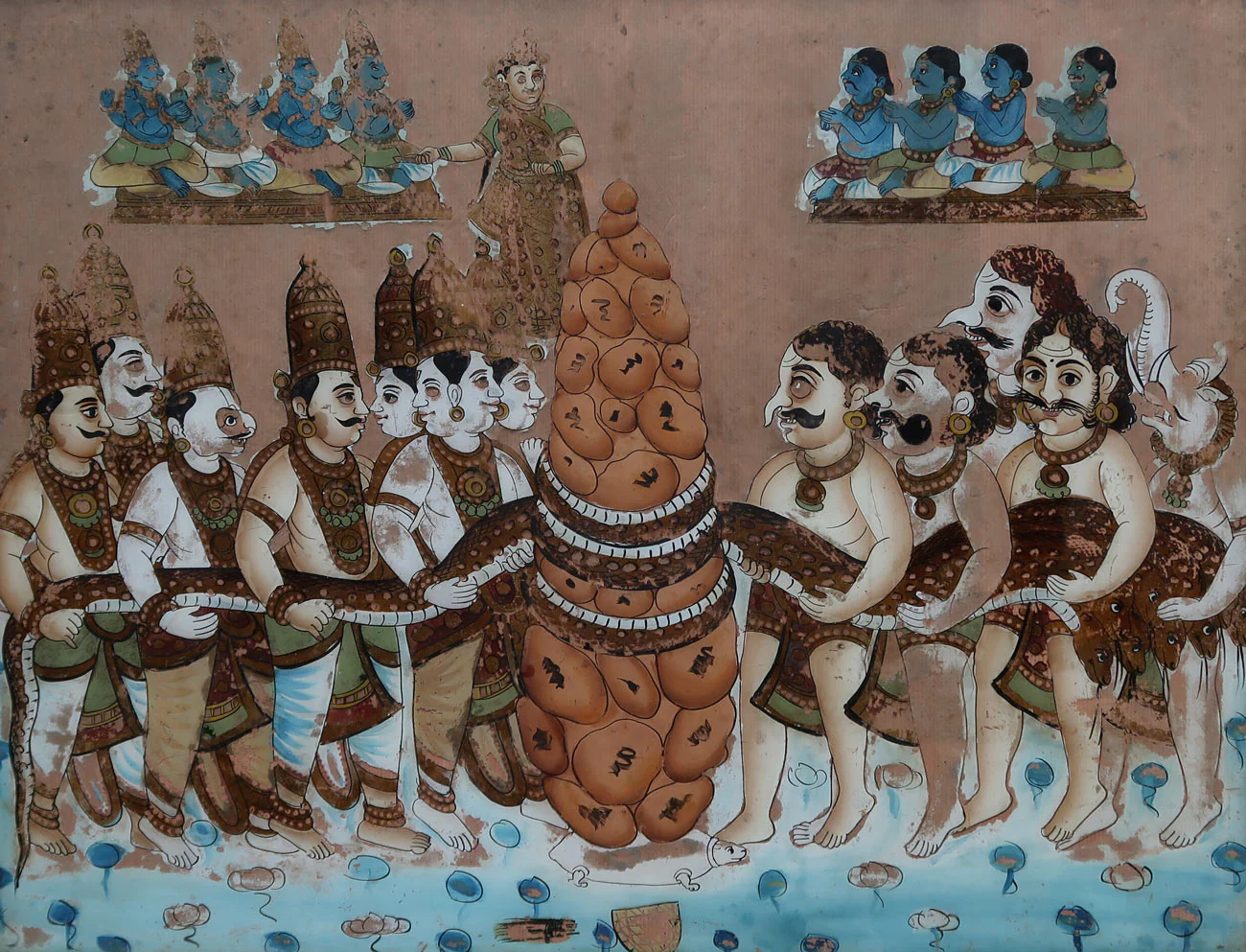
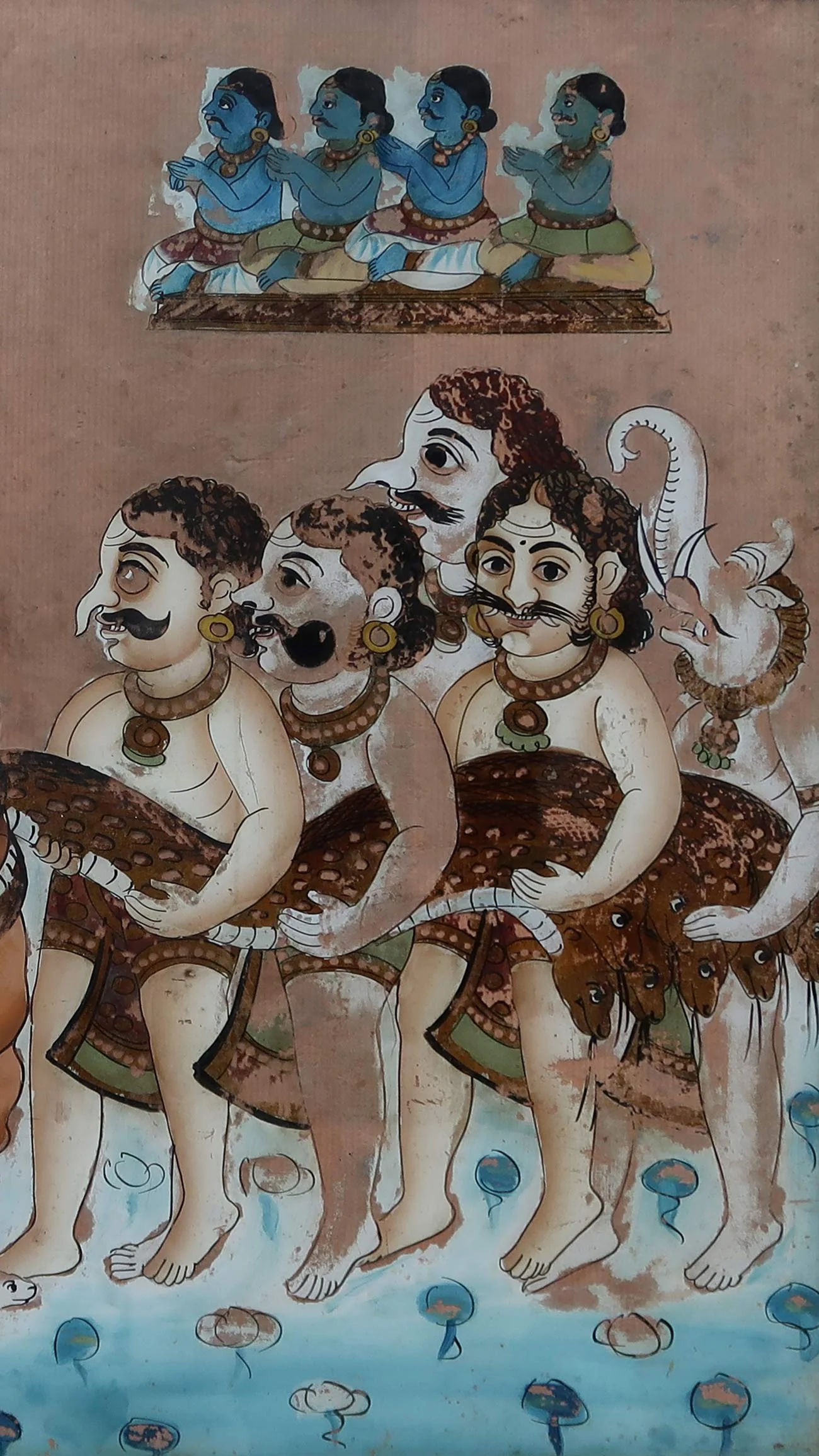
“At the centre of the composition is Mount Mandara, which emerges from an expanse of water dotted by lotus flowers. Vishnu, seen here as Kurma (the tortoise), supports the mountain, which is depicted as a pile of rocks on which dark squiggles suggest vegetation. The snake Vasuki is coiled around the mountain; the asuras hold him by his head, the gods by his tail.
The asuras, clad in short lower garments, are characterized by dishevelled hair, crooked or deformed noses, fangs, and occasionally, an animal head. Tripundra marks and vibhuti on their foreheads suggest their Shaiva affiliation. The gods, among whom only Brahma is clearly recognizable by his four heads, wear the usual dhoti, crowns and appropriate jewellery items. Among them is Vali, who, according to an incident narrated in the Kishkindha kanda of Kamban's Iramavataram was instrumental in saving the situation. Because of the friction during the churning process, Mount Mandara lost its shape and Vasuki spat fire. Vali, to whom Shiva gave superhuman strength, completed the churning single-handed (Kamba Ramayana, 2002: 167). An interesting detail is the broom and the basket at the bottom of the painting. These may refer to the Jyeshtha or Alakshmi, sister of Lakshmi and goddess of misfortune, who was among the creatures that emerged from the churning. The goddess is not shown, but her attributes are depicted.
The upper part of the painting depicts the events following the retrieval of the amrita: on the left sit the gods to whom Mohini distributes the nectar, on the right are the asuras waiting for their turn. A striking feature of this work is that all the precious objects retrieved during the churning process have not been shown. The soft palette informing this charming work is very unusual. There is some slight damage where the pigment has flaked.”
“At the centre of the composition is Mount Mandara, which emerges from an expanse of water dotted by lotus flowers. Vishnu, seen here as Kurma (the tortoise), supports the mountain, which is depicted as a pile of rocks on which dark squiggles suggest vegetation. The snake Vasuki is coiled around the mountain; the asuras hold him by his head, the gods by his tail.
The asuras, clad in short lower garments, are characterized by dishevelled hair, crooked or deformed noses, fangs, and occasionally, an animal head. Tripundra marks and vibhuti on their foreheads suggest their Shaiva affiliation. The gods, among whom only Brahma is clearly recognizable by his four heads, wear the usual dhoti, crowns and appropriate jewellery items. Among them is Vali, who, according to an incident narrated in the Kishkindha kanda of Kamban's Iramavataram was instrumental in saving the situation. Because of the friction during the churning process, Mount Mandara lost its shape and Vasuki spat fire. Vali, to whom Shiva gave superhuman strength, completed the churning single-handed (Kamba Ramayana, 2002: 167). An interesting detail is the broom and the basket at the bottom of the painting. These may refer to the Jyeshtha or Alakshmi, sister of Lakshmi and goddess of misfortune, who was among the creatures that emerged from the churning. The goddess is not shown, but her attributes are depicted.
The upper part of the painting depicts the events following the retrieval of the amrita: on the left sit the gods to whom Mohini distributes the nectar, on the right are the asuras waiting for their turn. A striking feature of this work is that all the precious objects retrieved during the churning process have not been shown. The soft palette informing this charming work is very unusual. There is some slight damage where the pigment has flaked.”
Ingredients
167). An interesting detail is the broom and the basket at the bottom of the painting. These may refer to the Jyeshtha or Alakshmi, sister of Lakshmi and goddess of misfortune, who was among the creatures that emerged from the churning. The goddess is not shown, but her attributes are depicted.
You may also like
Krishna Quells the Serpent Kaliya
Artisera
₹0
out of stock
Balakrishna Seated on Shesha
Artisera
₹150,000
out of stock
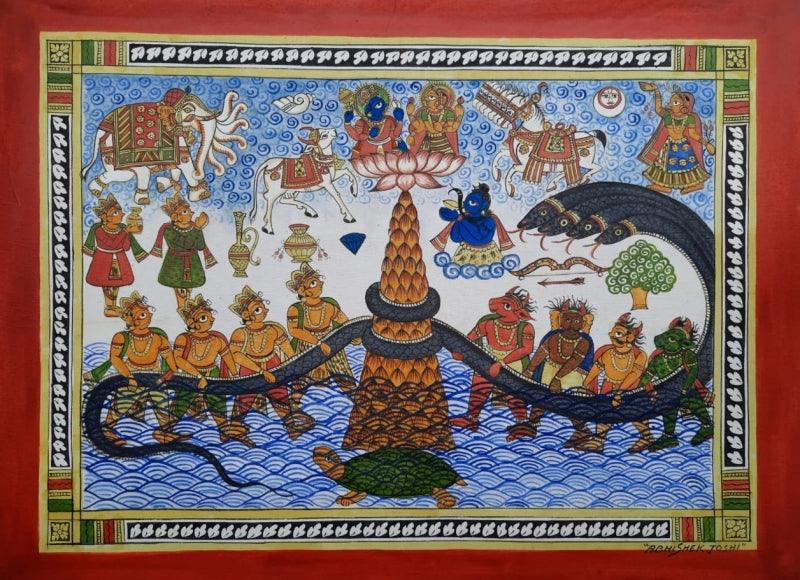
Samundr Manthan (Divine Churning Samudra Manthan)
Artzolo
₹33,000
★ 5.0 (9)
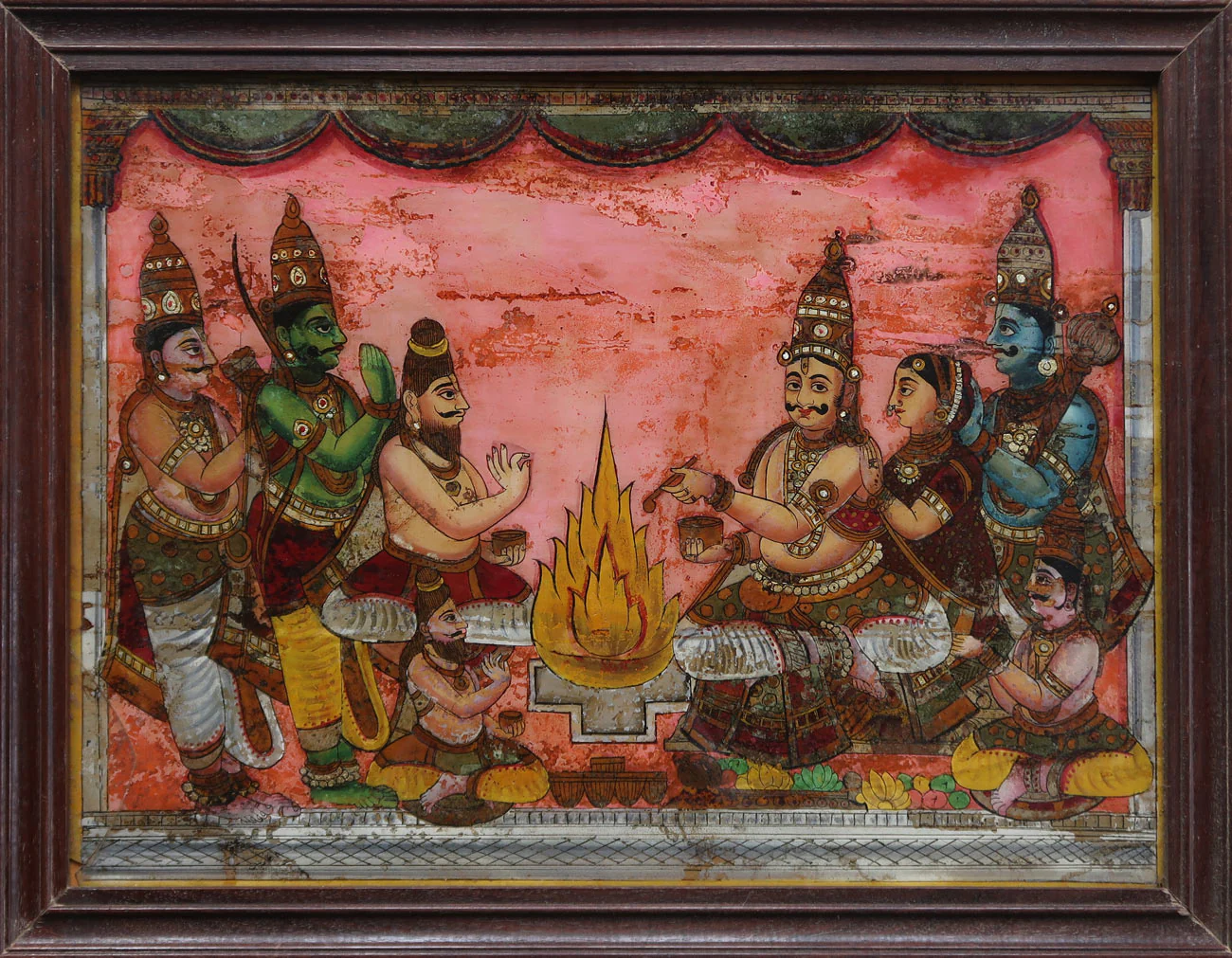
A Yajna
Artisera
₹150,000
out of stock
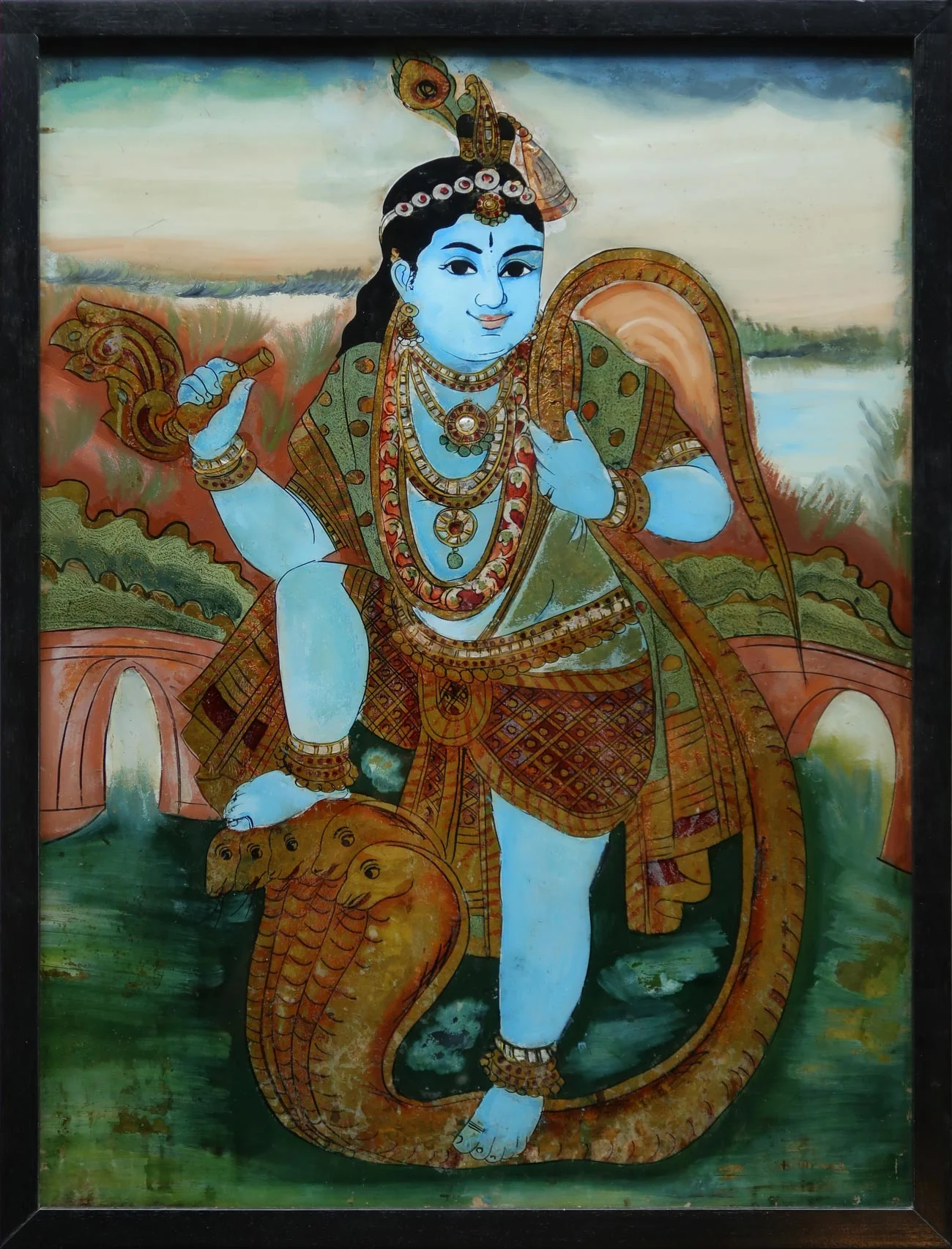
Kalinga Mardhana Krishna - 03
Artisera
₹125,000
out of stock
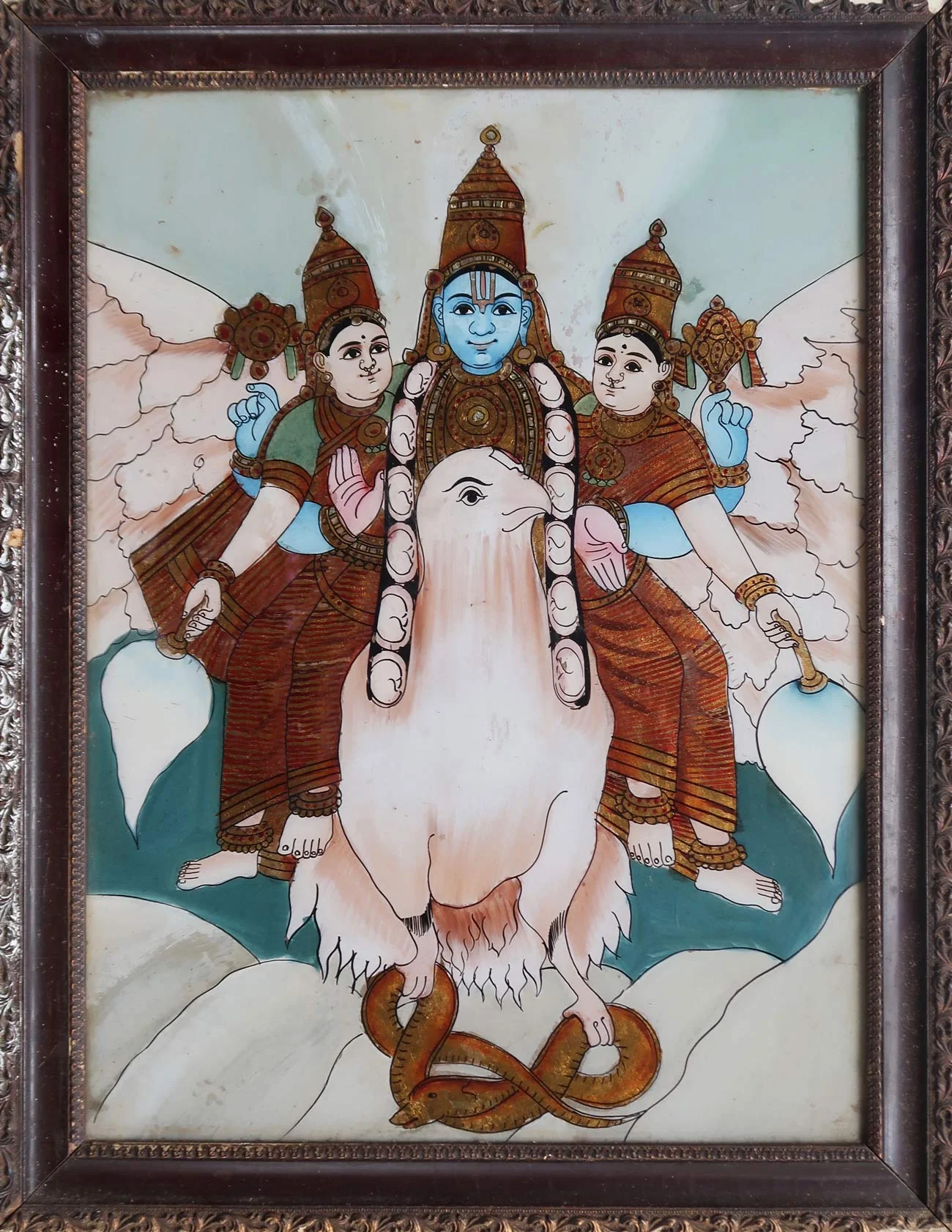
Vishnu and his Consorts on Garuda
Artisera
₹175,000
out of stock
Rama's Coronation - 01
Artisera
₹150,000
out of stock
Kalinga Mardhana Krishna - 01
Artisera
₹70,560
out of stock