Evening
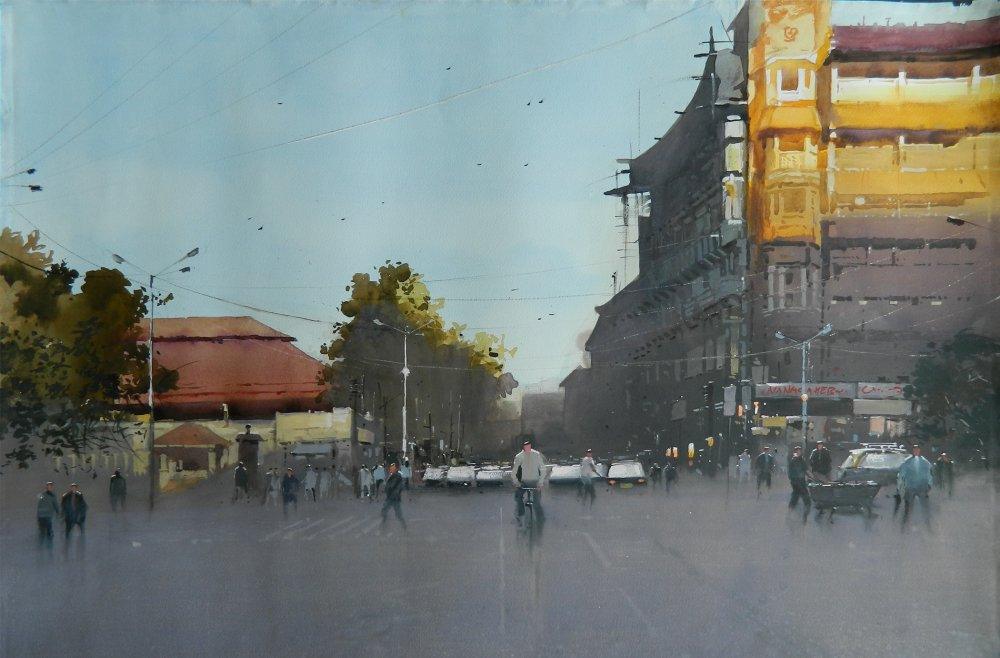
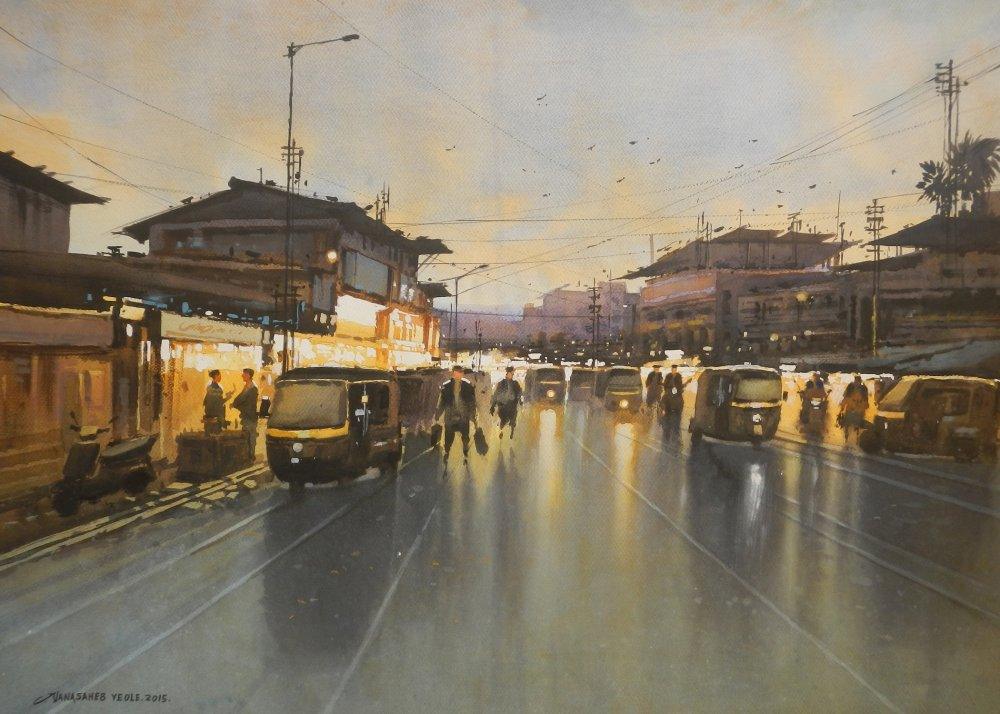
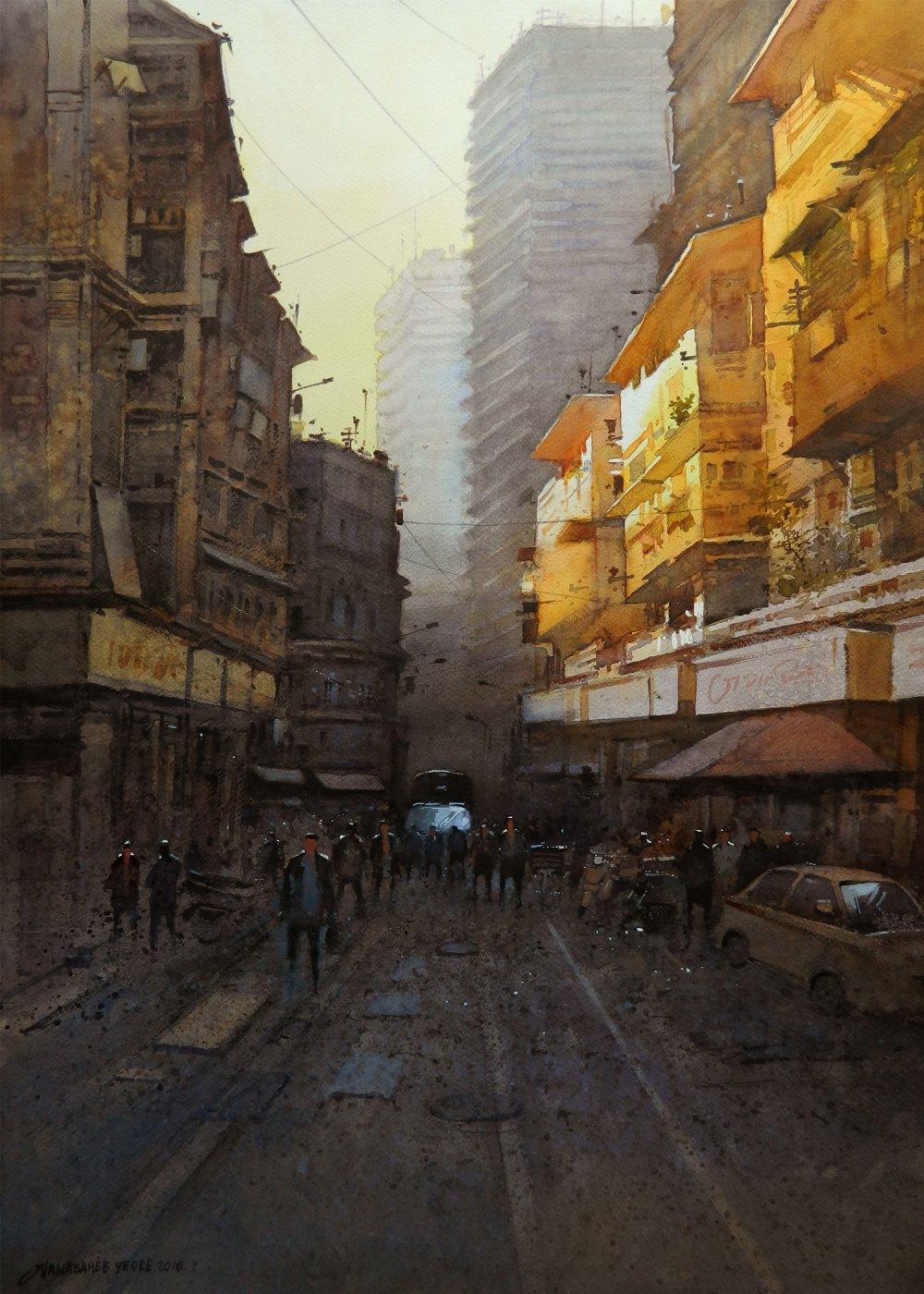
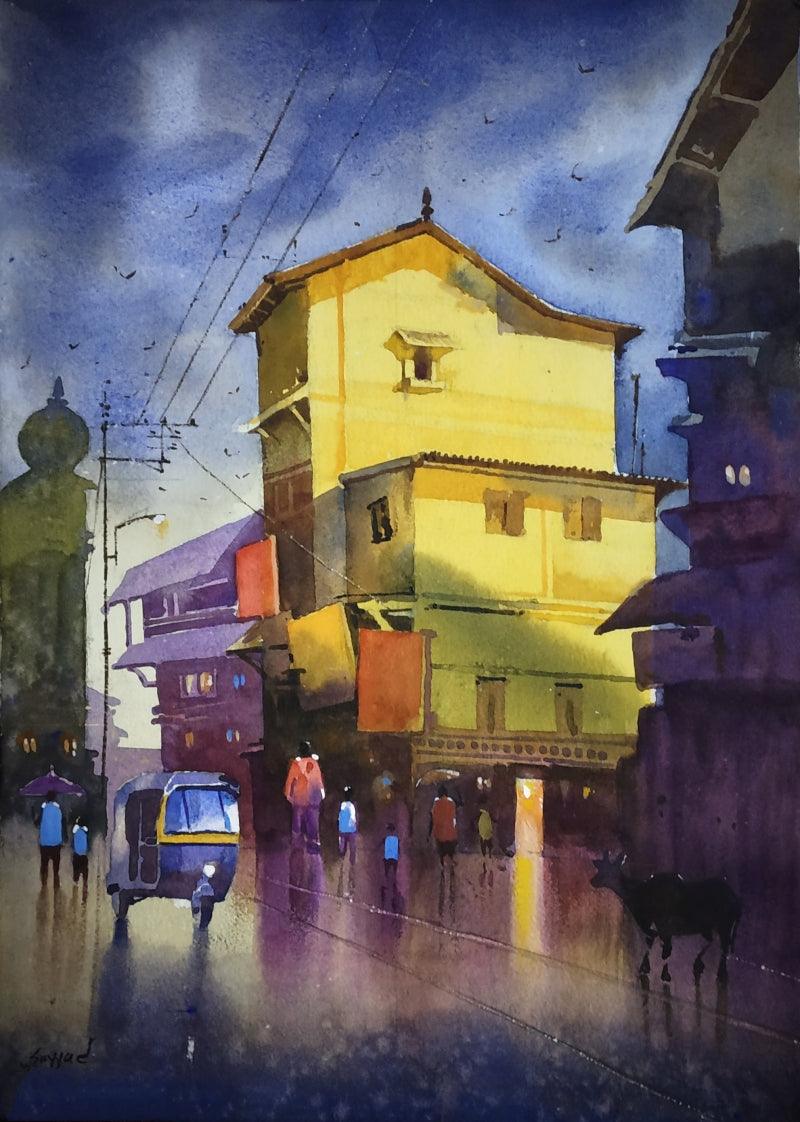
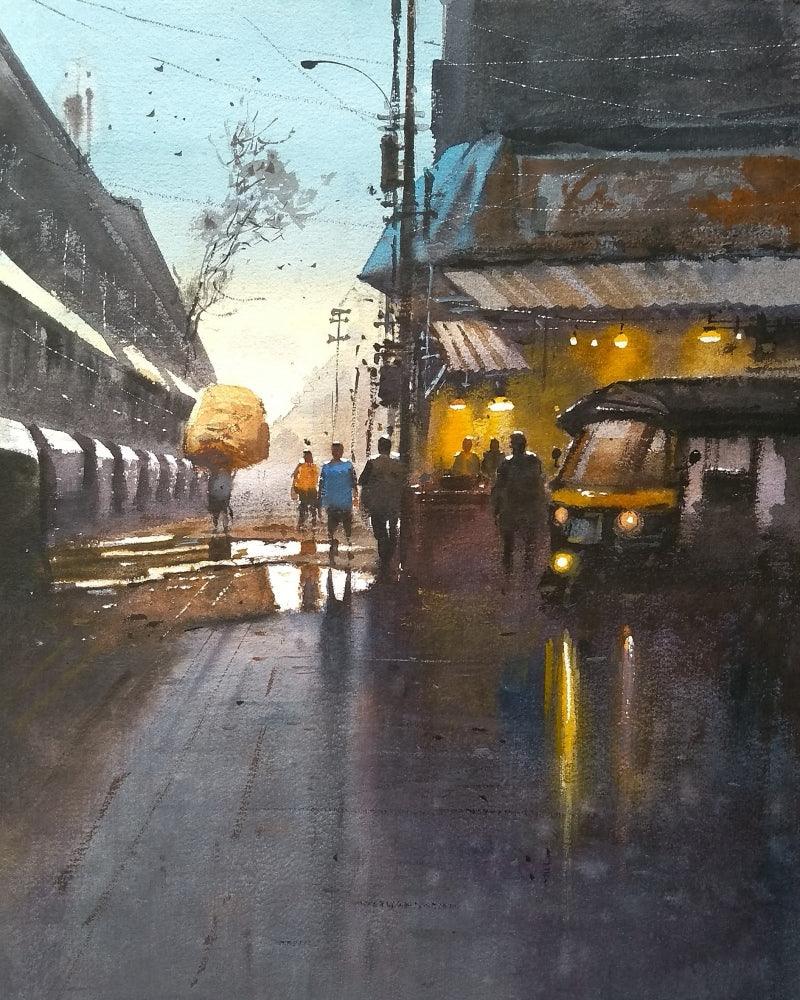
This rain-slicked street scene stages an intimate theater of the everyday, where figures dissolve into silhouette and become carriers of time rather than individuals—brief presences moving through a corridor of commerce and shadow. Cool washes of blue-gray expand the space like damp air, while the amber shop lights and the rickshaw’s headlamp puncture the haze, turning reflections on the pavement into trembling ribbons of warmth. The composition hinges on a strong recession of lines—awnings, poles, and the dark flank of architecture—guiding the eye toward a pale, uncertain horizon that feels both invitation and departure. In this dialogue between glow and gloom, the work suggests the city as a living organism: resilient, anonymous, and quietly luminous even as it erodes at the edges.
Delivery
You may also like