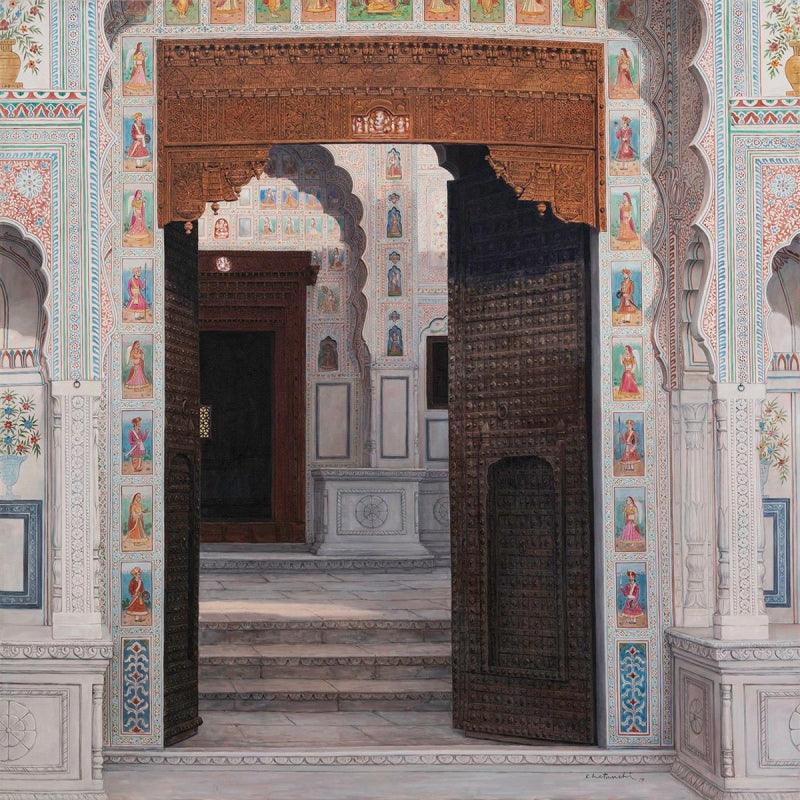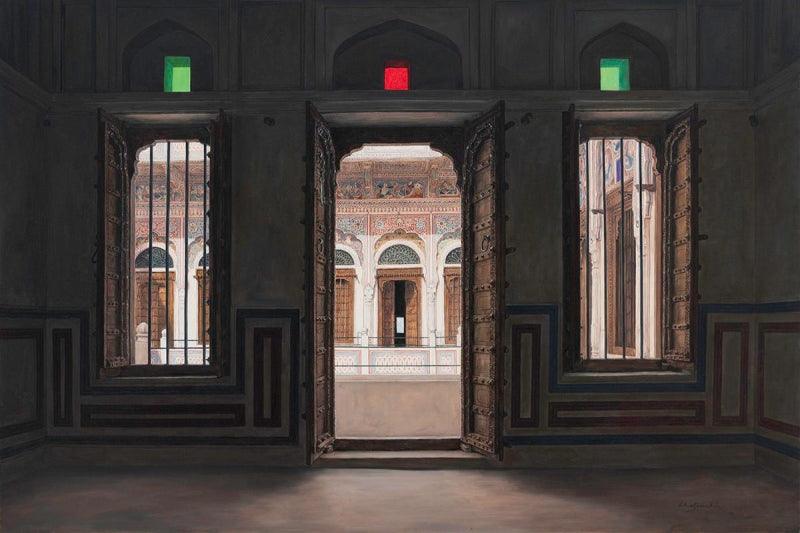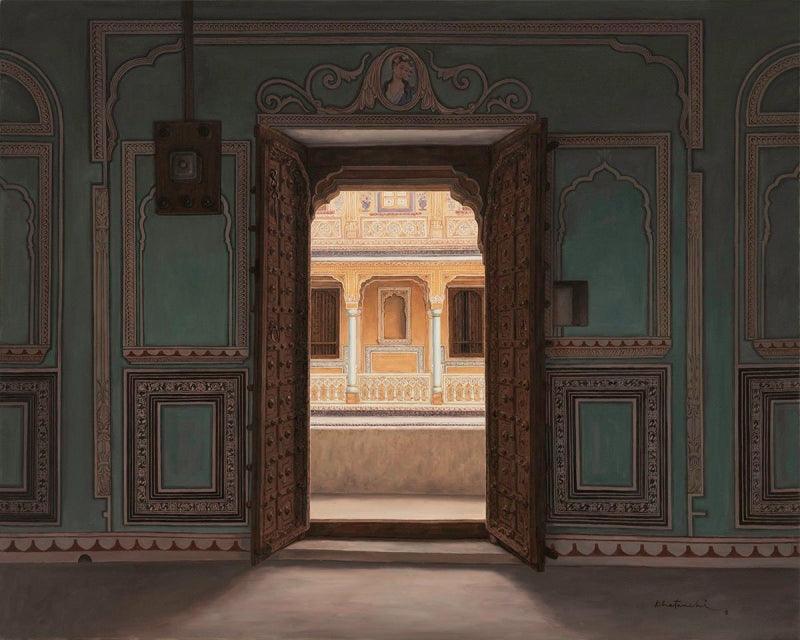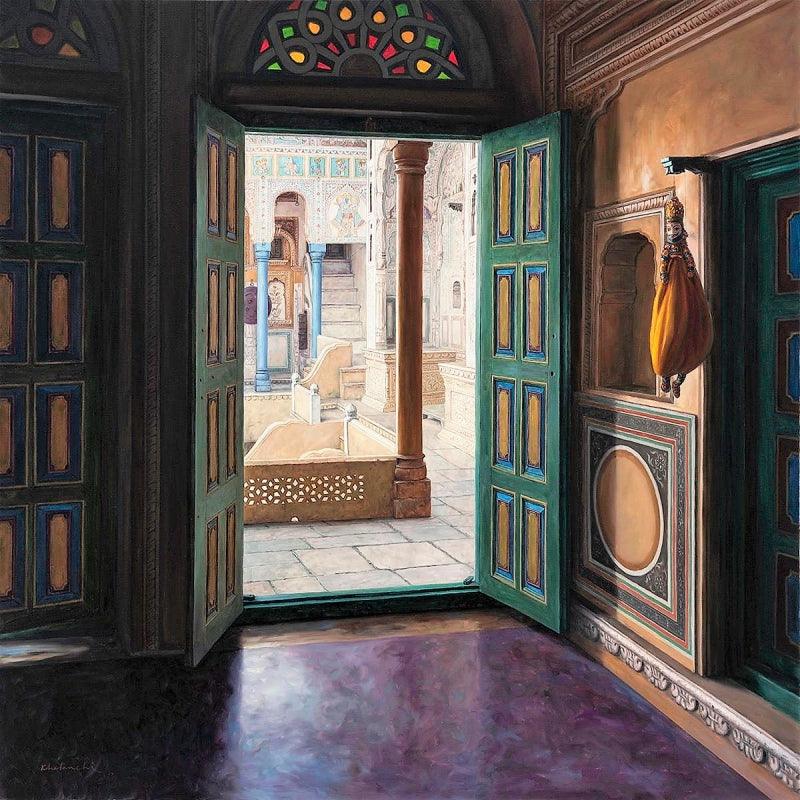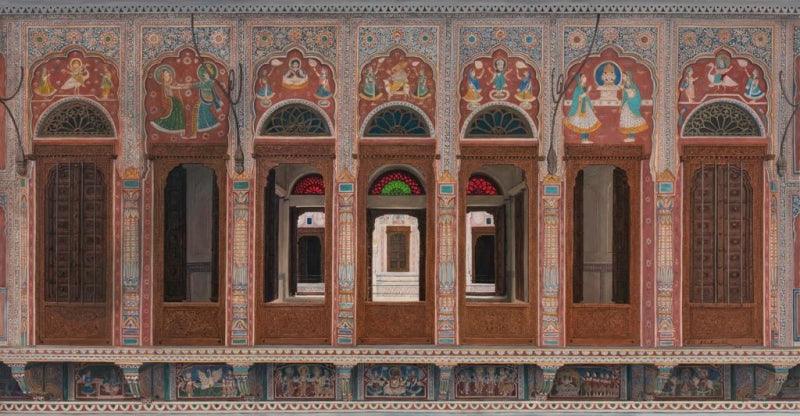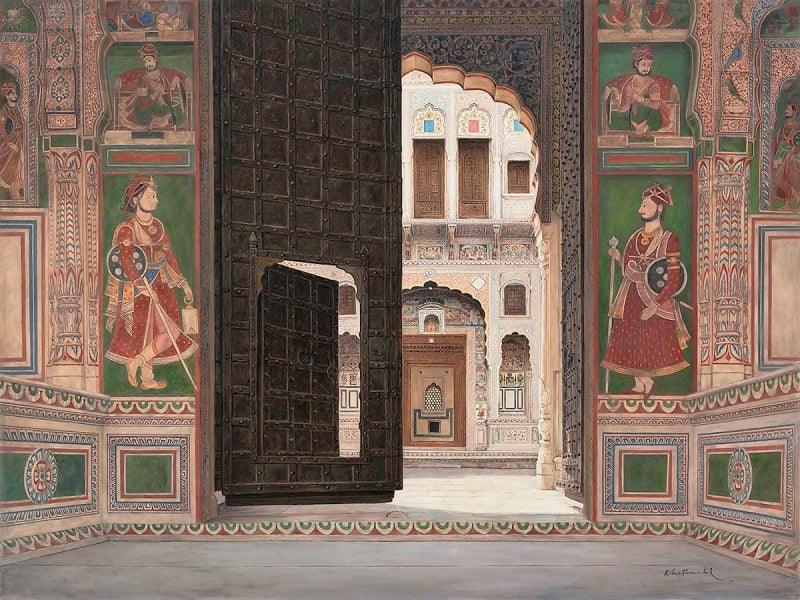
Shubh Aagman (Palace Courtyard with Open Doorway)
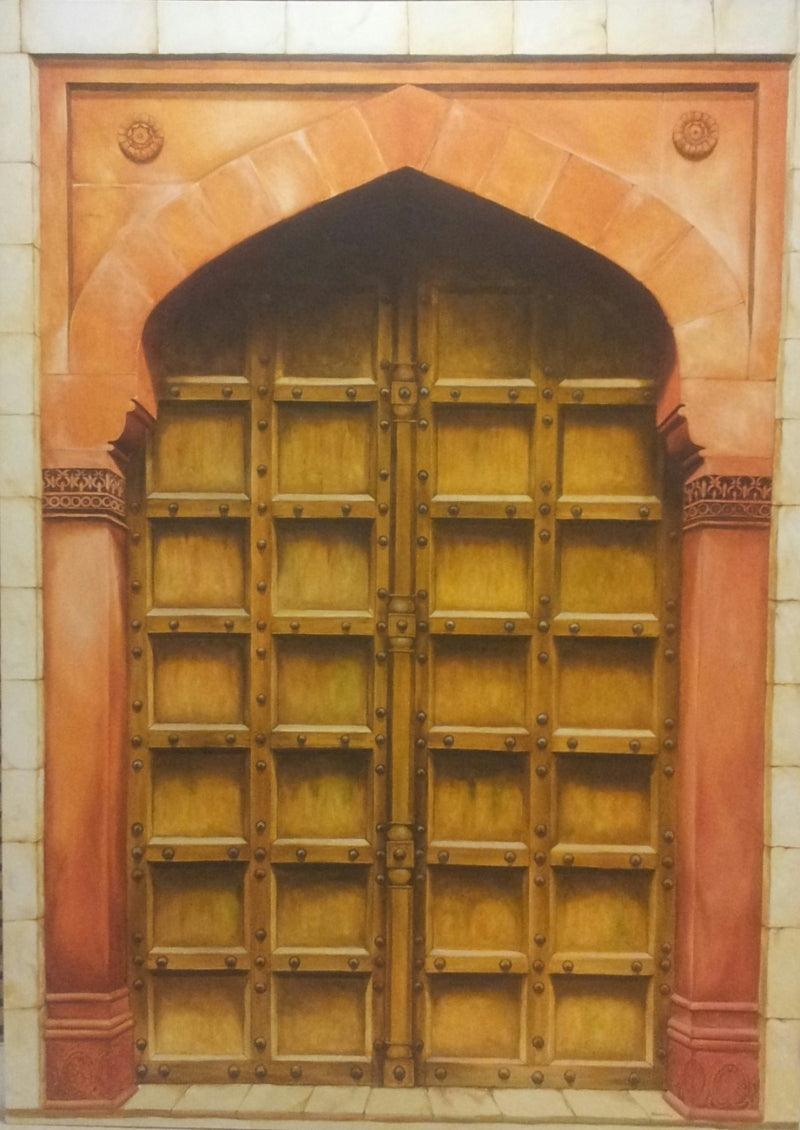
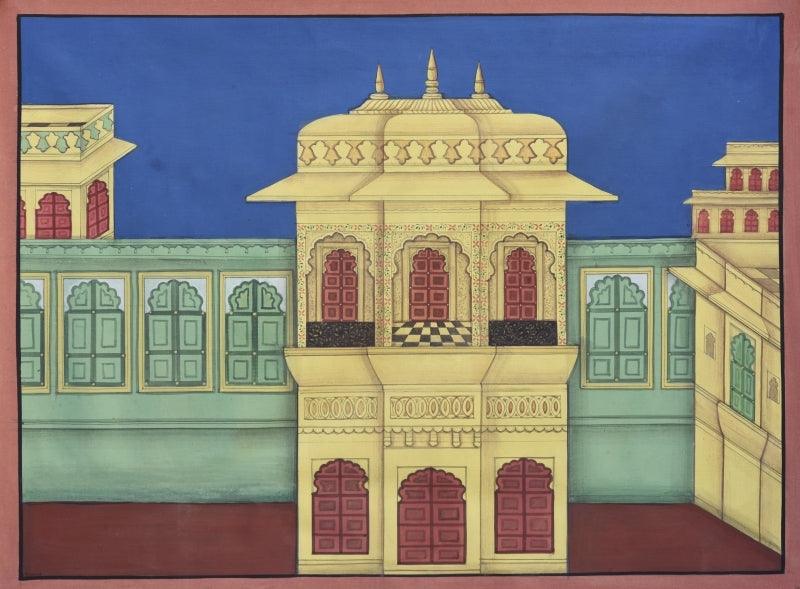
Framed by meticulously ornamented walls, the composition turns a simple architectural threshold into a meditation on passage—where the massive, dark door reads as both protection and pause, holding back the brilliance beyond. Courtly figures painted into the flanking panels stand like silent sentinels, their ceremonial stillness contrasting with the living light that floods the inner courtyard and draws the eye into layered recesses of arches and windows. The intricate patterning—greens, reds, and pale stone tones—functions as visual liturgy, suggesting a culture where beauty is inseparable from order, and where every surface carries memory. In this quiet tension between enclosure and invitation, the work becomes a poised allegory of sovereignty: power expressed not through spectacle, but through measured openness.
Delivery
You may also like