Love (0)
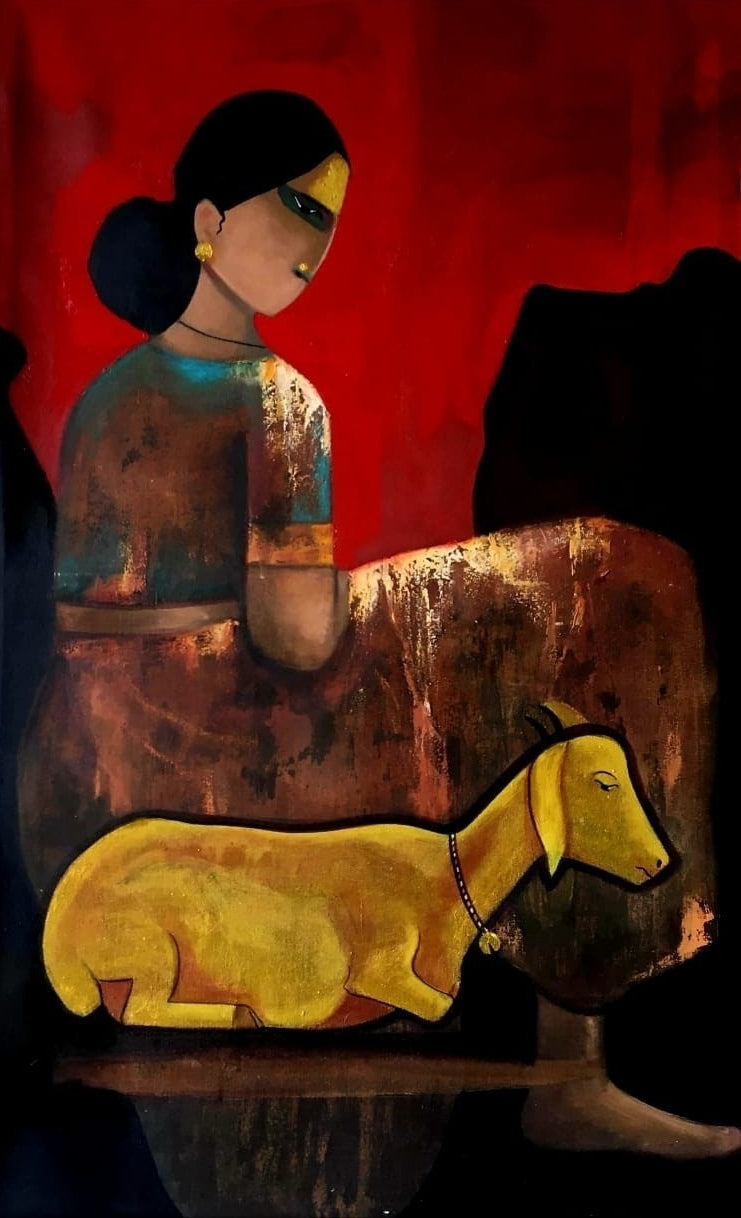
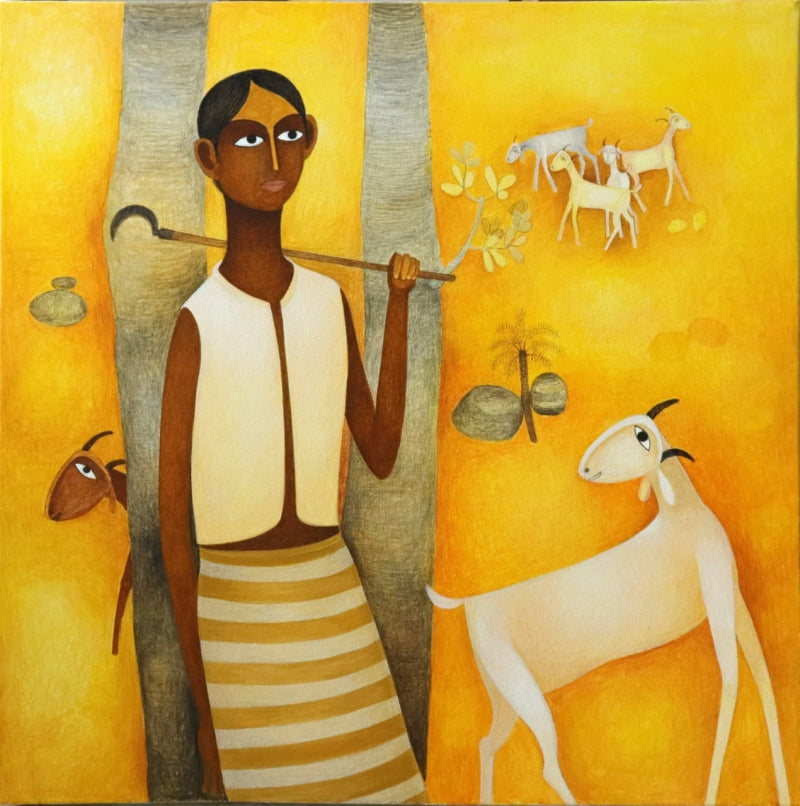
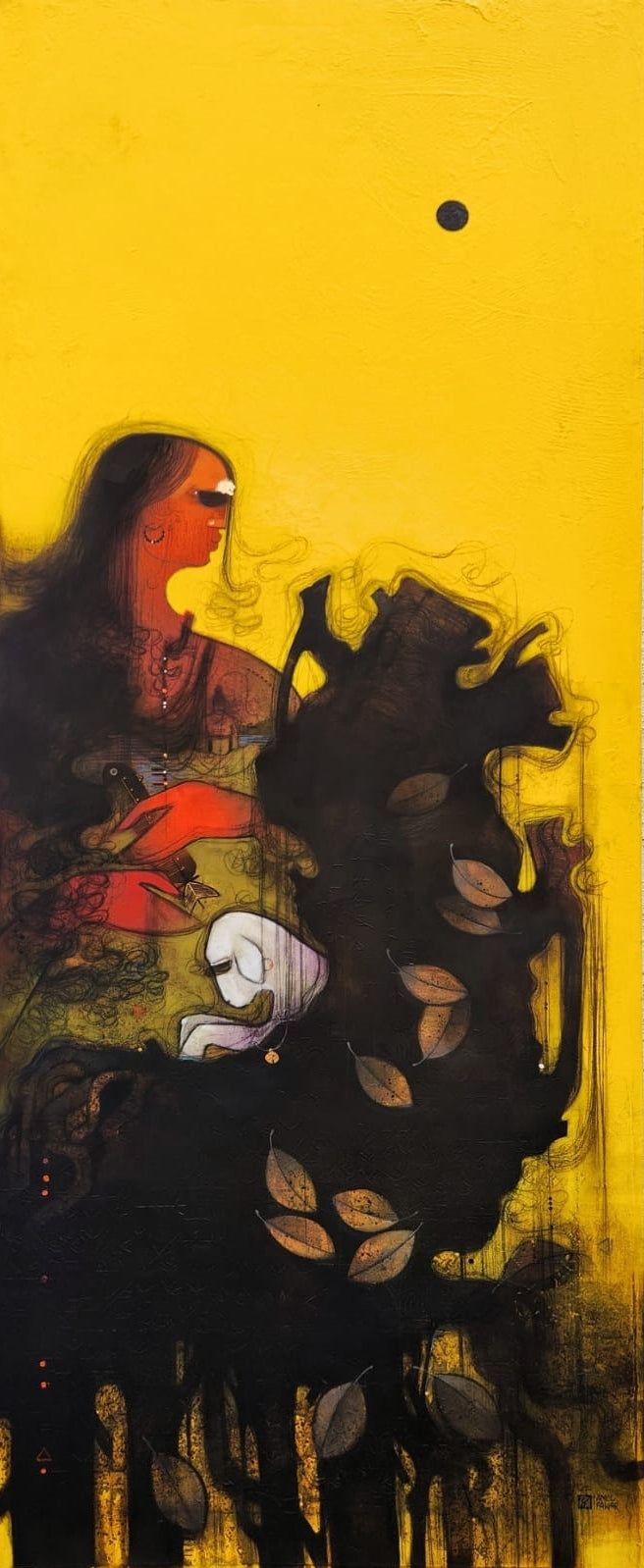
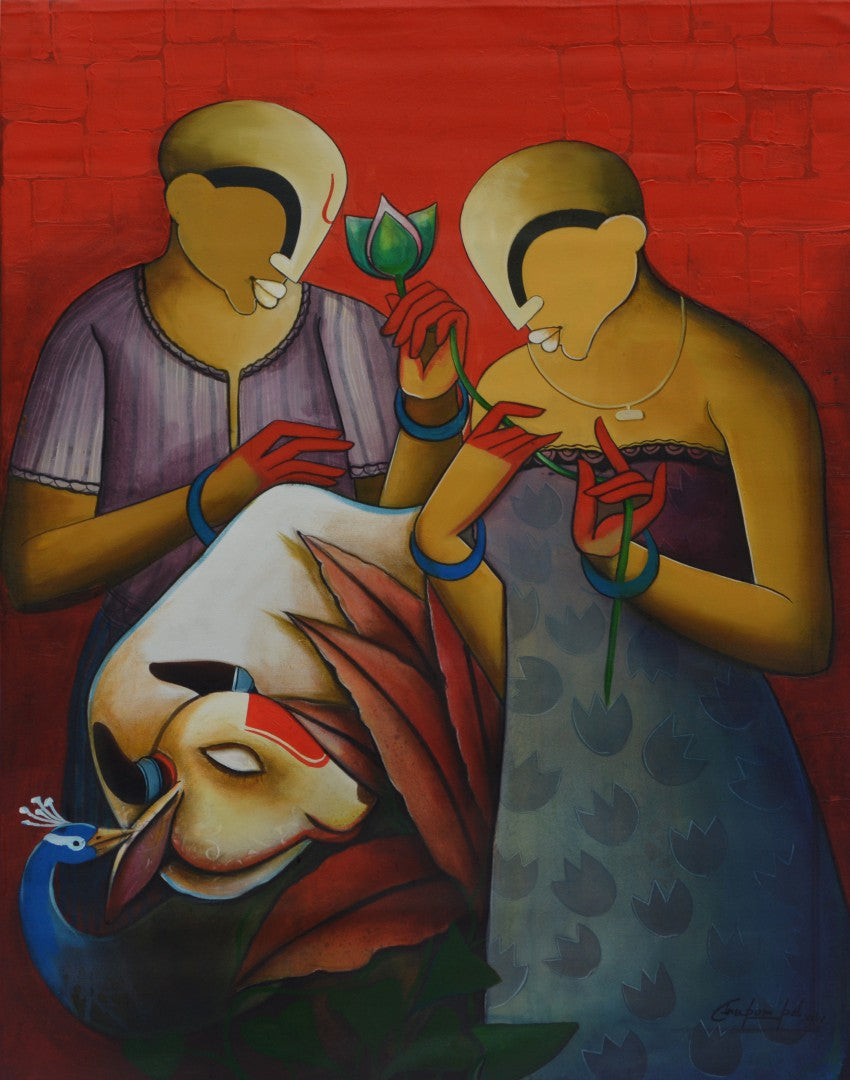
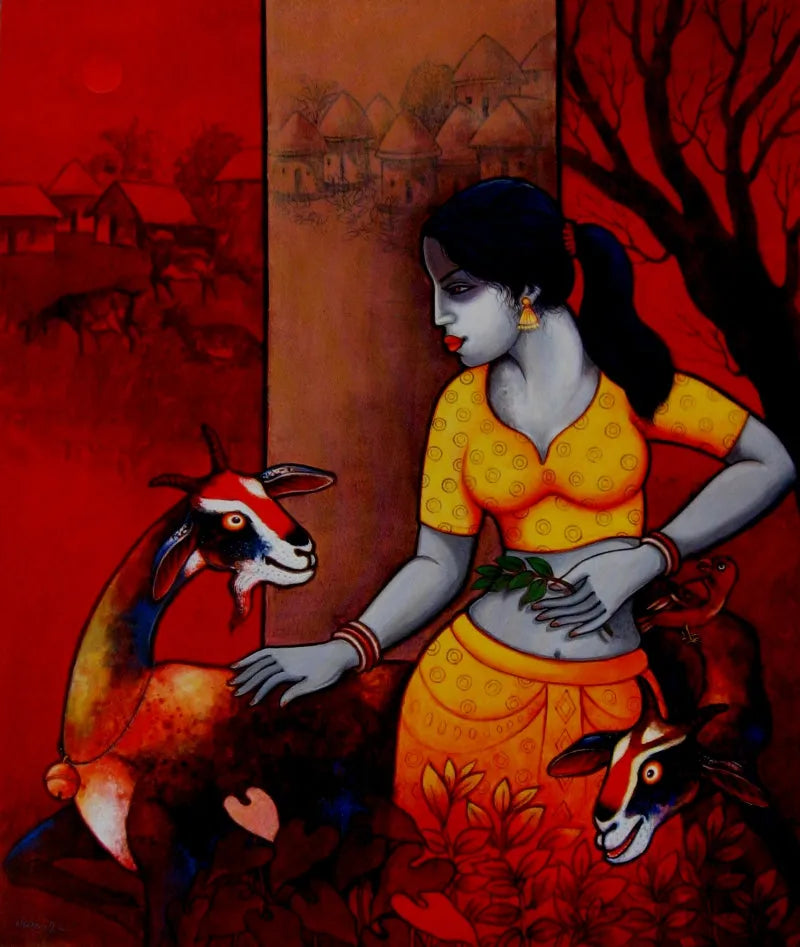
Set against a field of smoldering crimson, the woman’s cool, ash-toned skin and saffron garments become a quiet axis of calm, as if her presence steadies a landscape on the verge of fevered memory. The composition layers village silhouettes and bare, branching trees like distant recollections, while the goats lean in as intimate witnesses—creatures of earth that answer her touch with trust rather than spectacle. Her downcast gaze and the small sprig held at her abdomen suggest an inward ritual of care, where fertility, sustenance, and vulnerability are braided into a single, private offering. In this tense harmony of warm and cool, the scene reads as a pastoral myth reframed through longing—home not as a place, but as a tender negotiation between human tenderness and the restless red of time.