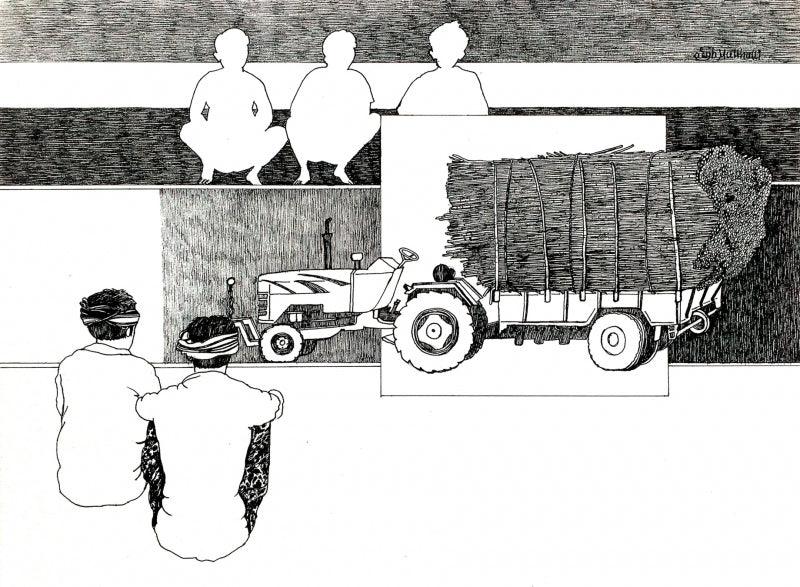
Former Sacrifice
₹30,000
Out of stock · ★ 4.0 (6)checking live price…
Size
10x13Type
OriginalMaterial
Canson PaperRendered in spare black-and-white line, the scene choreographs a quiet rural theater where figures sit as silhouettes and spectators, their stillness set against the tractor’s utilitarian presence and the dense, bristling mass of bundled cane. The composition’s stacked bands of light and shadow flatten space into panels, suggesting how agrarian life is experienced in measured strata—labor, waiting, witnessing—rather than in romantic depth. By withholding faces and color, the work turns individuality into a collective condition, letting the loaded cart read as both sustenance and burden, a mobile monument to unseen effort and shared endurance.
Delivery
You may also like
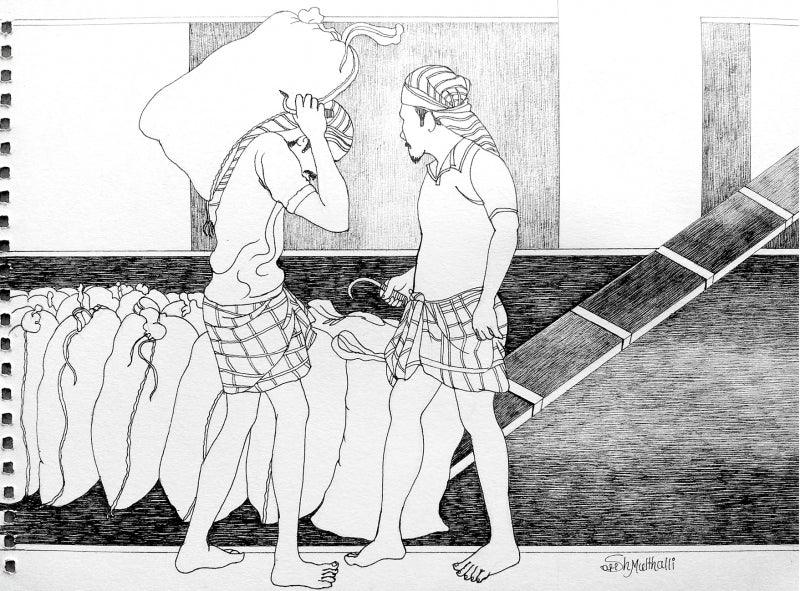
Agriculture (The Bounty of the Land)
Artzolo
₹26,000
out of stock
★ 4.0 (9)
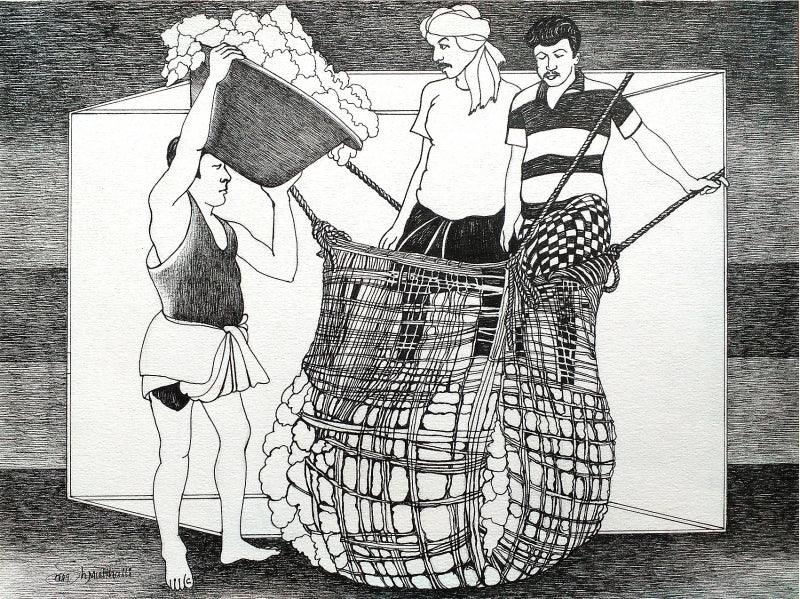
Our Agriculture
Artzolo
₹30,000
out of stock
★ 5.0 (12)
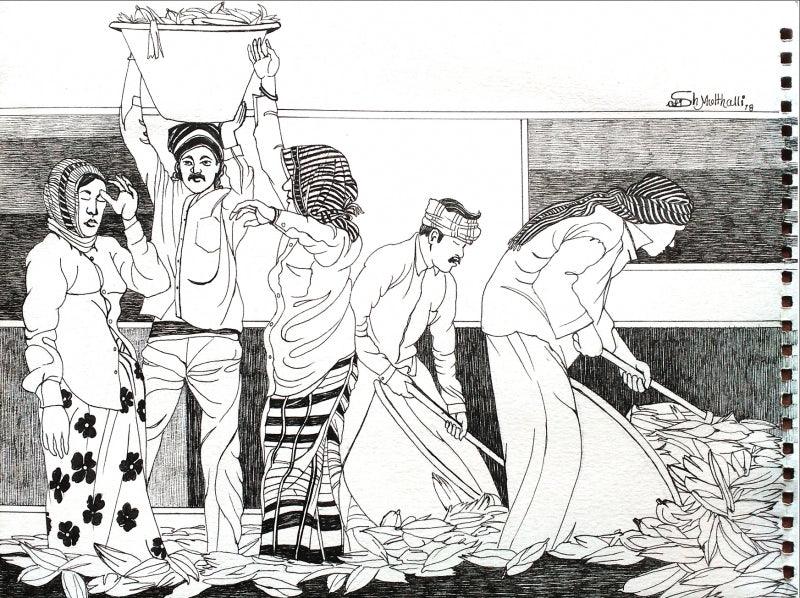
Agriculture 2
Artzolo
₹26,000
out of stock
★ 5.0 (5)
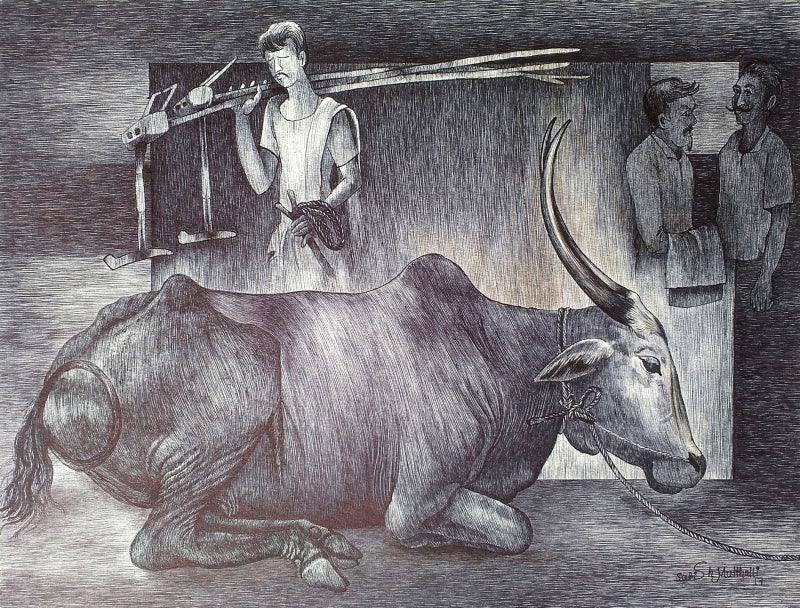
Once Upon A Time There Is 2 (The Burden of Labor)
Artzolo
₹36,000
out of stock
★ 4.0 (14)
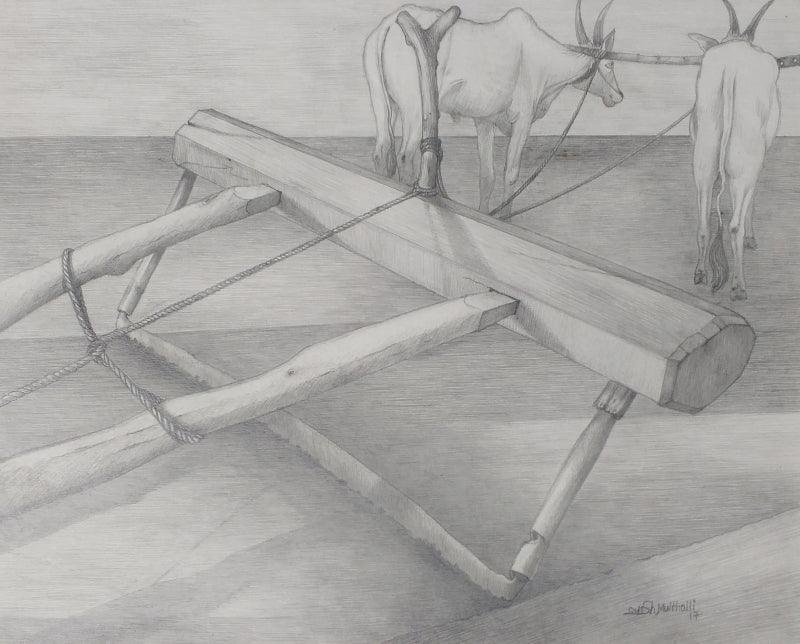
Once Upon A Time There Is 1 (The Tools of Tradition)
Artzolo
₹36,000
out of stock
★ 5.0 (5)
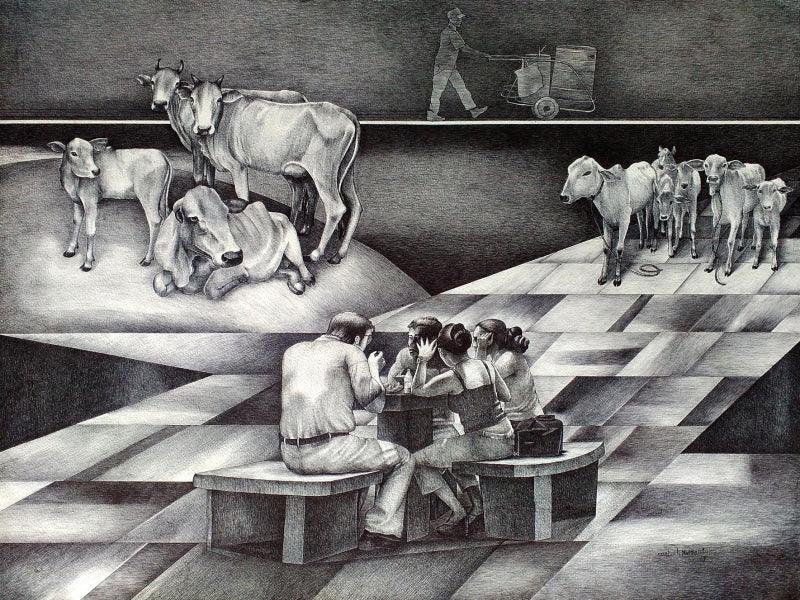
Untitled
Artzolo
₹75,000
out of stock
★ 4.0 (5)
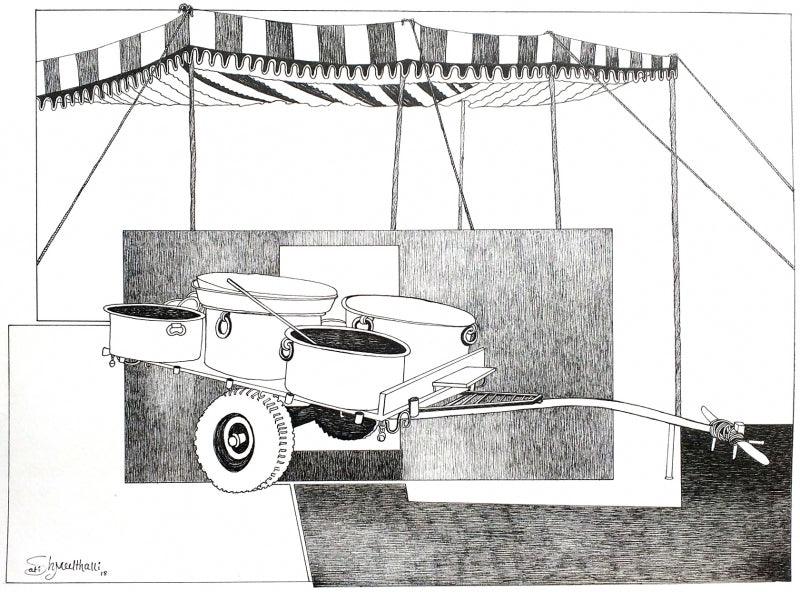
Untitled (A Mobile Feast)
Artzolo
₹26,000
out of stock
★ 4.0 (12)
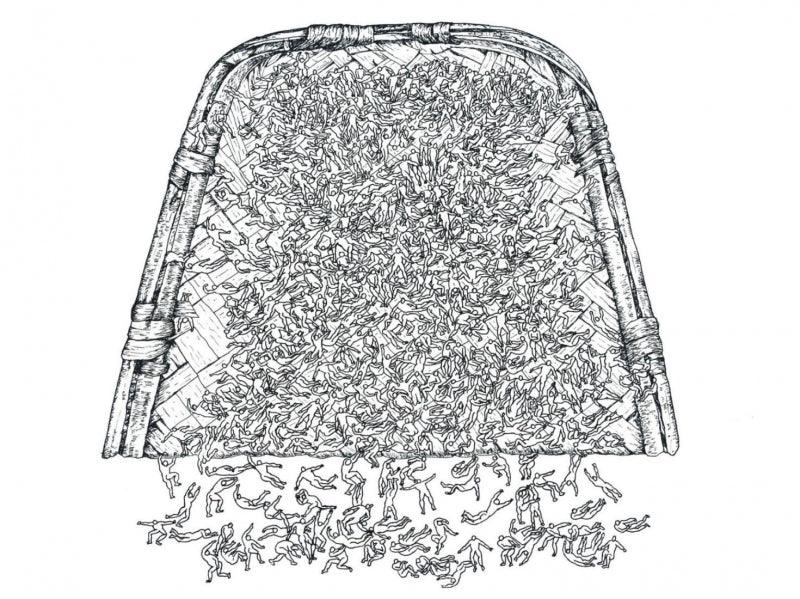
Expurgator (A Burdened Vessel)
Artzolo
₹75,000
★ 4.0 (11)