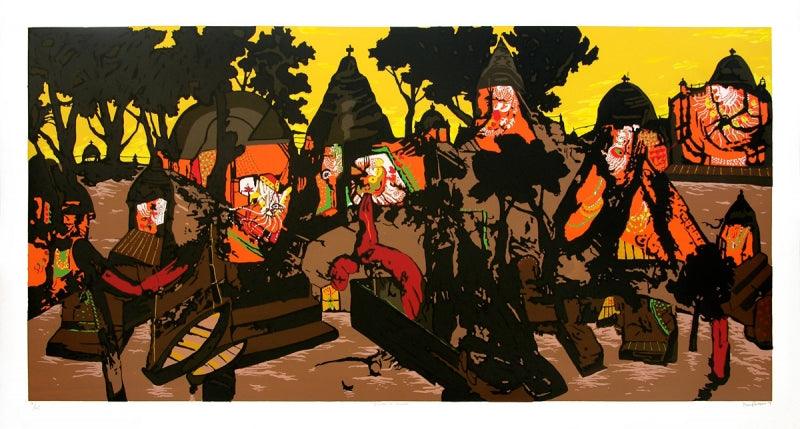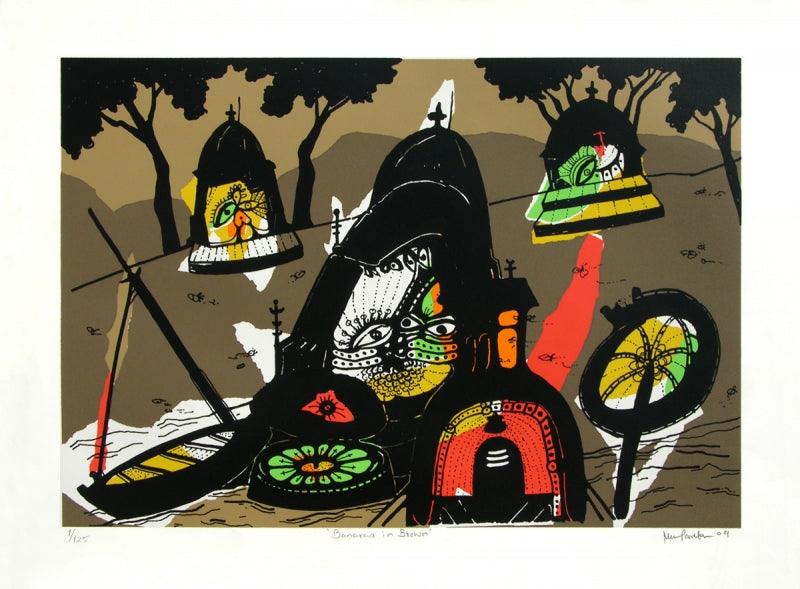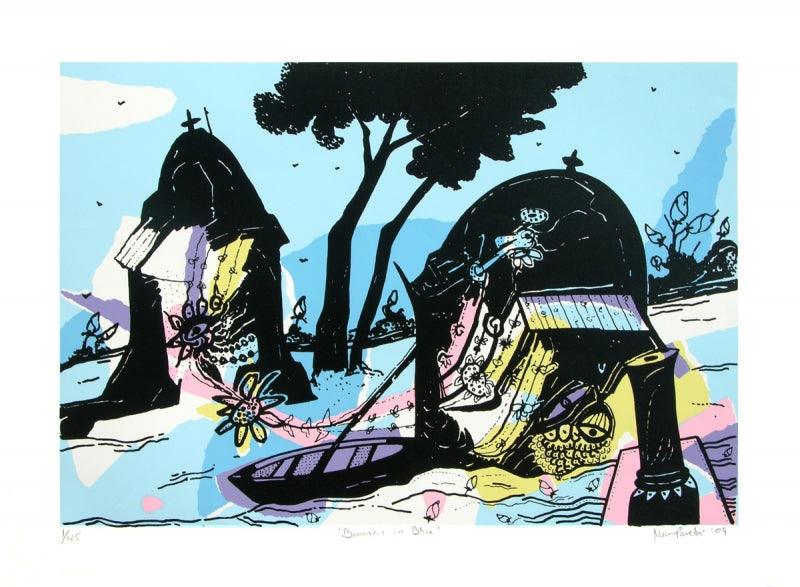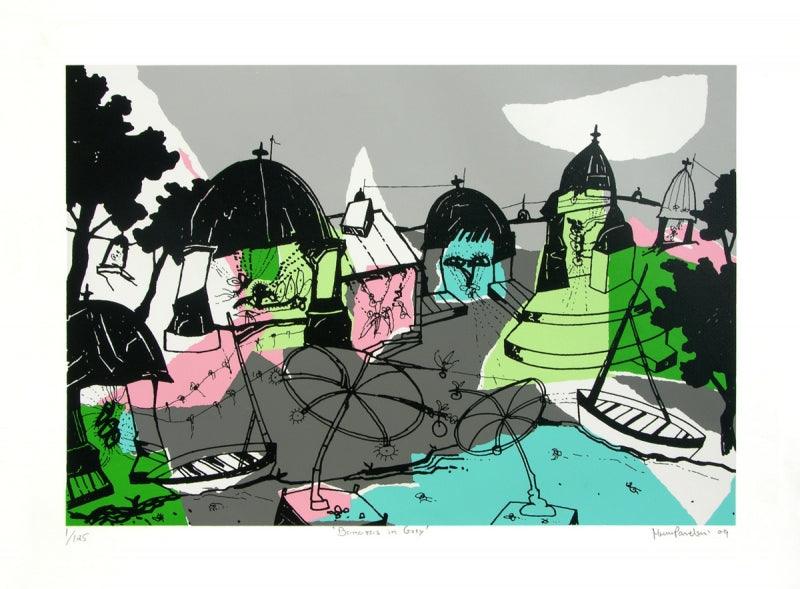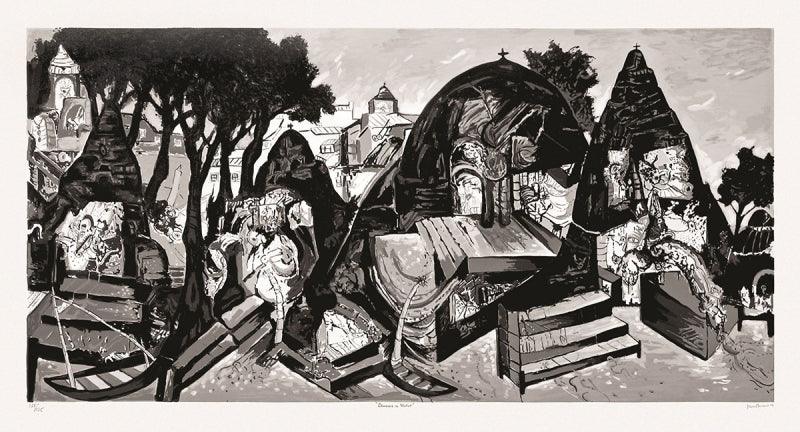

Banaras In Winter (Banaras in Black and White)
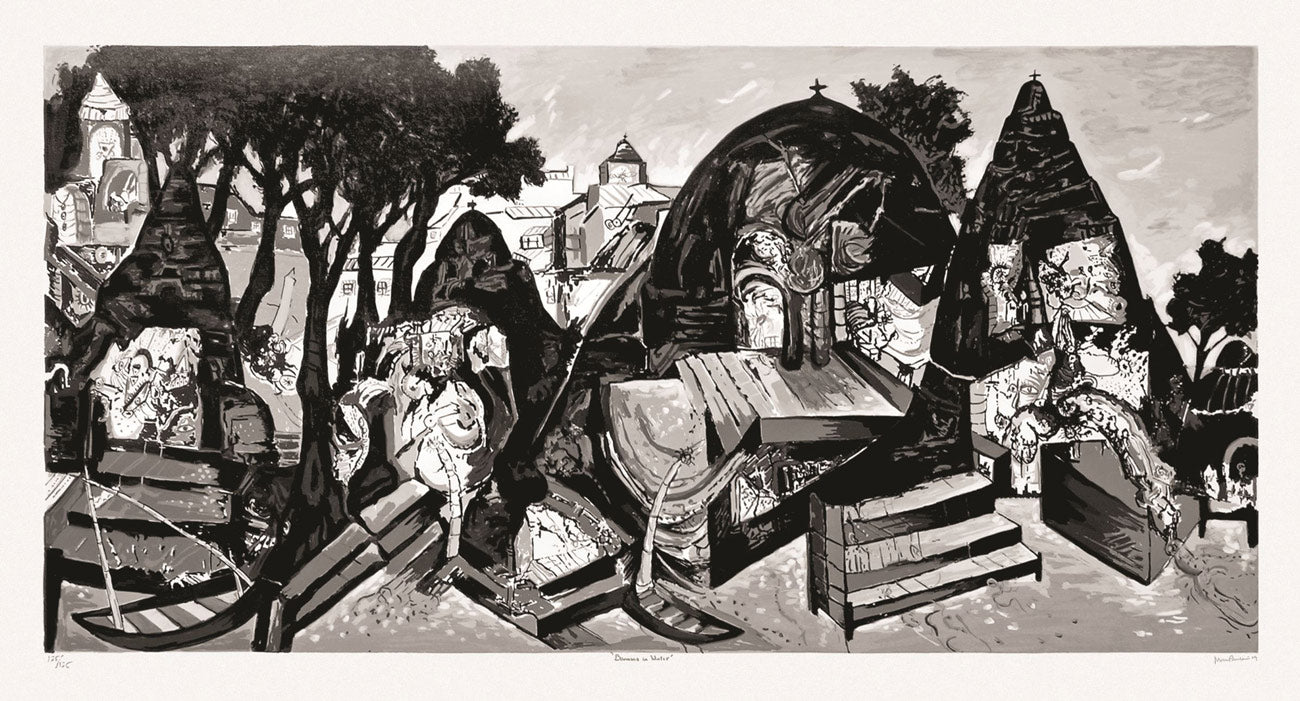
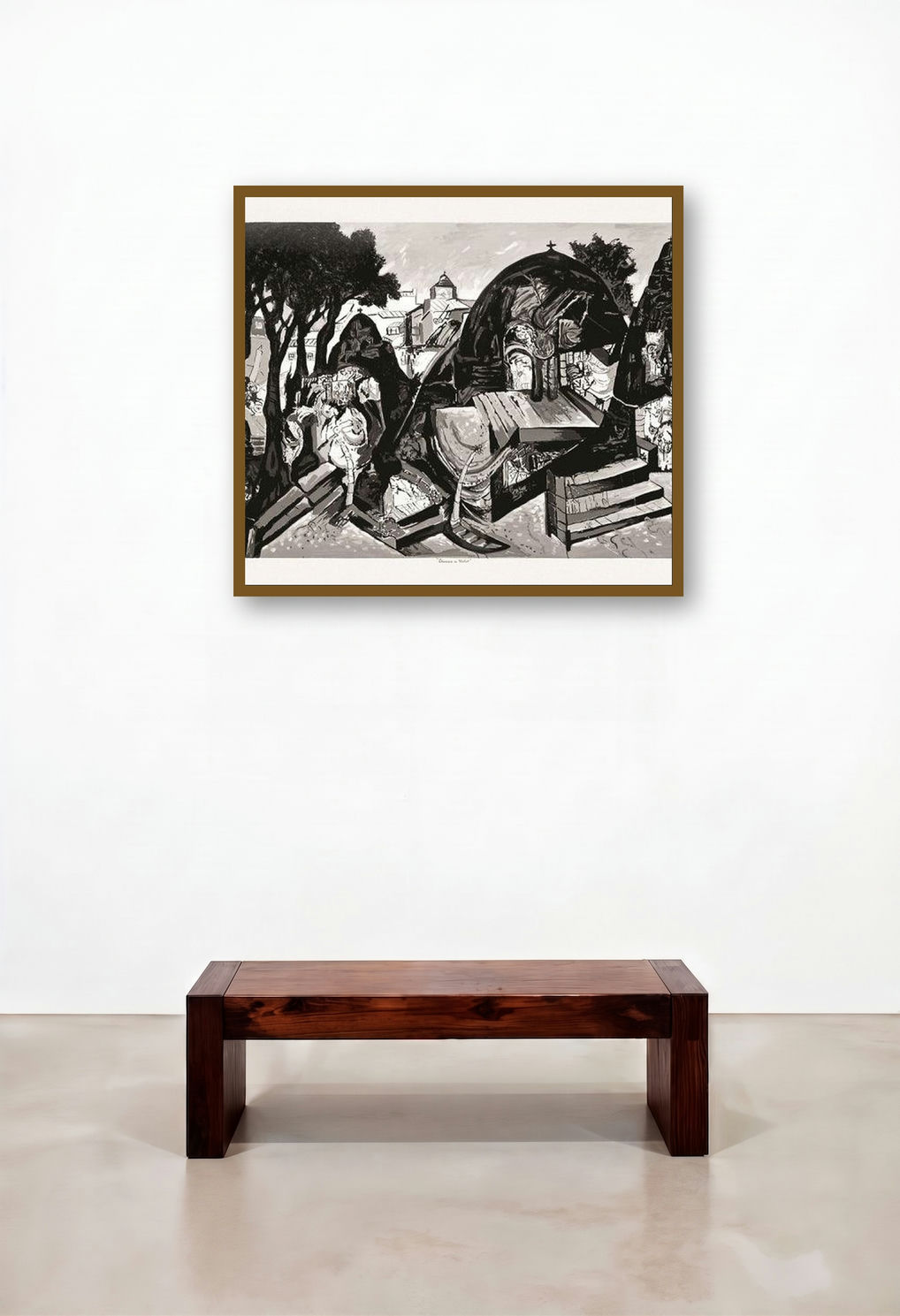
Rendered in a stark, declarative monochrome, the scene turns a public landscape into a procession of hulking, hooded forms—part shrine, part specter—whose dense blacks press against the pale ground like memory refusing erasure. The composition’s staggered pyramids and heavy, draped silhouettes create a tense rhythm of concealment and revelation, while the intricate, patterned passages inside the shadows read like buried narratives surfacing through the skin of the image. Architectural fragments in the distance—domes, towers, and trees—anchor the work in a lived city, yet the foreground’s monumental bundles and tether-like lines suggest labor, displacement, and the choreography of carrying what cannot be set down. Light here is not illumination but interrogation: it carves edges, isolates burdens, and makes the ordinary terrain feel like a threshold between communal history and private grief.
Delivery
You may also like