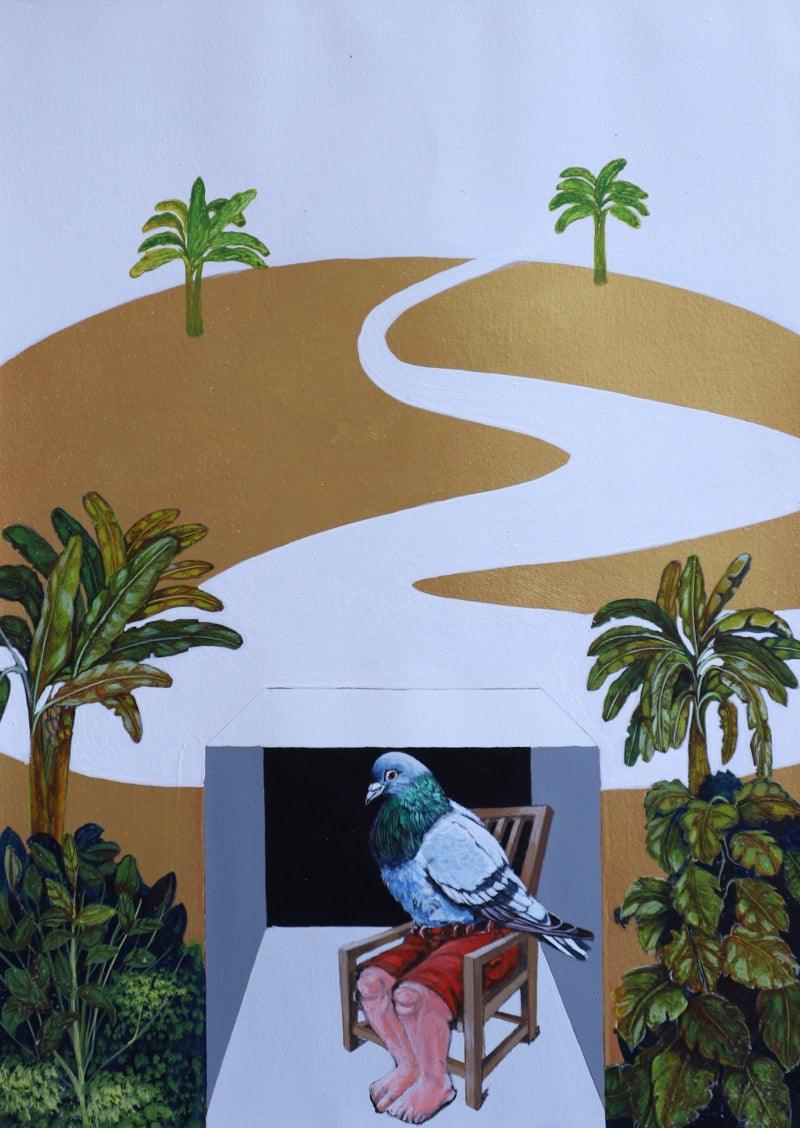
Lockdown 7
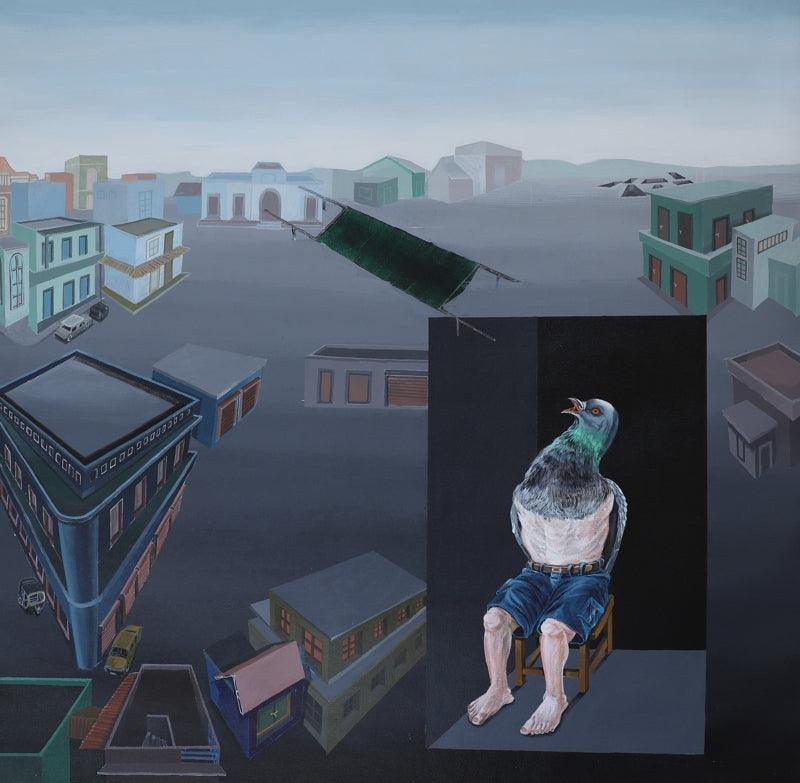
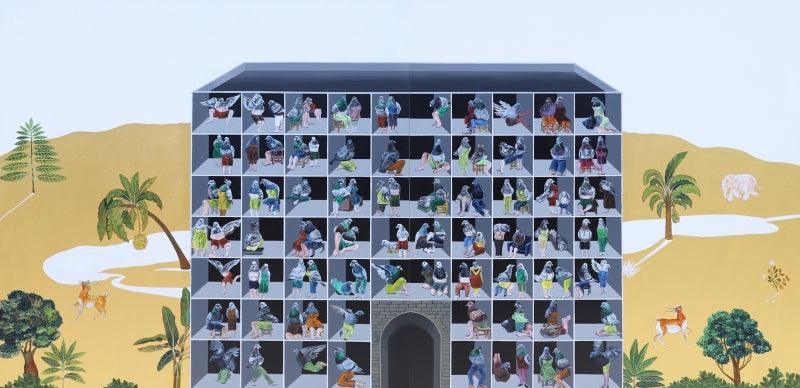
A sinuous white road cleaves the ochre hill like a quiet proposition—an invitation toward elsewhere—while the foreground collapses that promise into an intimate, uncanny stillness. In the doorway’s black void, a pigeon perches where a face should be, turning the seated body into a tender riddle of identity: human presence rendered vulnerable, yet dignified, under the calm gaze of an ordinary bird made emblematic. The crisp geometry of the threshold and chair counters the lush, watchful foliage, staging a dialogue between cultivated order and the fertile, indifferent persistence of nature. Light is withheld from the interior and lavished on the landscape, suggesting that the true narrative lives in what is obscured—memory, substitution, and the fragile act of becoming seen.
Delivery
You may also like