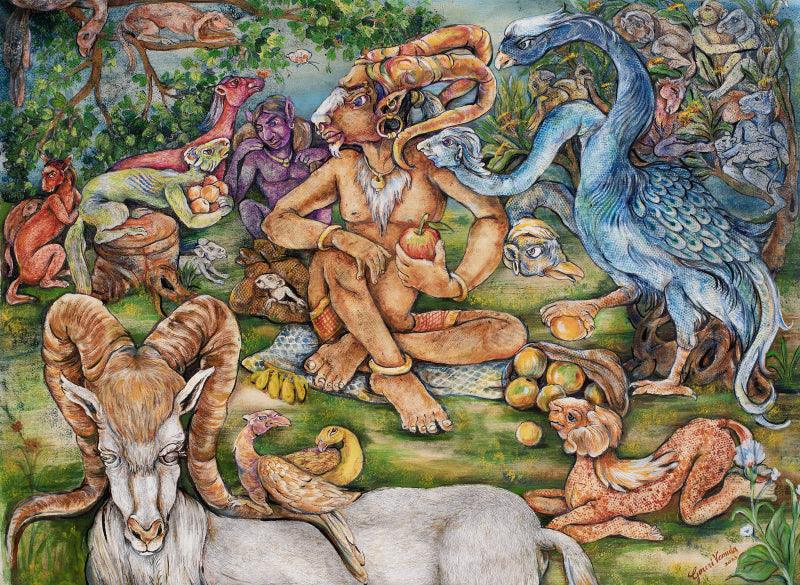
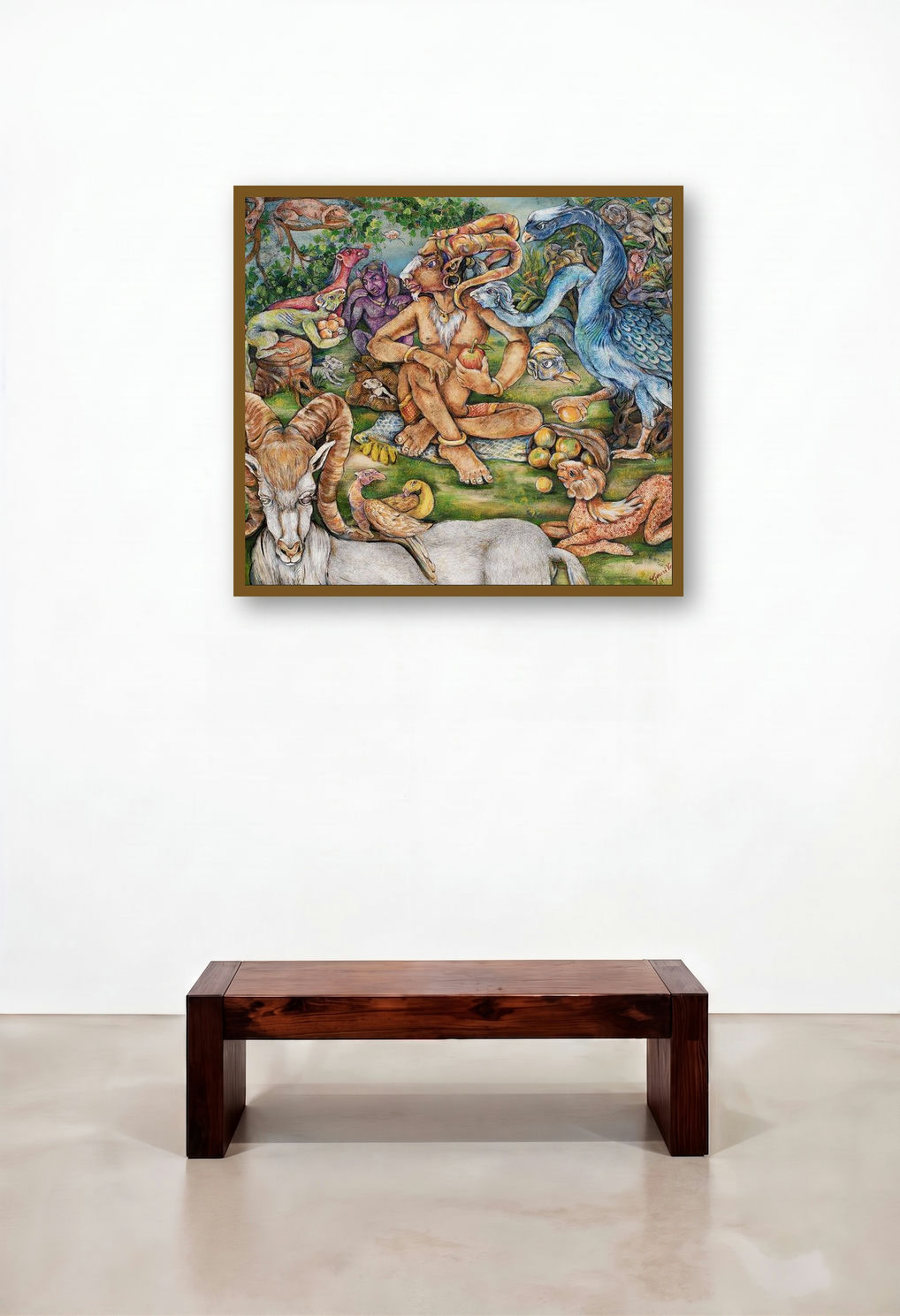
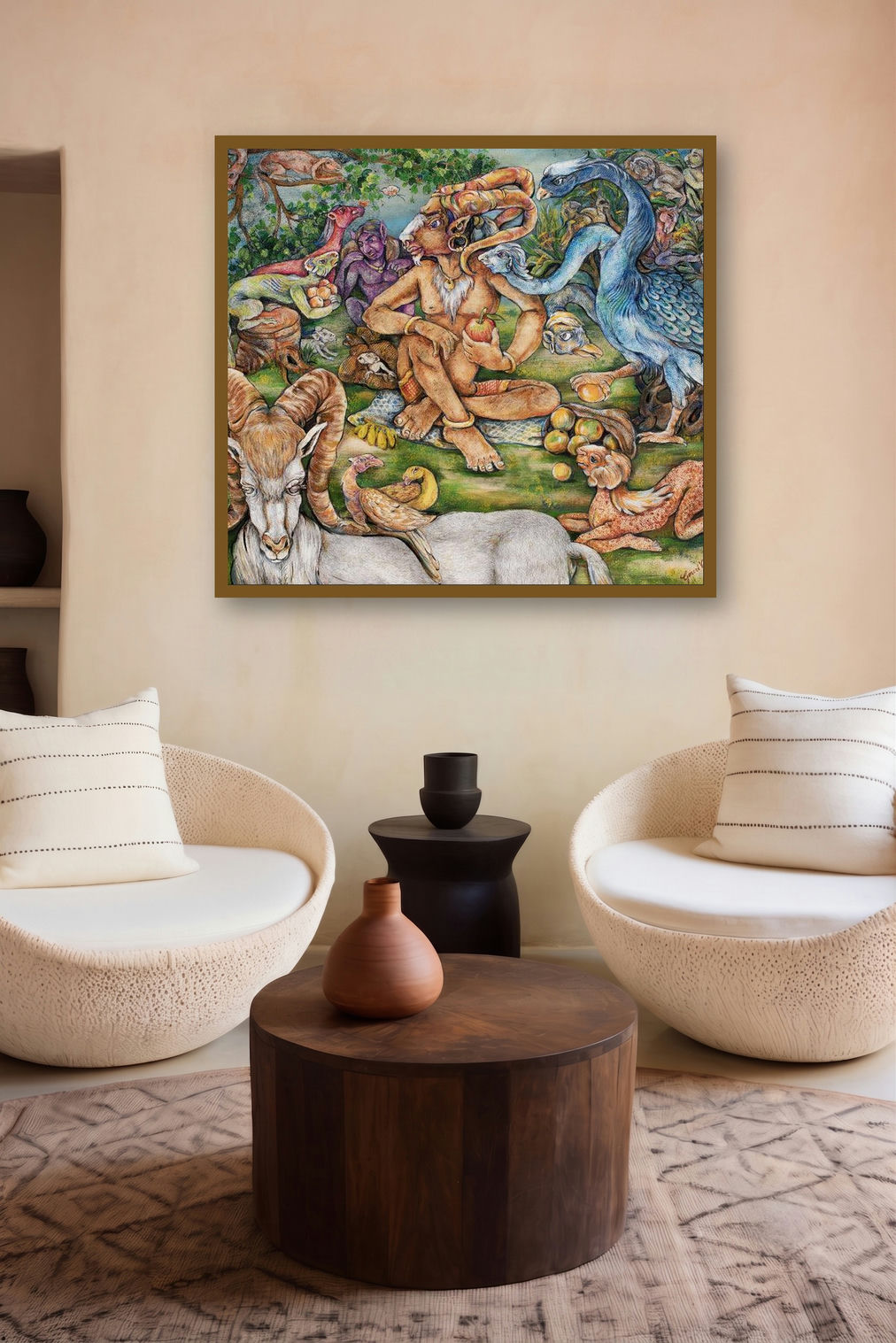
Untitled 5 (The Garden of Dreams**)
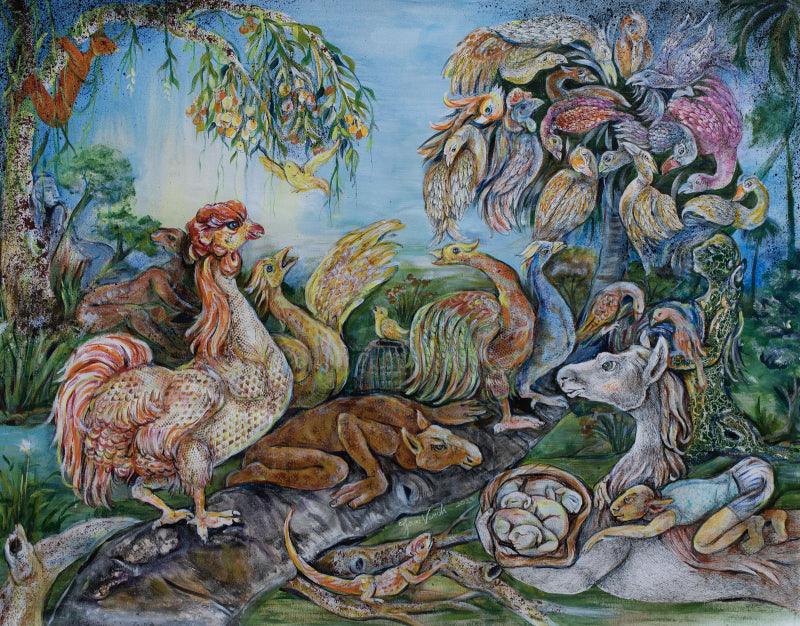
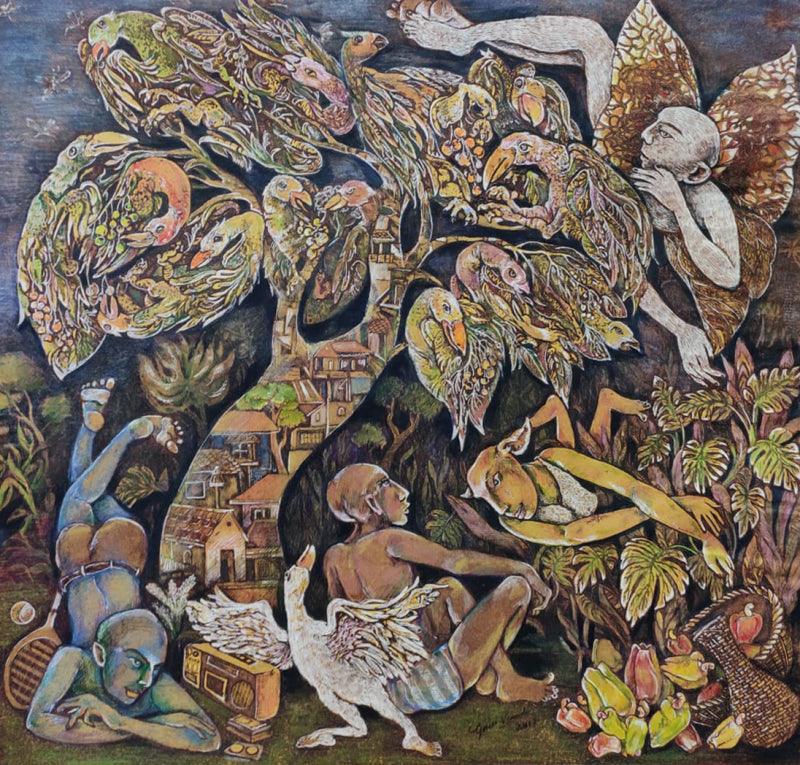
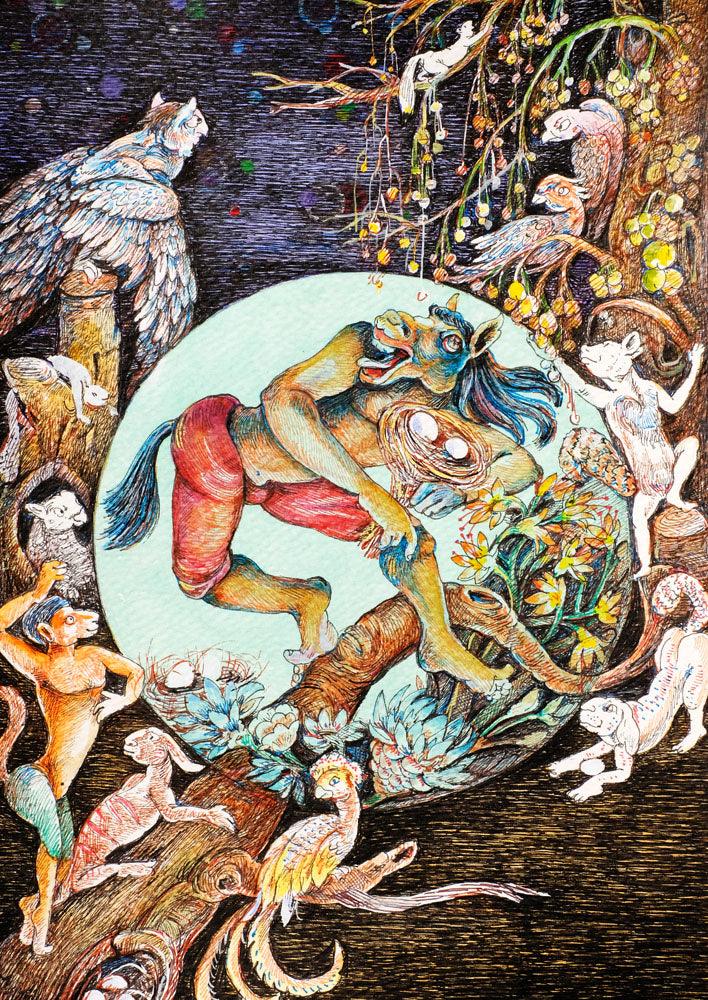
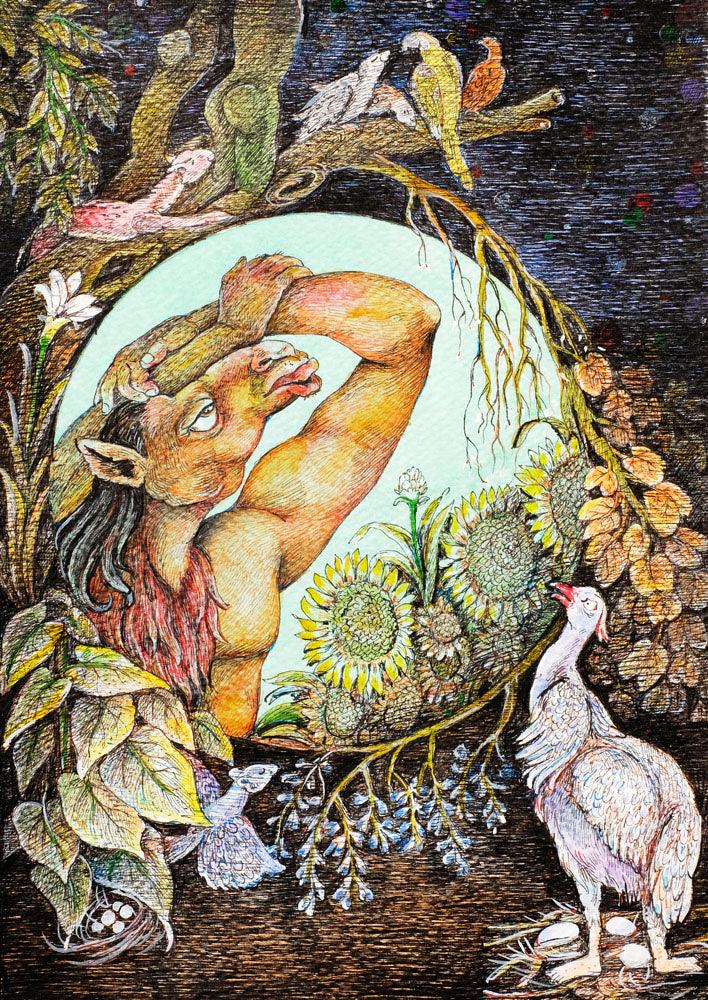
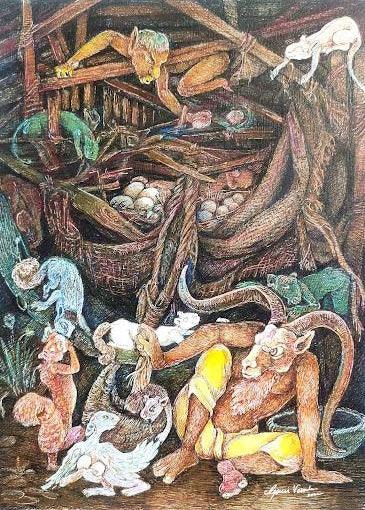
This densely peopled pastoral vision gathers the animal world into a single, humming cosmology, where a satyr-like figure—half guardian, half reveler—anchors the scene with an apple held like a quiet emblem of choice and appetite. Color moves in layered currents—ochres, verdant greens, and cool blues—so that the eye is continually led from horned mass to feathered sweep, from watchful gaze to furtive gesture, turning the meadow into a living tapestry of instincts. The composition’s abundance feels less like mere naturalism than a moral theater: innocence and hunger, play and predation, coexist without resolution, suggesting a fragile truce within the larger order of life. In its attentive rendering of fur, plume, and muscle, the work reads as an ode to interdependence—an Edenic moment made restless by the knowledge that harmony is always provisional.
Delivery
You may also like