


Cityscape 1 (Untitled)
₹45,000
Out of stock · ★ 5.0 (12)checking live price…
Size
22x30Type
OriginalMaterial
PaperBathed in a saffron haze, the grand façade rises like a memory half-held—its domes and pointed arches rendered in soft washes that let time seep through the stone. The composition balances monument and movement: a wide forecourt becomes a stage where cars, carts, and clustered figures sketch the pulse of the present against the patient weight of history. Light is less illumination than atmosphere, dissolving edges and inviting the viewer to feel the city as a living palimpsest—devotion, commerce, and transit braided into a single, everyday ritual. In the airy gaps and drifting birds, the work suggests that permanence is not solidity, but the continual return of life around an enduring form.
Delivery
You may also like

Bombay Village Ii
Artzolo
₹30,000
out of stock
★ 5.0 (9)
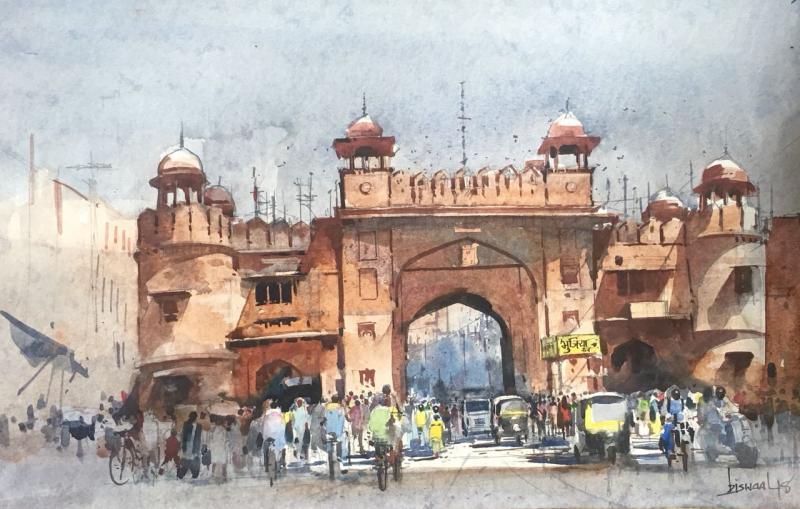
Cityscape 9 (Untitled)
Artzolo
₹25,000
out of stock
★ 4.0 (9)

Old Calcutta (Untitled)
Artzolo
₹45,000
out of stock
★ 4.0 (8)

Bombay Village I
Artzolo
₹40,000
out of stock
★ 4.0 (10)

Cityscape 6 (Untitled)
Artzolo
₹25,000
out of stock
★ 4.0 (7)
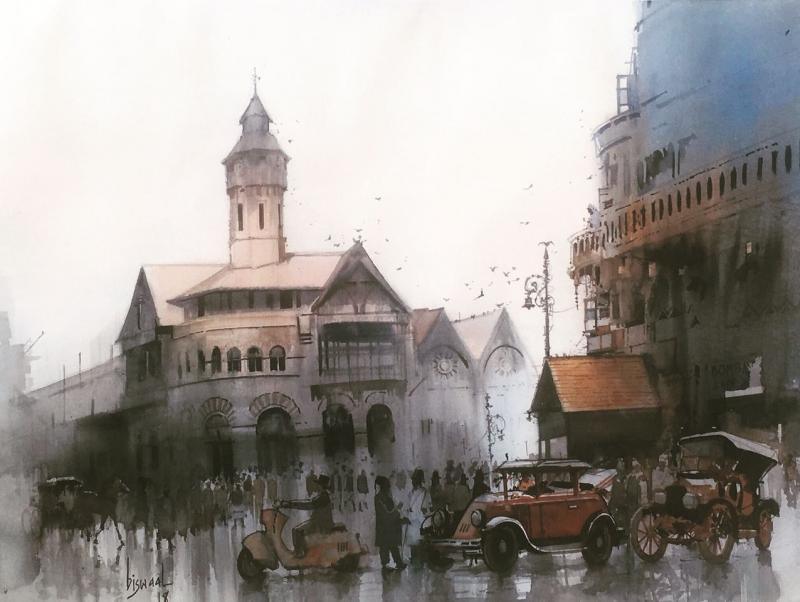
Retro Calcutta (Untitled)
Artzolo
₹45,000
★ 4.0 (8)

Cityscape 3 (Untitled)
Artzolo
₹45,000
★ 4.0 (9)
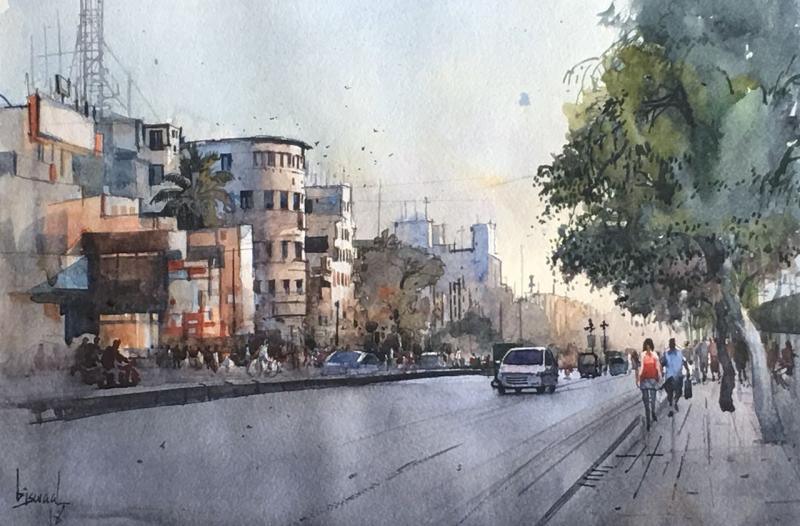
Cityscape 5 (Untitled)
Artzolo
₹25,000
out of stock
★ 4.0 (11)