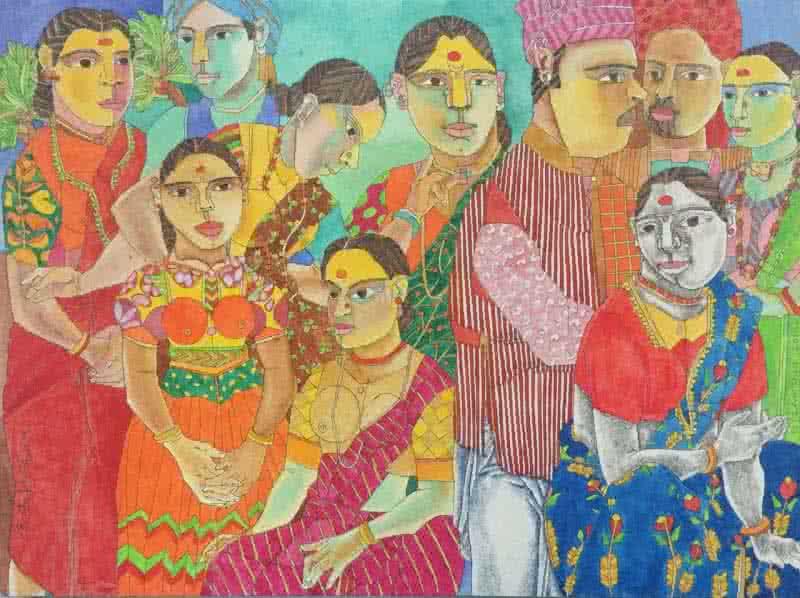
Village Scene 1
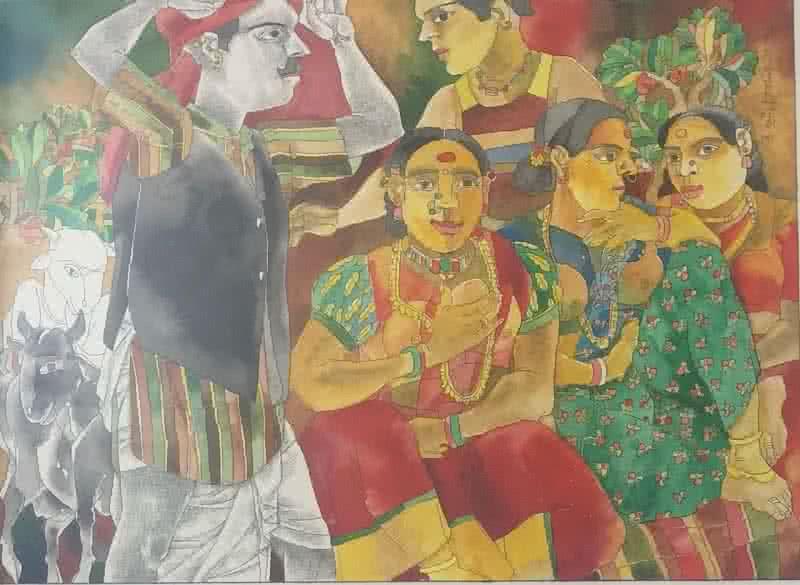
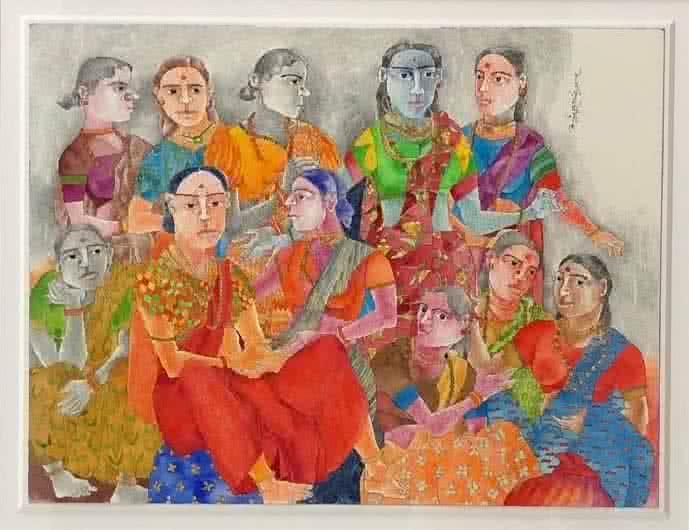
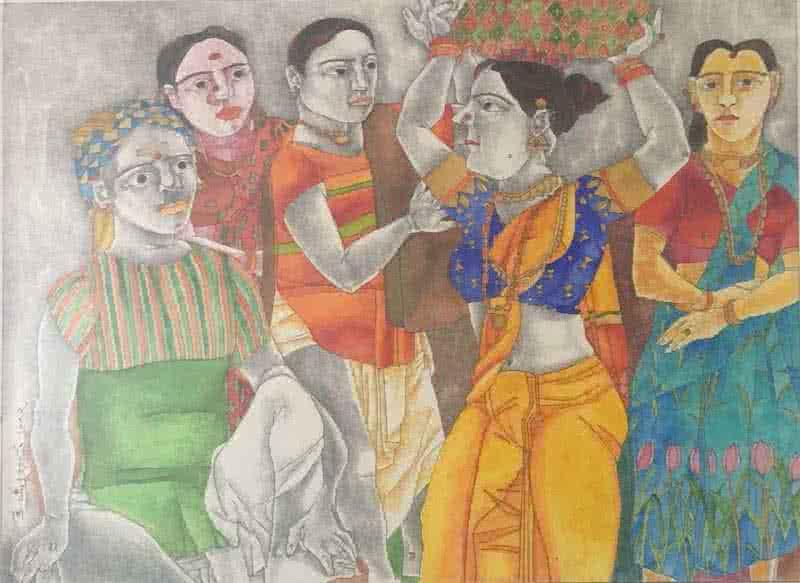
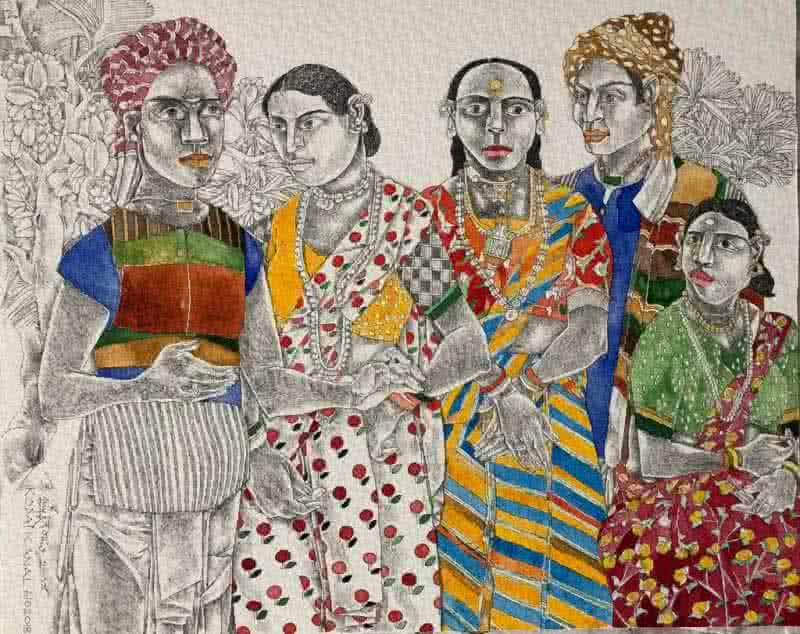
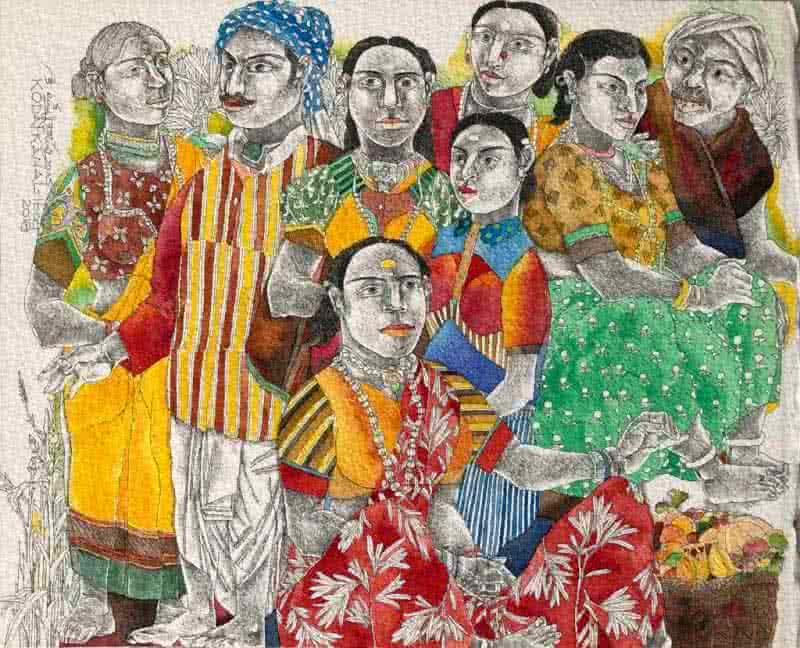
A clustered procession of faces and torsos, rendered in flattened planes and textile-like patterning, turns the scene into a living tapestry where individuality is held in tension with collective identity. Saturated reds, turquoises, and saffron hues pulse against muted skin tones, so that ornament, sari borders, and stripes become the true architecture of the composition—binding the figures while also marking subtle social distances. The compressed space and direct, unblinking gazes suggest a community caught between intimacy and scrutiny, as if the viewer is invited into a private ritual yet kept at its threshold by the work’s deliberate frontal rigidity. In this quiet theatricality, the painting reads as a meditation on belonging: how tradition adorns, protects, and sometimes immobilizes the self within the crowd.
Delivery
You may also like