Separate Space (Sanitation and Society)
₹35,000
● In stock · ★ 5.0 (6)checking live price…
Size
10x12Type
OriginalMaterial
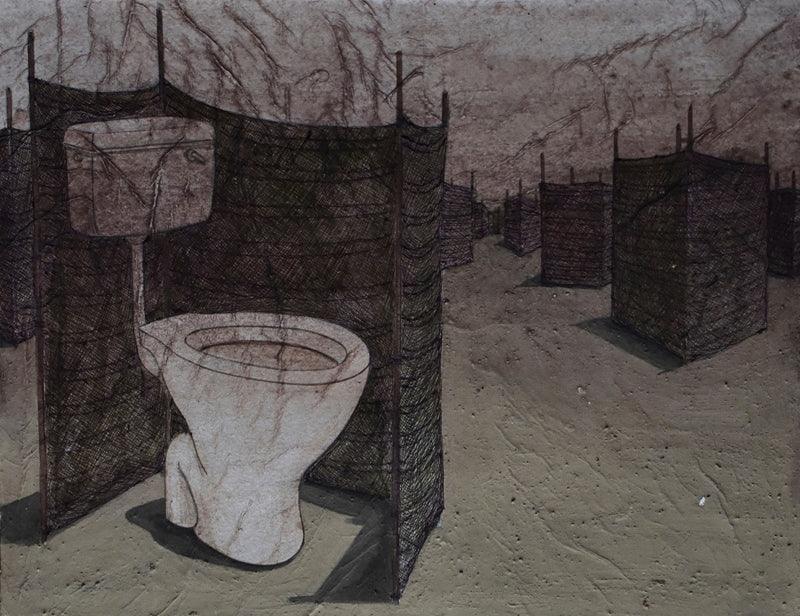
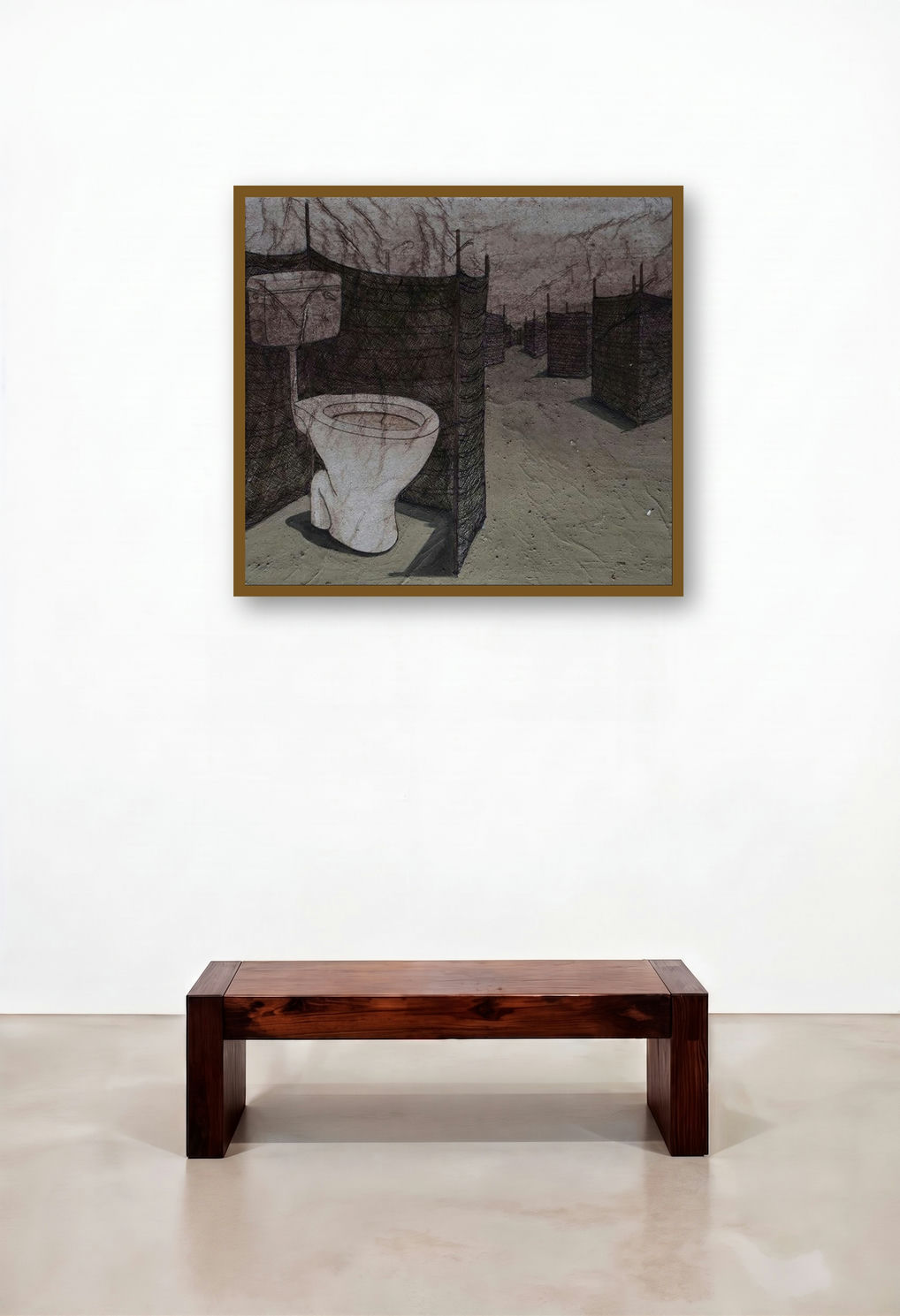
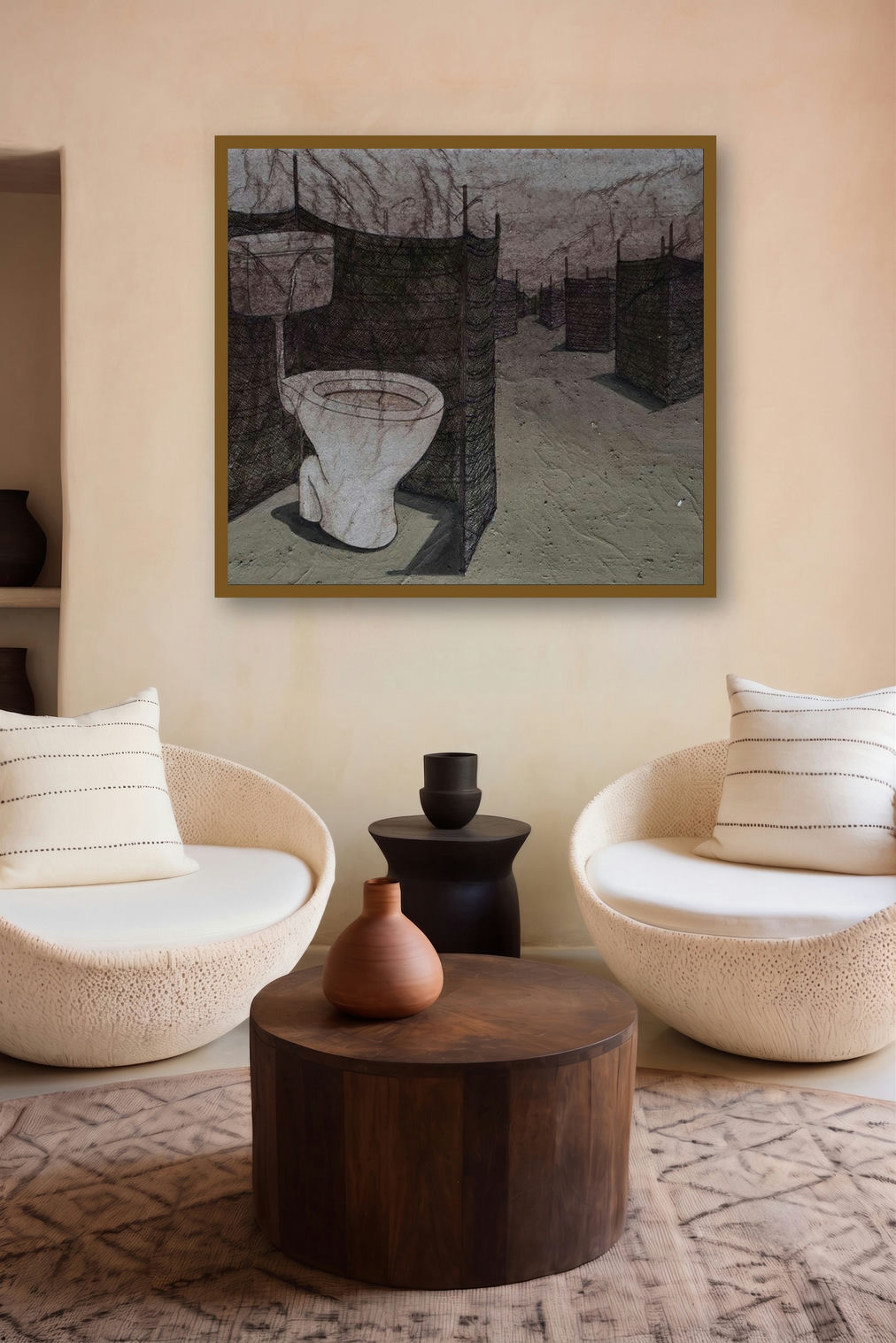
PaperA solitary toilet sits like a fragile monument within a grid of dark mesh enclosures, turning an object of intimate necessity into a public relic and exposing how privacy can be engineered, rationed, and surveilled. The muted, ashen palette and crosshatched veils flatten depth into a claustrophobic field, where repeated partitions march toward the horizon like temporary architecture made permanent by despair. Light seems withheld rather than cast—absorbed by the netting and dust—so the scene reads as an ethics of scarcity, a quiet indictment of systems that bureaucratize dignity. In this barren corridor of stalls, the absence of bodies becomes the loudest presence, making the viewer inhabit discomfort as a form of witnessing.
Delivery
You may also like
Dont Disturb (The Waiting Game)
Artzolo
₹35,000
★ 4.0 (12)
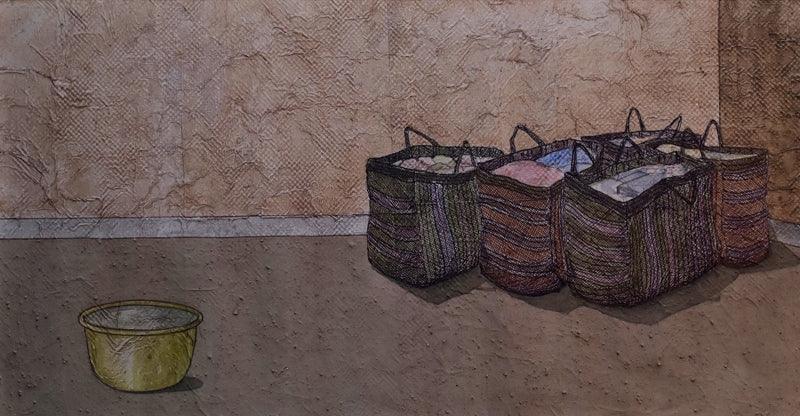
Untitled 3 (Everyday Necessities)
Artzolo
₹20,000
★ 4.0 (6)
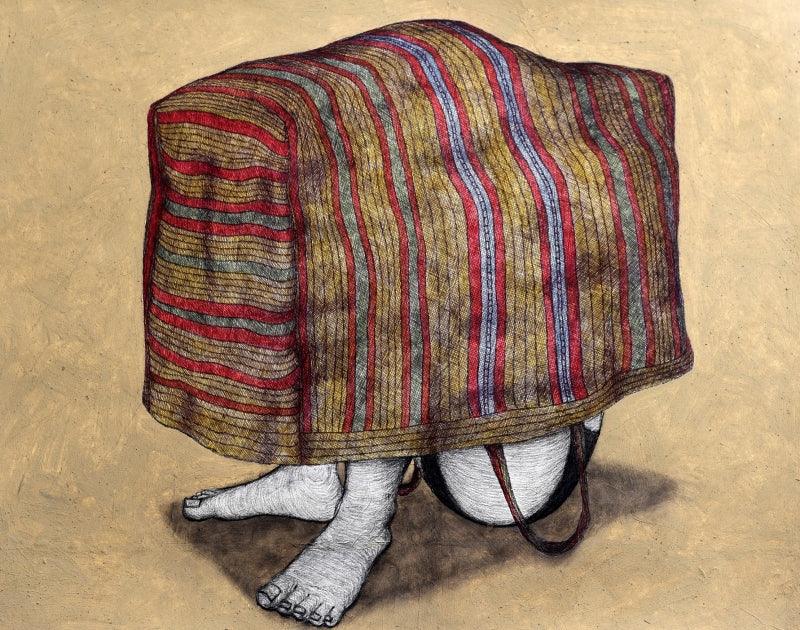
Untitled 5 (Beneath the Surface)
Artzolo
₹35,000
★ 4.0 (8)
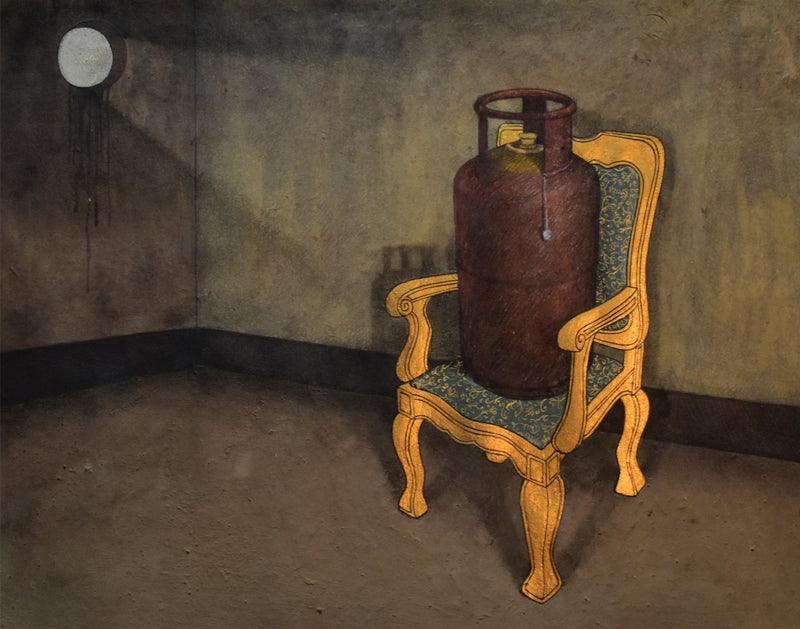
No One Is Permanent (A Seat of Power)
Artzolo
₹35,000
★ 4.0 (7)
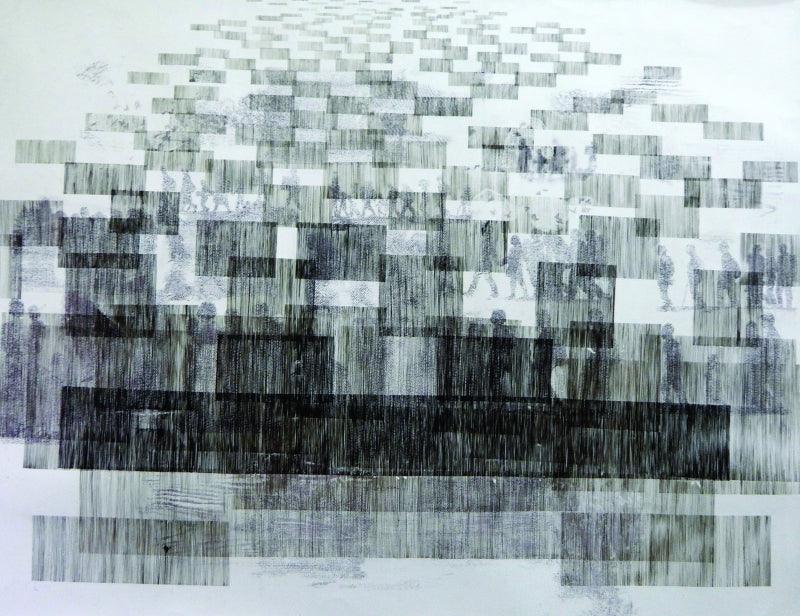
Partition (Urban Fragmentation)
Artzolo
₹50,000
★ 4.0 (15)
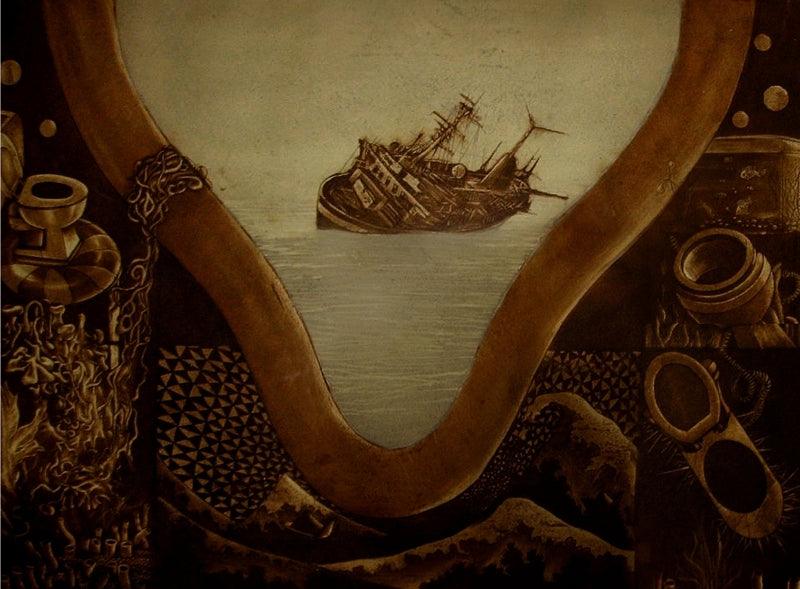
Dreamy Bathroom (The Abyss Gazes Back)
Artzolo
₹43,000
★ 4.0 (6)
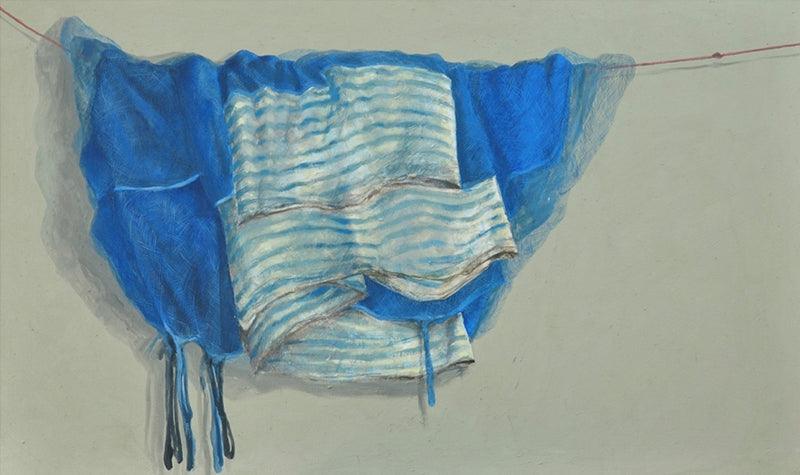
Untitled 1 (Drying in the Sun)
Artzolo
₹50,000
★ 4.0 (11)
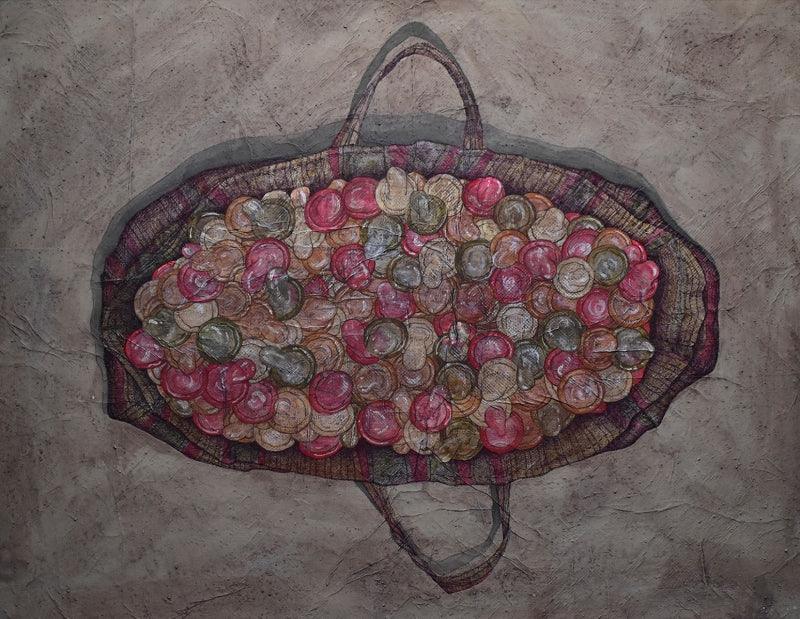
Untitled 2 (A Bounty of Memories)
Artzolo
₹25,000
★ 5.0 (5)