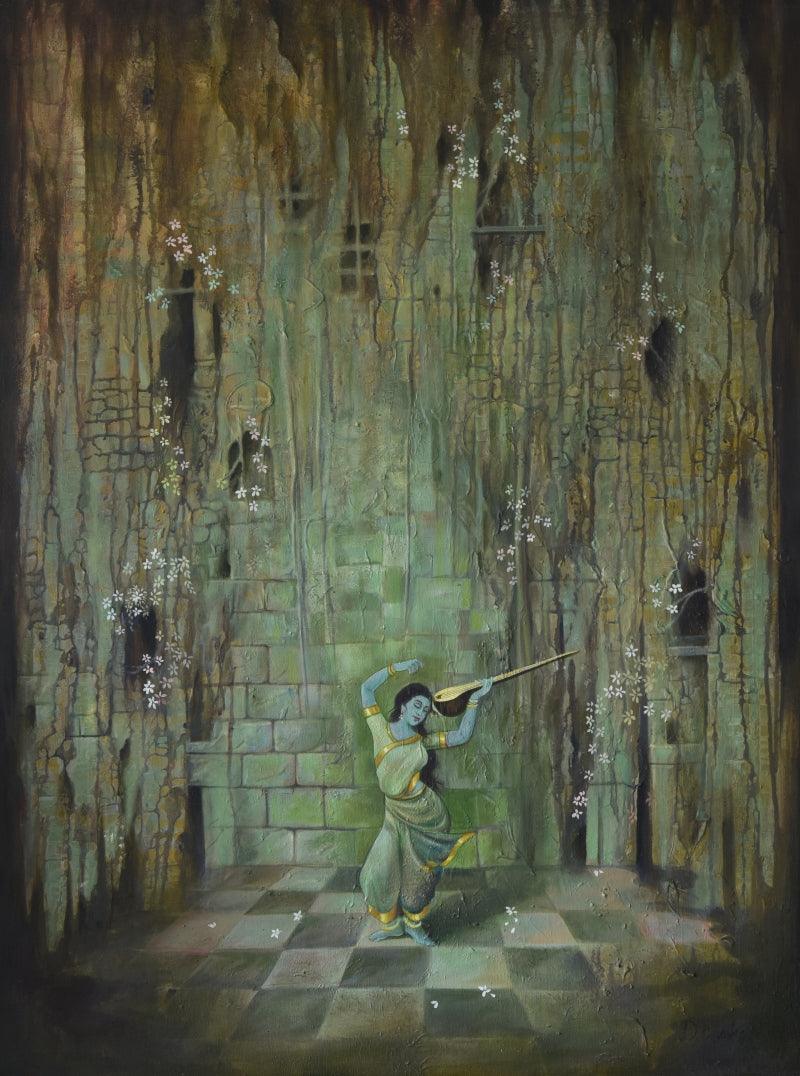
Devotee (Musician in Ruins)
₹110,000
● In stock · ★ 4.0 (8)checking live price…
Size
36x48Type
OriginalMaterial
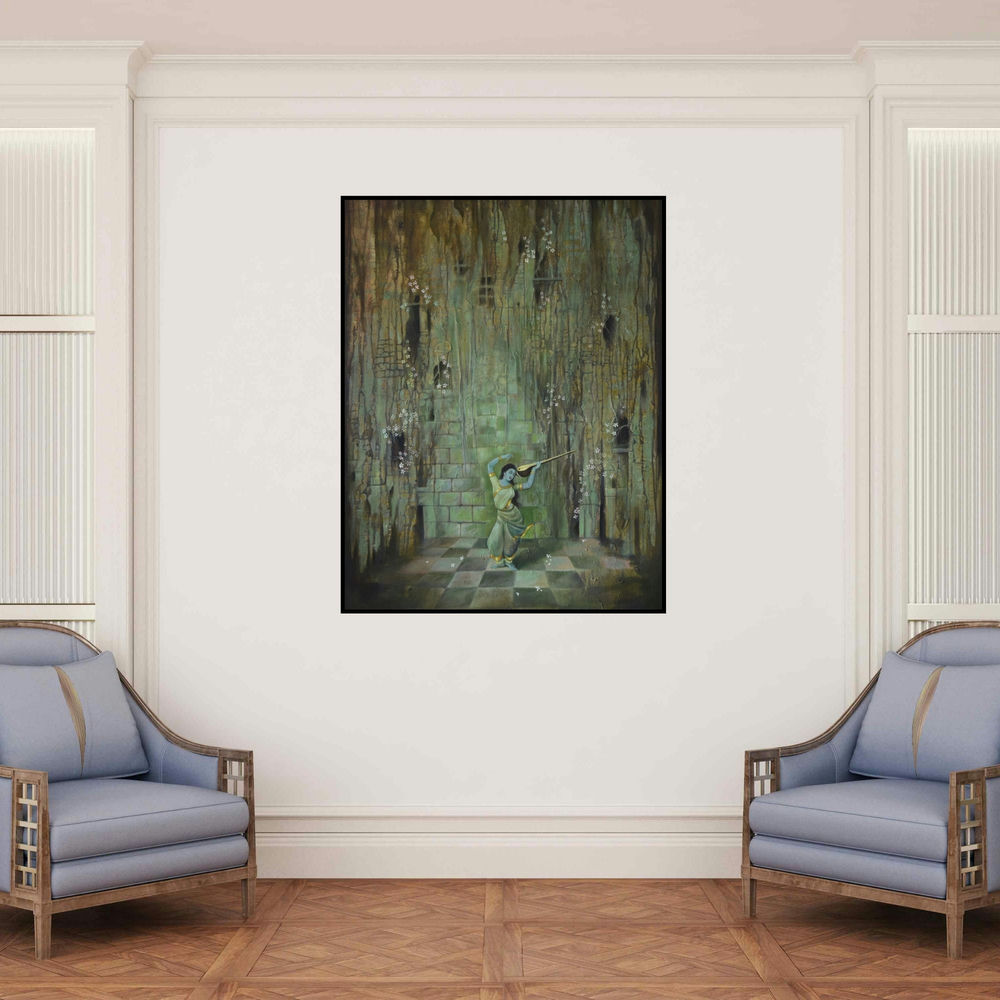
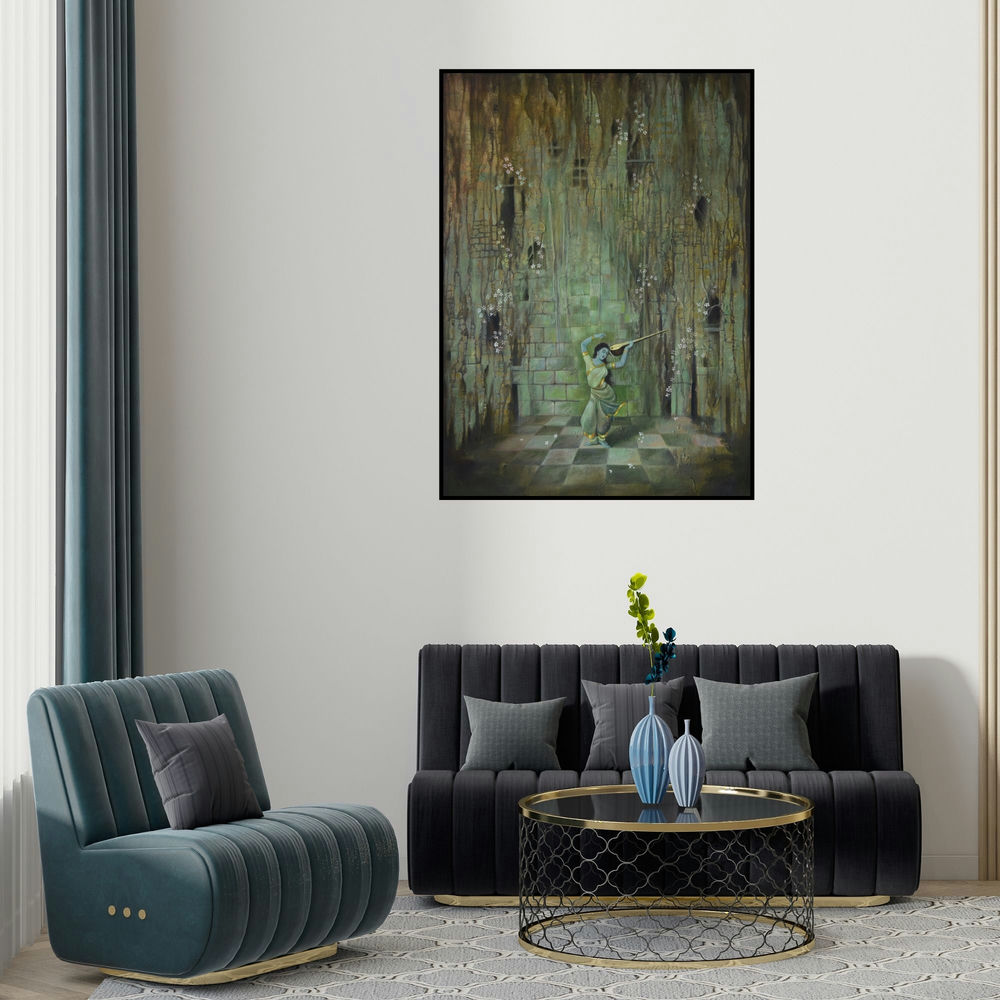
CanvasIn a cavernous, timeworn interior where mossy greens and umber stains bleed downward like memory made visible, the lone dancer becomes a luminous interruption—an intimate pulse of life against stone. The composition presses inward with towering, eroded walls and faint apertures, yet her raised arms and the diagonal sweep of the instrument carve a lyrical axis that reorders the ruin into a stage of devotion. Scattered white blossoms drift through the damp air as quiet witnesses, suggesting resilience and grace persisting where architecture has surrendered to weather and neglect. The work reads as a meditation on transience: music and movement as fragile sanctuaries that briefly consecrate what decay cannot fully erase.
Delivery
You may also like
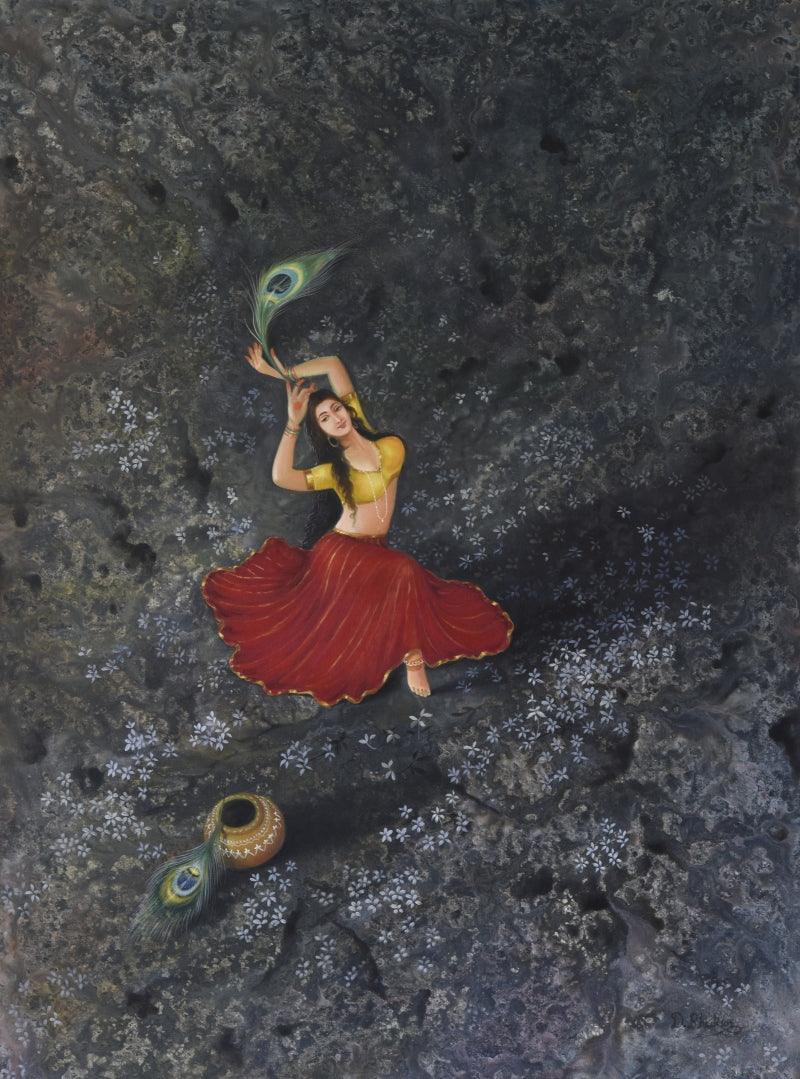
Devotee 2
Artzolo
₹110,000
★ 5.0 (12)
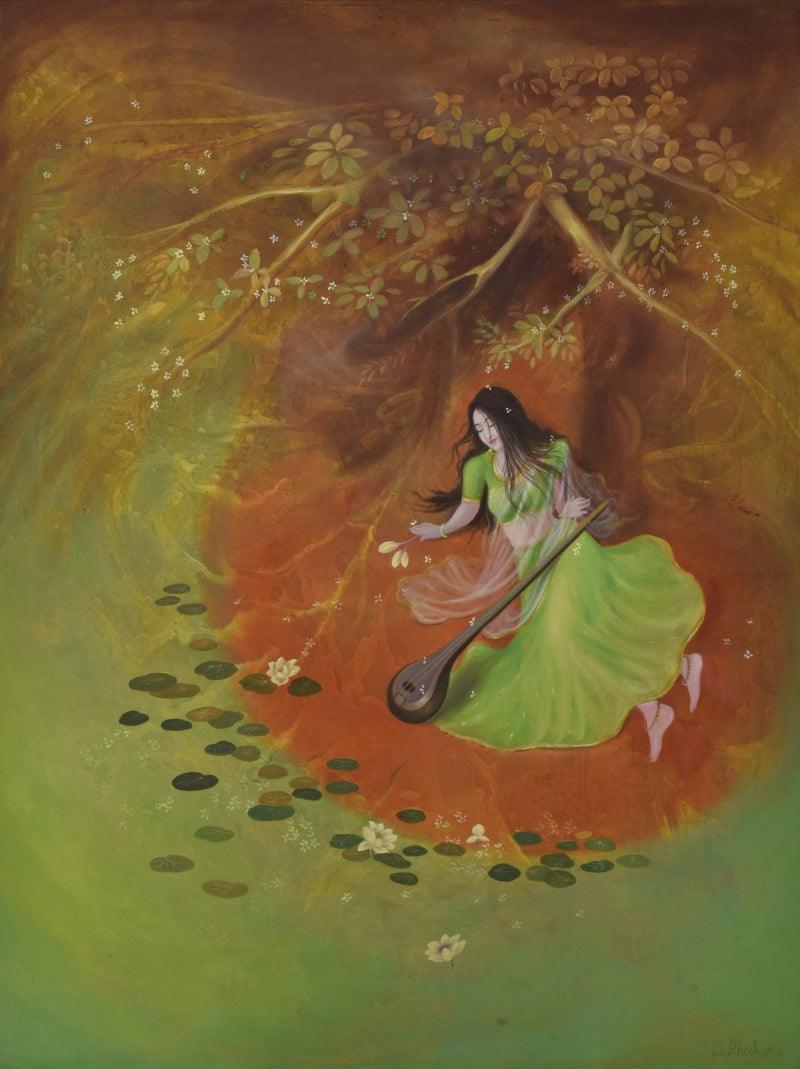
Devotee (A Moment of Tranquility)
Artzolo
₹110,000
★ 5.0 (8)
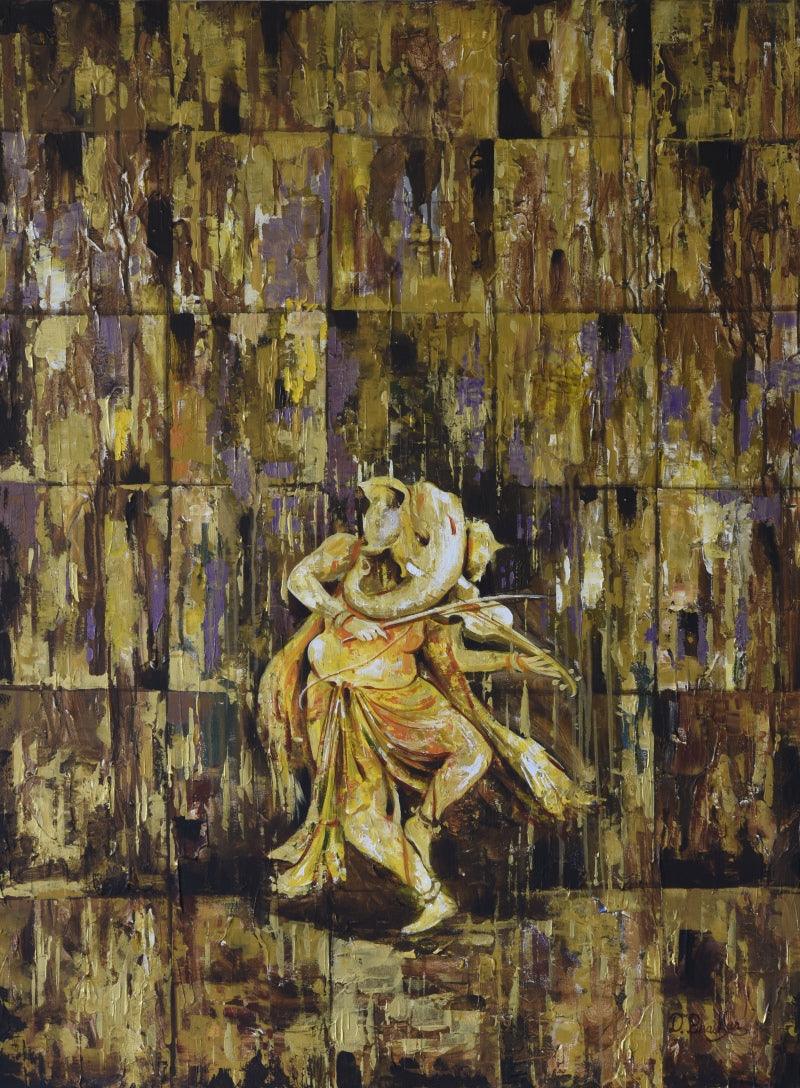
Musical Ganesha (Dancing Ganesha)
Artzolo
₹110,000
out of stock
★ 4.0 (7)
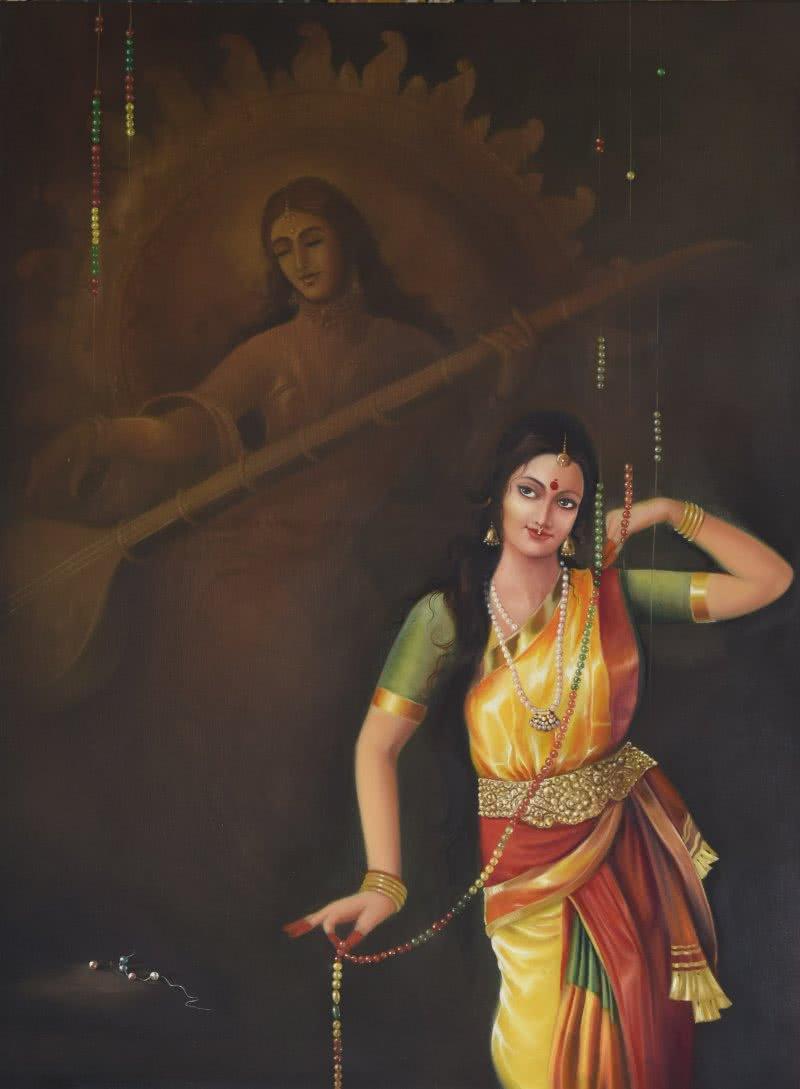
The Divine Dance
Artzolo
₹110,000
★ 4.0 (11)
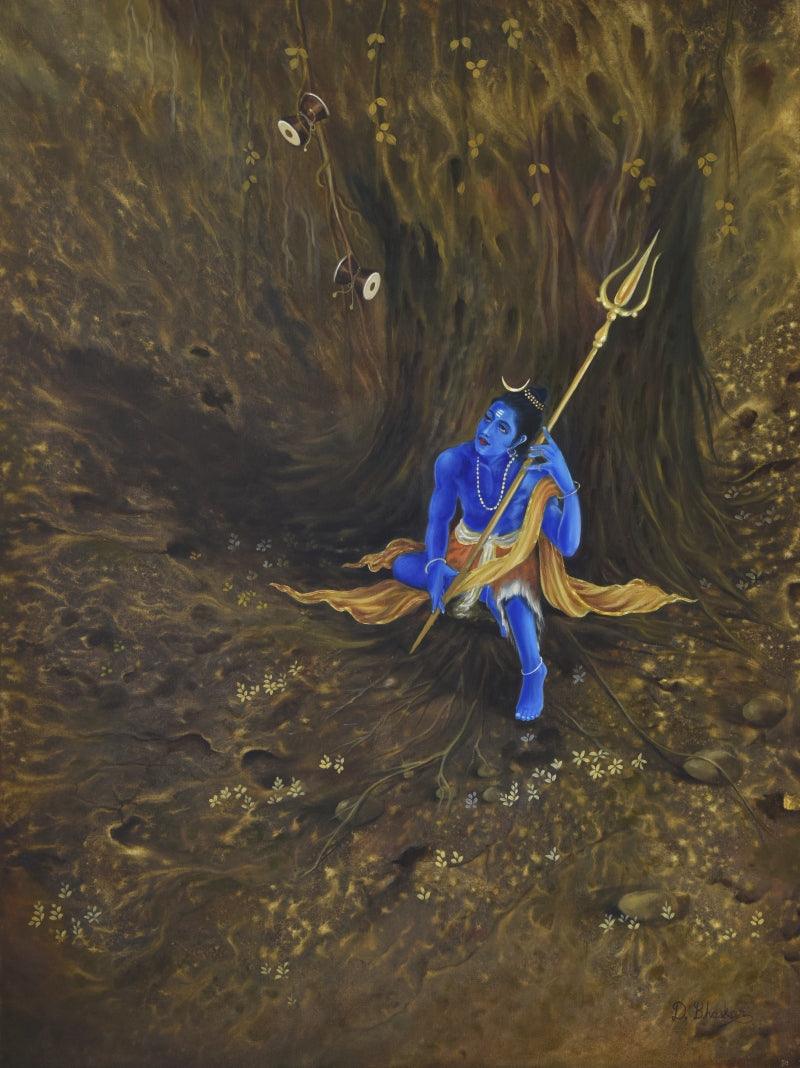
Damru And Trishul (Woman Musician)
Artzolo
₹110,000
★ 5.0 (6)
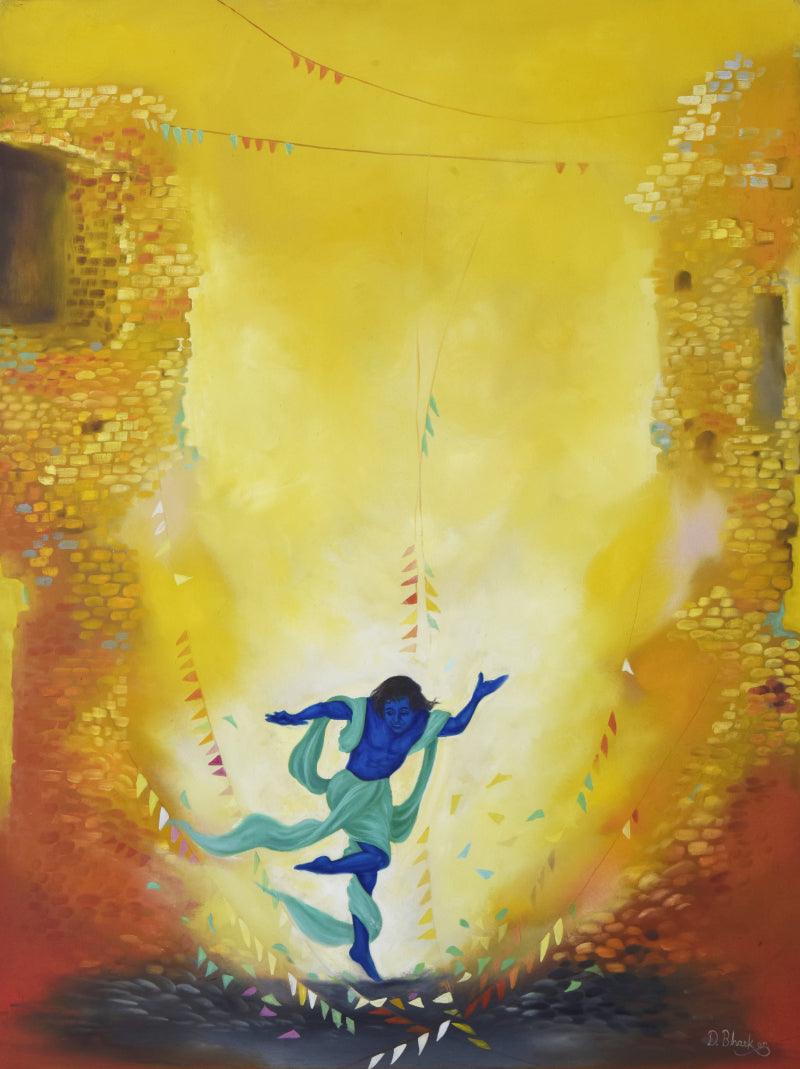
Bliss (Rhythmic Energy)
Artzolo
₹110,000
★ 5.0 (14)
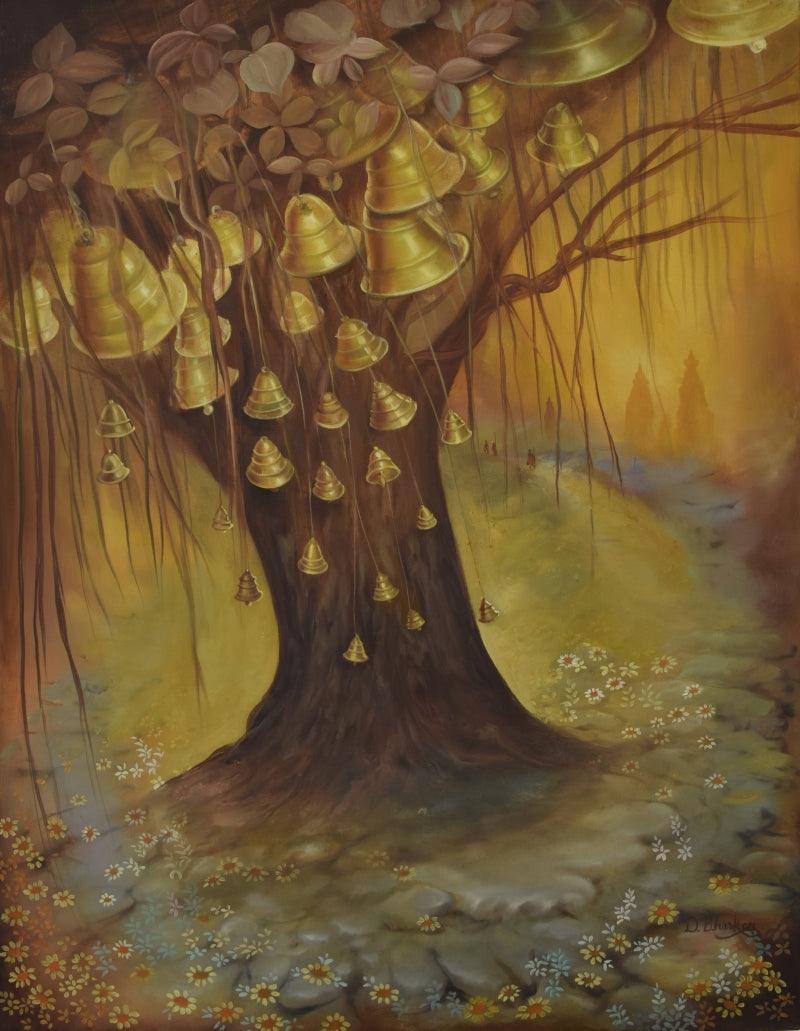
Devotion (Tree of Bells)
Artzolo
₹110,000
★ 4.0 (9)
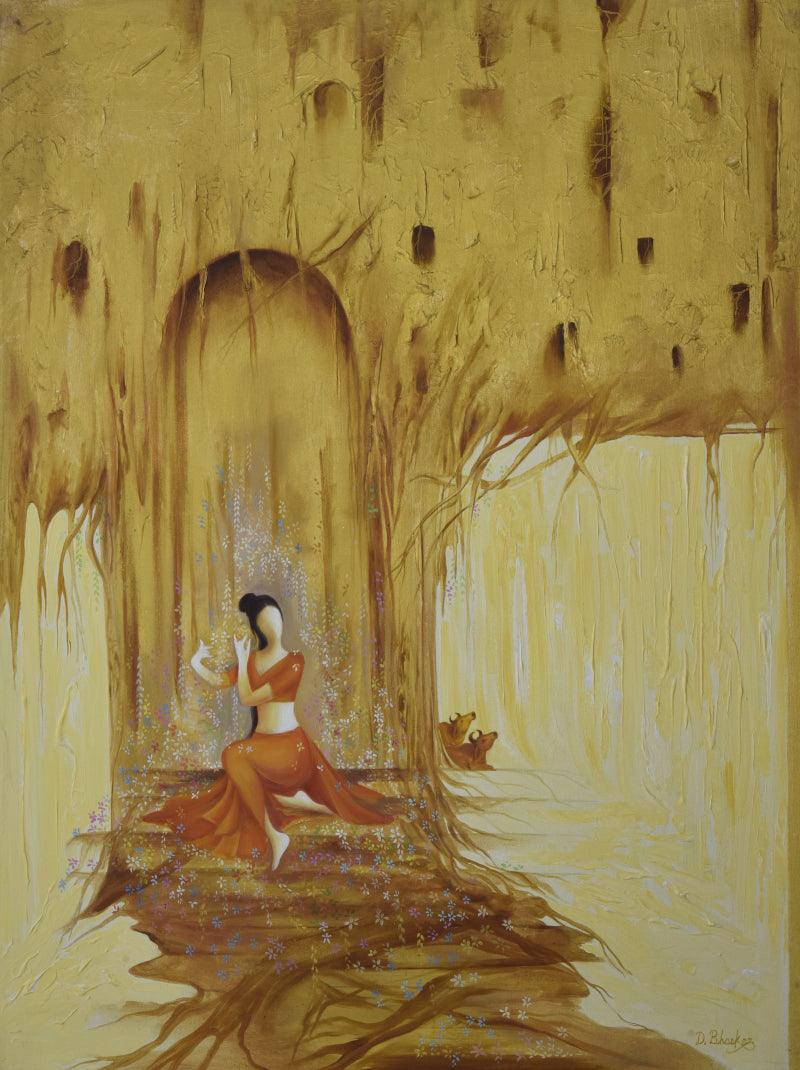
Sound Of Music (Echoes of the Past)
Artzolo
₹110,000
★ 4.0 (6)