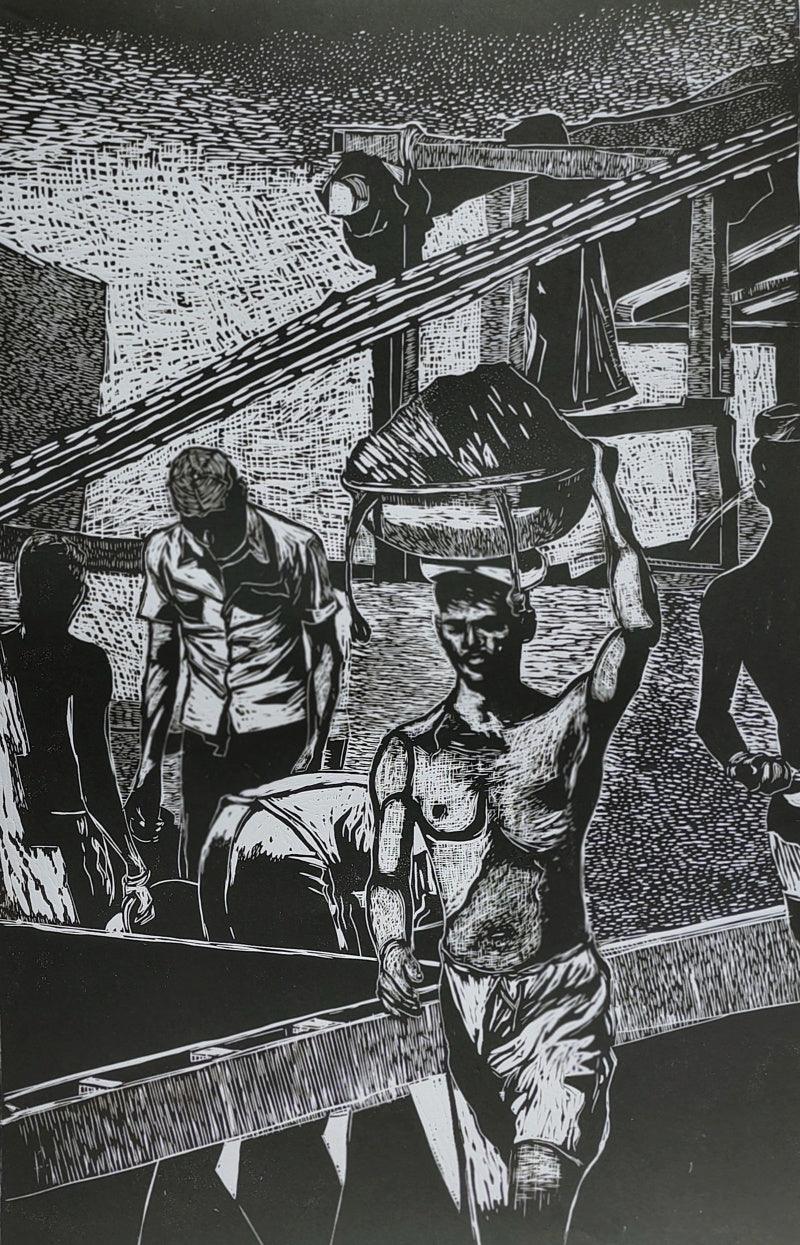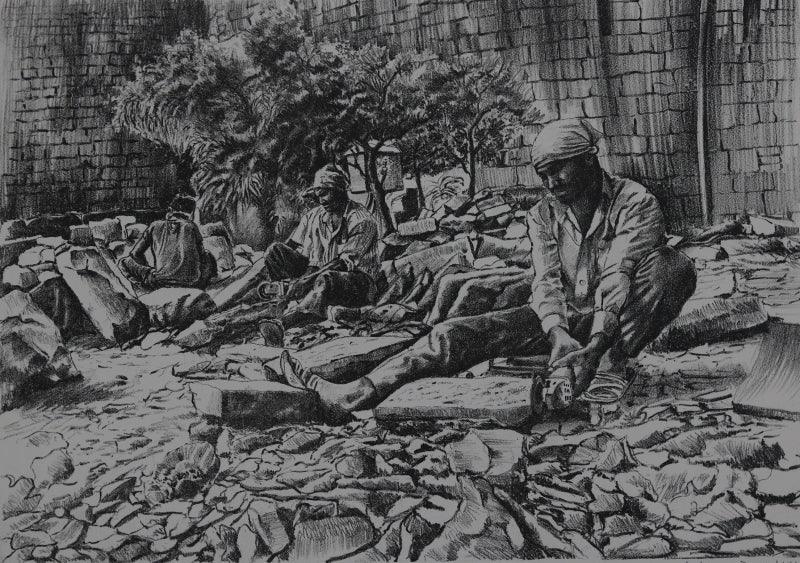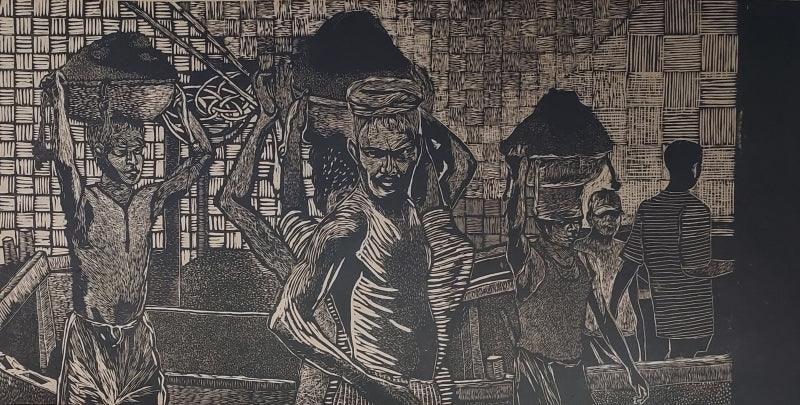
Nagla Bunder 2 (The Burden of Labor)
This stark, high-contrast relief-like scene turns labor into a quiet epic, where bodies—bent, straining, and rhythmically repeated—become the architecture of survival. The dense lattice of the background reads like woven walls or an abstracted city grid, compressing space so that the figures feel both enclosed and unwaveringly present, their loads rising like dark crowns that eclipse individual features. Light is carved rather than painted, and in those sharp incisions the work suggests a double truth: dignity carried on the shoulders, and the heavy anonymity imposed by necessity. A lone, simplified figure at the edge intensifies the narrative tension—witness, overseer, or passerby—hinting at the social distance that often accompanies unseen toil.
Ingredients
Delivery
You may also like