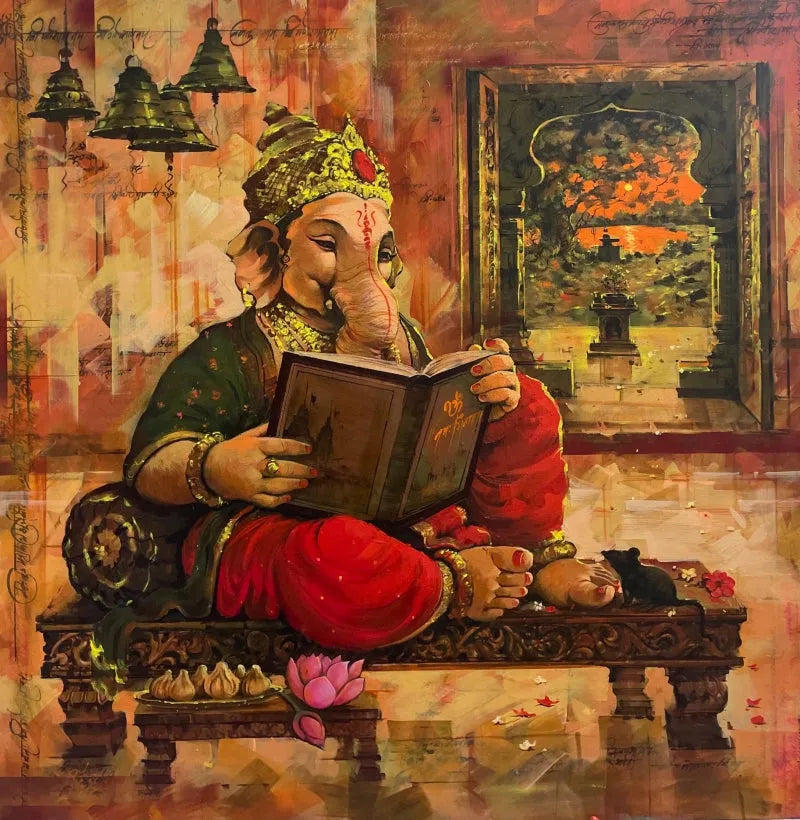
Balaganapati (0)
₹0
Out of stockchecking live price…
Size
30x30Type
OriginalMaterial
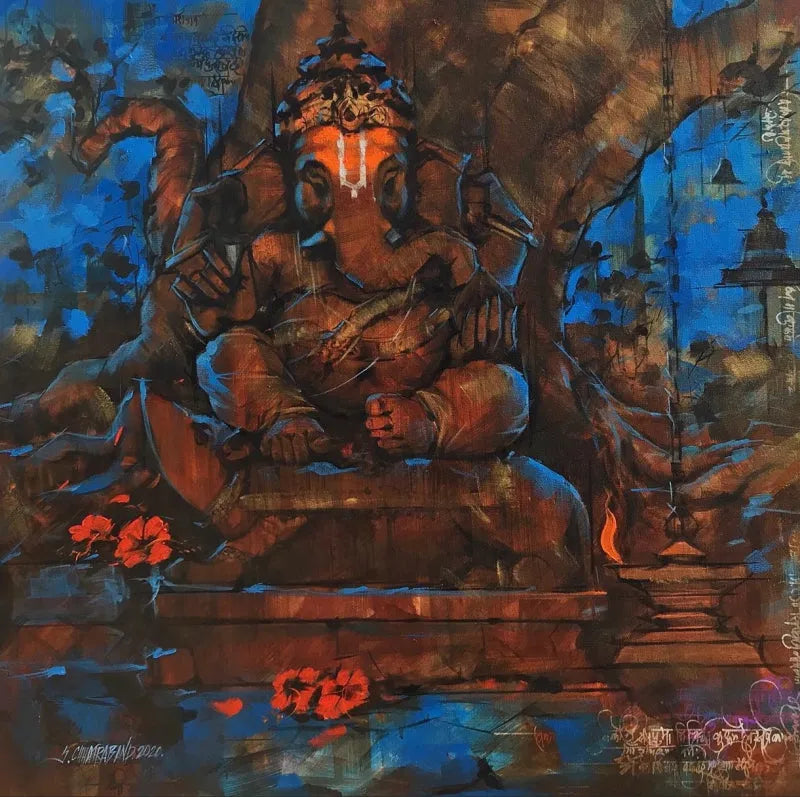
CanvasSeated in quiet sovereignty, Ganesha is rendered not as a distant icon but as an intimate contemplative—his jeweled crown and vermilion folds glowing against a weathered wash of ochres and ember reds that feels like memory made visible. The composition balances inward devotion with outward world: the open window frames a temple courtyard and flame-bright sky, while suspended bells and drifting script-like marks turn the air itself into a chorus of prayer and thought. By placing sacred presence in the act of reading, the artist suggests wisdom as a lived ritual—learning and grace entwined—where even the smallest companions at his feet become witnesses to a tender, humane divinity.
Delivery
You may also like
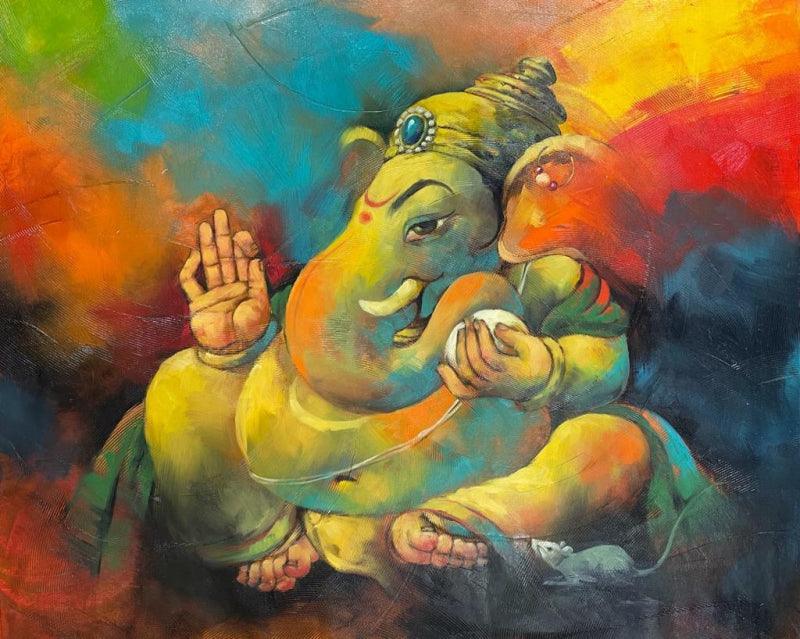
Balaganapati (Ganesha in Abstract Vibrance)
Artzolo
₹100,000
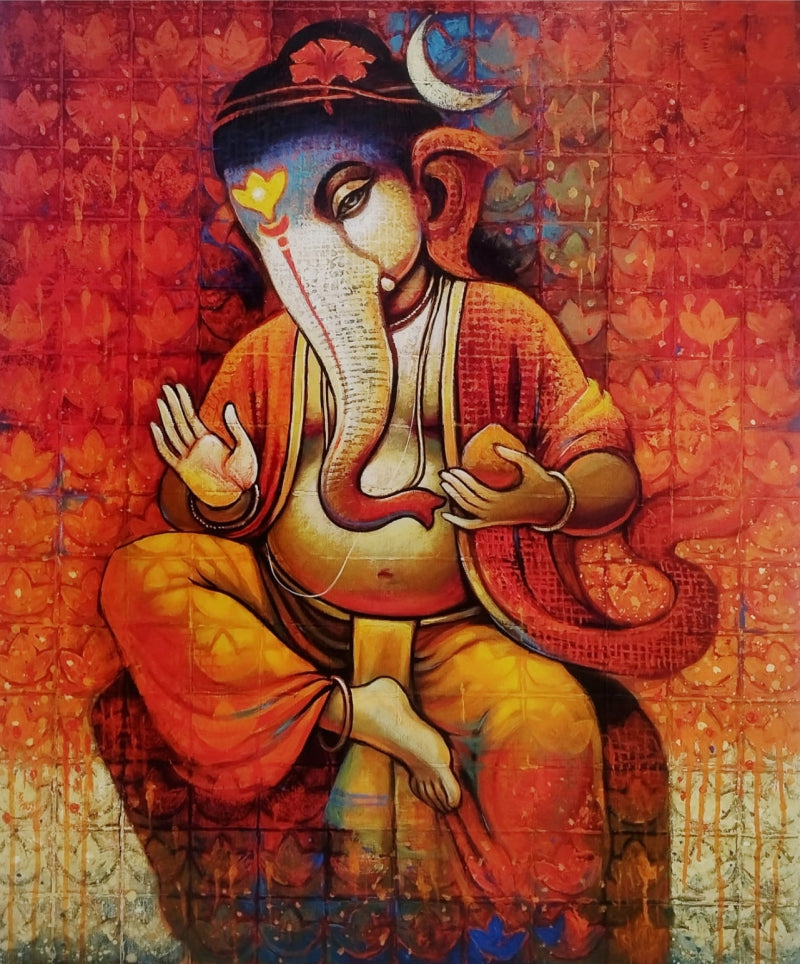
Ganesha
Artzolo
₹90,000
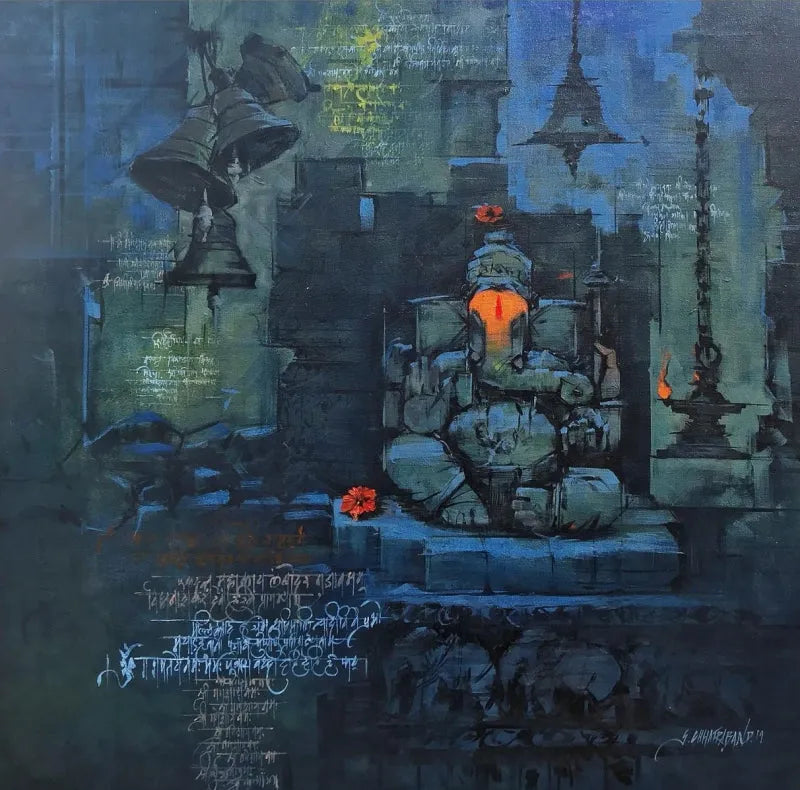
Mahaganapati (Ganesha's Divine Presence)
Artzolo
₹0
out of stock
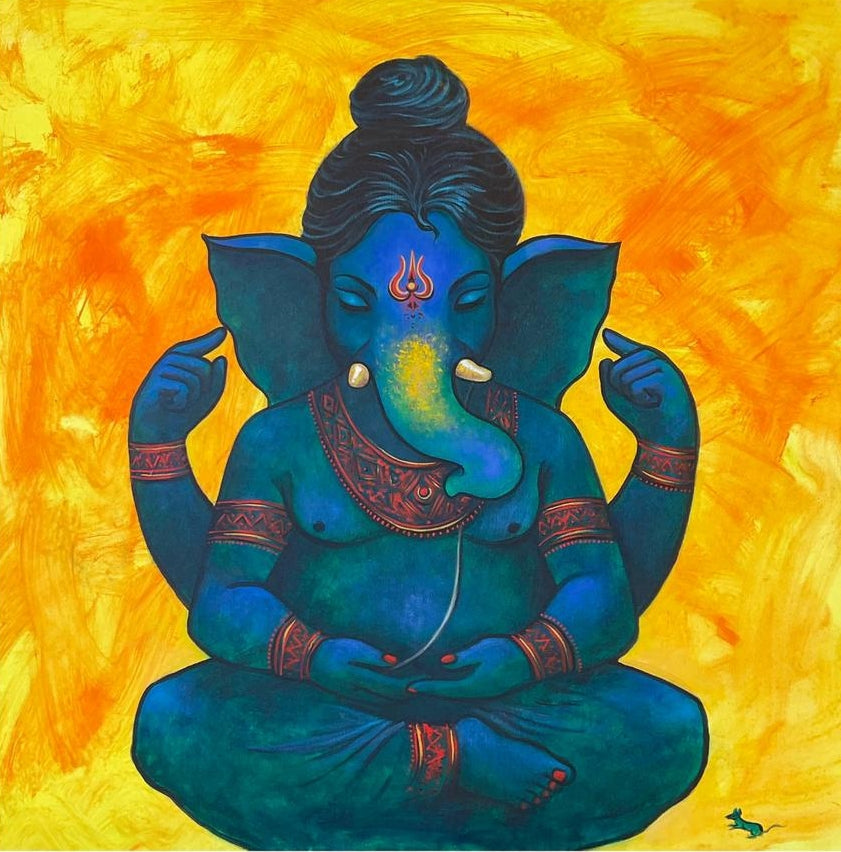
Lord Ganesha
Artzolo
₹150,000
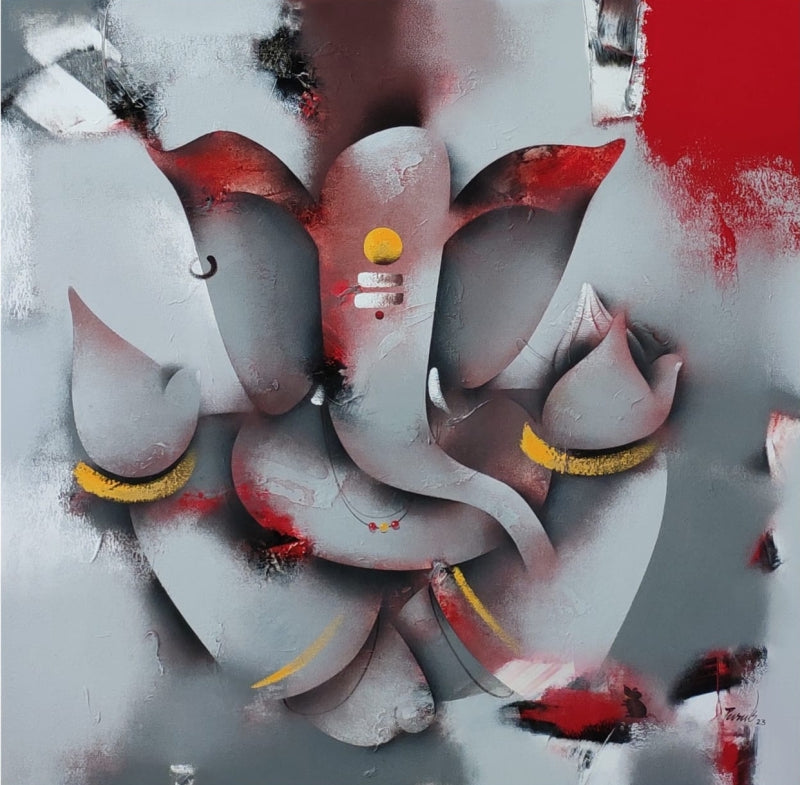
Balaganapati
Artzolo
₹95,000
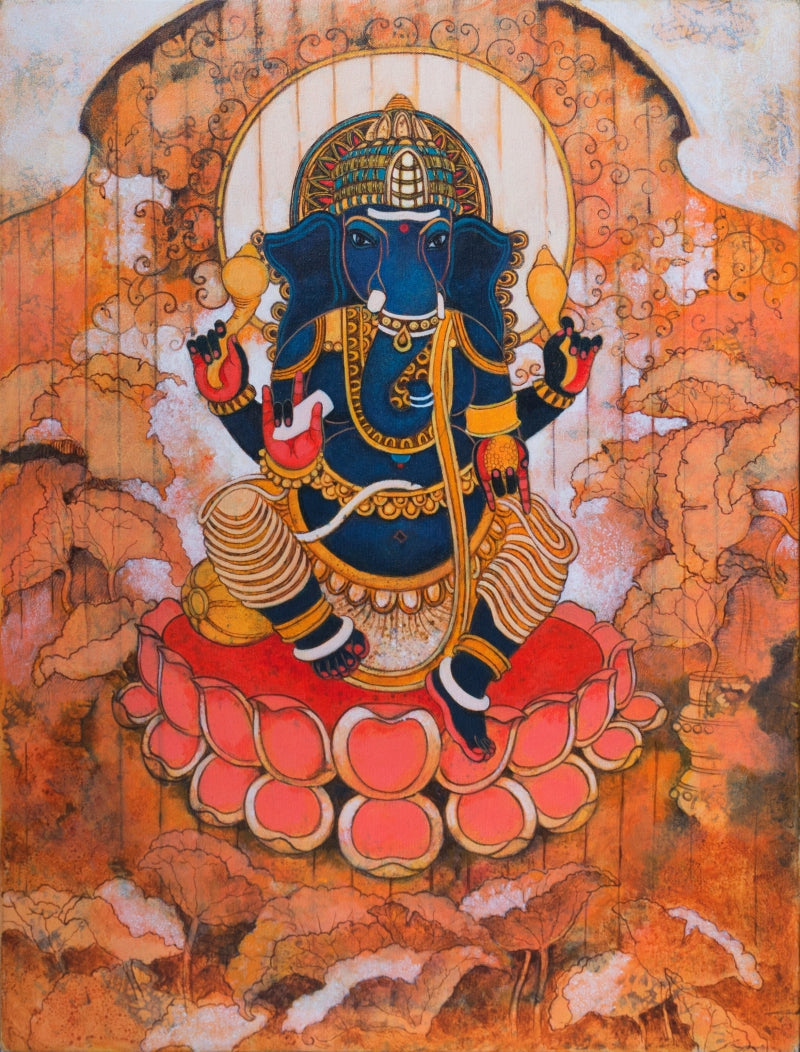
Ganapati
Artzolo
₹45,000
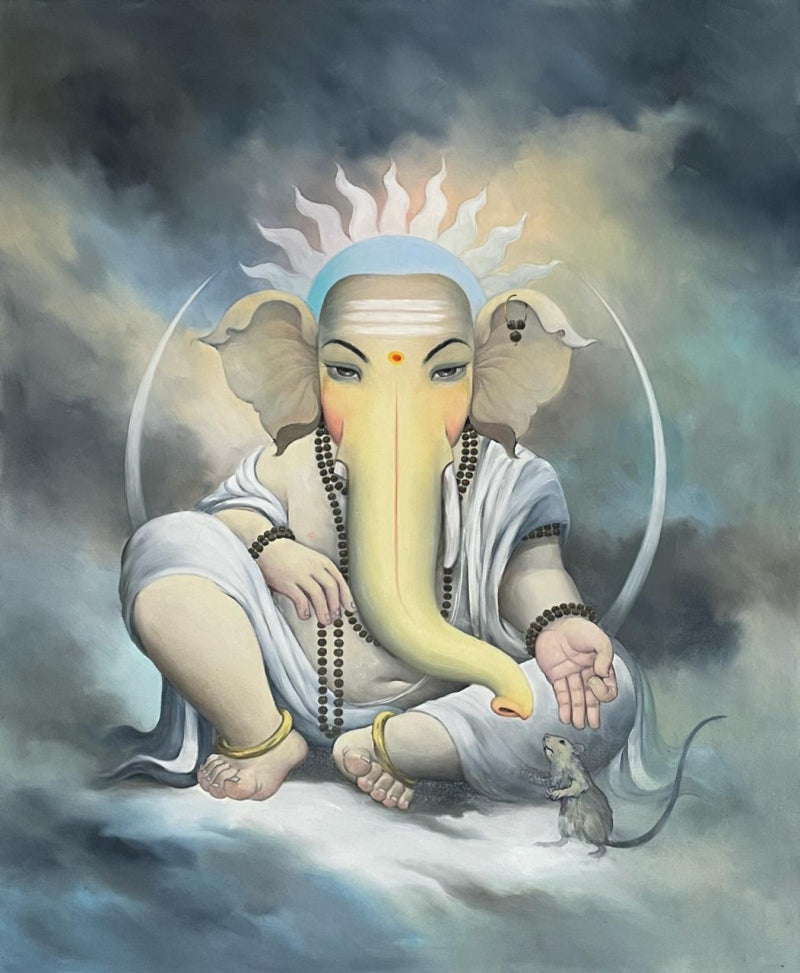
Lord Ganesha
Artzolo
₹90,000
Mangalamurti (Ganesha's Tranquil Abode)
Artzolo
₹0
out of stock