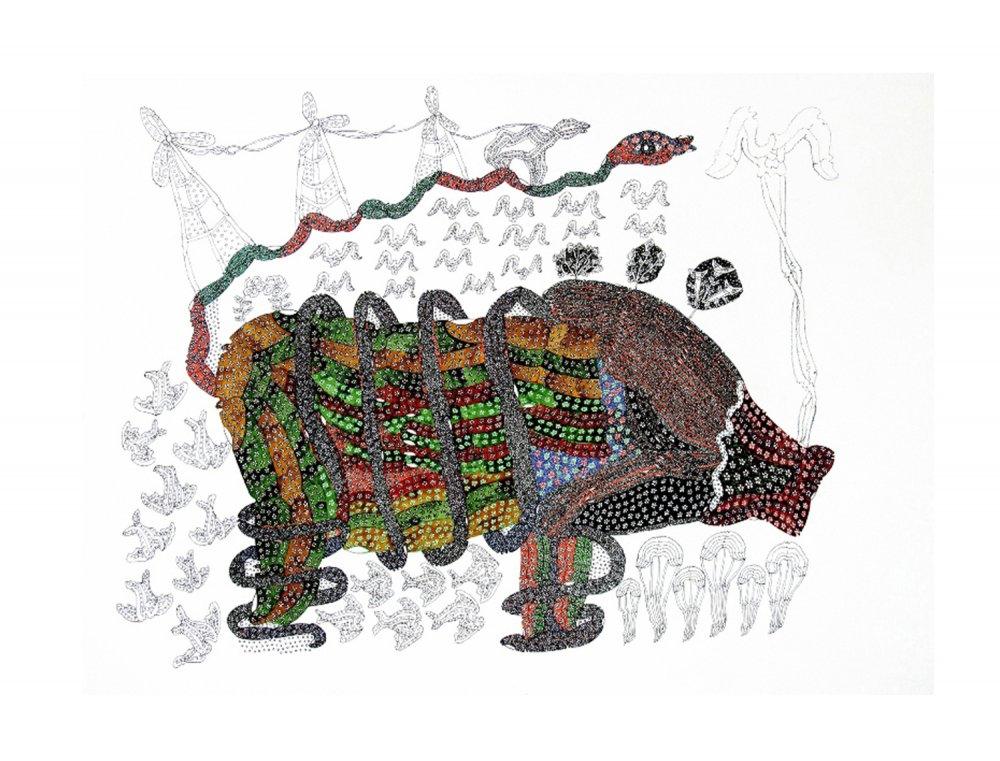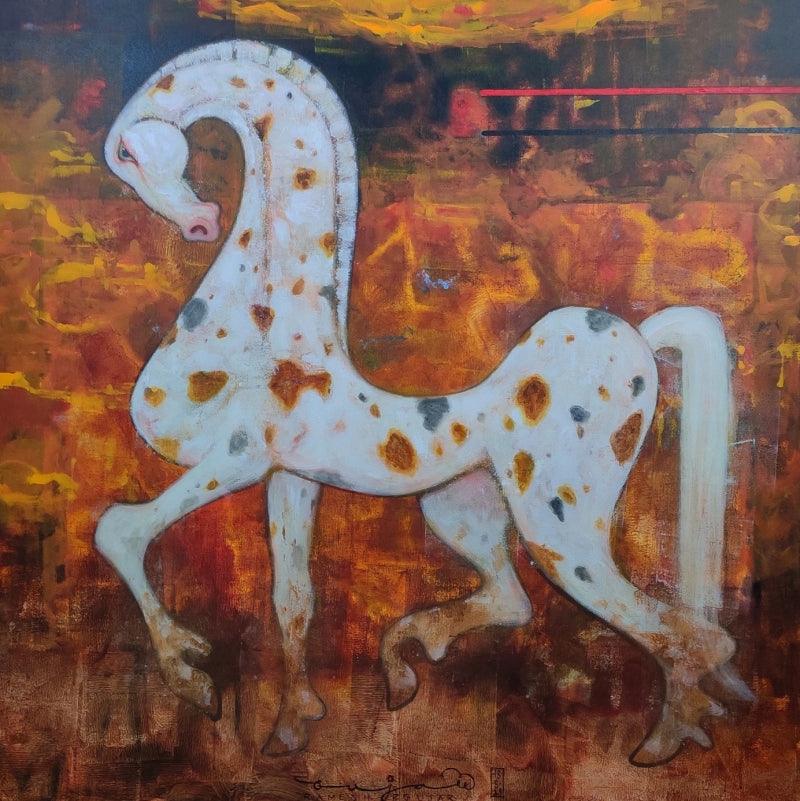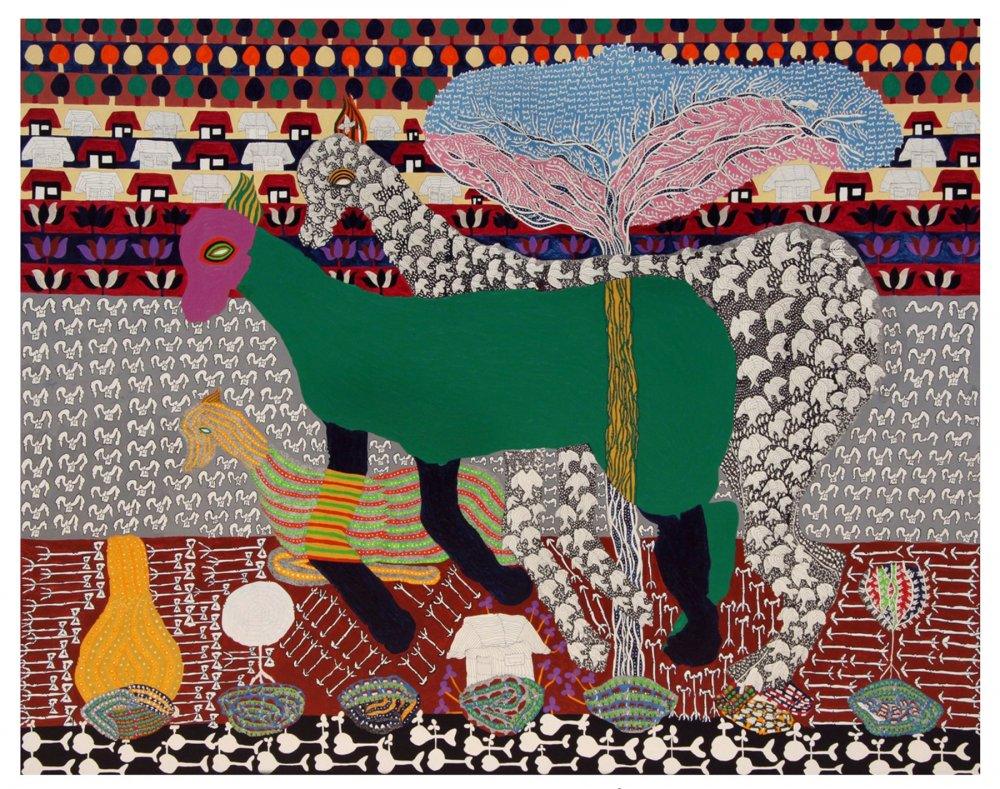
Looking For Space (Mythical Steed)
A monumental, dreamlike beast occupies the center as a living landscape—its emerald body and patterned hide stitched together like a tapestry of memory, where animal, earth, and ornament become inseparable. Behind it, banded horizons of houses and floral motifs compress space into rhythmic registers, suggesting a village consciousness that repeats, persists, and watches. The sinuous white tree blooming from the creature’s back reads as an inner genealogy—growth that is both protective and burdensome—while the small, striped animal below acts as a gentle echo, a second voice in the same myth. Color here is not naturalistic but ceremonial: saturated reds, greens, and blacks conduct a quiet procession of symbols, turning the scene into a meditation on belonging, inheritance, and the sacred labor of everyday life.
Delivery
You may also like