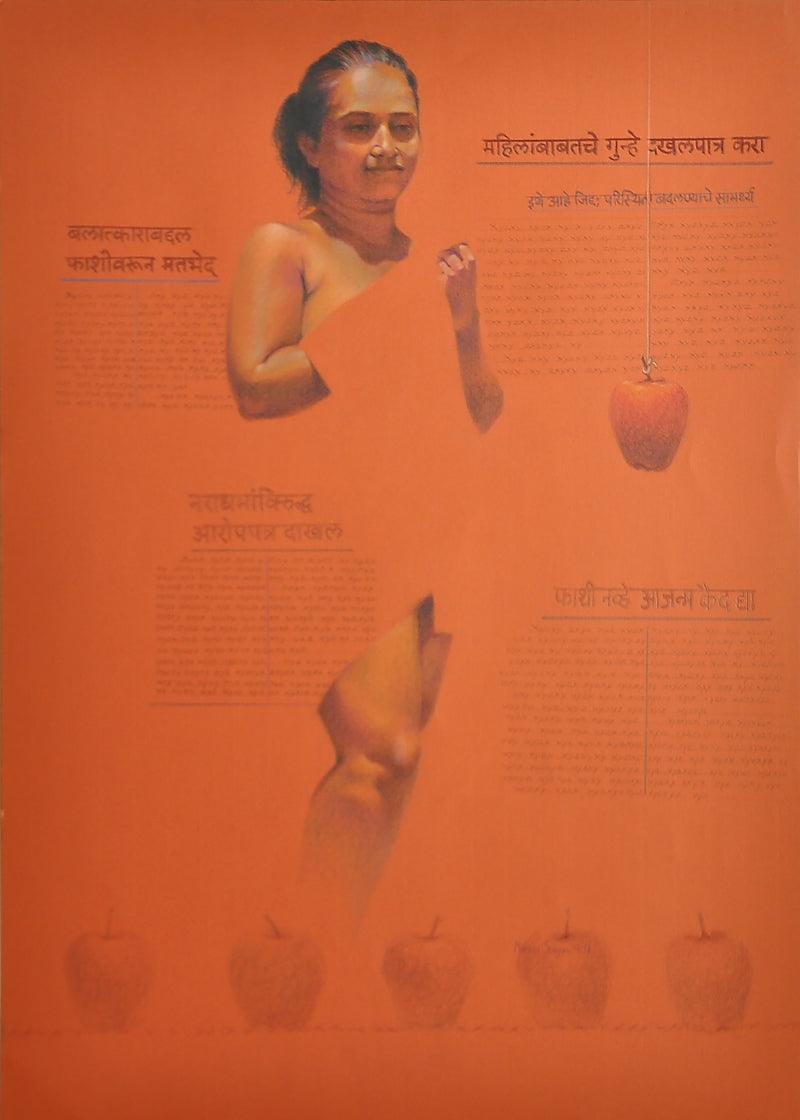
Unkilled Desire 2 (Spiral Arbor)
₹58,000
● In stock · ★ 4.0 (13)checking live price…
Size
35x25Type
OriginalMaterial
PaperBathed in a near-monochrome saffron haze, the figure emerges as both present and withheld—her torso rendered with tender realism while the surrounding field dissolves into silence and suspended text. The scattered Devanagari headlines read like social verdicts hovering around the body, turning the composition into a courtroom of public language where identity is narrated, edited, and judged. A single apple dangling on a string becomes an uneasy emblem—temptation, bait, or burden—echoed by the faint row of apples below like a repetitive measure of expectation. In this quiet tension between softness and censorship, the work frames womanhood as a contested space where desire, dignity, and moral scrutiny are choreographed by the gaze.
Delivery
You may also like
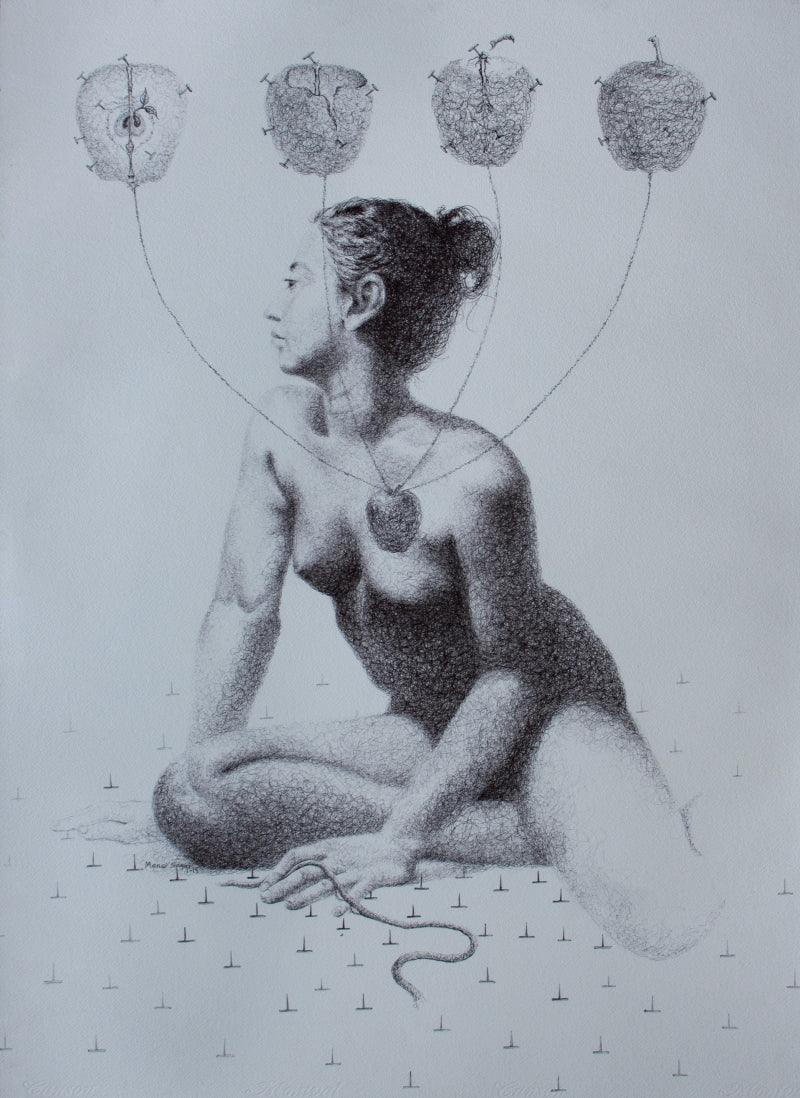
Unkilled Desire 3
Artzolo
₹43,000
out of stock
★ 4.0 (15)
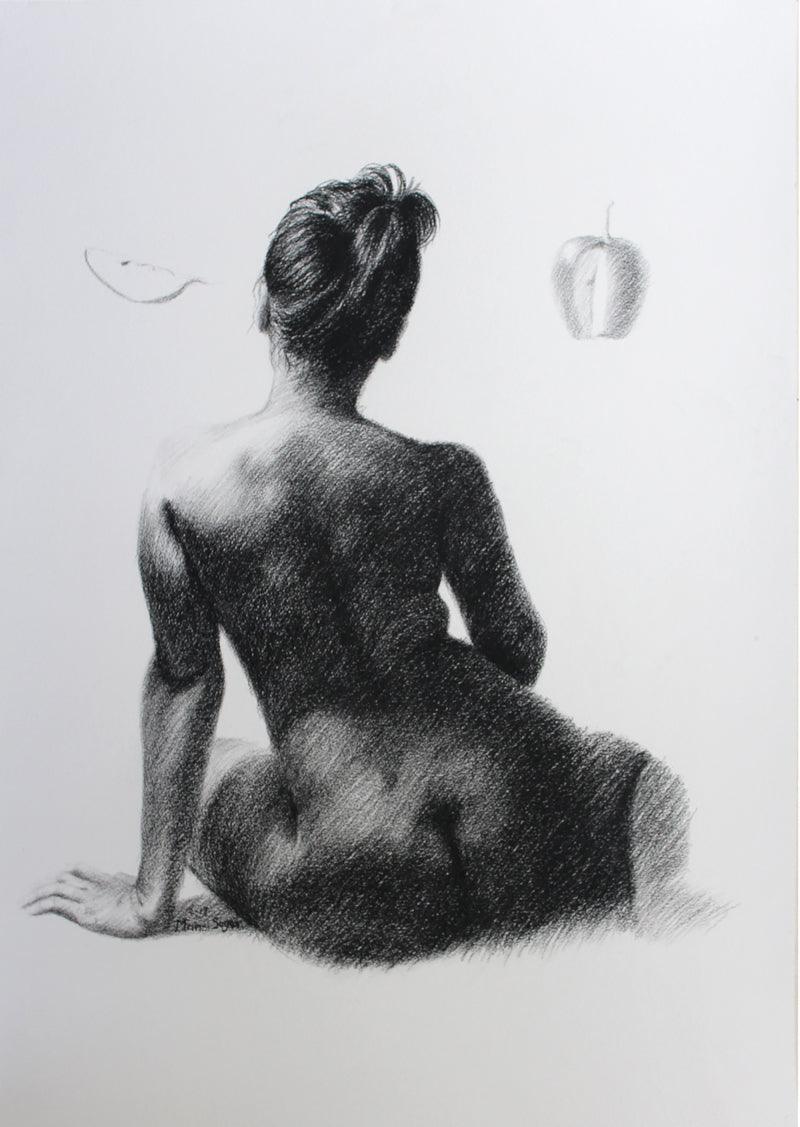
Unkilled Desire 2
Artzolo
₹47,000
★ 4.0 (11)
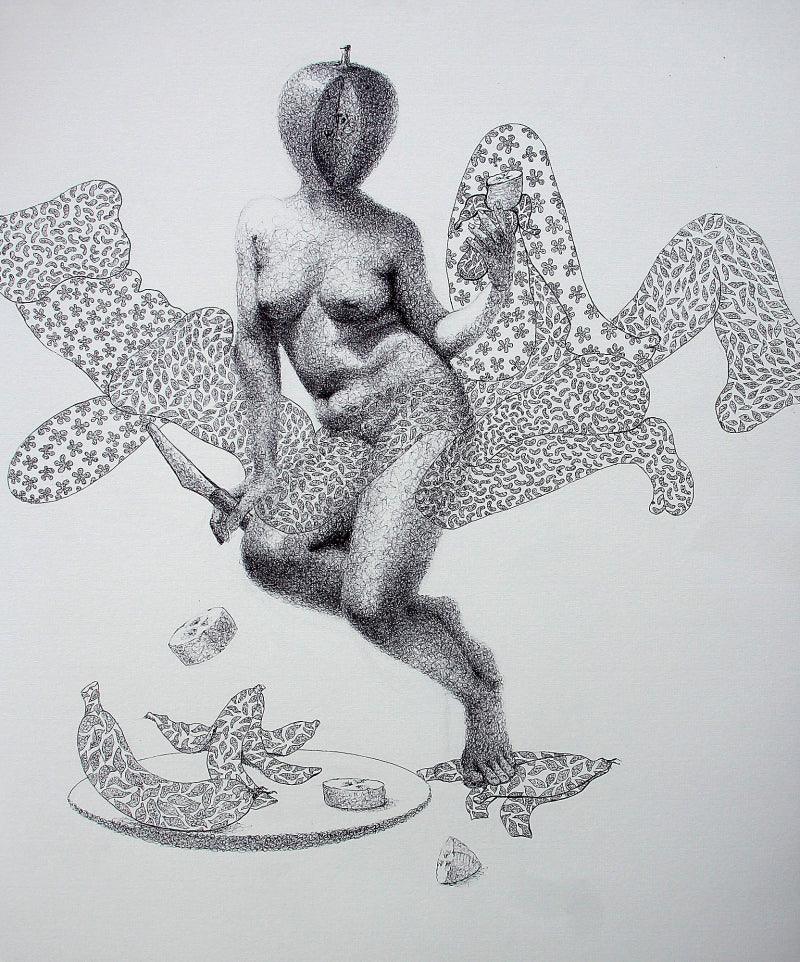
Unkilled Desire 7 (The Fruitful Enigma)
Artzolo
₹45,000
★ 4.0 (13)
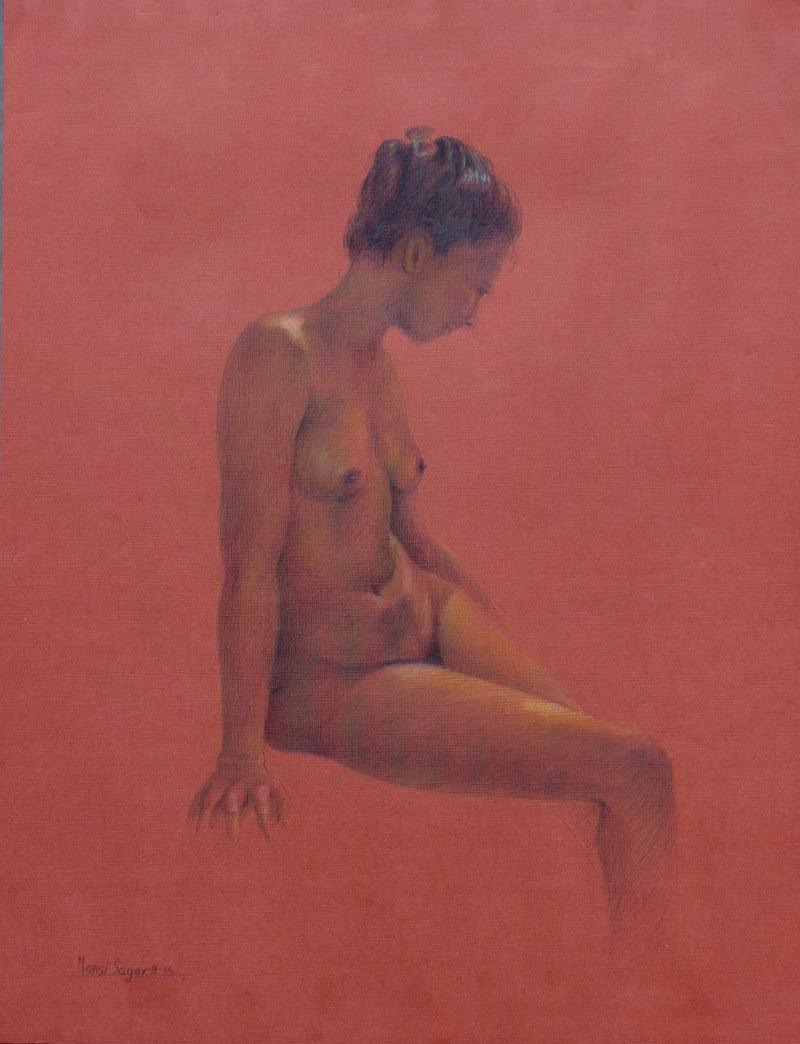
Mood 3
Artzolo
₹24,000
★ 4.0 (14)
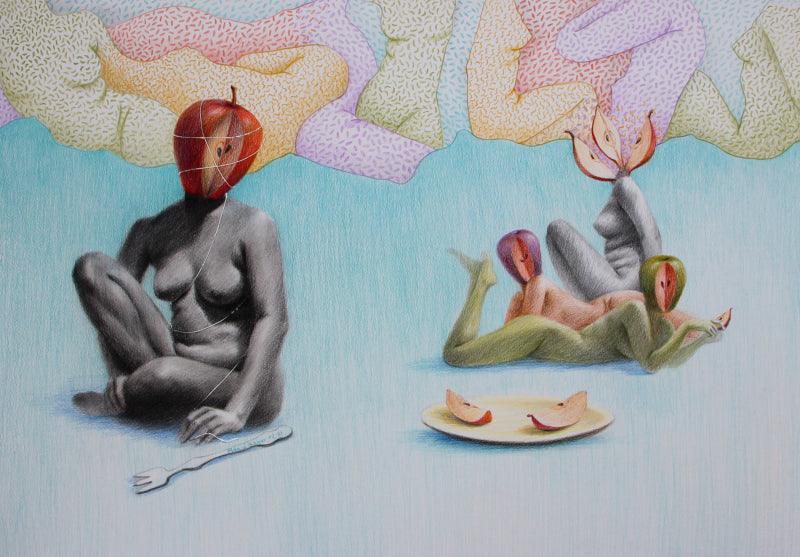
Forbidden Feast 1 (The Fruitful Mind)
Artzolo
₹54,000
★ 4.0 (7)
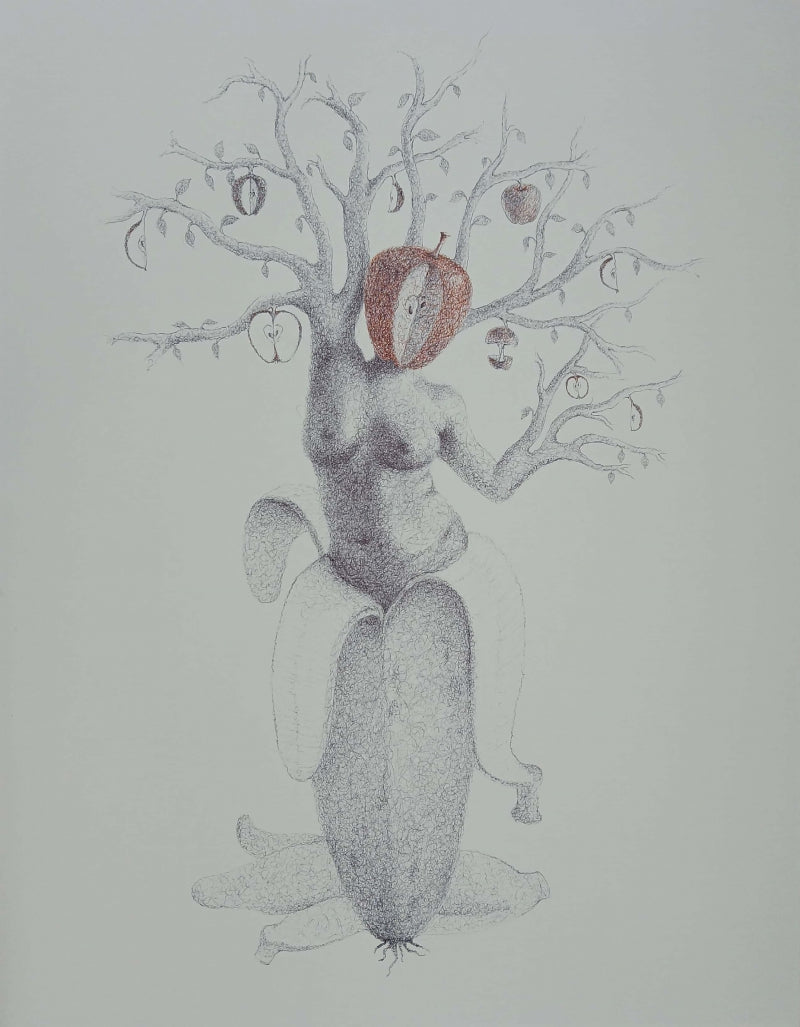
Untitled 2 (Woman as Apple Tree)
Artzolo
₹45,000
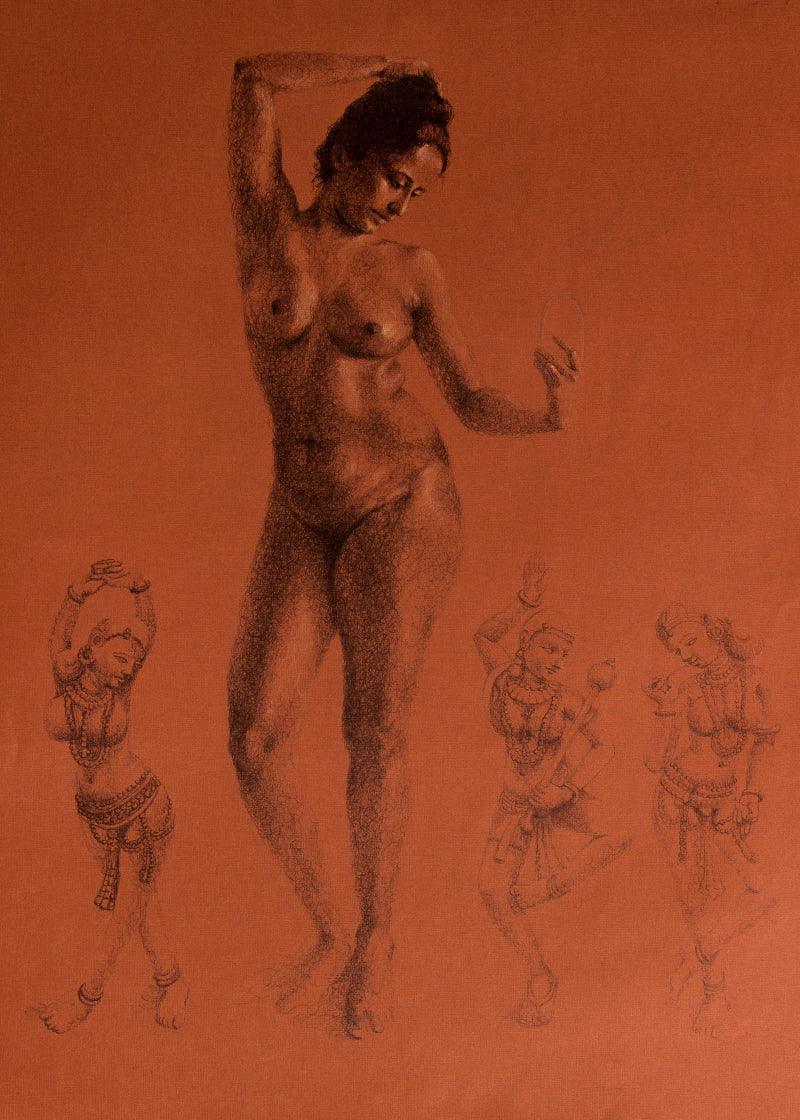
Self Restoration
Artzolo
₹38,500
★ 5.0 (12)
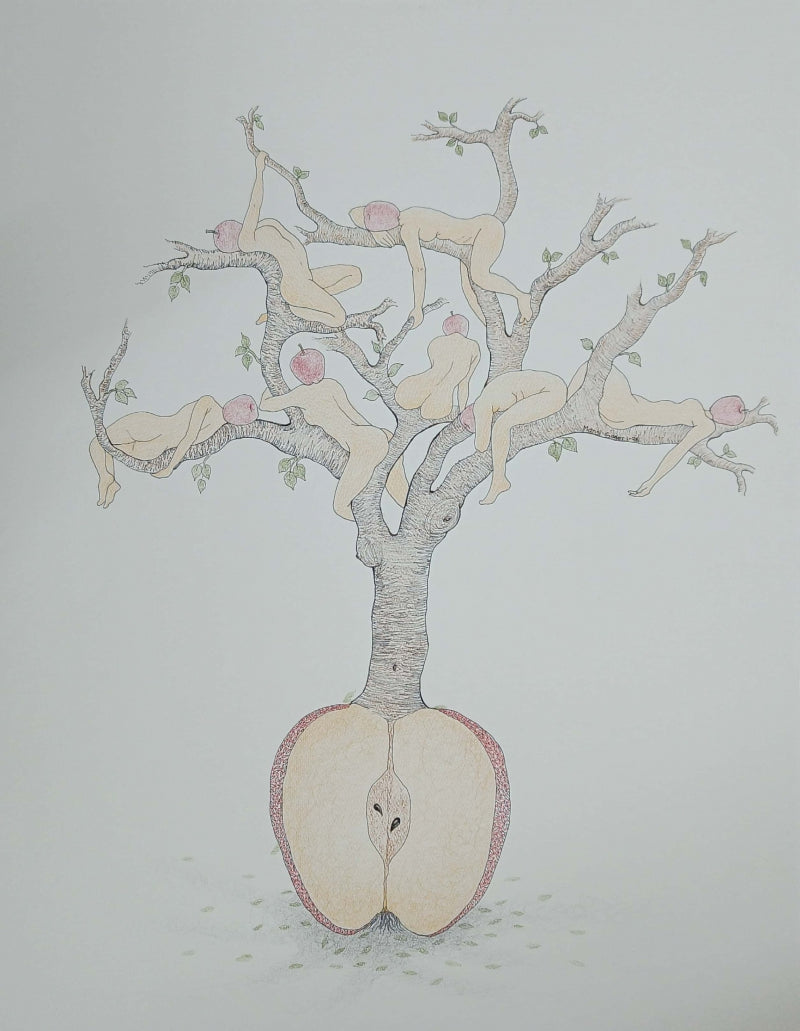
Untitled 3 (Tree of Life)
Artzolo
₹45,000