Nature In A Carry Bag 6
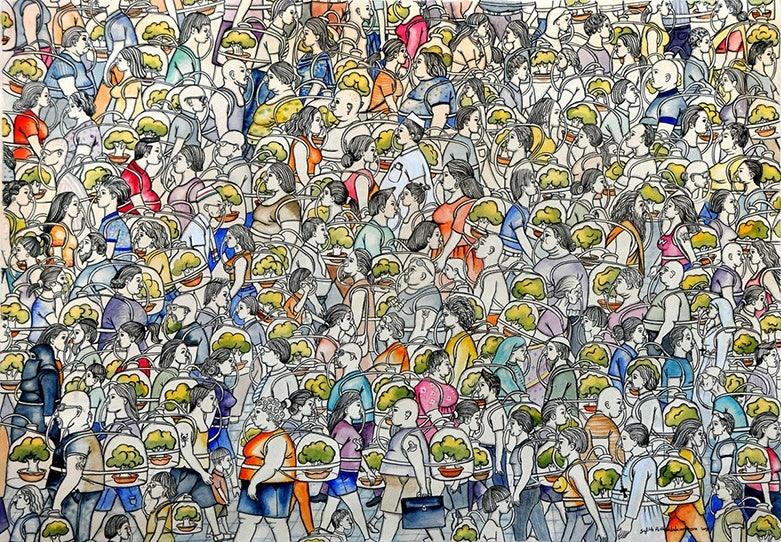
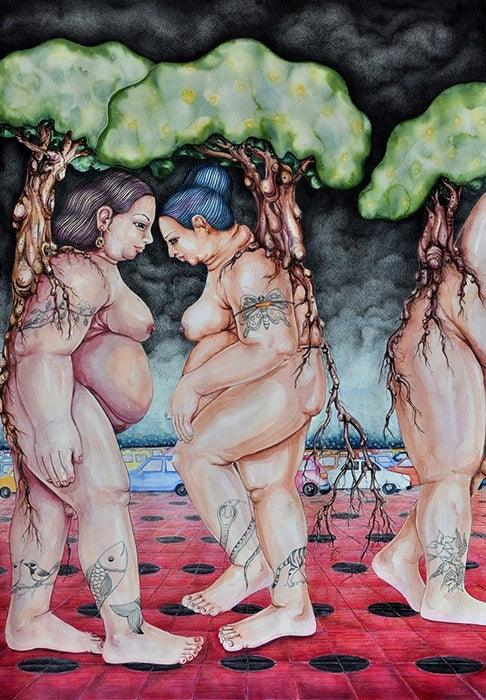
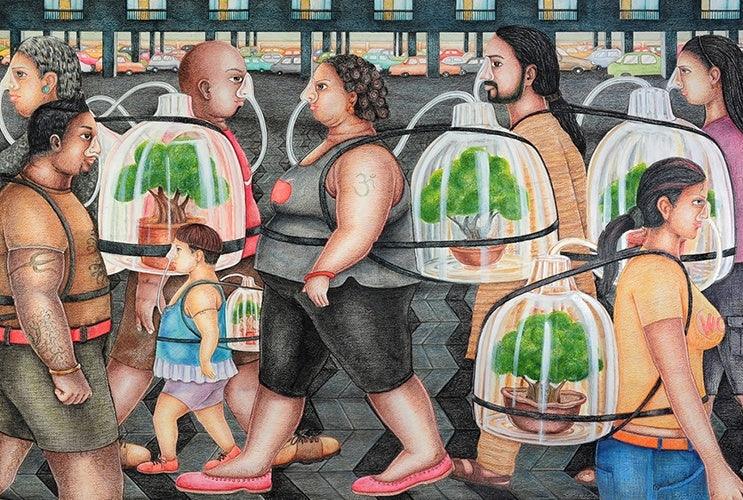
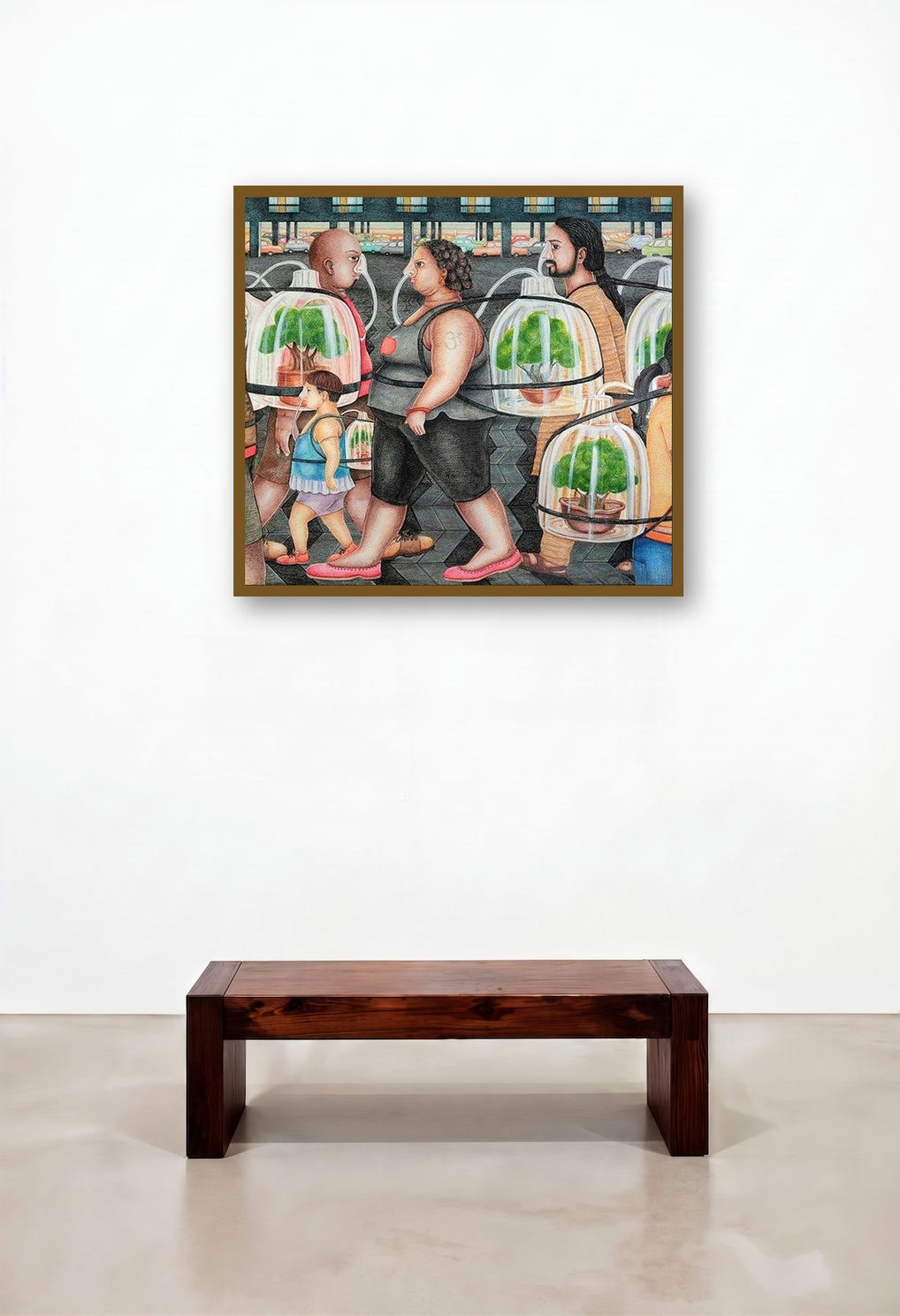
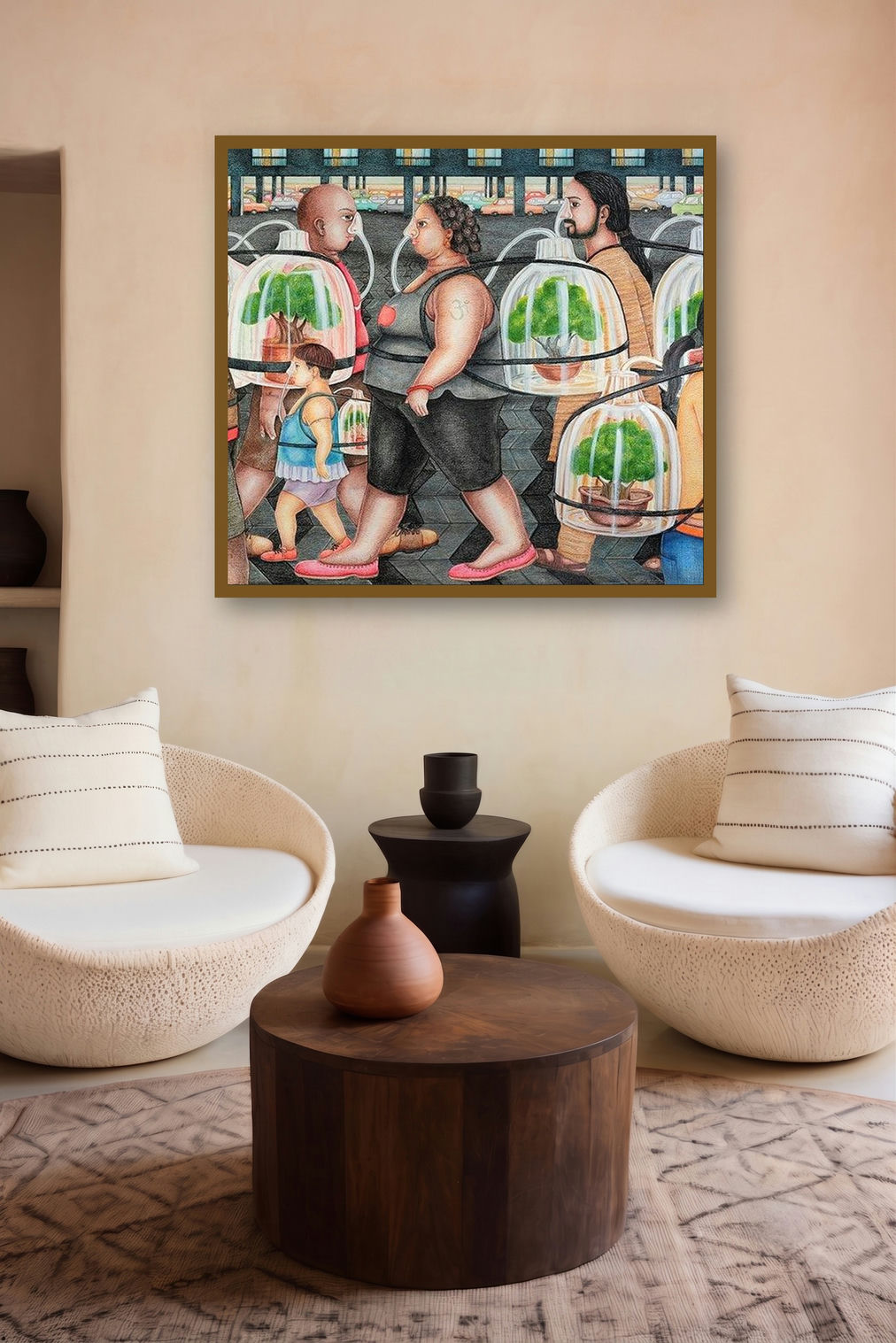
The scene stages an urban procession where bodies move in tight lateral rhythm, yet each figure carries a fragile dome of greenery like a private atmosphere—life preserved, partitioned, and made portable. The repetition of glass bell-jars and harness lines turns the crowd into a quiet system, suggesting how contemporary survival often means protecting what is vital behind transparent barriers while still remaining on display. Against the patterned pavement and the distant band of traffic, the soft greens inside the domes become moral punctuation marks: small refuges of breath and memory set against the density of routine. What reads at first as civic movement gradually feels like an allegory of care under pressure—nature, innocence, and hope rationed into personal cargo.
Delivery
You may also like