Swayamprabha
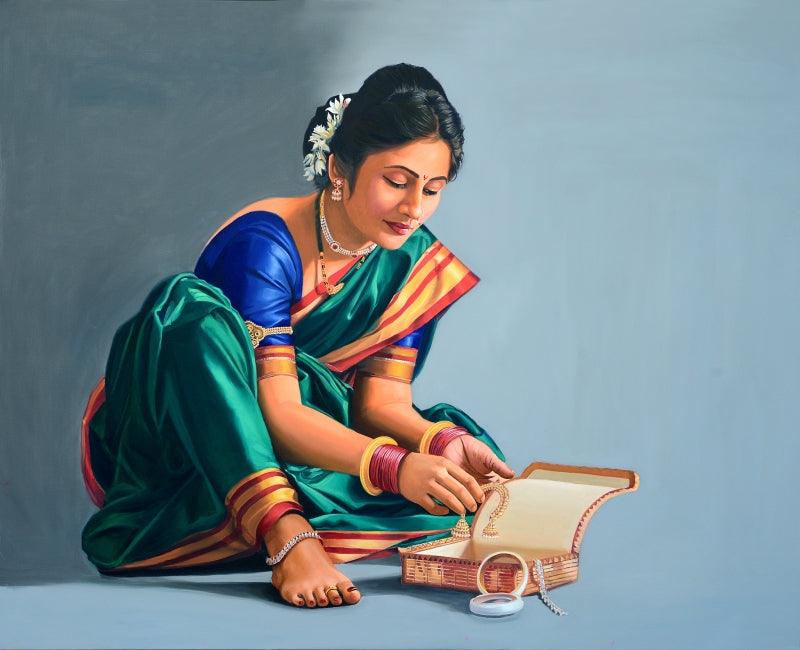
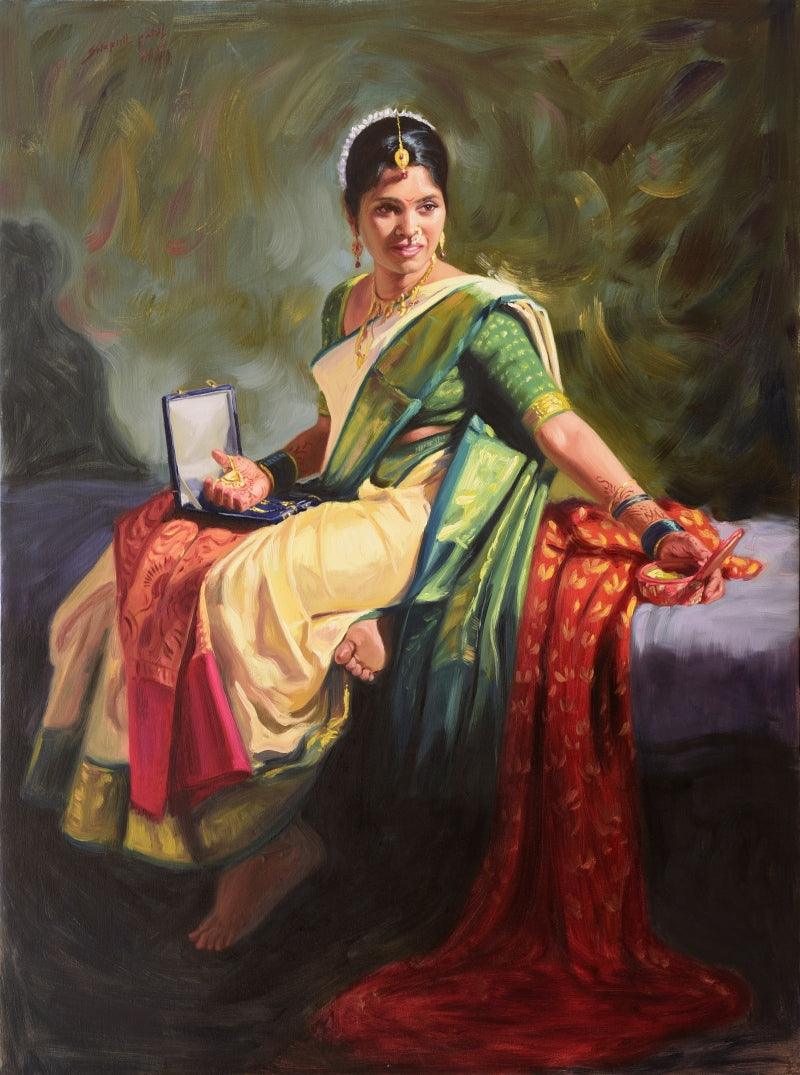
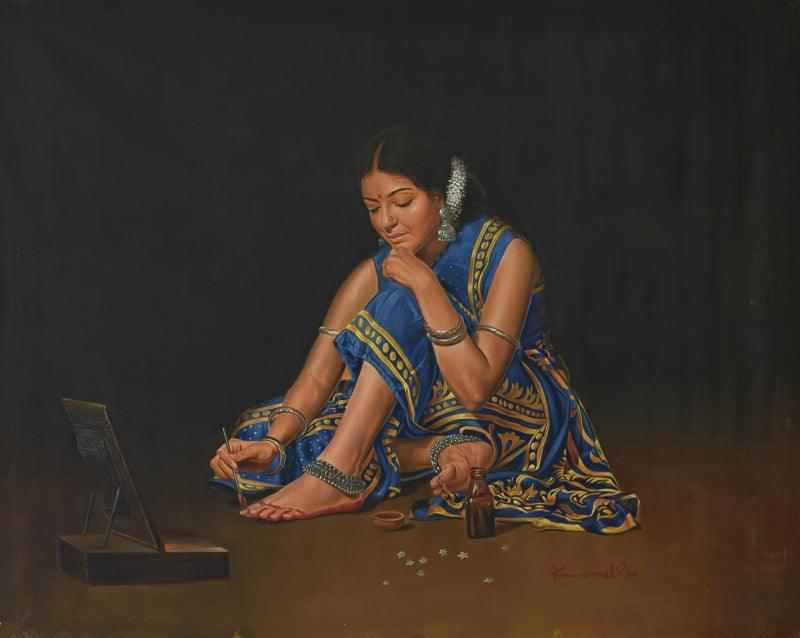
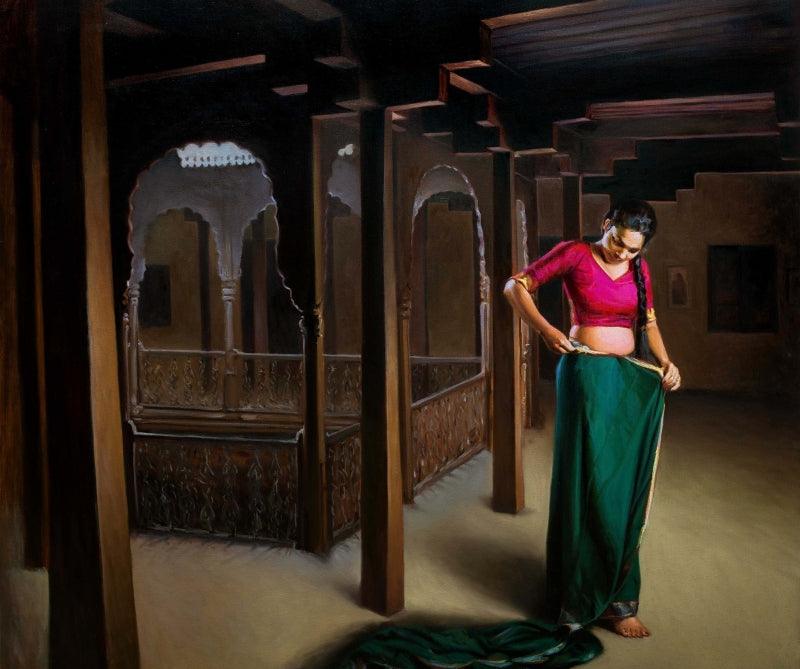
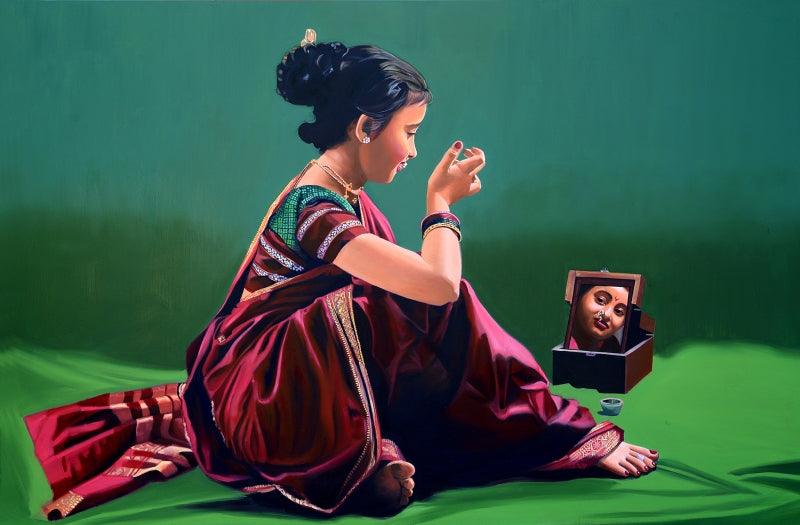
Set against an unmodulated green field that reads like a stage of pure consciousness, the seated figure becomes both performer and witness, her profile held in a hush of inward attention. The lustrous maroons of the sari fold into deep, rhythmic drapery, while a cool, directional light polishes skin and fabric into near-sculptural presence, elevating a private ritual into something ceremonial. In the small mirror box, the reflected face returns as an alternate self—an icon-like double that suggests identity as a careful construction, assembled through gesture, adornment, and gaze. The composition’s restraint—ample negative space, anchored diagonals of cloth and limb—turns intimacy into contemplation, as if the act of self-regard were also an act of devotion.
Delivery
You may also like