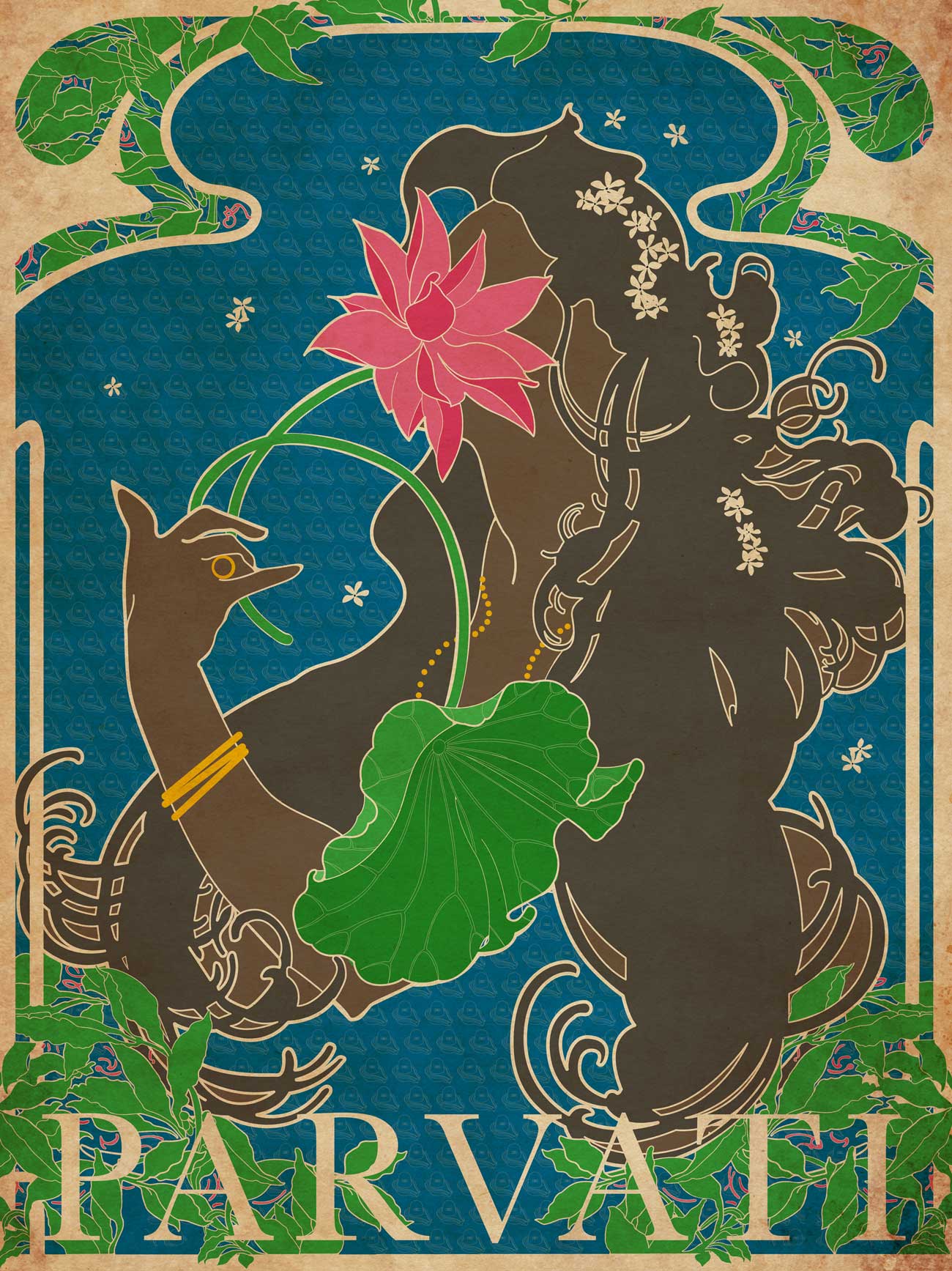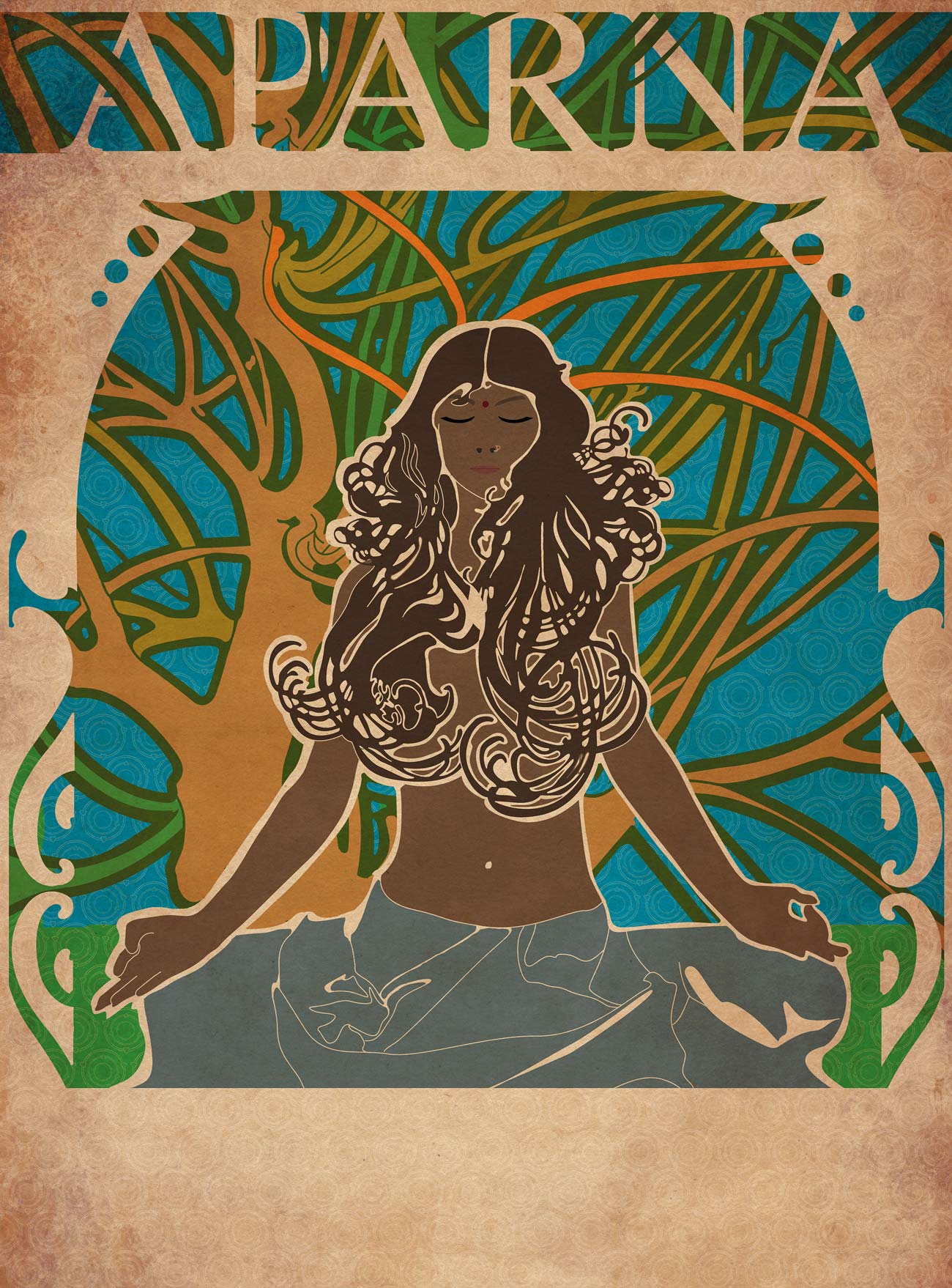
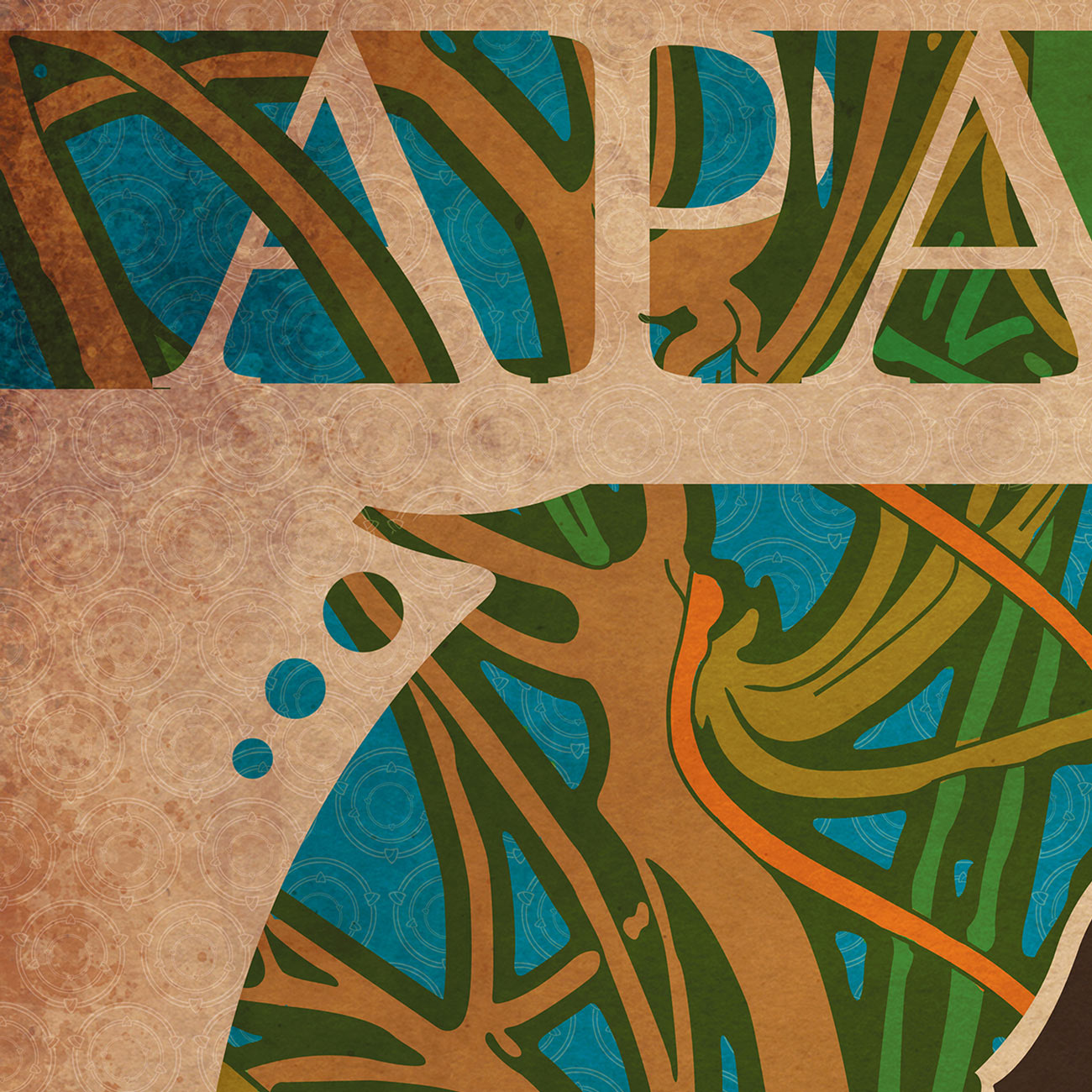
Shiva, devastated after the violent death of his beloved wife Sati, retreats into a state of absolute renunciation. But Sati returns in the avatar of Parvati, the mother goddess herself. Her sole purpose is to reclaim Shiva. And so begins a tapasya of such pure and powerful concentration that not even clothing nor food are allowed to break the flow of her communion with Shiva. The sages of the forest, awed, name her Aparna – without leaf, for not even a leaf has entered her mouth. Her tapasya so powerful, brings Shiva out of his, and compels him to gaze upon the beautiful revival of his wife.
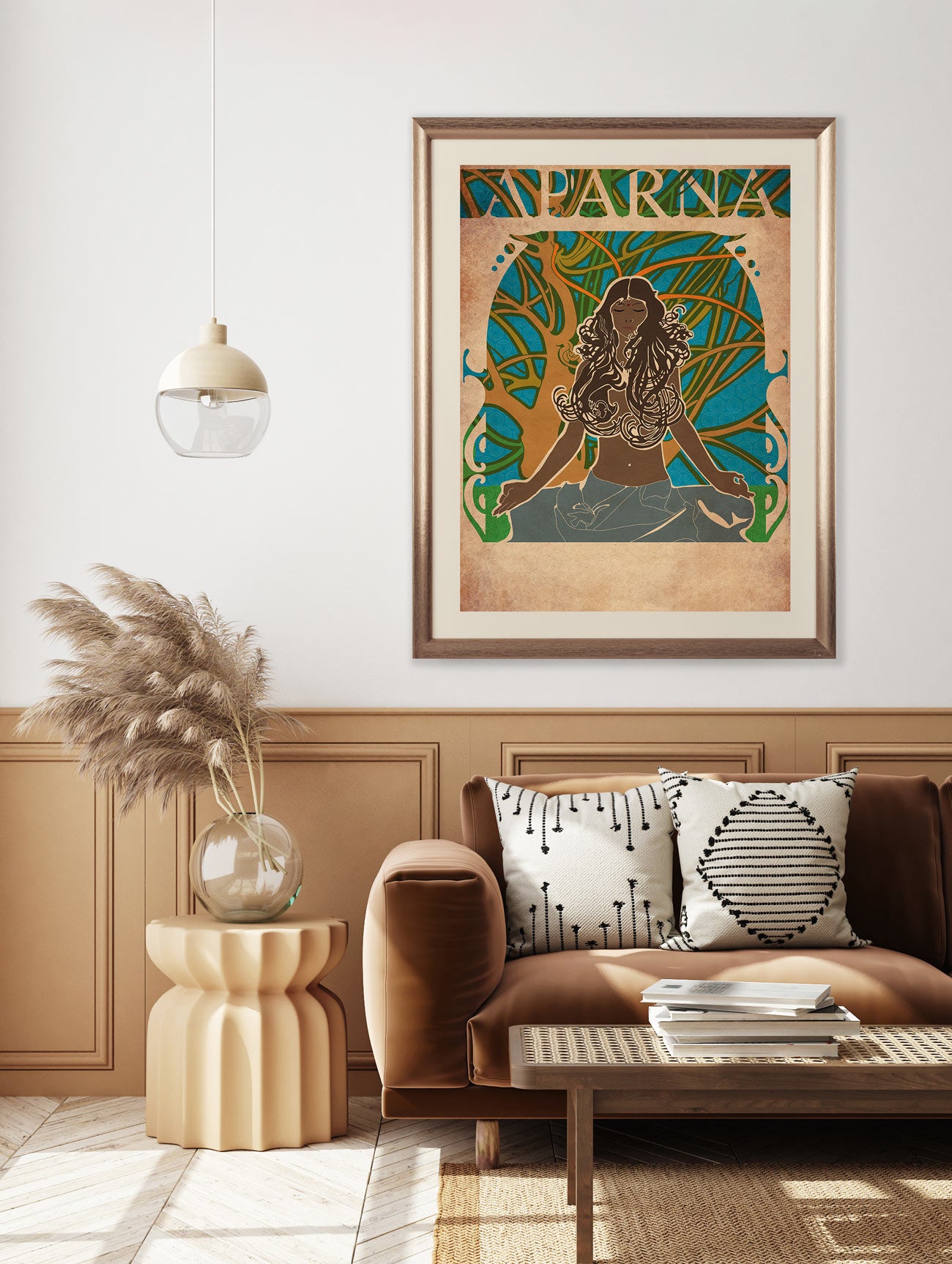
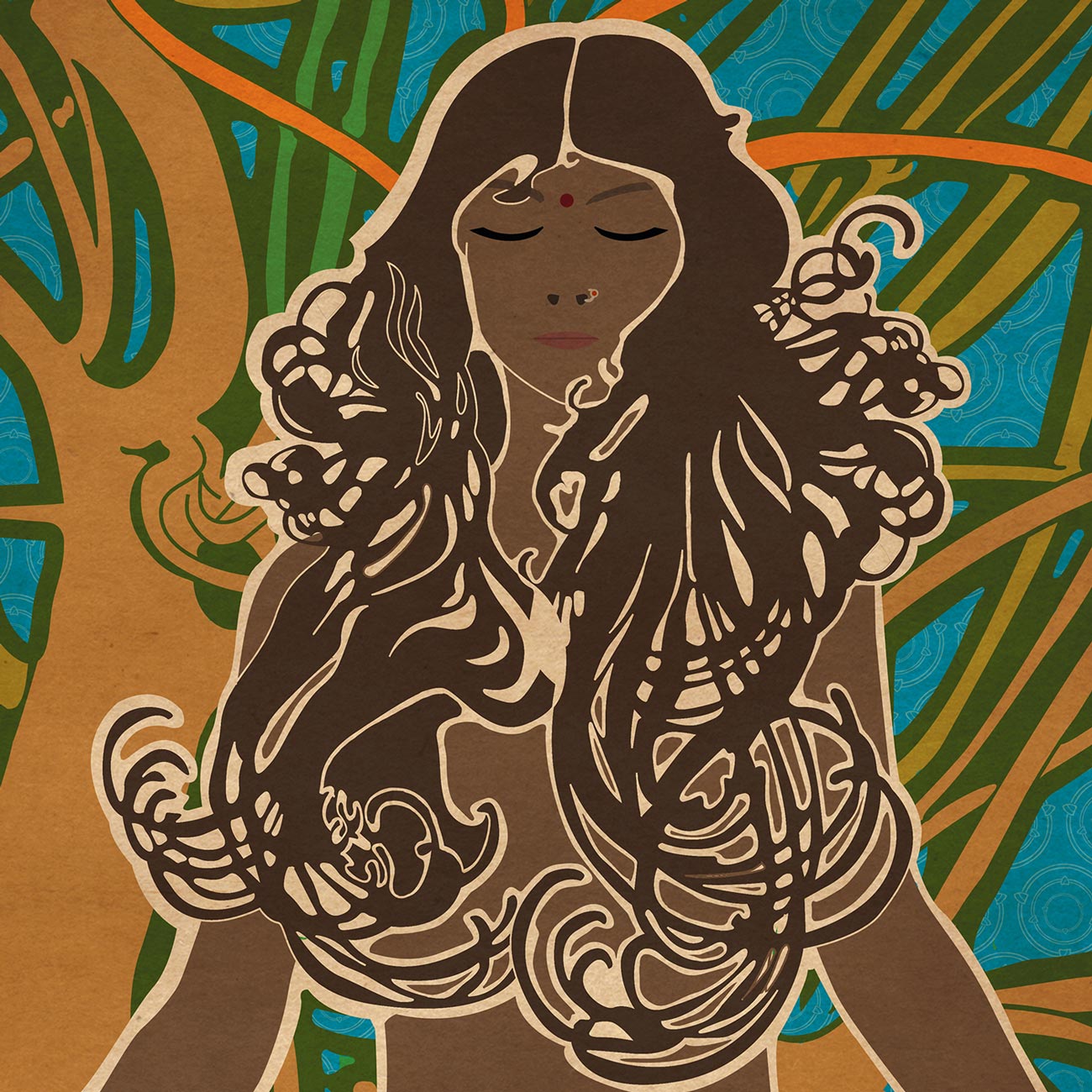
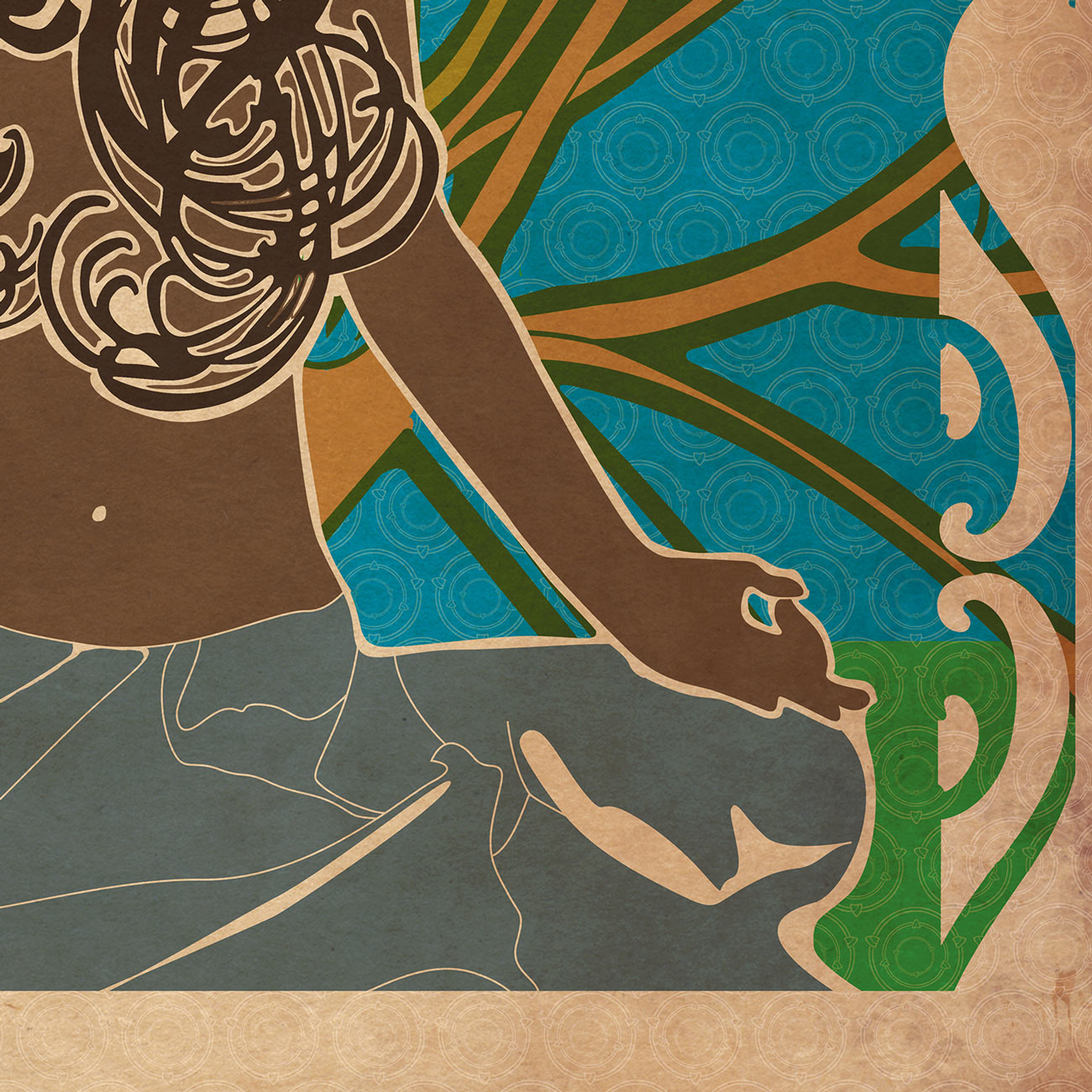
Gradually darkening earth tones, the deep forest green and the black of Aparna’s hair make the stillness and quiet intensity of the forest palpable. But there is movement too - in the gentle fluidity of the freely flowing tendrils of hair that seem to merge with the lithe branches of the trees. There is the distinct sensation of an elemental force at work.
About the Series:
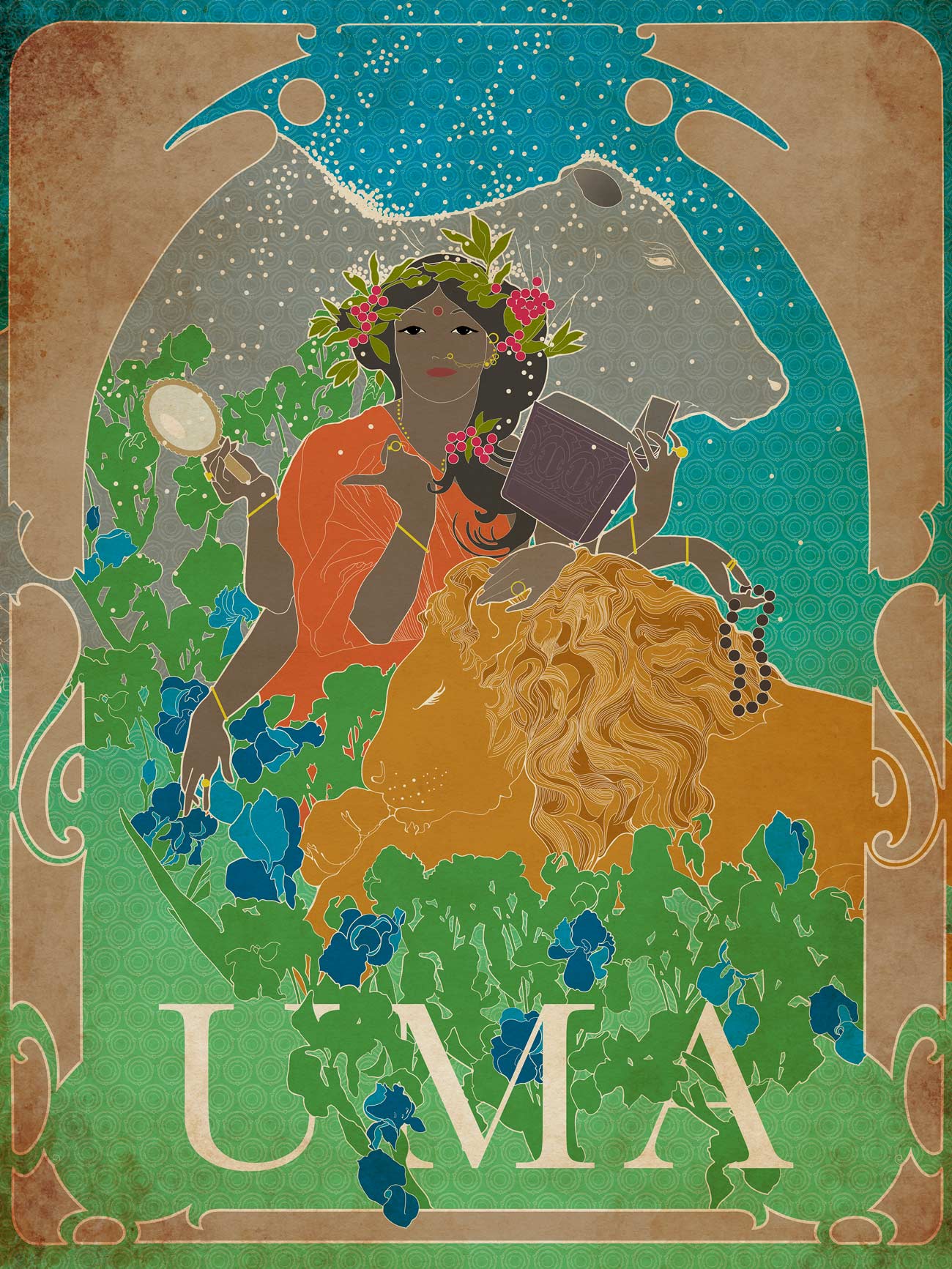
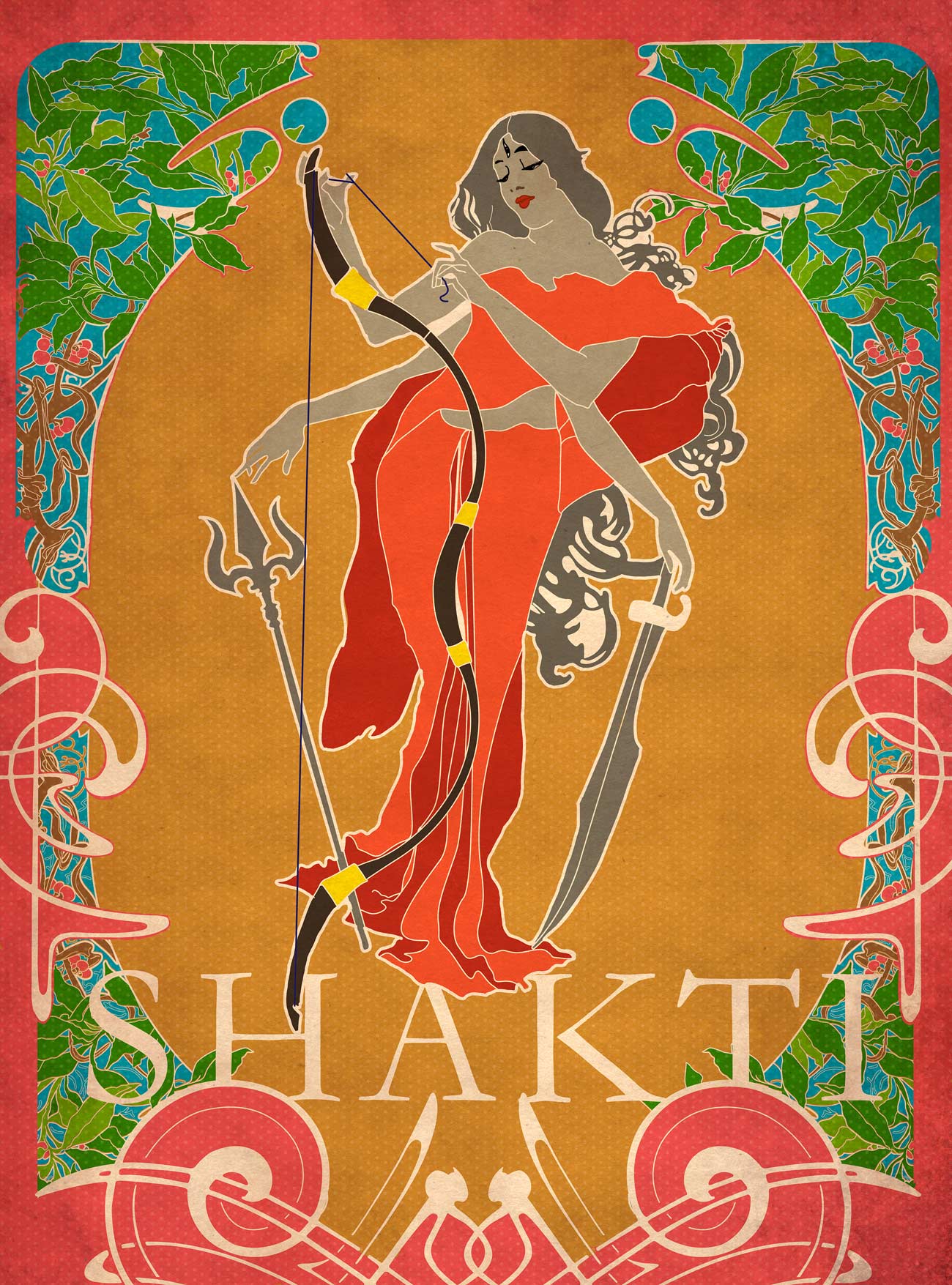
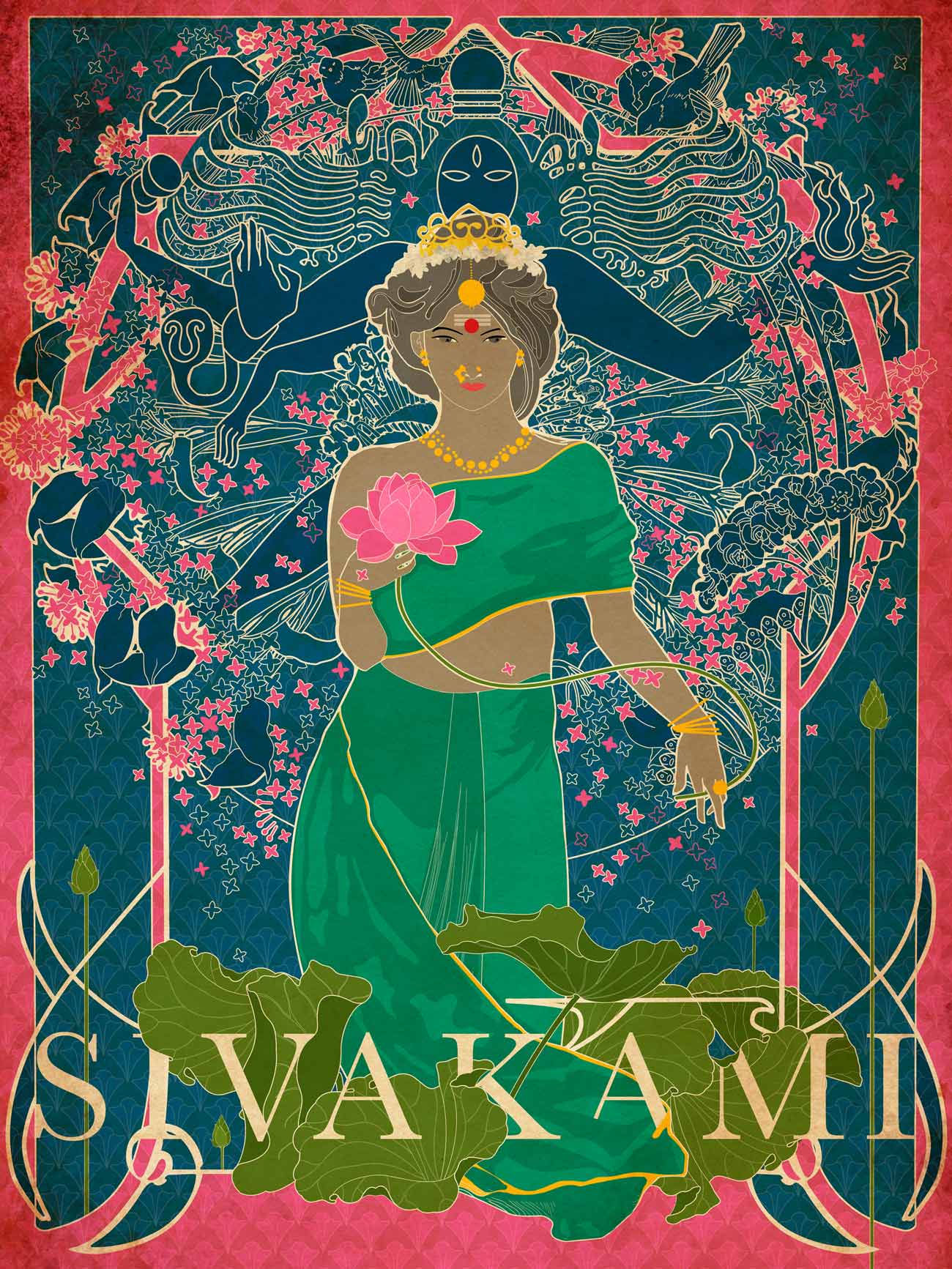
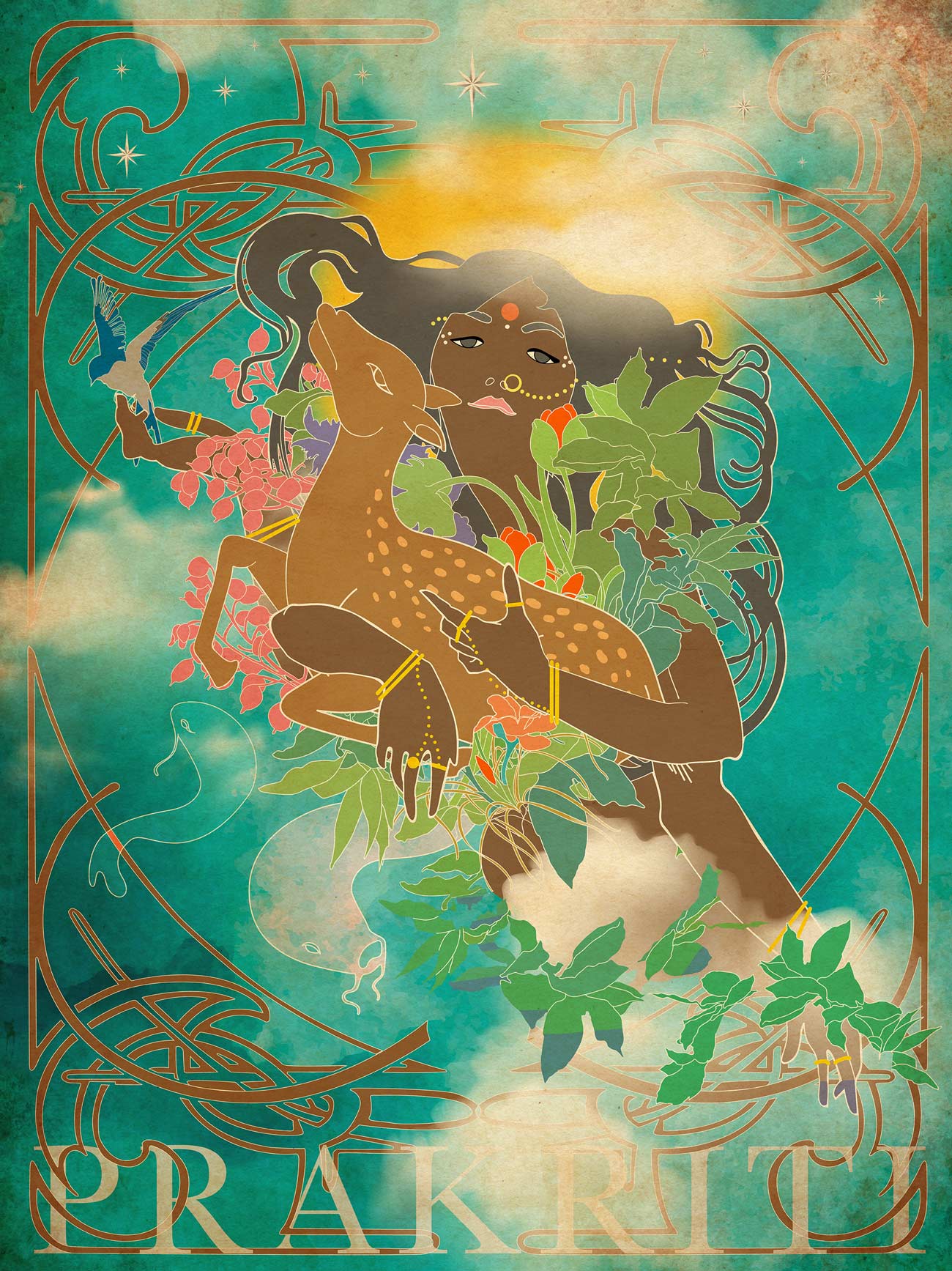
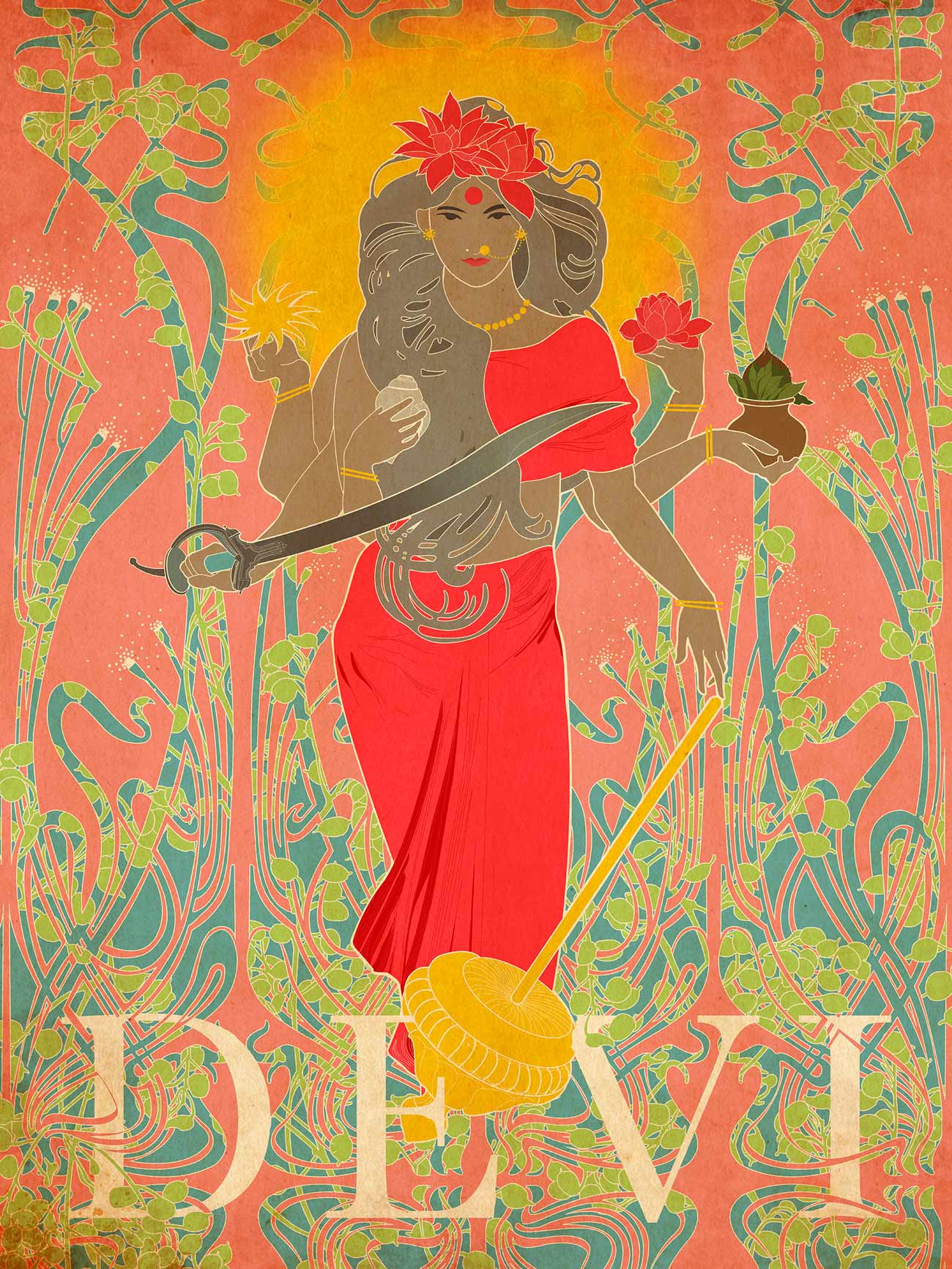
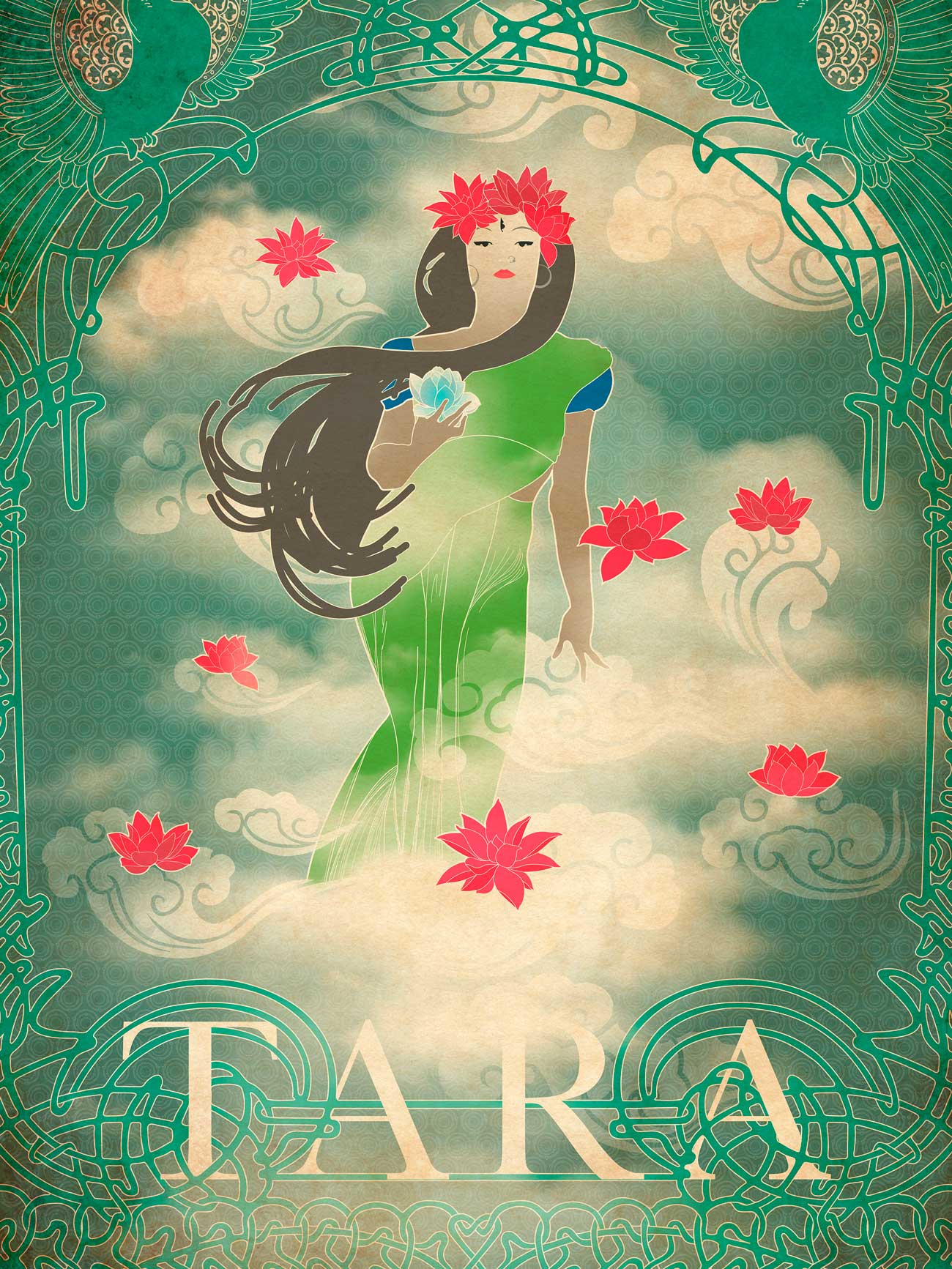
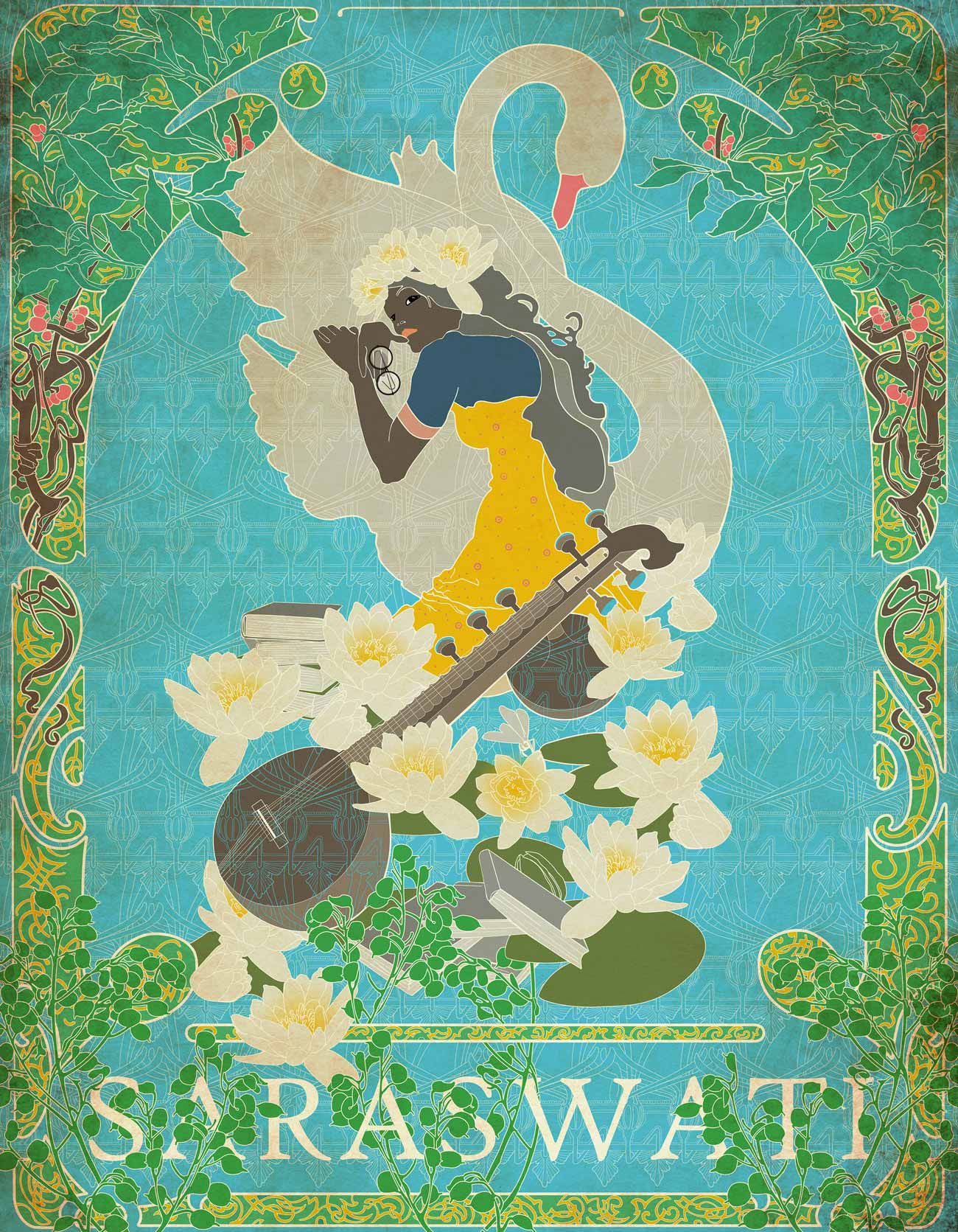
This artwork is part of the “Sister Misfortune” series, through which the artist, Smruthi Gargi Eswar, narrates lesser-known stories from Indian mythology, while reflecting on the narrative surrounding women in our culture. Various Indian goddesses (devis) are depicted with a refreshing artistic lens.
In India, there is a constant burden on women to be “Devi-like”. Through this series, the artist attempts a reverse deification of the goddesses, making them appear like real women, in a real world. The series is an exploration not just of duality, but of multiplicity. It compels us to question our attitudes - women towards themselves, men towards women. How does the idea of a goddess coexist within every woman? How do we, as a society, so casually dismiss, disrespect, disregard, and defile in our everyday existence, those who we have bedecked with gold and enshrined in a temple?
Gradually darkening earth tones, the deep forest green and the black of Aparna’s hair make the stillness and quiet intensity of the forest palpable. But there is movement too - in the gentle fluidity of the freely flowing tendrils of hair that seem to merge with the lithe branches of the trees. There is the distinct sensation of an elemental force at work.
About the Series:
This artwork is part of the “Sister Misfortune” series, through which the artist, Smruthi Gargi Eswar, narrates lesser-known stories from Indian mythology, while reflecting on the narrative surrounding women in our culture. Various Indian goddesses (devis) are depicted with a refreshing artistic lens.
In India, there is a constant burden on women to be “Devi-like”. Through this series, the artist attempts a reverse deification of the goddesses, making them appear like real women, in a real world. The series is an exploration not just of duality, but of multiplicity. It compels us to question our attitudes - women towards themselves, men towards women. How does the idea of a goddess coexist within every woman? How do we, as a society, so casually dismiss, disrespect, disregard, and defile in our everyday existence, those who we have bedecked with gold and enshrined in a temple?