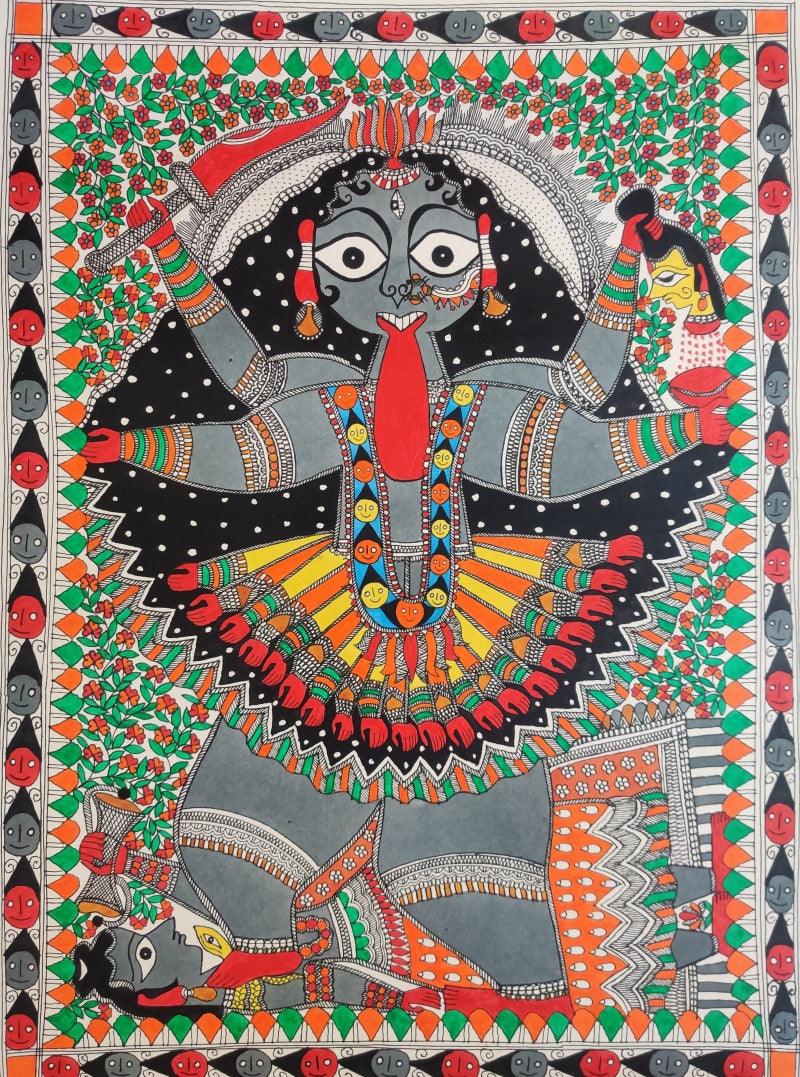
Goddess Kali (Kali's Cosmic Dance)
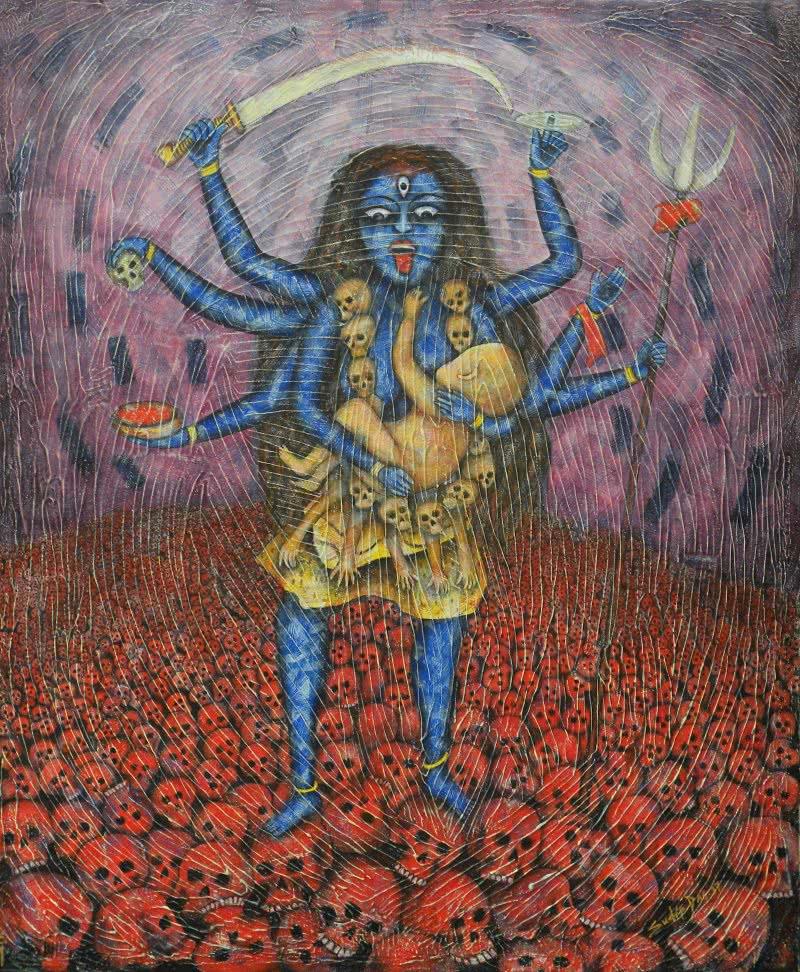
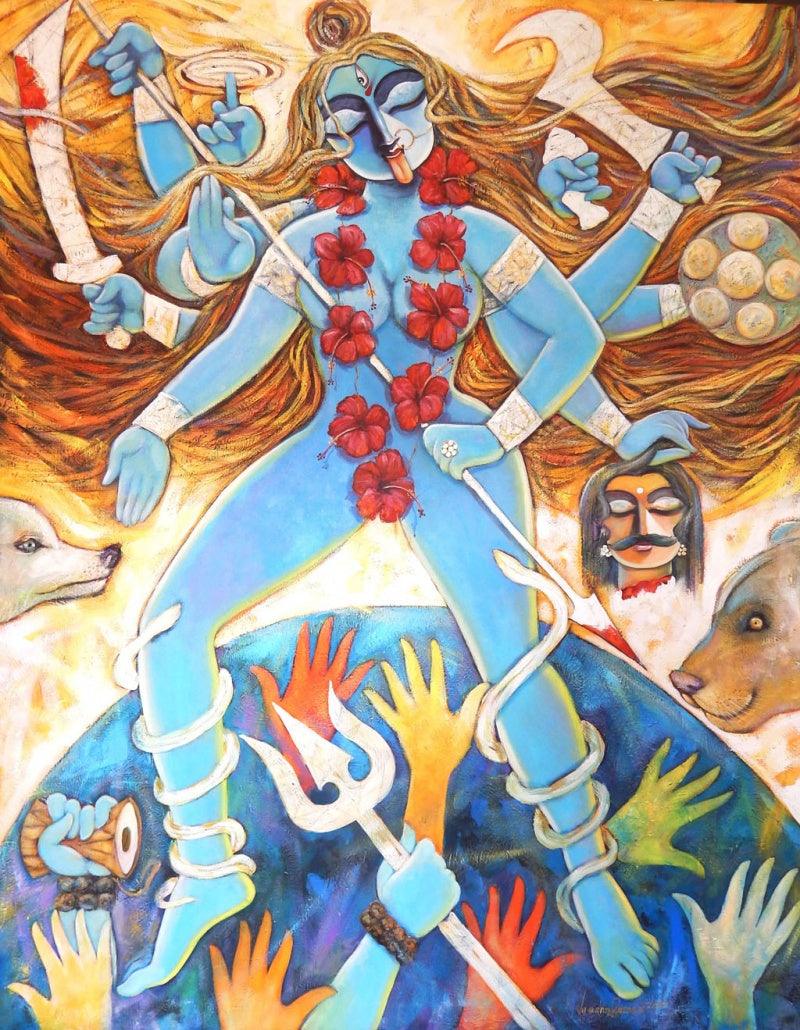
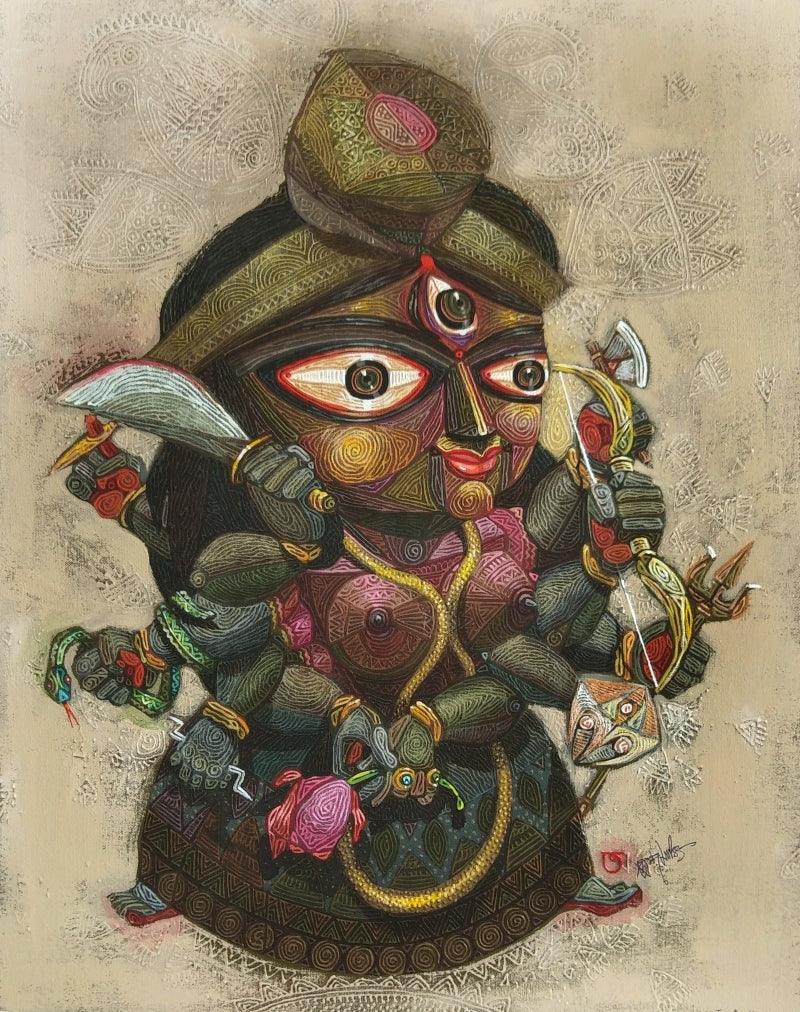
This vividly patterned depiction of Kali turns the goddess into a living mandala—her many arms radiating outward like a disciplined storm, each gesture balancing protection, severance, and sacred insistence. The stark dialogue of black, red, and ash-grey heightens the emotional voltage: darkness is not absence here but a charged field, punctuated by ornament and floral abundance that suggests life persisting at the edge of terror. Encircled by a rhythmic border of faces, the scene reads as both ritual theatre and inner landscape, where the self is confronted, dismantled, and ultimately re-ordered through ferocious compassion. Even the dense decorative latticework functions symbolically, binding chaos into pattern and turning violence into a grammar of transformation.
Delivery
You may also like