Untitled 79
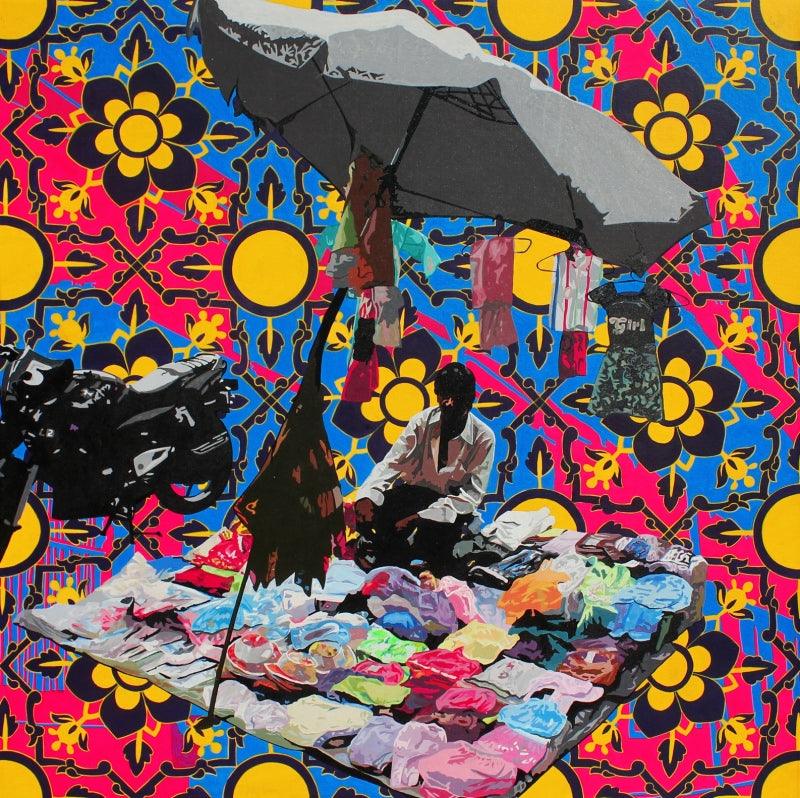
Against a riotous field of ornamental patterning, the street vendor’s modest enclave—cloth, garments, and a sheltering umbrella—reads like a fragile island of livelihood carved out of visual excess. The composition pits the anonymity of silhouetted figures against the intimacy of handled fabric, where each saturated fold becomes both commodity and quiet testimony to labor. Light is implied rather than described: the umbrella casts a protective dusk over the seller, suggesting resilience and concealment while the background’s relentless vibrancy evokes the city’s indifferent spectacle. In this tension between decoration and survival, the work turns commerce into a meditation on visibility—who is seen, who is flattened into pattern, and who persists by arranging color into order.
Delivery
You may also like