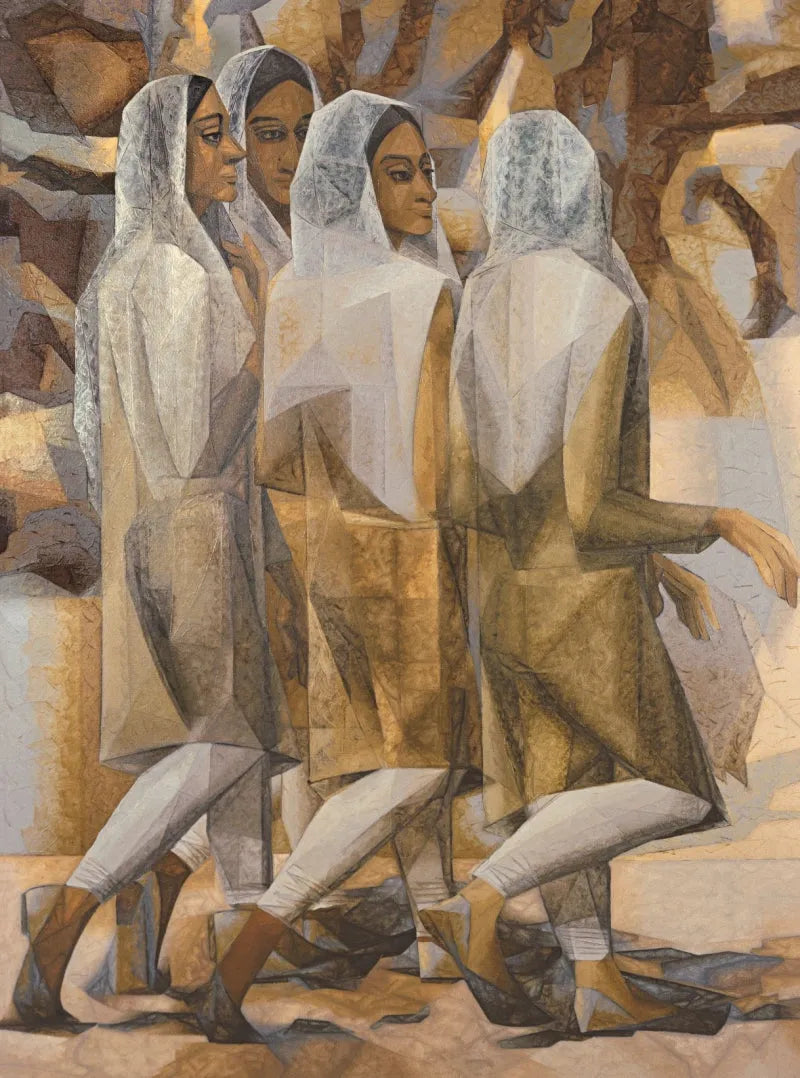
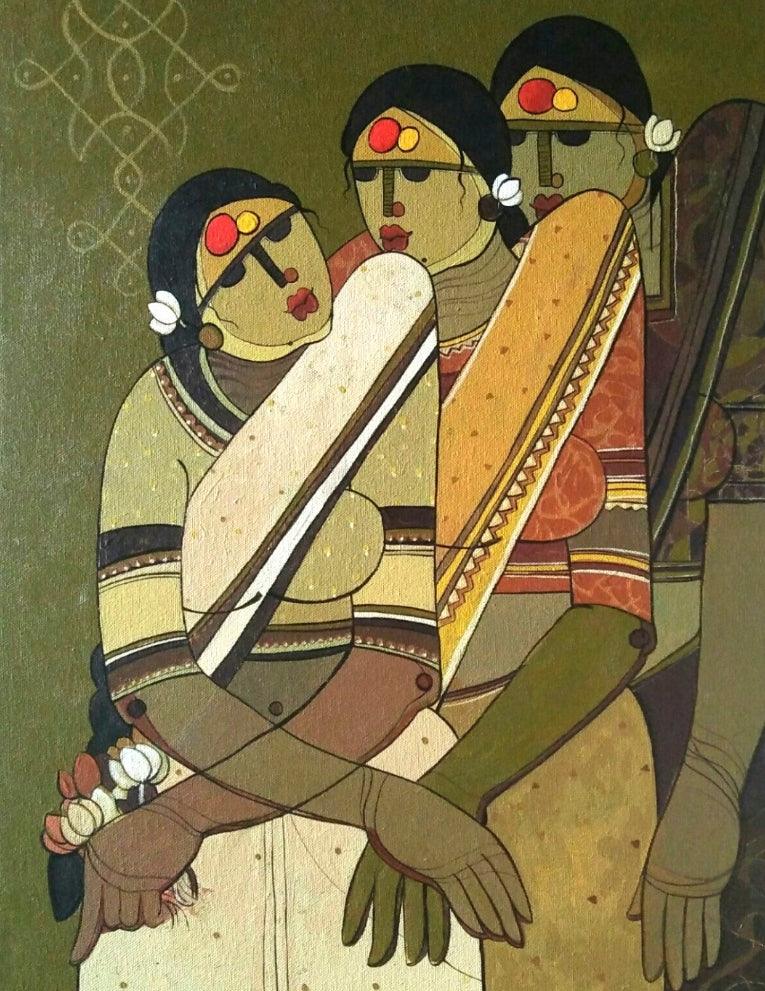
The Friends (The Friends)
₹450,000
● In stockchecking live price…
Size
44x30Type
SerigraphMaterial
PaperA procession of veiled figures advances through a fractured, earth-toned architecture, their bodies rendered in angular planes that feel both sculptural and tenderly human. The milky whites of the drapery catch a softened light, creating a quiet halo effect that contrasts with the ochres and umbers behind them, as if memory itself were built from dust and sun. Compressed together yet inward-looking, the women suggest a shared ritual—part solidarity, part solitude—where anonymity becomes a form of protection and dignity. The faceted composition turns the scene into a mosaic of time, implying that movement forward is never purely linear but negotiated through history’s broken surfaces.
Delivery
You may also like
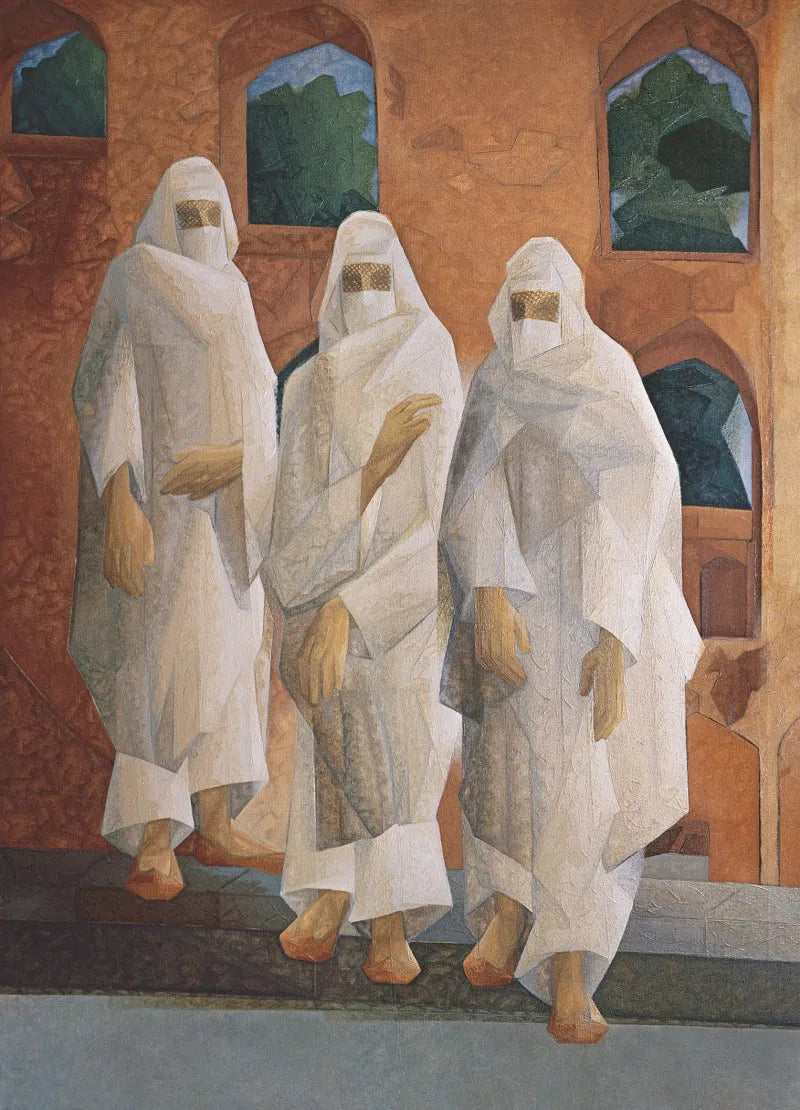
Purdah 1 (The Veiled Procession)
Artzolo
₹300,000
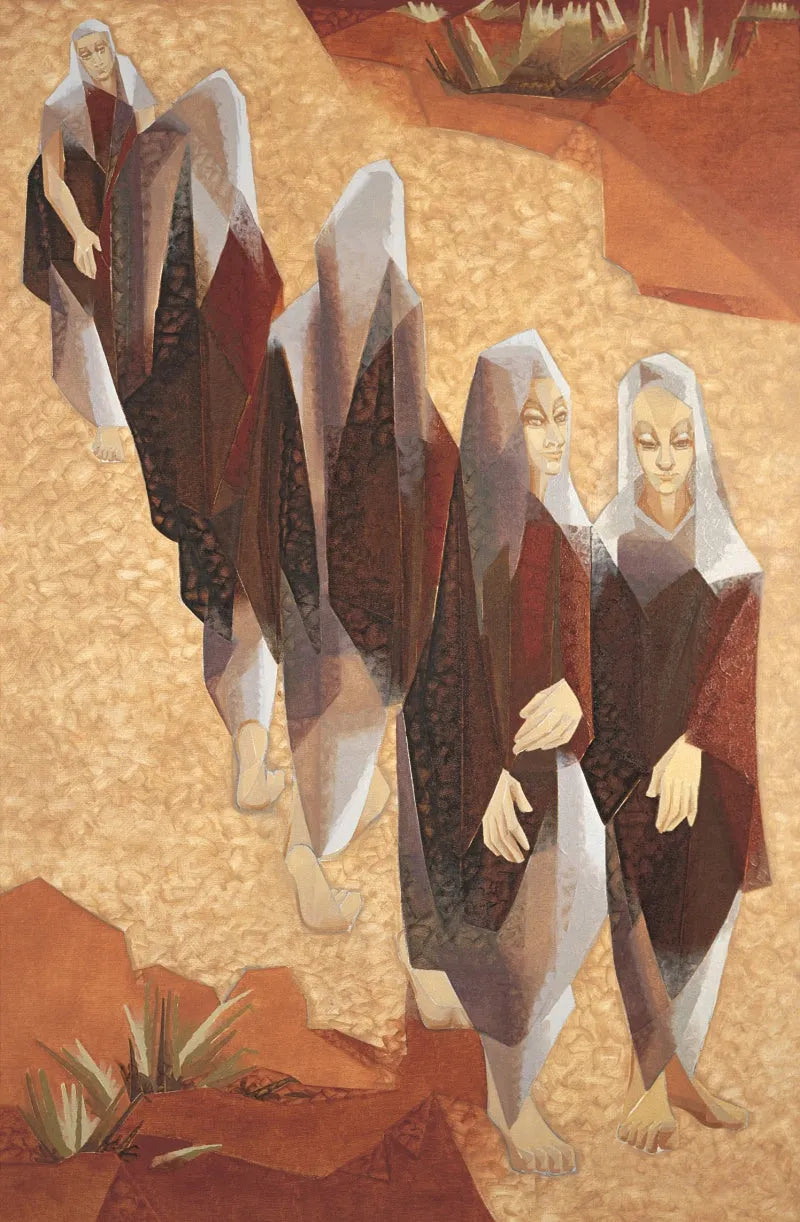
Pilgrimage 2 (Pilgrimage II)
Artzolo
₹300,000
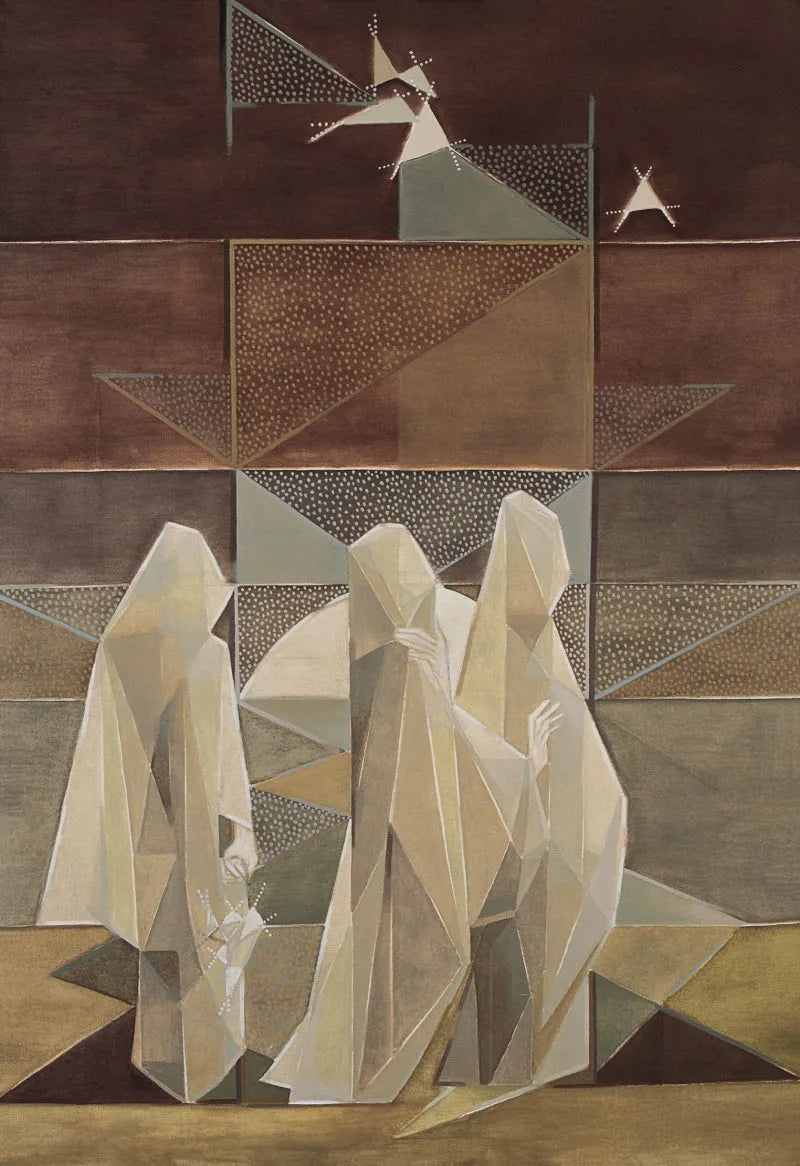
The Wandering Shades 2 (The Wandering Shades II)
Artzolo
₹300,000
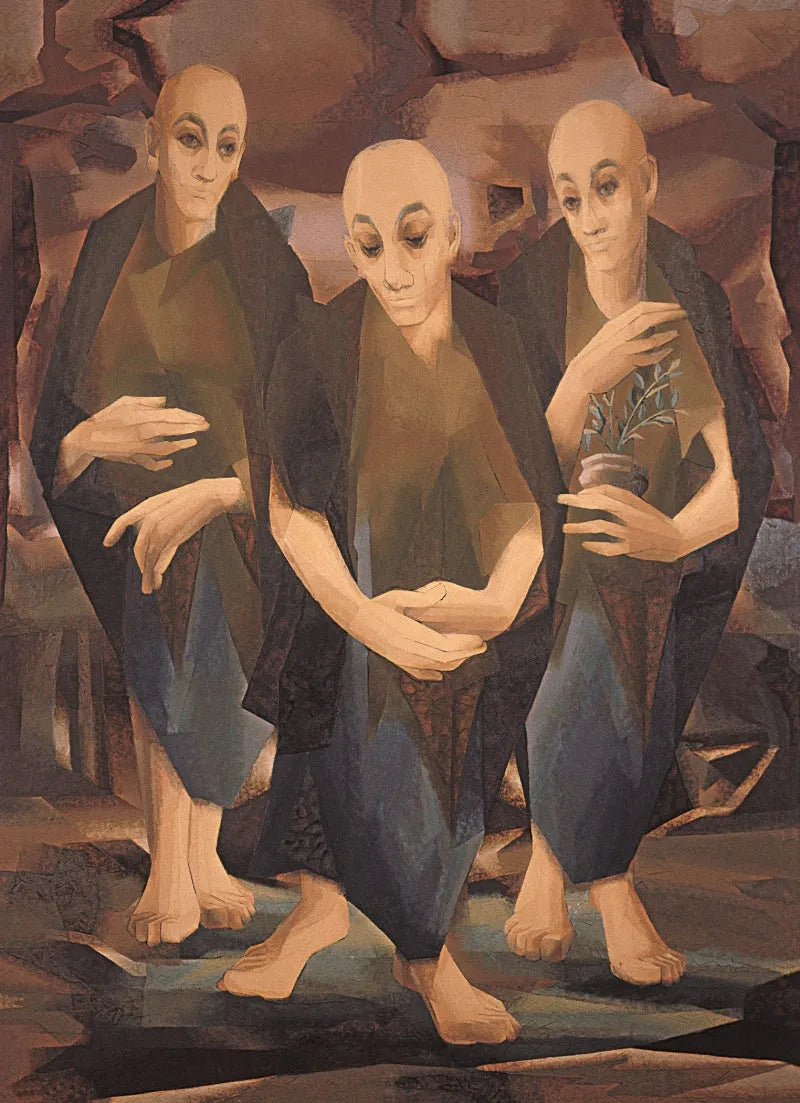
The Disciples (The Disciples)
Artzolo
₹300,000
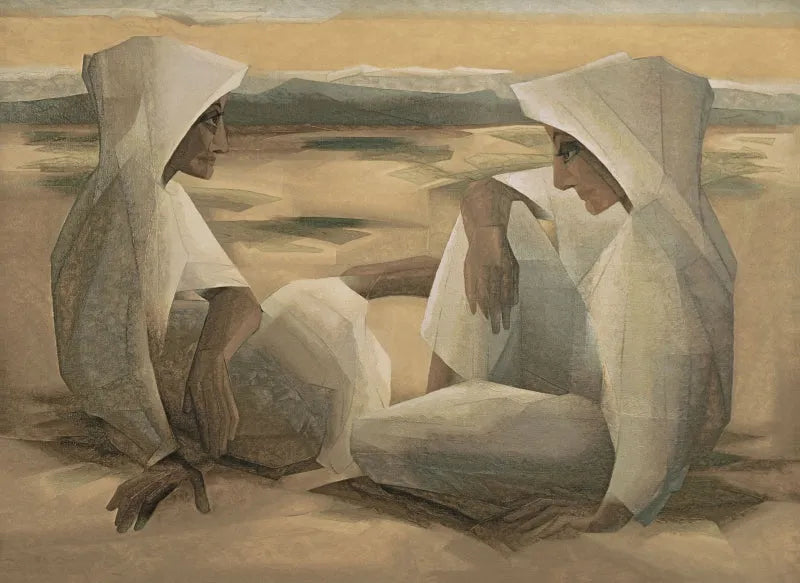
At The Deserts Edge (At the Desert's Edge)
Artzolo
₹300,000
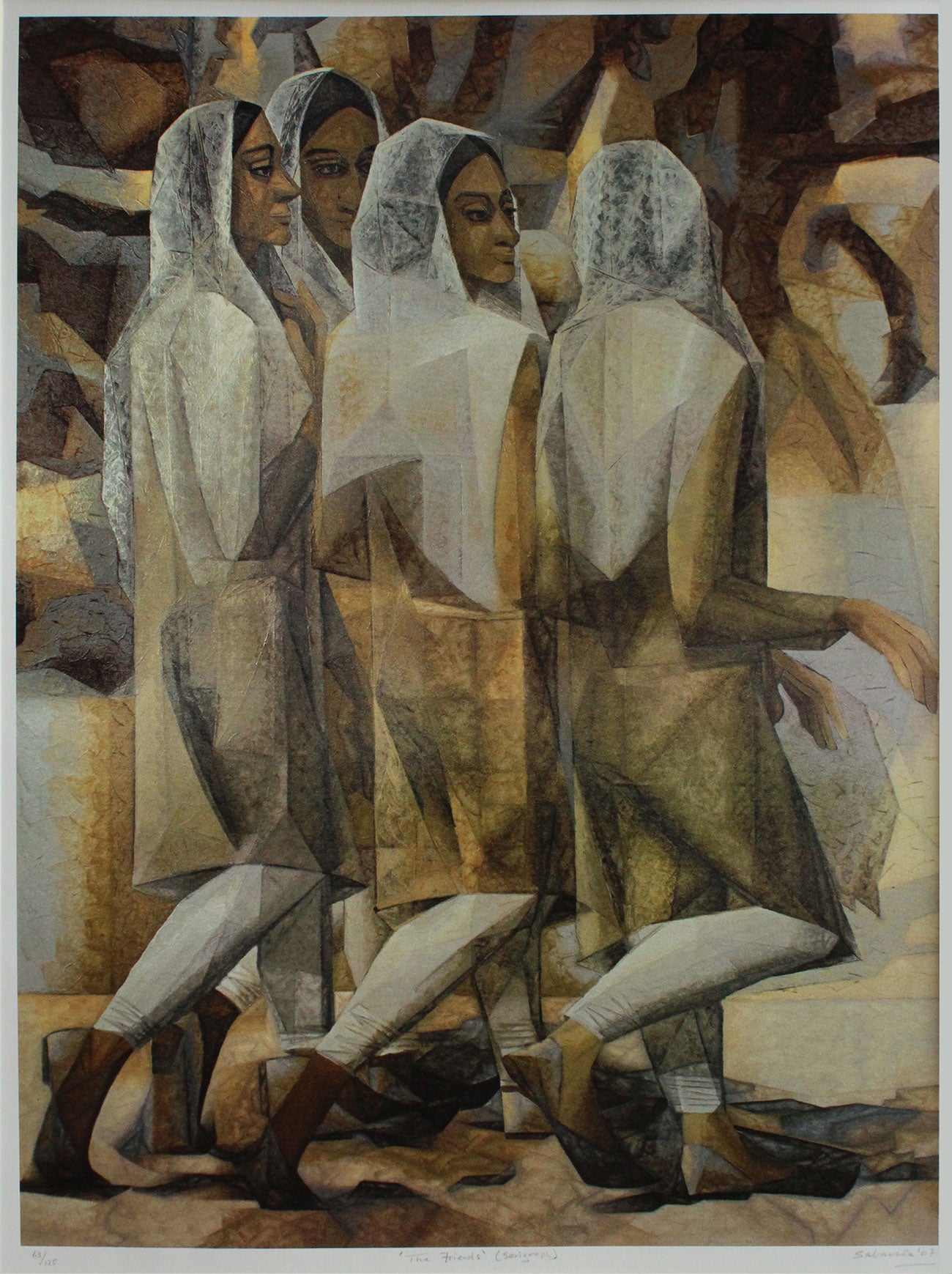
The Friends
Artisera
₹2,000,000
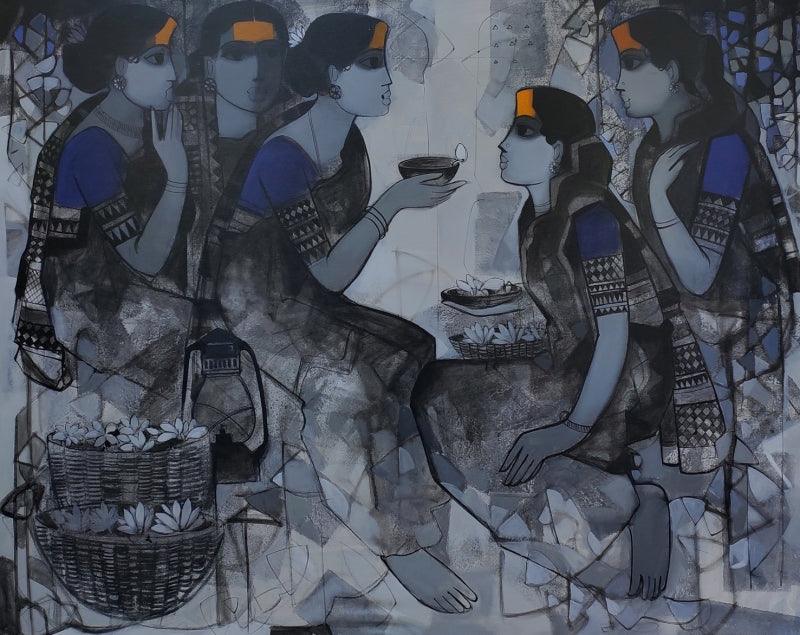
Friends 1
Artzolo
₹250,000
out of stock
★ 5.0 (5)
Friends
Artzolo
₹25,000
out of stock
★ 4.0 (11)