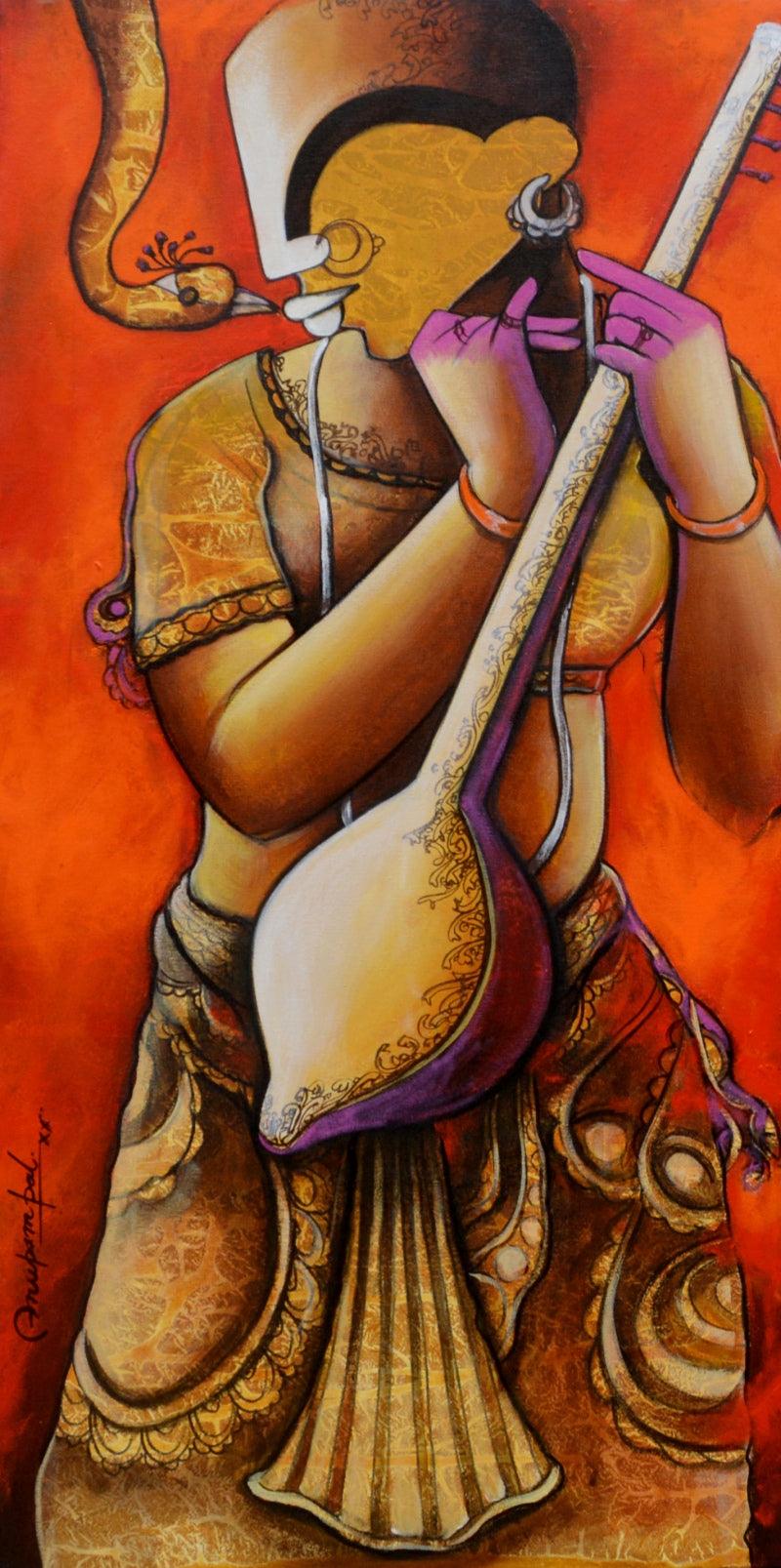
Element Of Devotion
₹16,000
Out of stock · ★ 4.0 (5)checking live price…
Size
18x36Type
OriginalMaterial
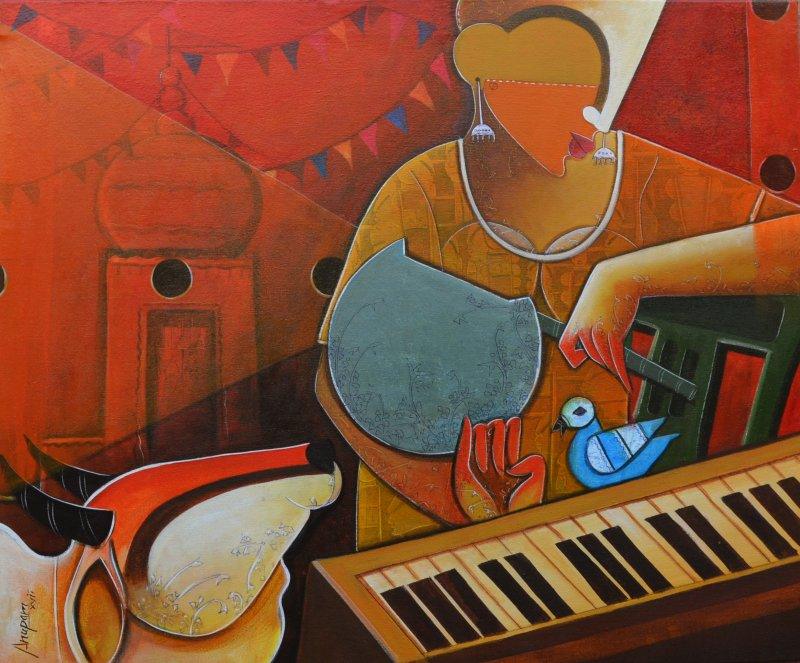
CanvasSet against a molten vermilion ground, the faceless musician becomes an icon of inward listening, where identity dissolves so that sound can take center stage. The sinuous neck of the tanpura arcs like a quiet spine through the composition, its pale body catching a soft, sanctified light that counters the heat of the surrounding field. Ornamental golds and patterned textiles read as memory and lineage—tradition worn like a second skin—while the violet-tinted hands introduce a contemporary pulse, suggesting devotion that is both ritual and living presence. In this poised stillness, music is framed not as performance but as a private conduit, a tender discipline that holds the self together through vibration.
Delivery
You may also like
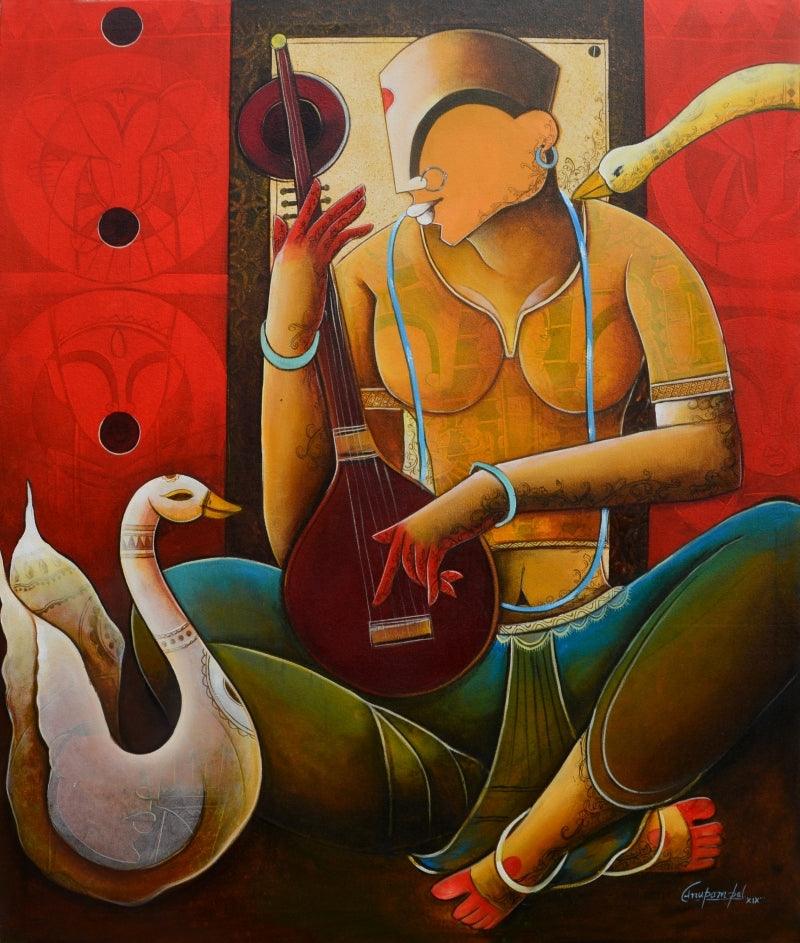
Veenavani:
Artzolo
₹42,000
out of stock
★ 5.0 (15)
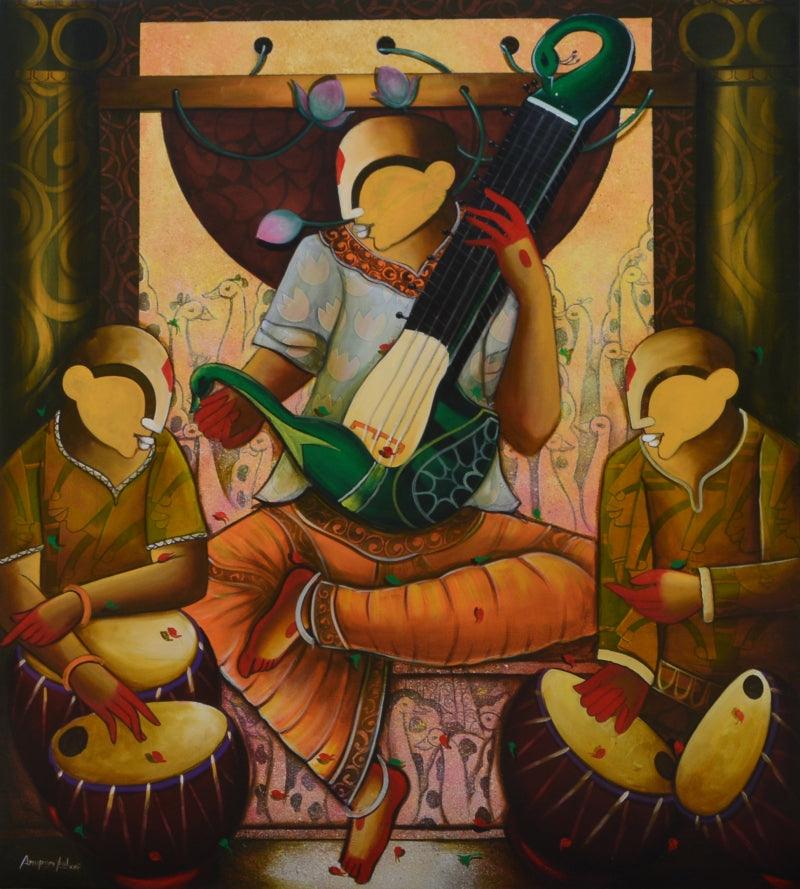
Musical Memoir
Artzolo
₹110,000
out of stock
★ 4.0 (11)
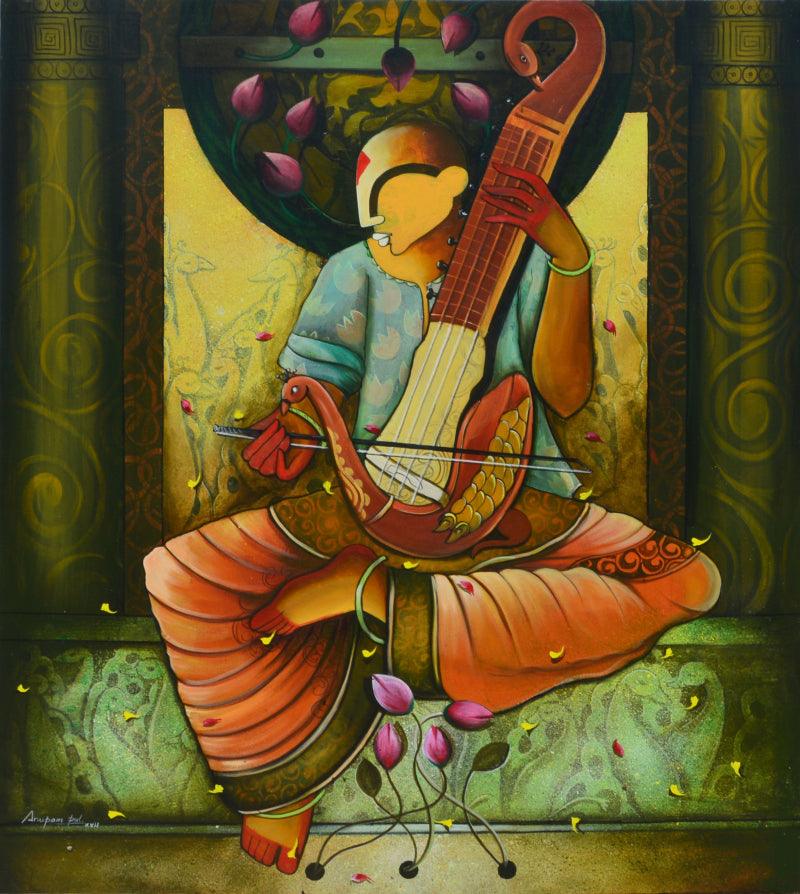
World On A String
Artzolo
₹99,000
out of stock
★ 4.0 (5)
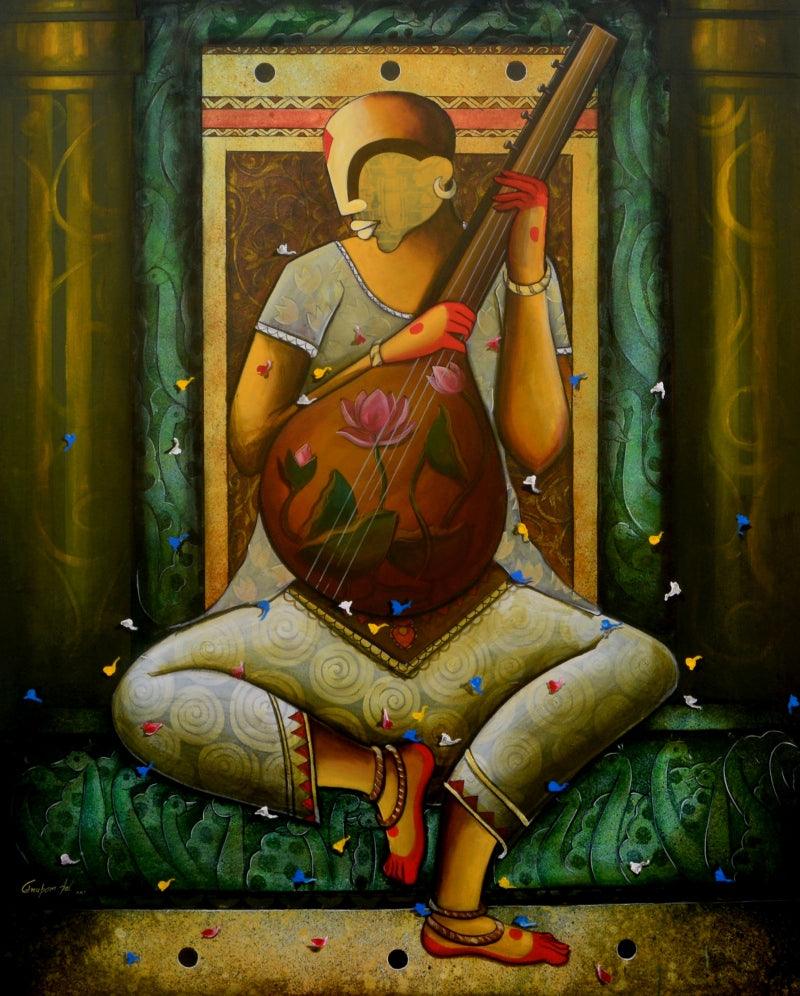
The Mesmerizing Tunes
Artzolo
₹90,000
out of stock
★ 4.0 (6)
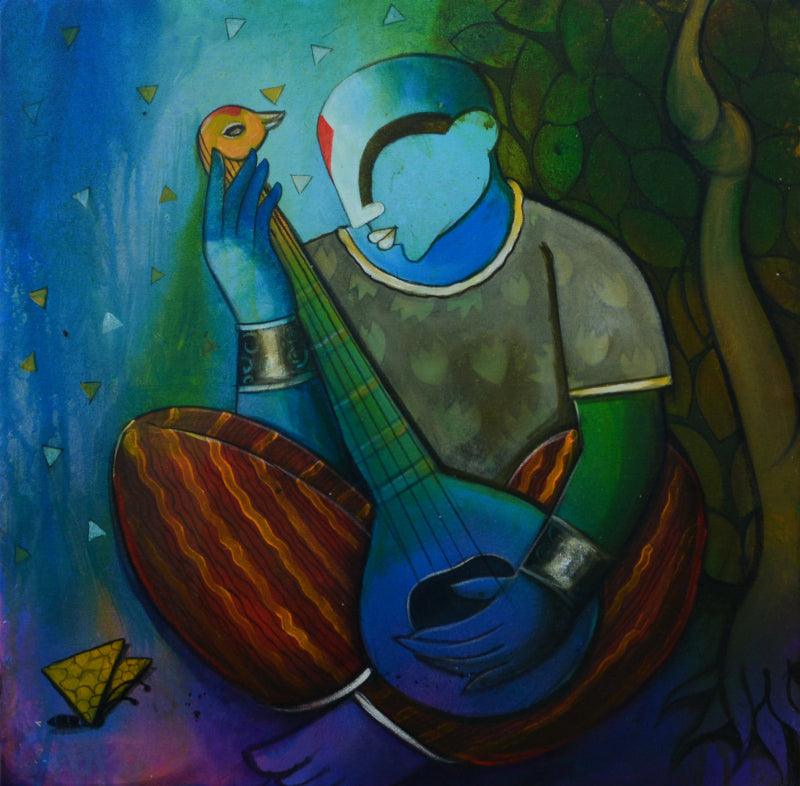
A Testament Of Devotion (Symphony of Nature) (Cosmic Harmony)
Artzolo
₹33,000
★ 5.0 (11)
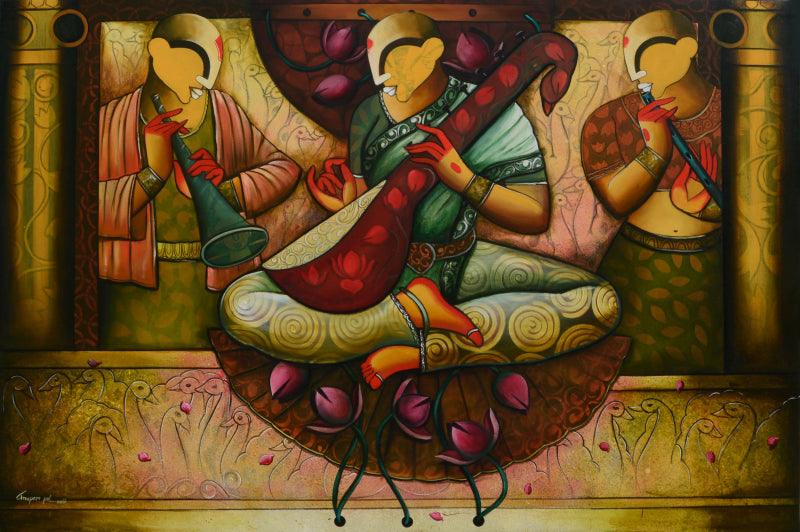
The Mesmerizing Melody (Harmonious Tapestry)
Artzolo
₹160,000
out of stock
★ 5.0 (7)
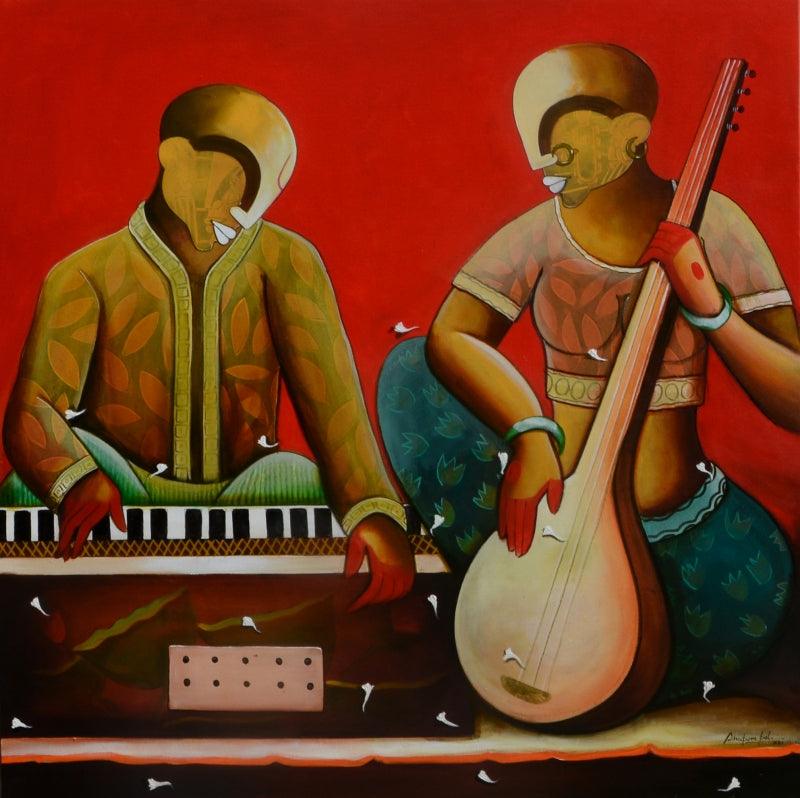
Rhythm Of Renewal
Artzolo
₹85,000
★ 5.0 (6)
Musician (Abstract Musician with Instrument)
Artzolo
₹25,000
out of stock
★ 5.0 (12)