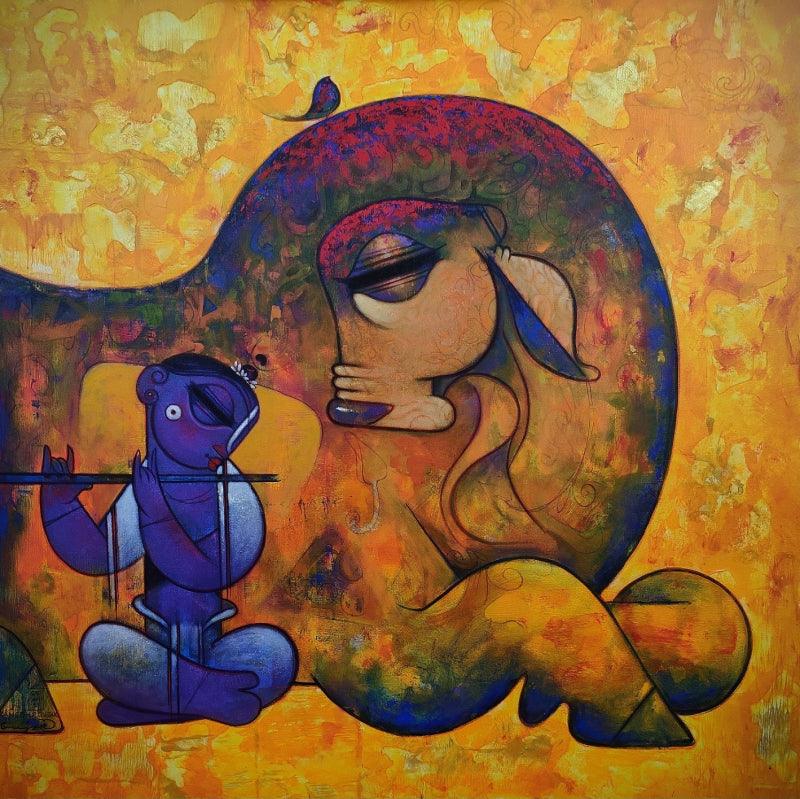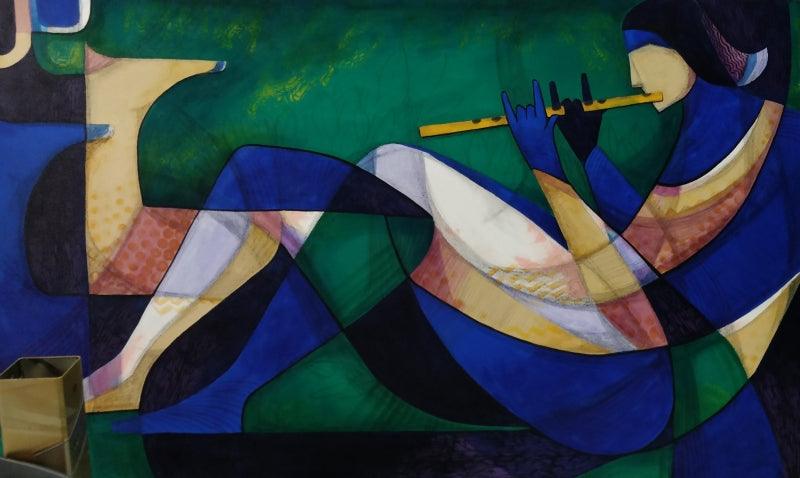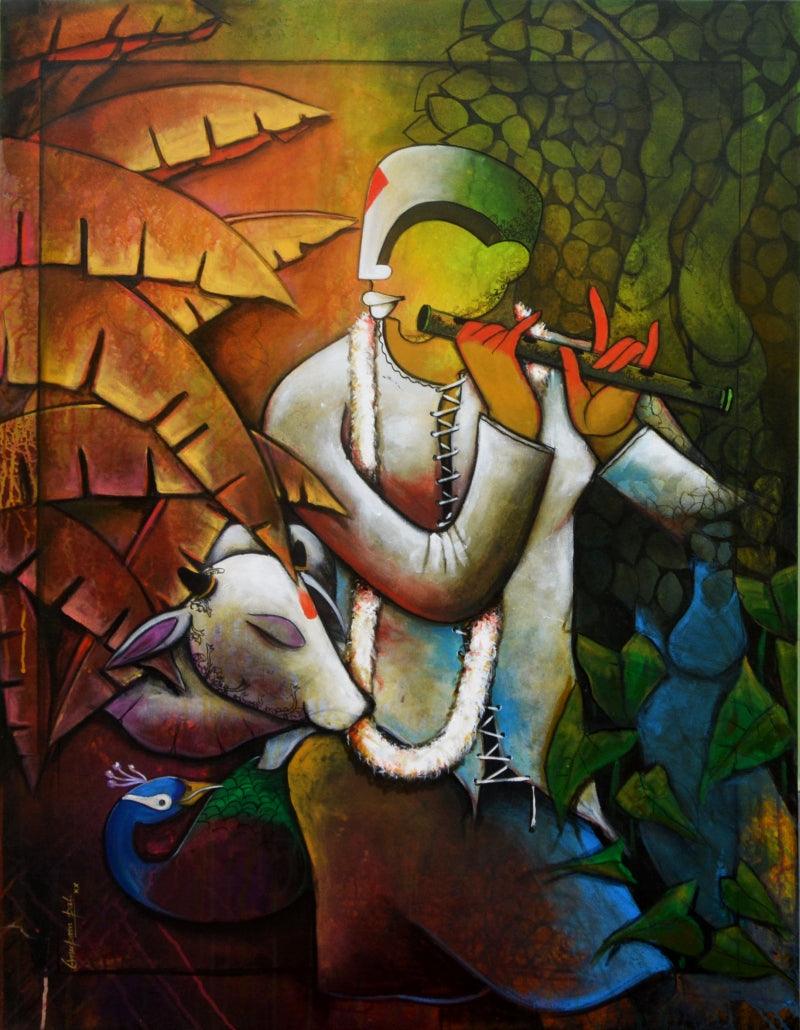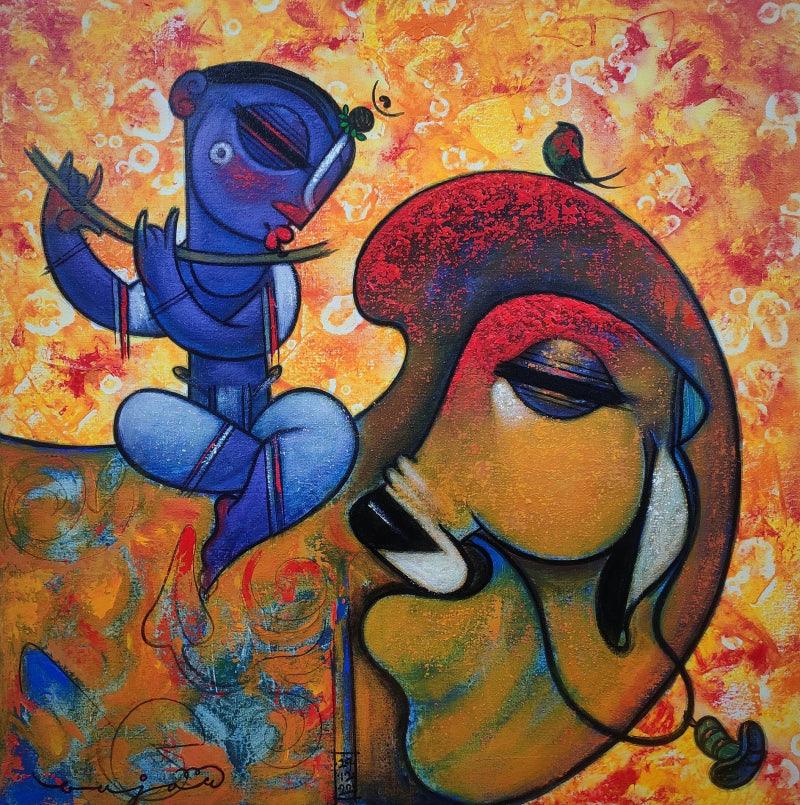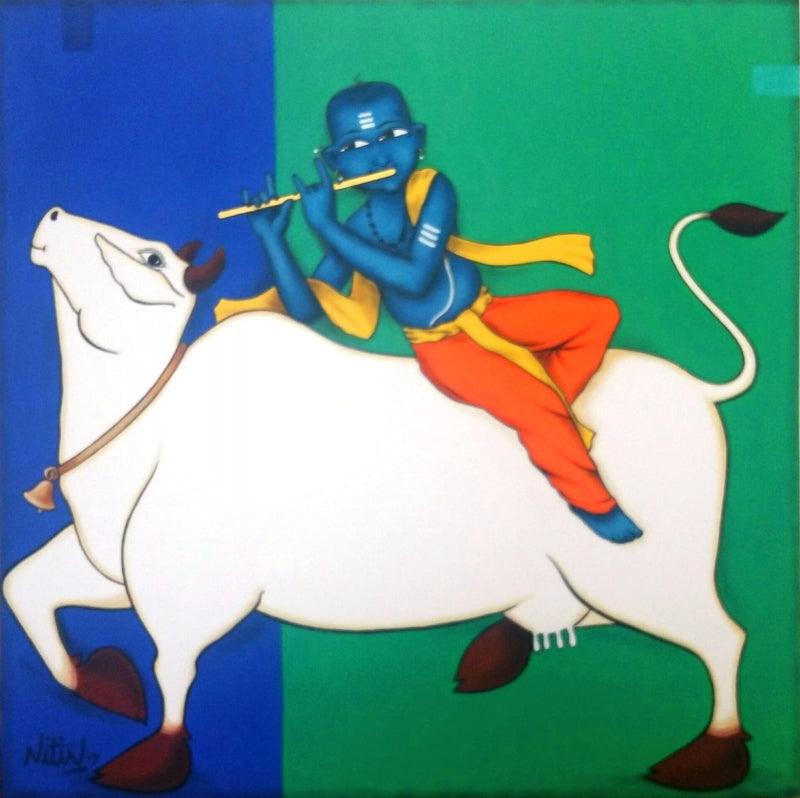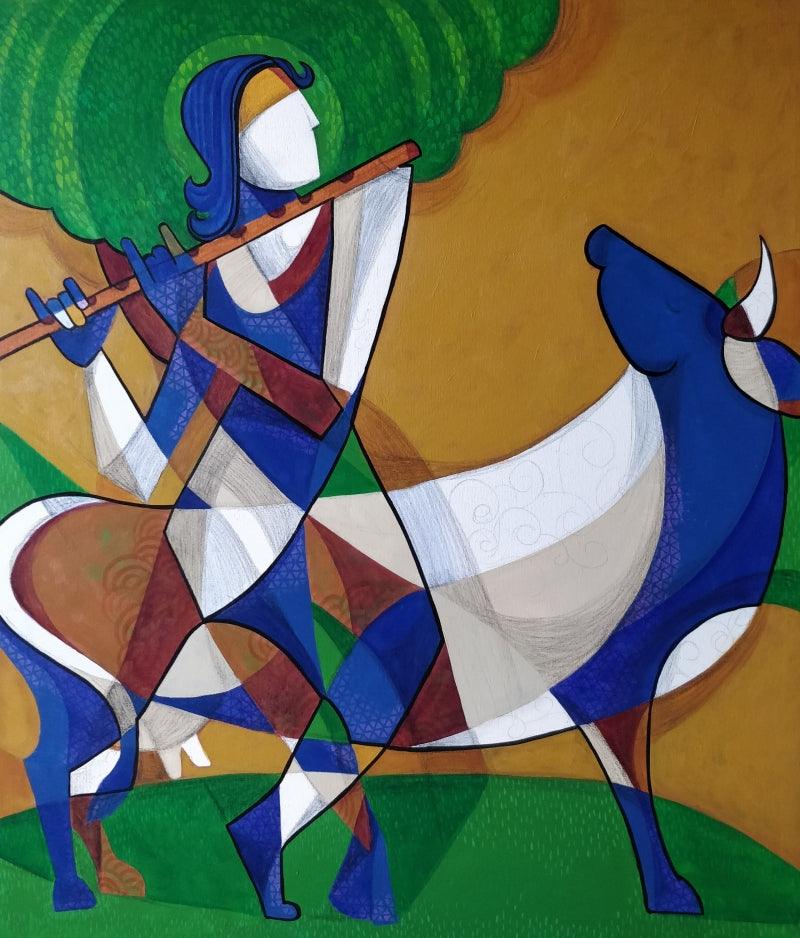
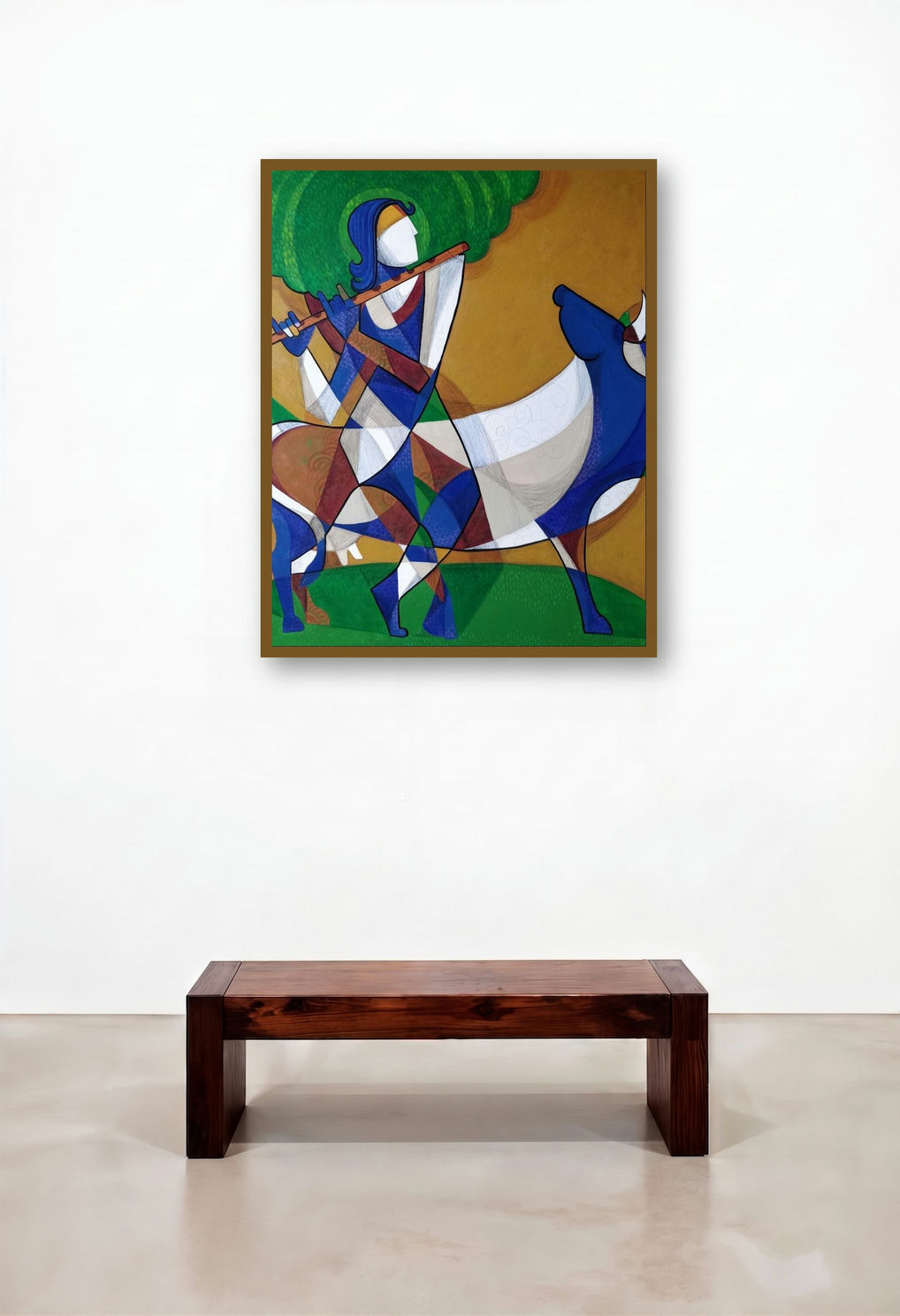

Kanha (Krishna with Cow)
This work distills a pastoral myth into a lyrical geometry, where the faceless flautist and the attentive cow become archetypes rather than individuals—symbols of harmony between breath, earth, and living body. Interlocking planes of cobalt, white, and ember-red create a patchwork rhythm that feels musical in itself, while the warm ochre ground and rounded canopy of green hold the figures in a protective, timeless enclosure. The diagonal flute acts as a compositional spine, guiding the eye through a choreography of angles and curves that suggests sound made visible. In its deliberate flattening and ornamental patterning, the scene reads as devotion and reverie at once—an invitation to consider how tradition is carried forward through stylized remembrance.
Delivery
You may also like