Way
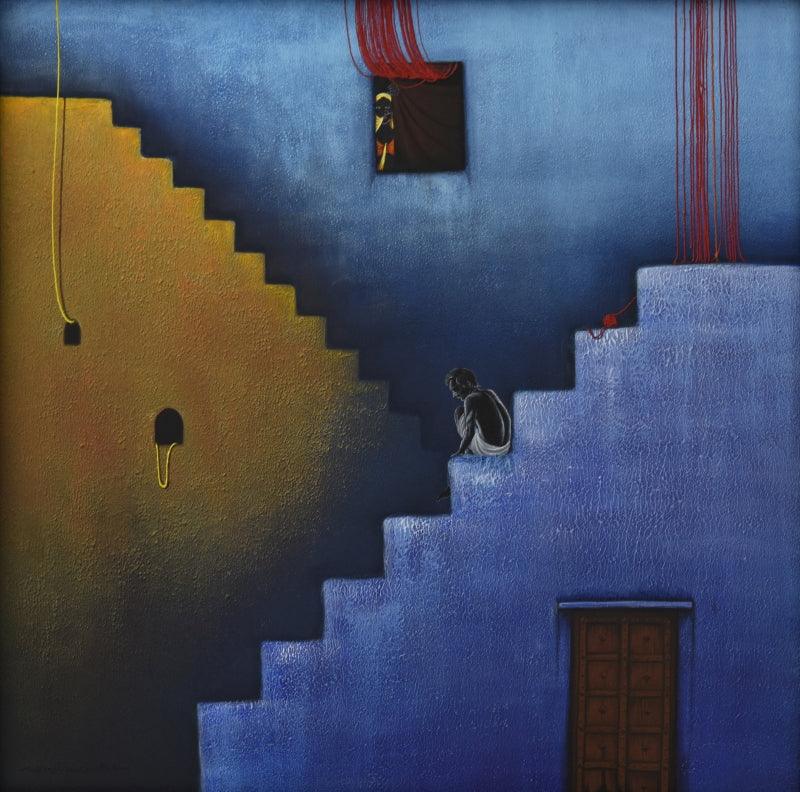
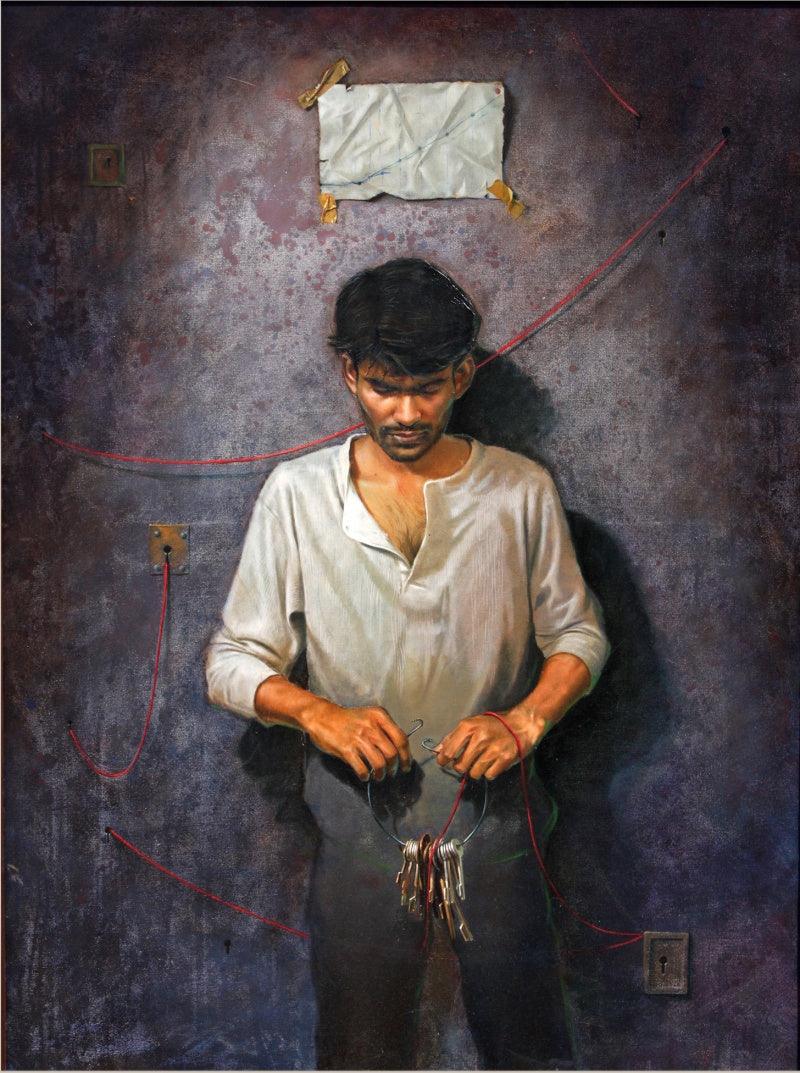
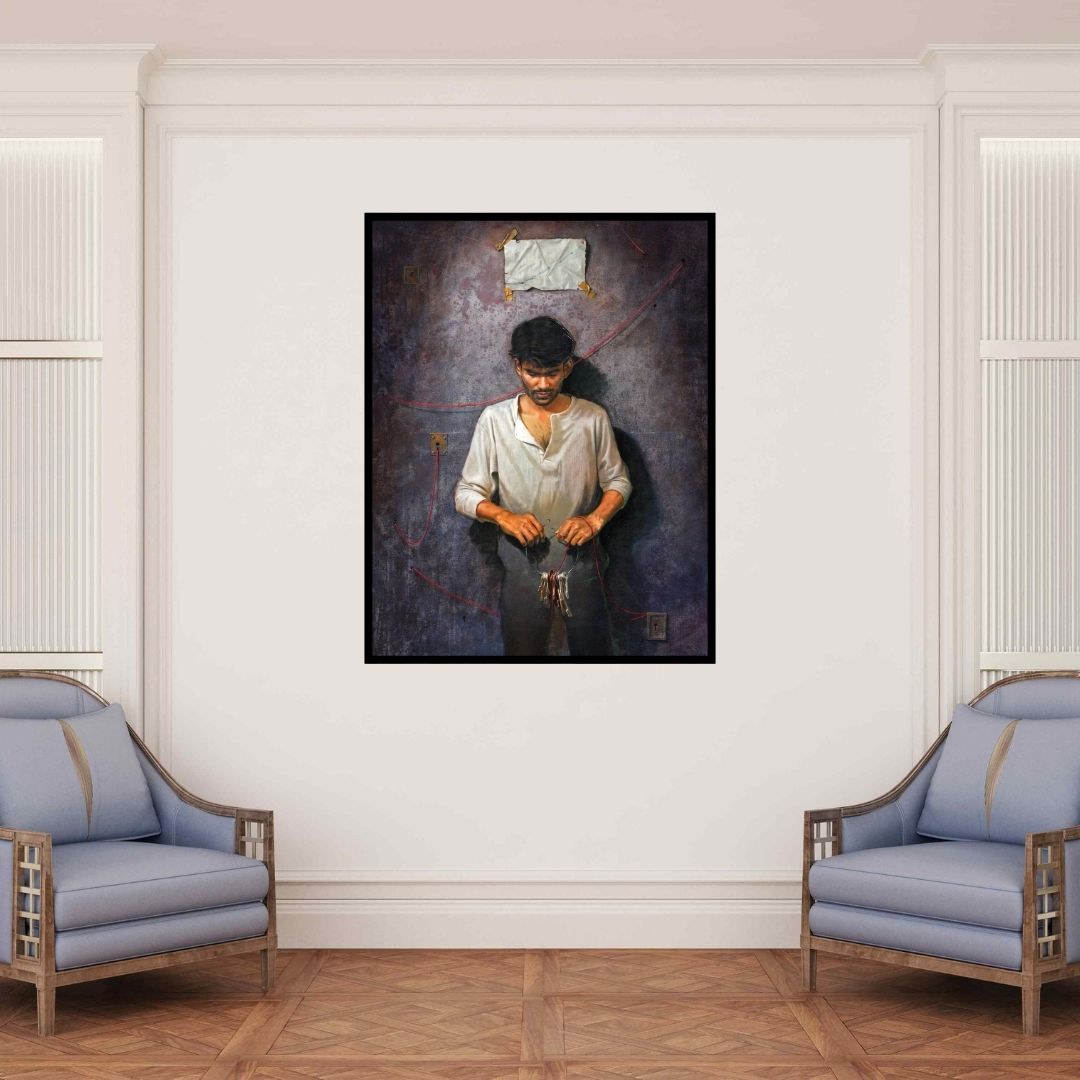
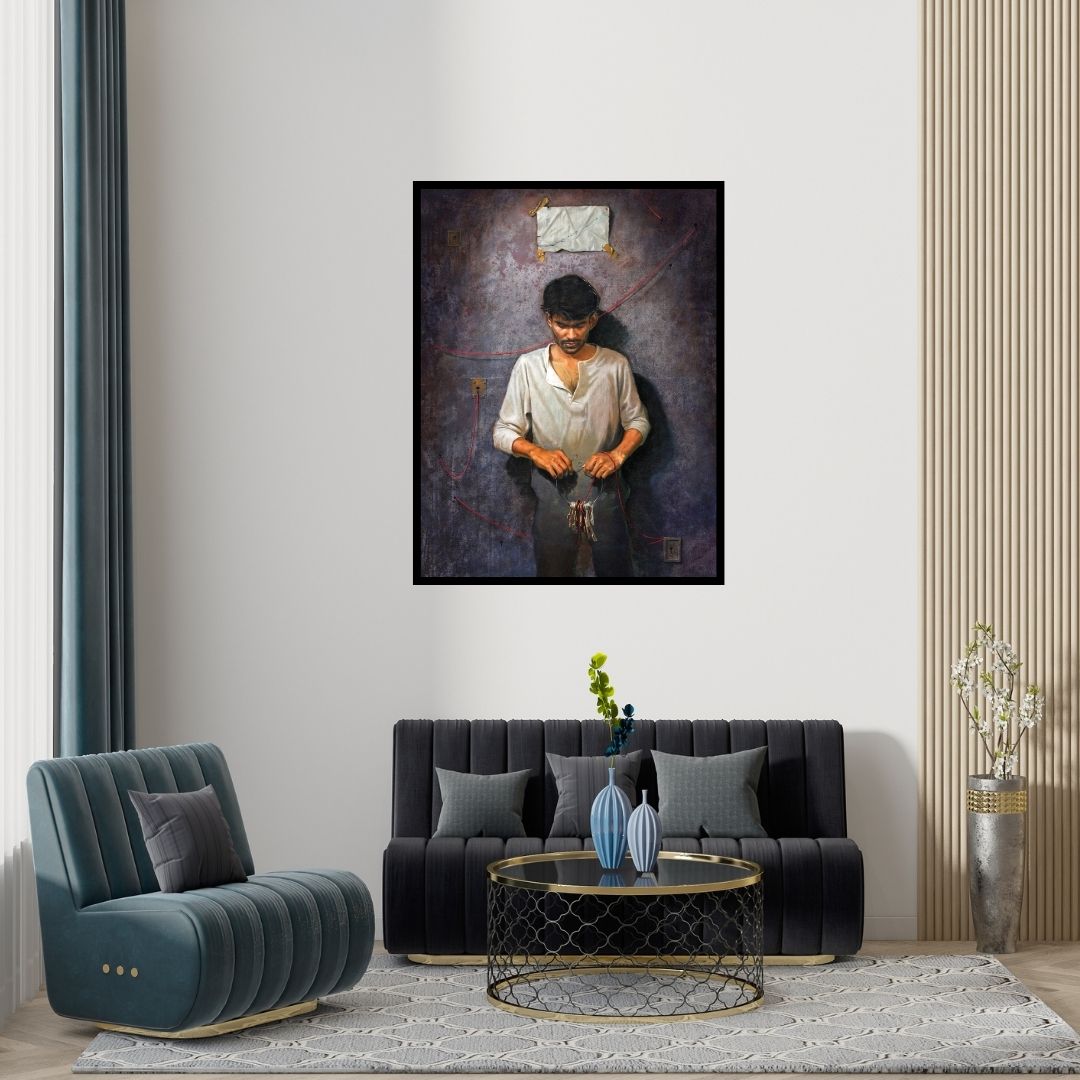
A solitary figure, head bowed in concentrated silence, gathers a jangling cluster of keys as if trying to assemble permission from fragments of metal and memory. The bruised, violet-grey wall becomes a psychological field: taut red wires arc like errant lifelines, mapping invisible pressures that tether him to unseen systems of control, while the small keyholes punctuate the space with the promise—and threat—of access. Light falls gently on his shirt and hands, lending dignity to labor yet sharpening the sense of enclosure, so that the act of holding keys reads less as ownership than as burden. Above him, a creased paper “diagram” taped in place suggests a plan that is incomplete or imposed, turning the scene into a meditation on agency: the more doors implied, the more precarious freedom becomes.
Delivery
You may also like