
Vasant Ritu (Whispers of Love)
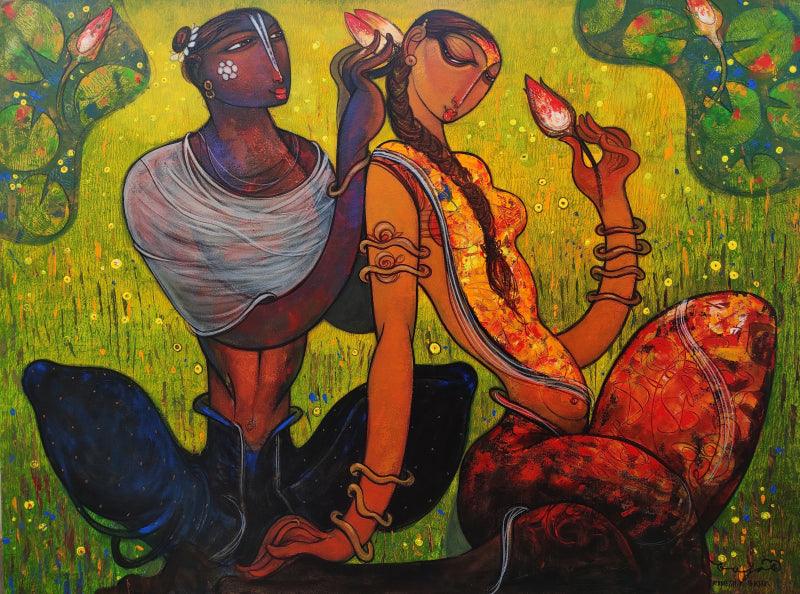
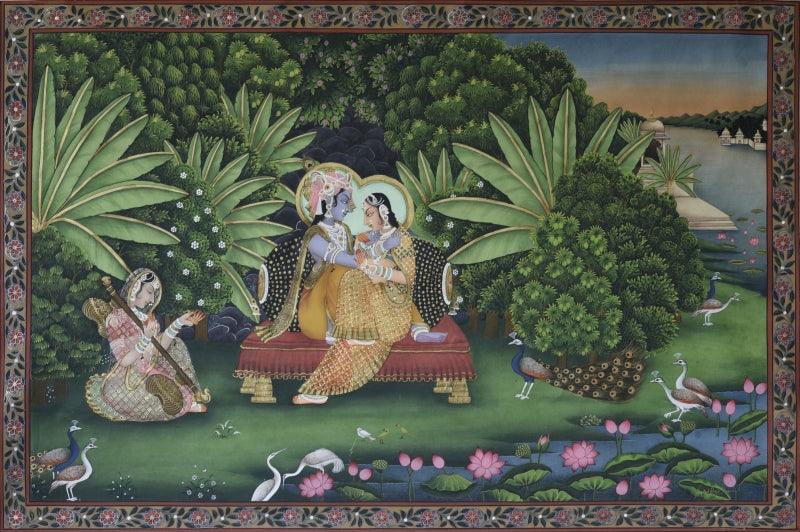
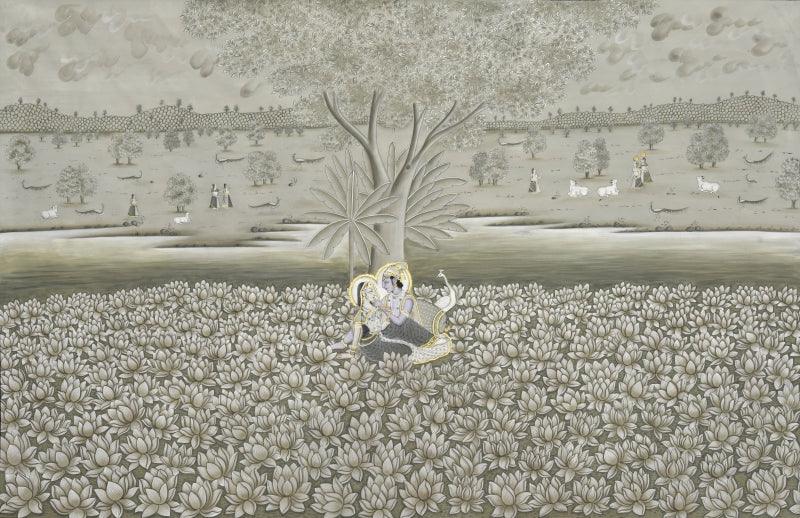
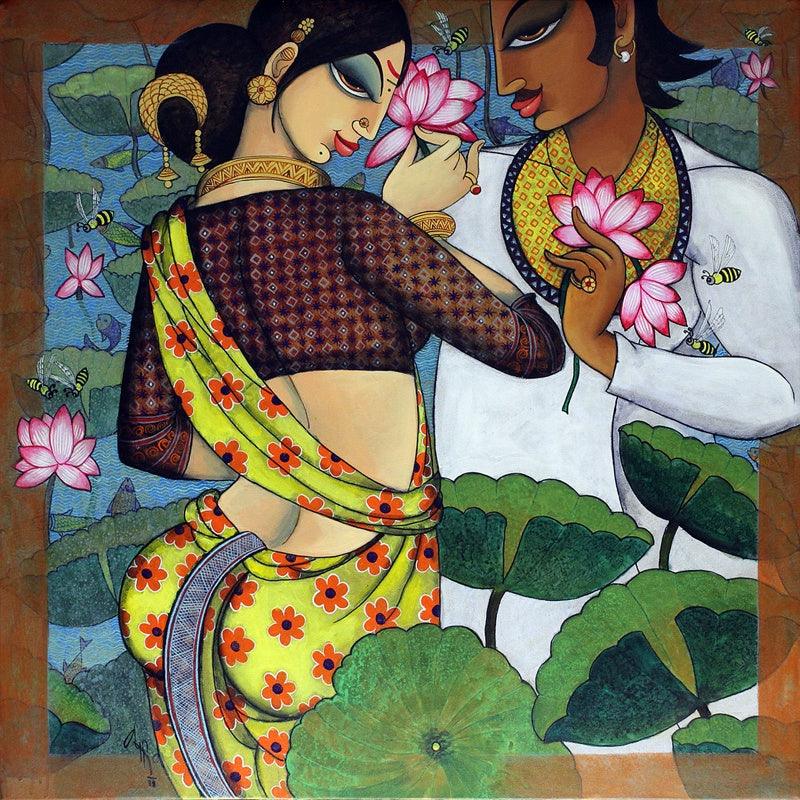
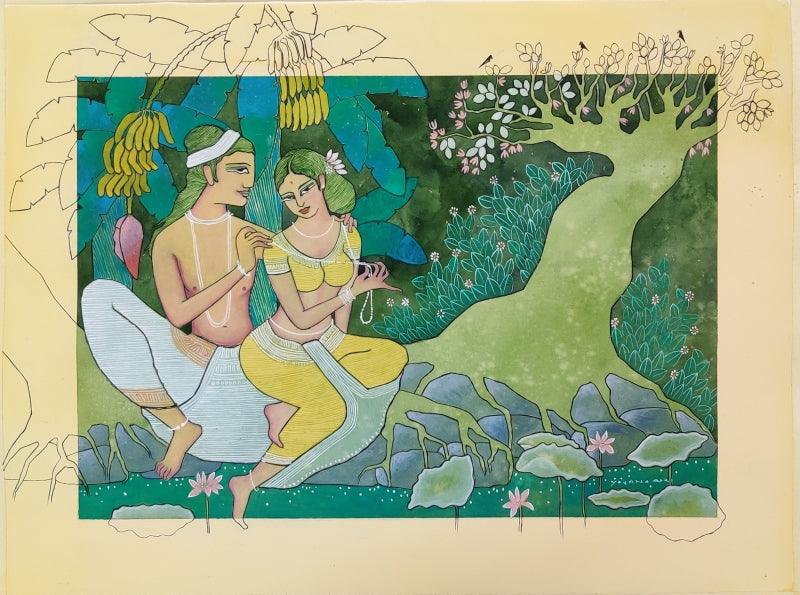
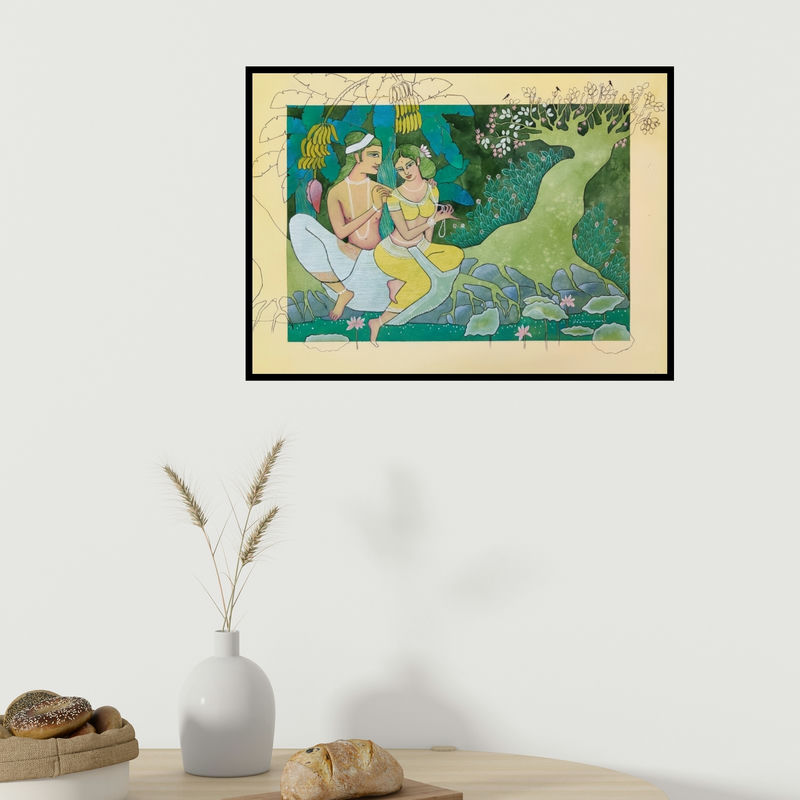
The scene stages intimacy as a quiet ritual, where two figures lean into one another with the measured grace of classical idealization, their gestures threaded like a shared melody. Saturated greens and turquoise foliage form a protective canopy, flattening space into decorative planes so that the lovers read less as bodies in a landscape than as emblems held within nature’s patterned breath. The pale tree trunk and scattered lotus blooms act as luminous pauses—signs of renewal and transience—guiding the eye from touch to terrain and back again, as if devotion itself were the current animating the grove. In its stylized contours and tender stillness, the work suggests a pastoral sanctuary where desire is tempered by serenity and made timeless through ornament.
Delivery
You may also like