Bold And Beautiful
₹0
● In stock · ★ 5.0 (12)checking live price…
Size
36x48Type
OriginalMaterial
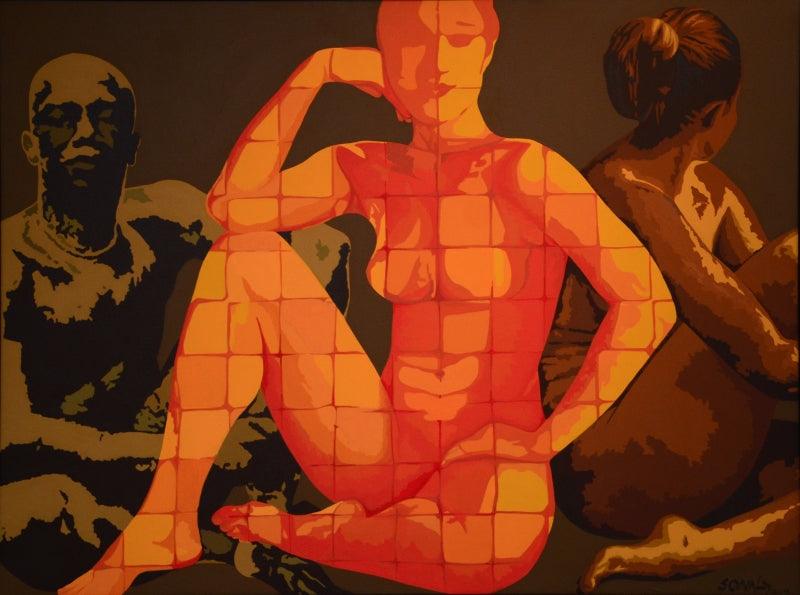
CanvasA trio of nude figures is staged like a quiet tribunal of the body, where the central form—built from warm, tiled planes of orange and ember—radiates as both icon and specimen. The grid-like segmentation turns flesh into architecture, suggesting how desire and identity are measured, assembled, and ultimately abstracted, while the shadowed companions recede into sepia and charcoal as if memory or social gaze is dimming them. Light is not merely illumination here but a sculpting force: it hardens contours, sharpens musculature into geometry, and creates a tension between intimacy and distance. The composition reads as a meditation on vulnerability—how presence can feel monumental, yet still be partitioned by perception.
Delivery
You may also like
Freedom
Artzolo
₹0
★ 5.0 (9)
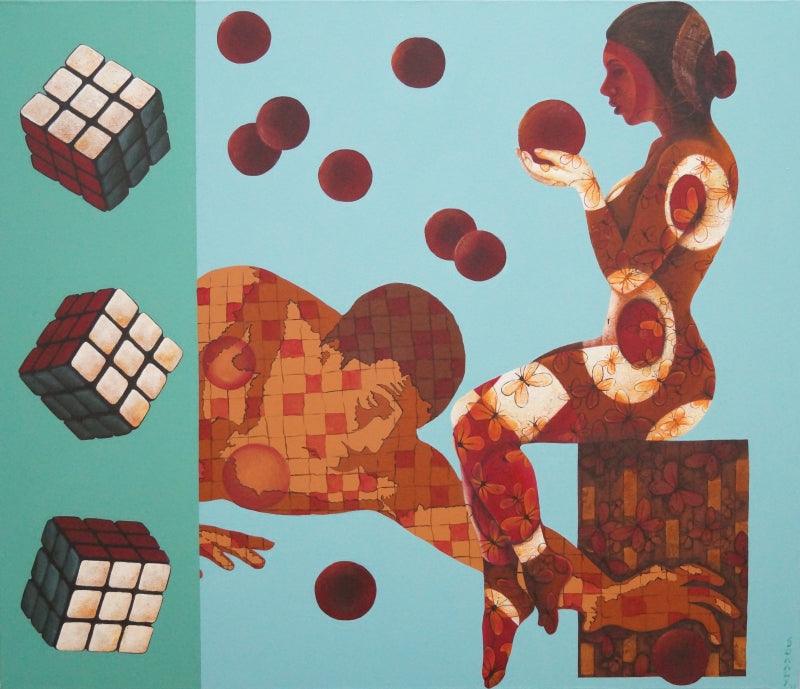
Couple 8 (The Puzzle of Love)
Artzolo
₹0
★ 4.0 (11)
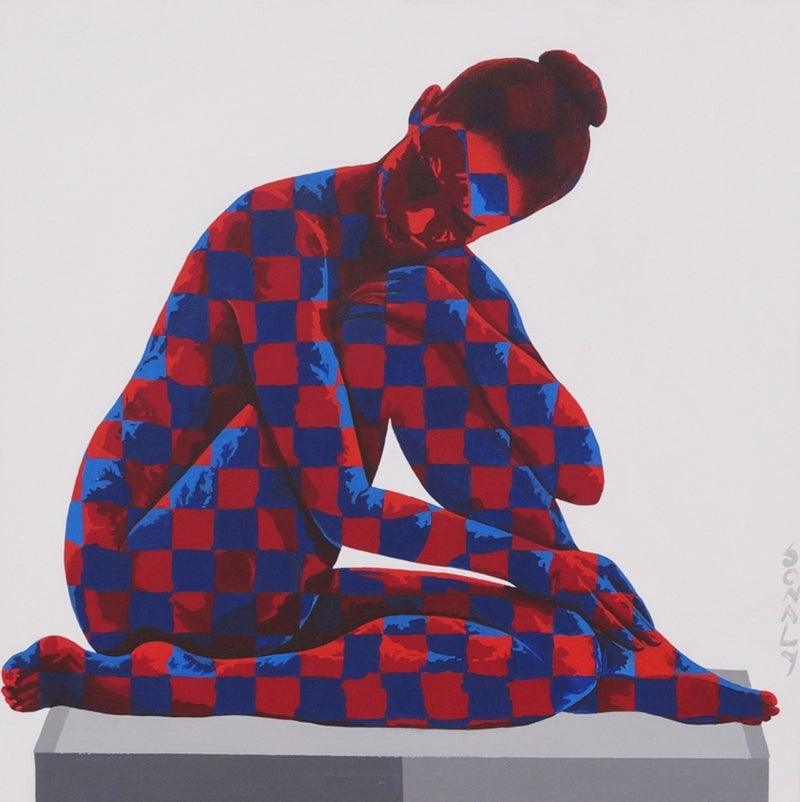
Forever Young 2 (The Red Saree)
Artzolo
₹110,000
out of stock
★ 4.0 (15)
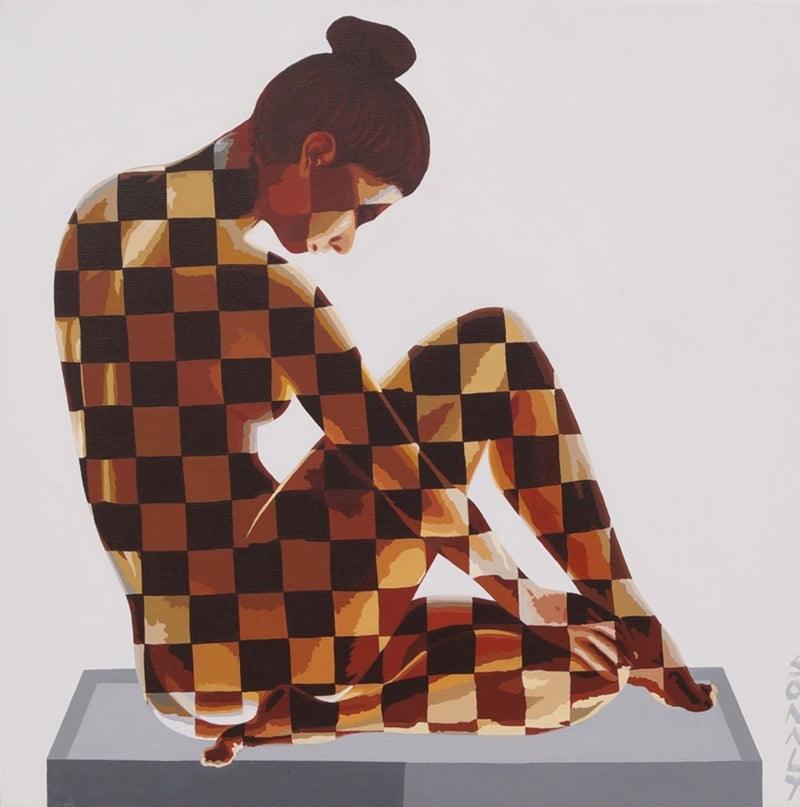
Forever Young (The Game Within)
Artzolo
₹0
★ 4.0 (9)
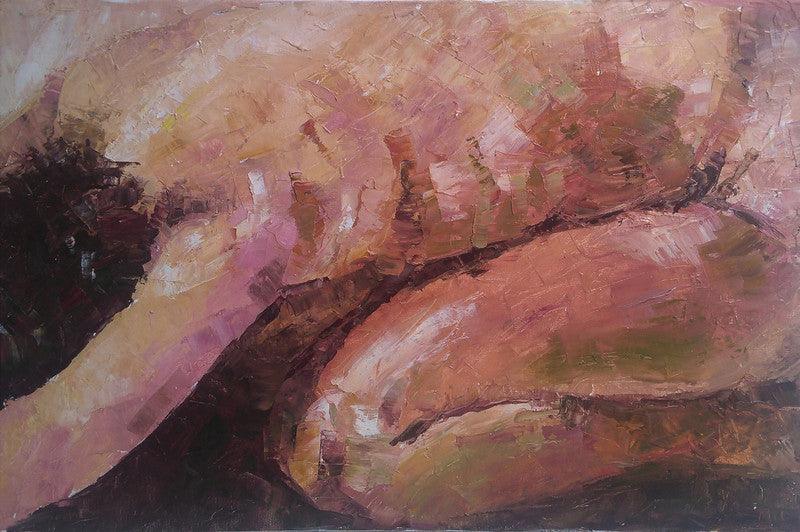
Figurescape 02 (Abstract Figure)
Artzolo
₹36,000
★ 5.0 (10)
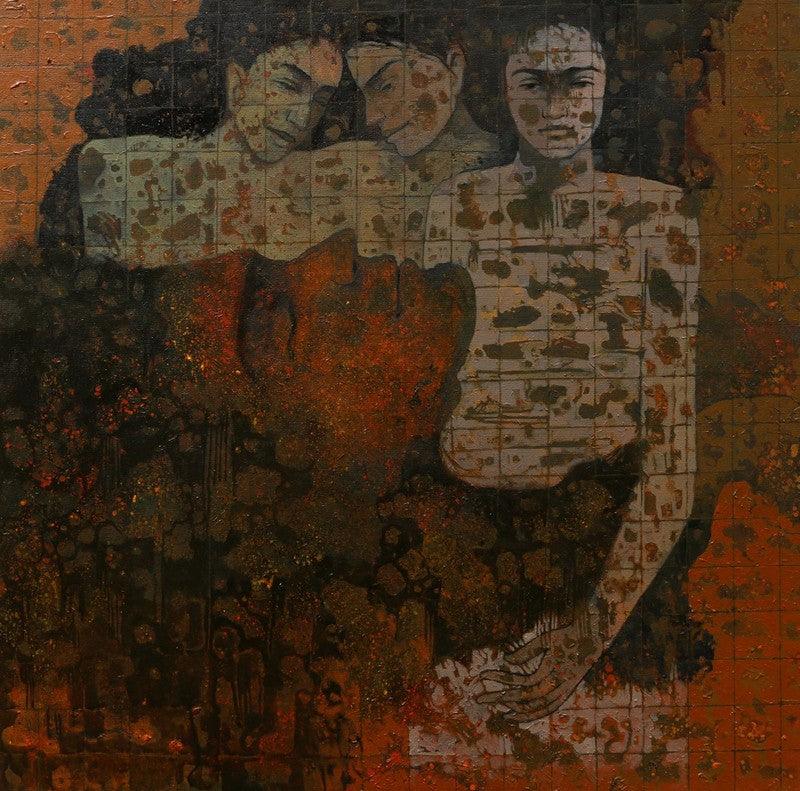
Untitled 20 (The Interconnected)
Artzolo
₹86,000
★ 4.0 (8)
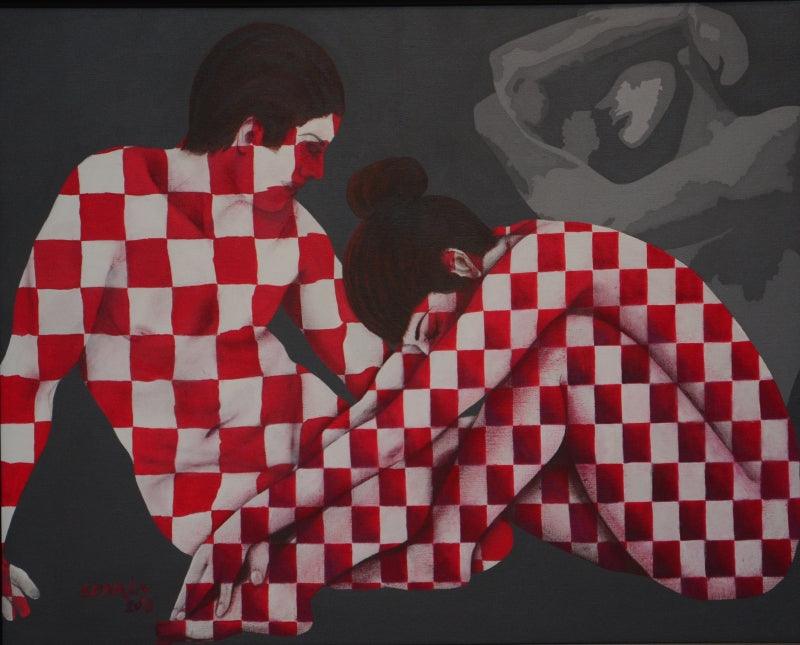
Couple 2
Artzolo
₹140,000
out of stock
★ 5.0 (8)
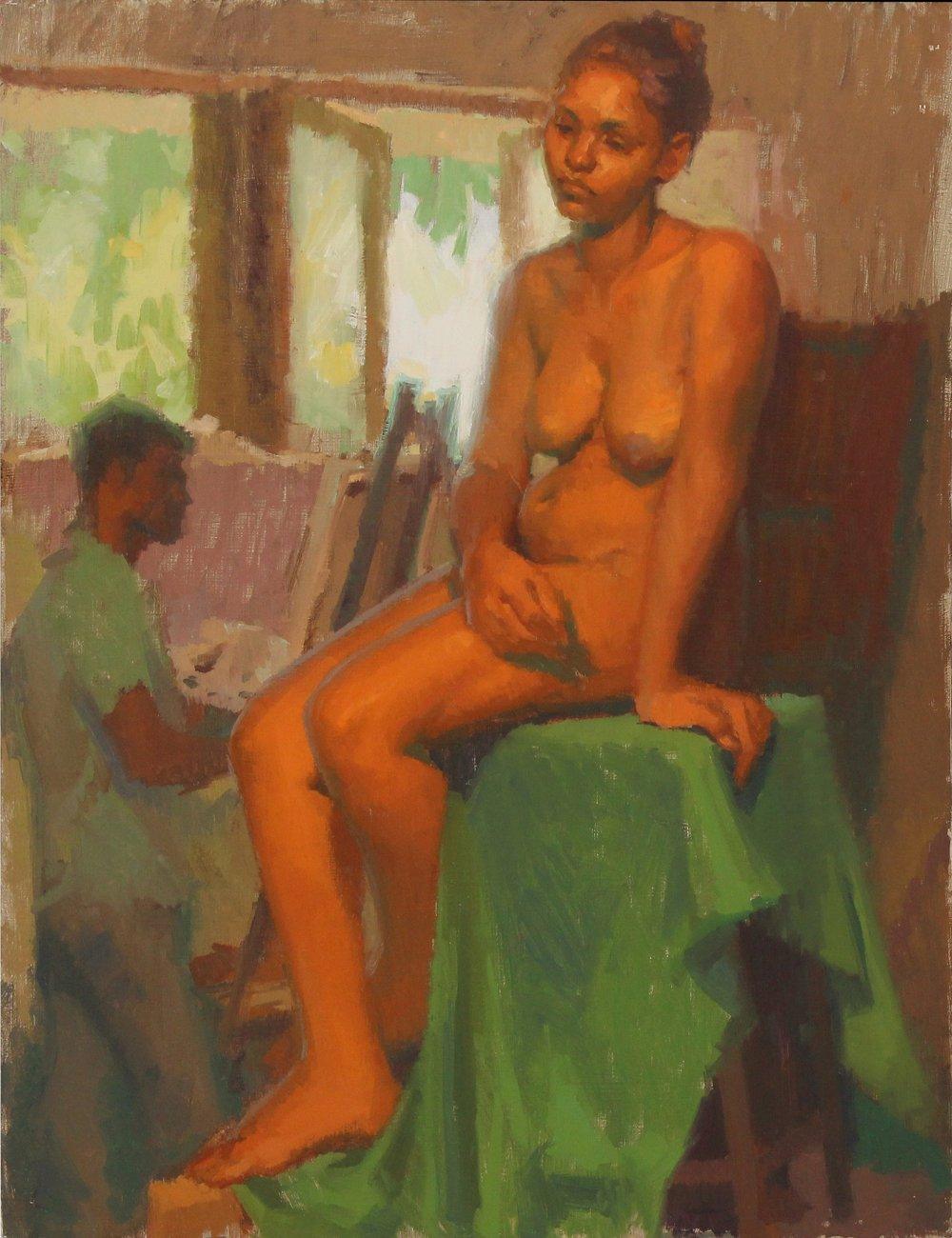
Figure Study
Artzolo
₹25,000
out of stock
★ 5.0 (9)