Syncretize 9
₹35,000
Out of stock · ★ 5.0 (8)checking live price…
Size
36x48Type
OriginalMaterial
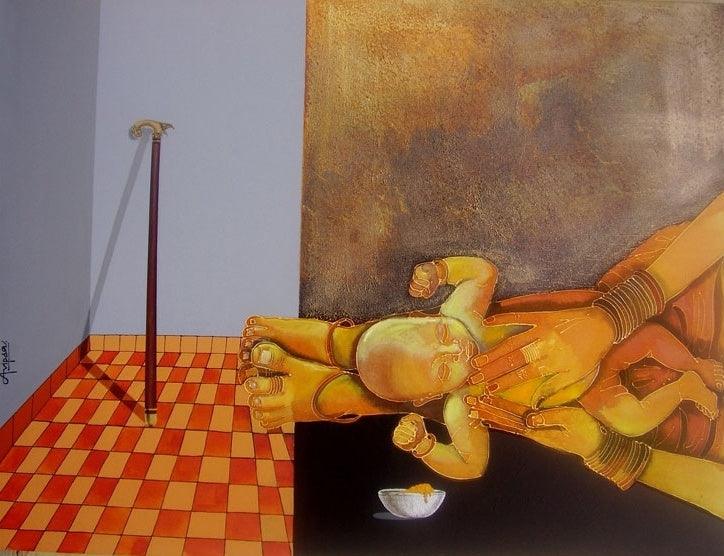
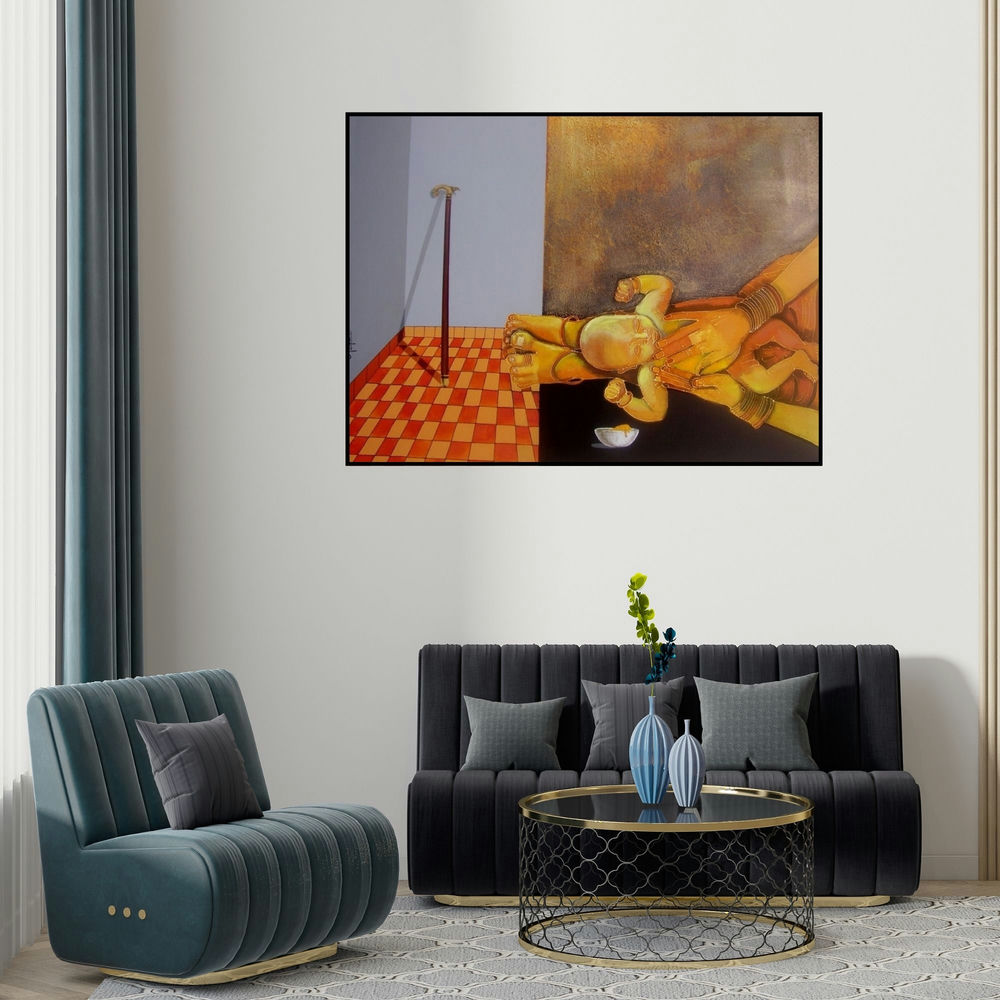
CanvasThe painting stages an unsettling tenderness: an infant rendered in metallic, earthen hues is cradled by oversized hands, while the body’s calm weight contrasts with the sense of being measured and handled. A stark division of space—checkered floor and empty wall on one side, dense shadow on the other—turns the domestic into a psychological room, where light falls like scrutiny rather than comfort. The cane standing alone becomes a quiet witness of authority and lineage, suggesting care entangled with control, tradition, and the inheritance of power. In its compressed perspective and theatrical stillness, the work reads as a meditation on vulnerability—how the earliest touch can be both shelter and sentence.
Delivery
You may also like
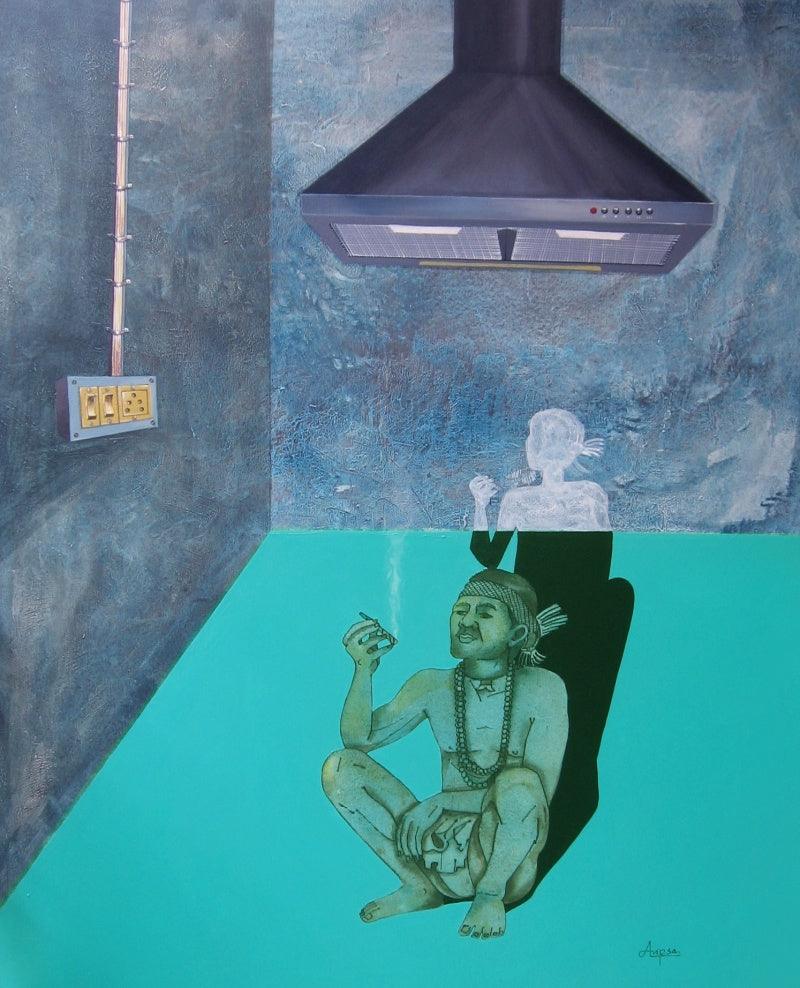
Syncretize 7 (Modern Dwelling)
Artzolo
₹100,000
★ 4.0 (6)
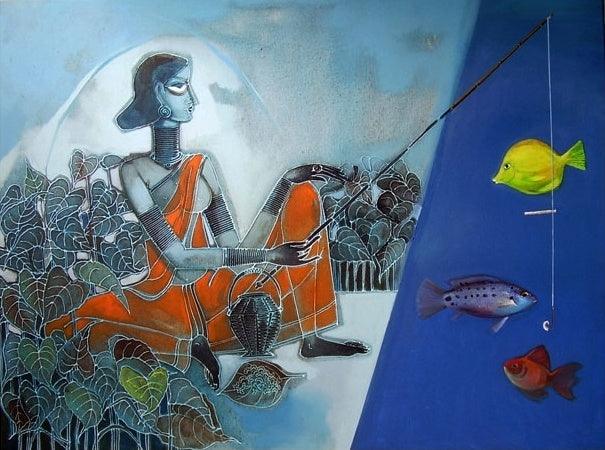
Syncretize 3 (The Bait)
Artzolo
₹70,000
★ 5.0 (14)
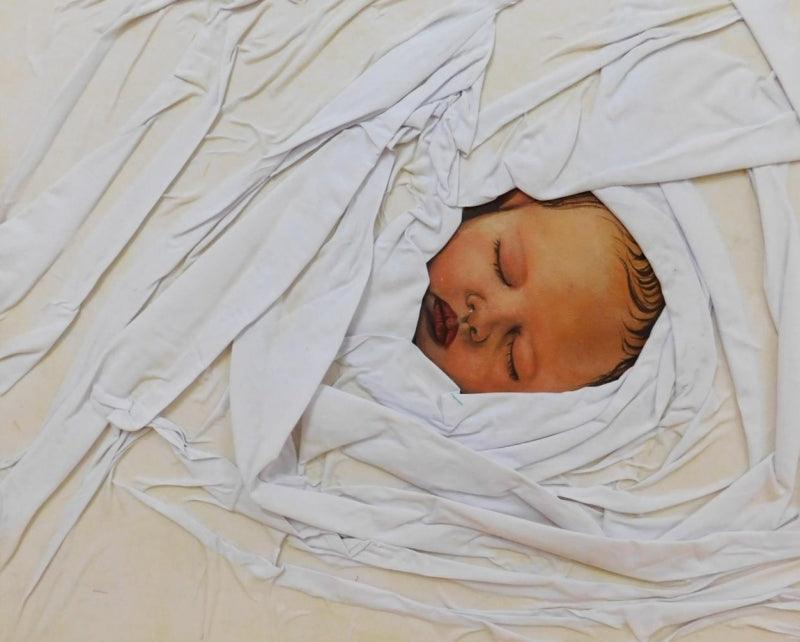
Sleeping Baby
Artzolo
₹15,000
★ 4.0 (8)
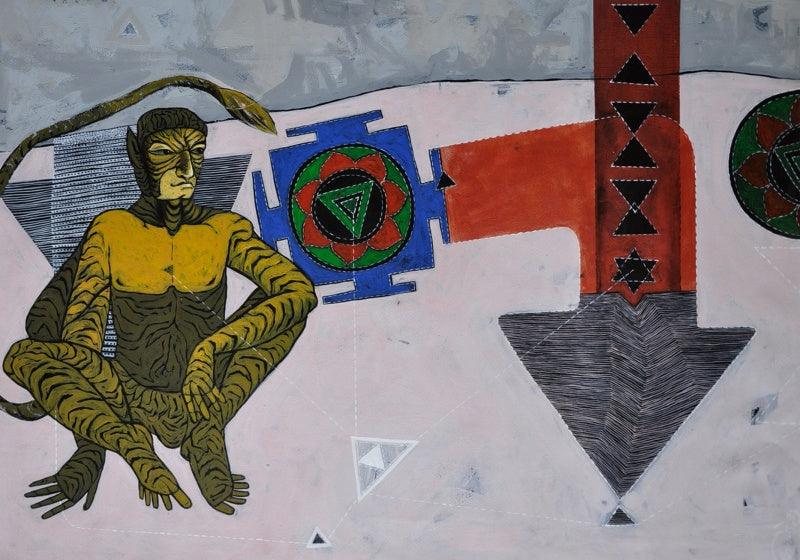
Untitled (Symbolic Convergence)
Artzolo
₹21,560
★ 4.0 (10)
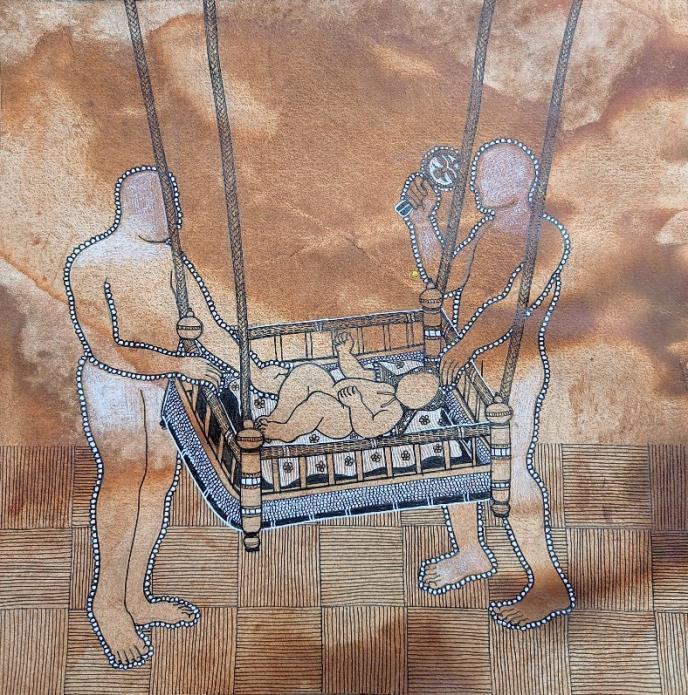
God Mother Father Former Media (Tender Care)
Artzolo
₹45,000
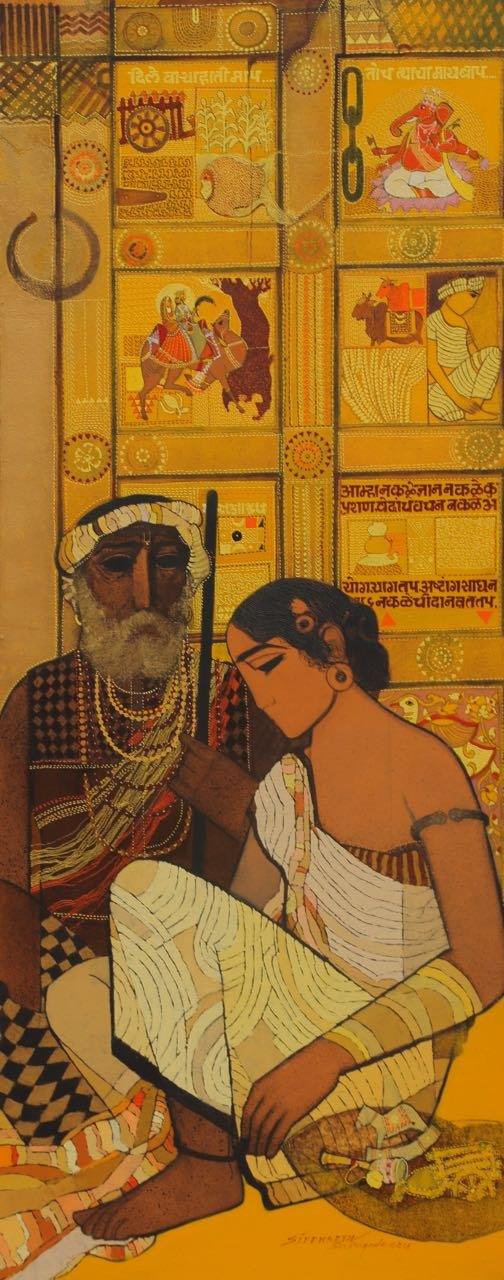
Sid Shingade
Artzolo
₹130,000
out of stock
★ 5.0 (8)
Togetherness 4 (Togetherness)
Artzolo
₹1,280,000
Mother And Child 2
Artzolo
₹72,000
out of stock
★ 4.0 (11)