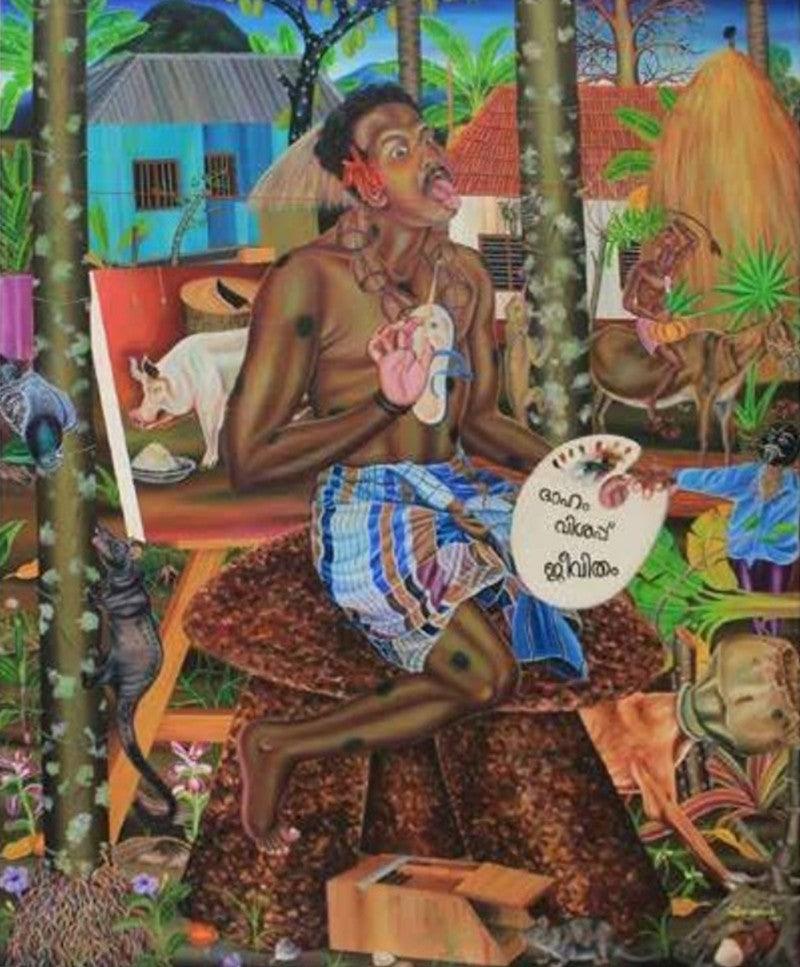
Crucified Journey (A Surreal Self-Portrait)
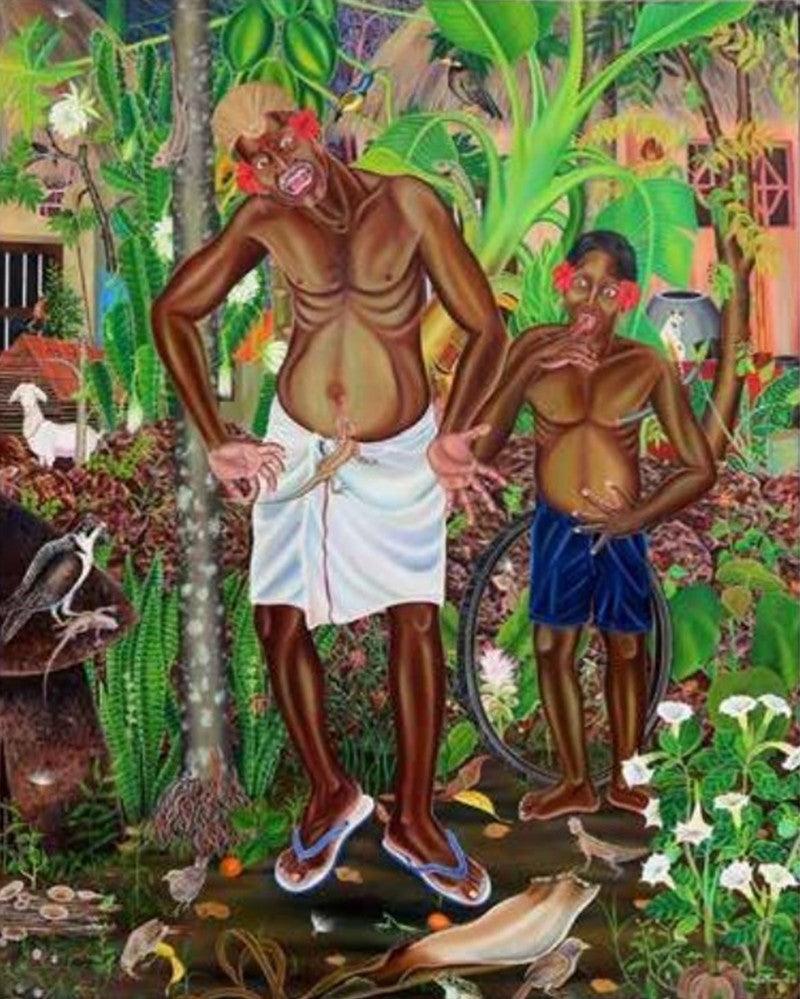
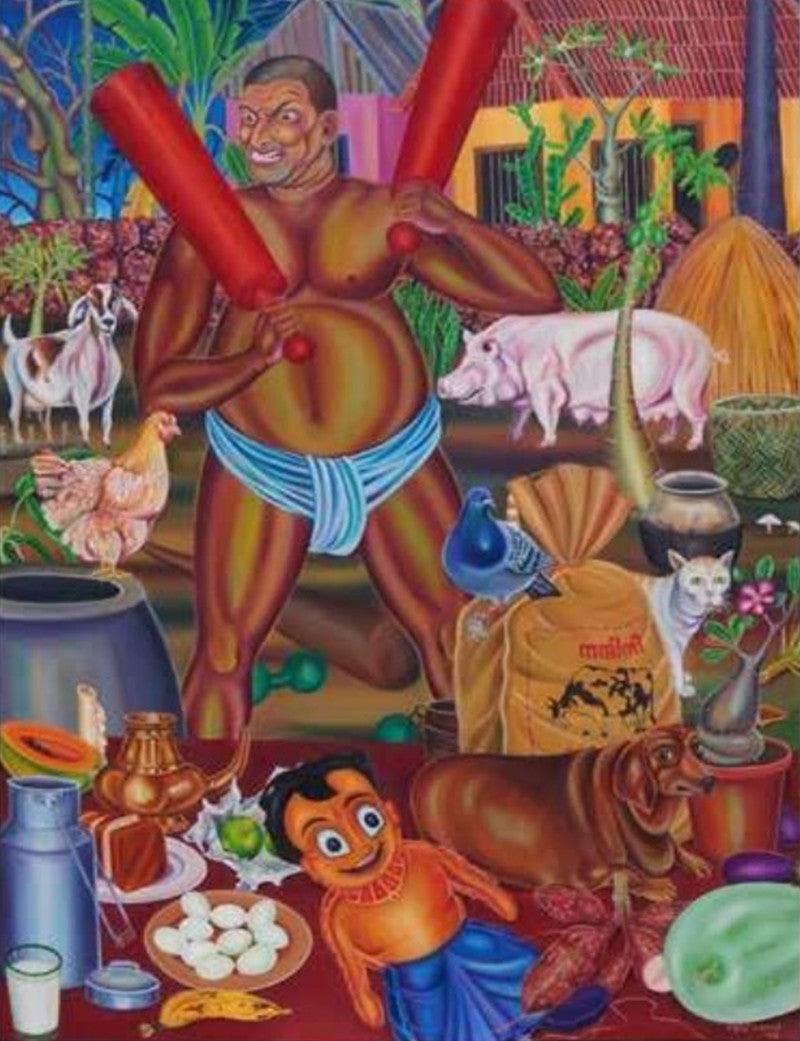
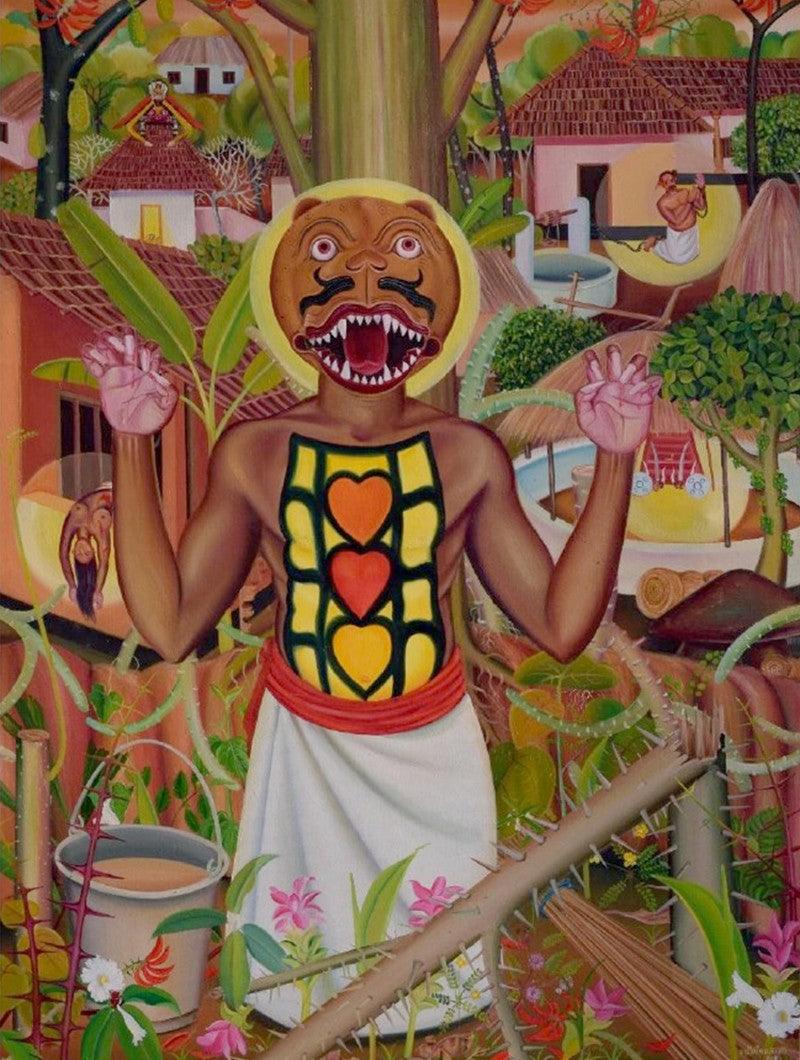
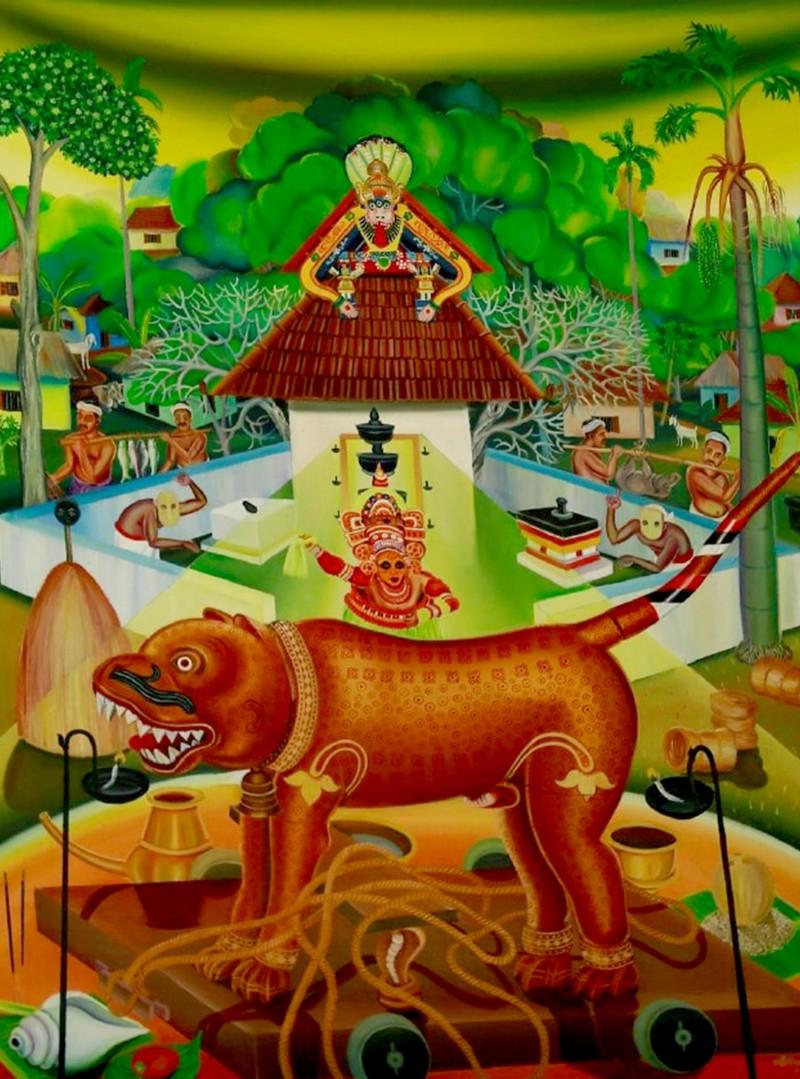
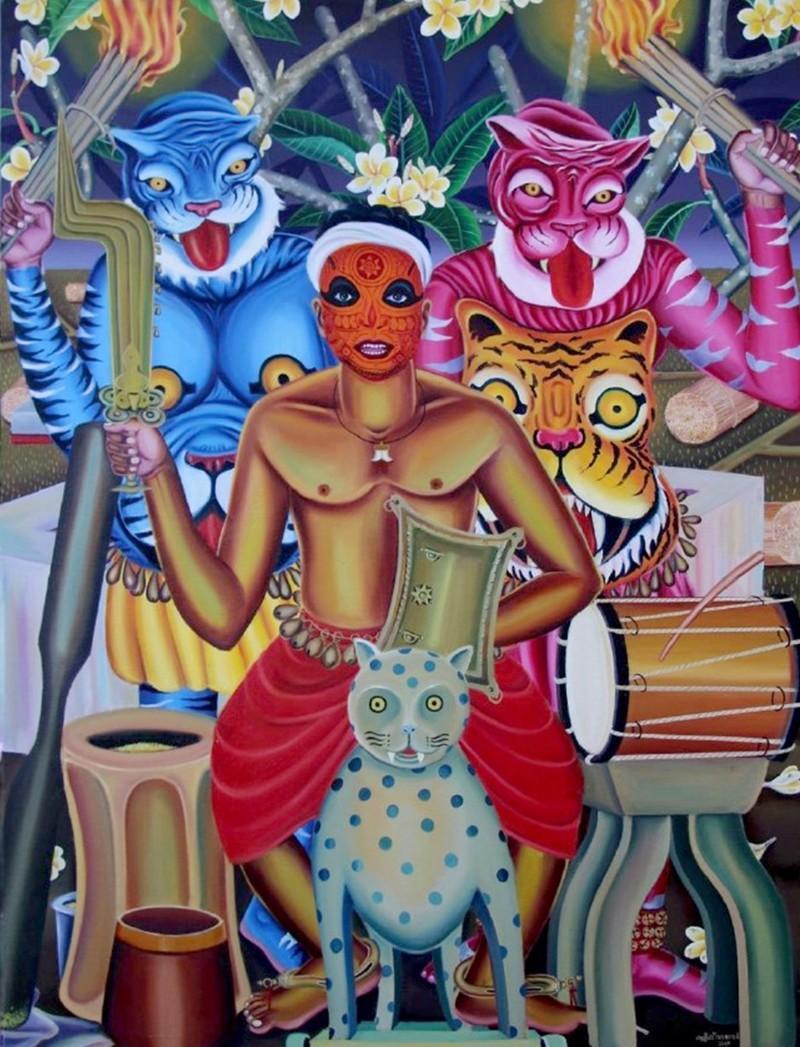
Anchored in a lush village thicket, the central figure becomes a conduit between performance and private longing—his exaggerated expression and poised hand suggesting a life lived as spectacle, even in solitude. The composition stages him amid a chorus of ordinary presences—hut roofs, tethered animals, thick trunks—so that the everyday reads like a densely layered myth, where each object feels charged with memory and local ritual. Saturated greens and earthen reds press forward with almost tactile insistence, collapsing distance and turning the space into an intimate, claustrophobic theater in which identity, labor, and desire are negotiated. The written script on the circular prop punctuates the scene like an invocation, hinting that language itself is both mask and witness within this vivid ecology of belonging.
Delivery
You may also like