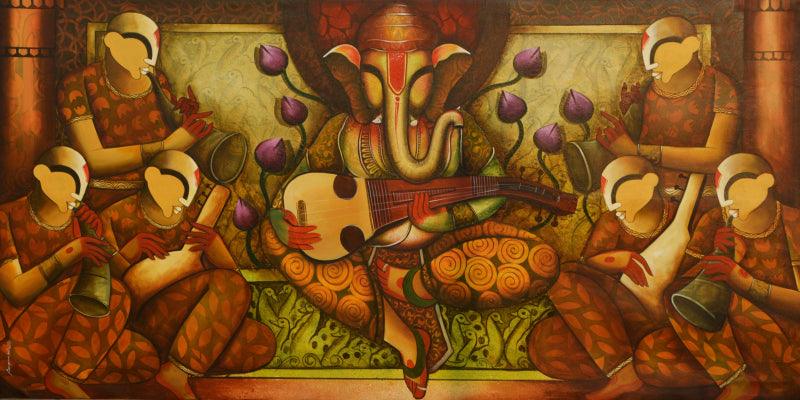

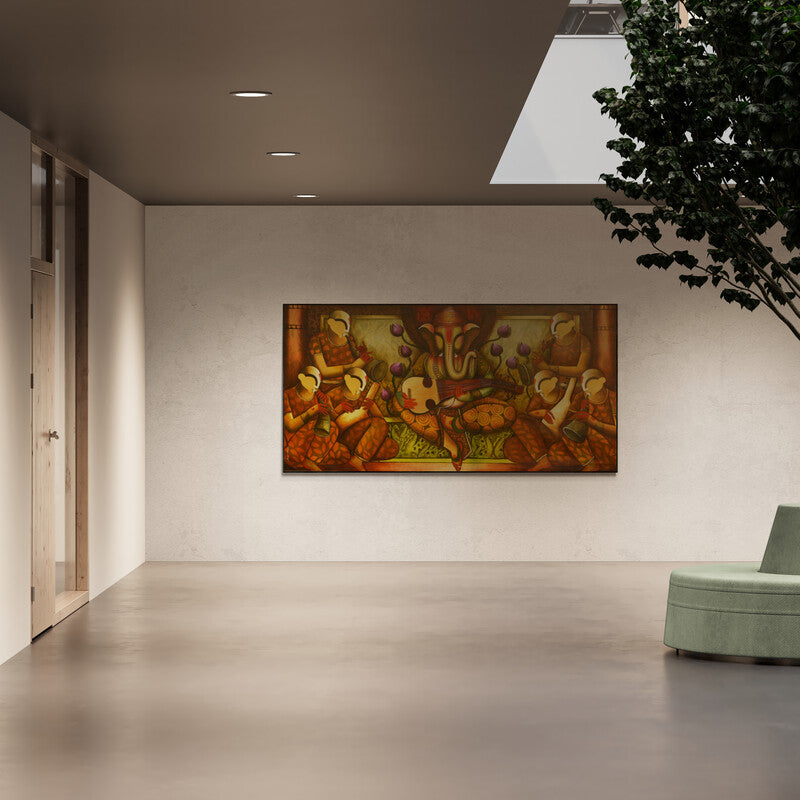
Melody Of The Divine (Ganesha's Symphony)
₹215,000
Out of stockchecking live price…
Size
96x48Type
OriginalMaterial
CanvasCentered in quiet sovereignty, Ganesha becomes both deity and conductor, cradling a stringed instrument whose long curve anchors the composition like a devotional axis. The surrounding musicians—faces deliberately anonymized—turn into vessels of ritual, their gestures and instruments forming a rhythmic perimeter that amplifies the god’s presence rather than competing with it. Warm earth tones and burnished golds create a temple-like glow, while repeating spirals and lotus buds weave a visual mantra, suggesting that music here is not performance but a passage into inner order and auspicious calm. The scene reads as an allegory of guidance: the divine sets the tone, and the human chorus, emptied of ego, becomes harmony.
Delivery
You may also like
Melody
Artzolo
₹145,000

Ganesha (Melodic Harmony)
Artzolo
₹40,000
★ 5.0 (9)

Sounds 3 (Divine Melodies)
Artzolo
₹180,000
out of stock
★ 5.0 (15)

Orchestra 2 (Musicians with Ganesha)
Artzolo
₹46,000
out of stock
★ 4.0 (11)

Welcome Ganesha (Ganesha with Musicians)
Artzolo
₹120,000
★ 5.0 (15)

Ganesha Arrivel (Musical Celebration)
Artzolo
₹100,000
★ 5.0 (5)

Lord Ganesha (Flute Song)
Artzolo
₹135,000
out of stock
★ 4.0 (8)

Vinayakam (Ganesha Musical Muse)
Artzolo
₹176,000
out of stock
★ 4.0 (7)