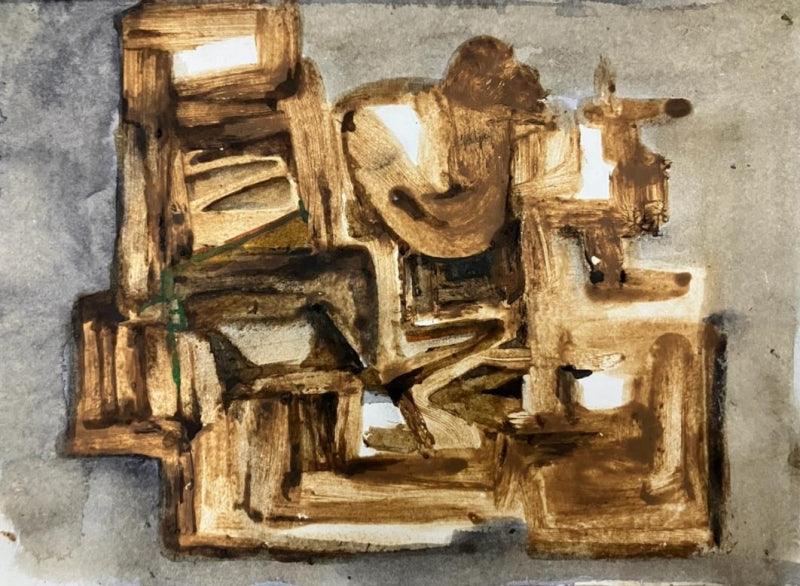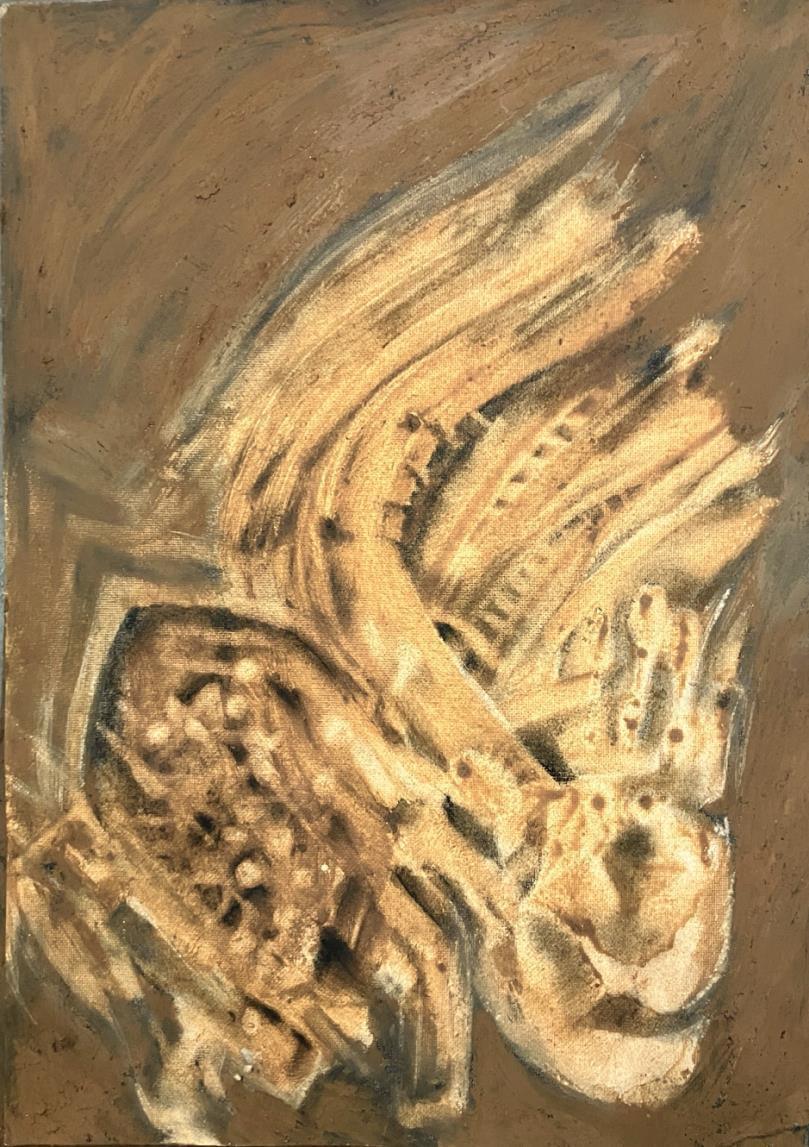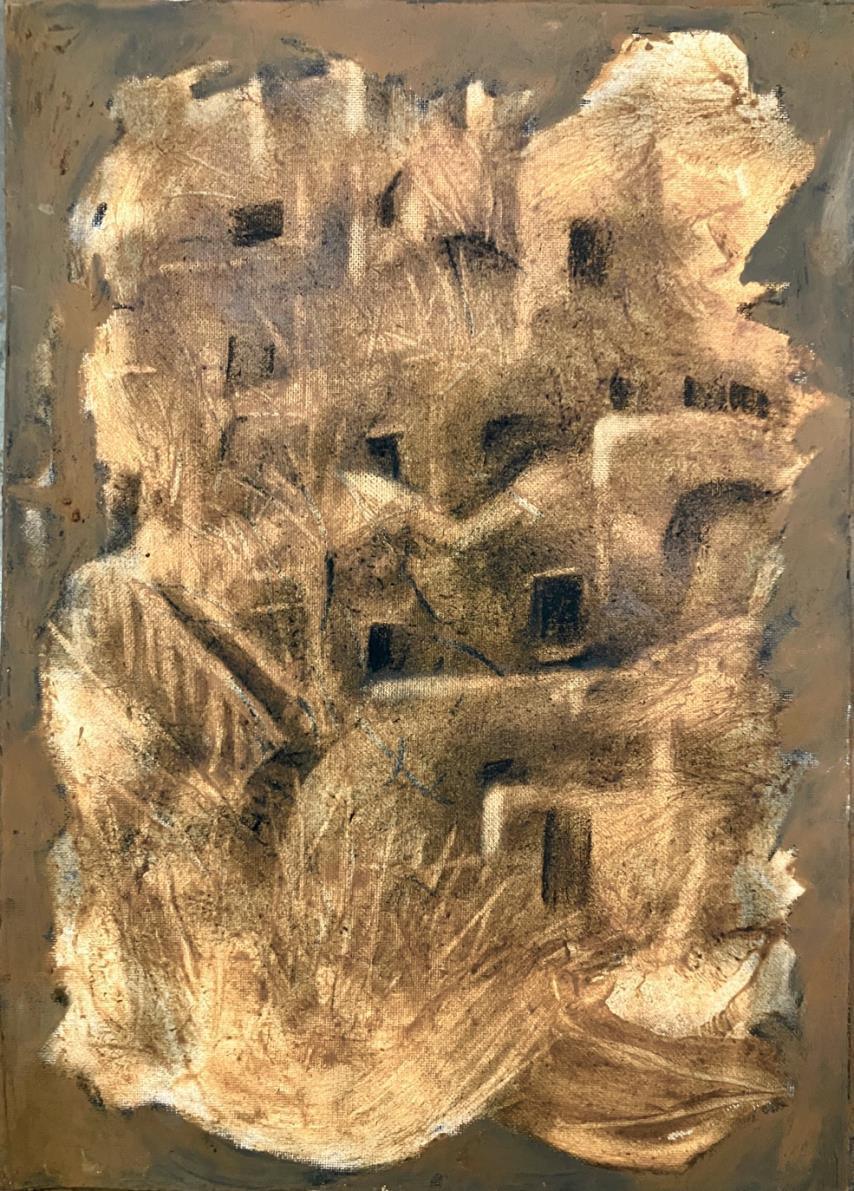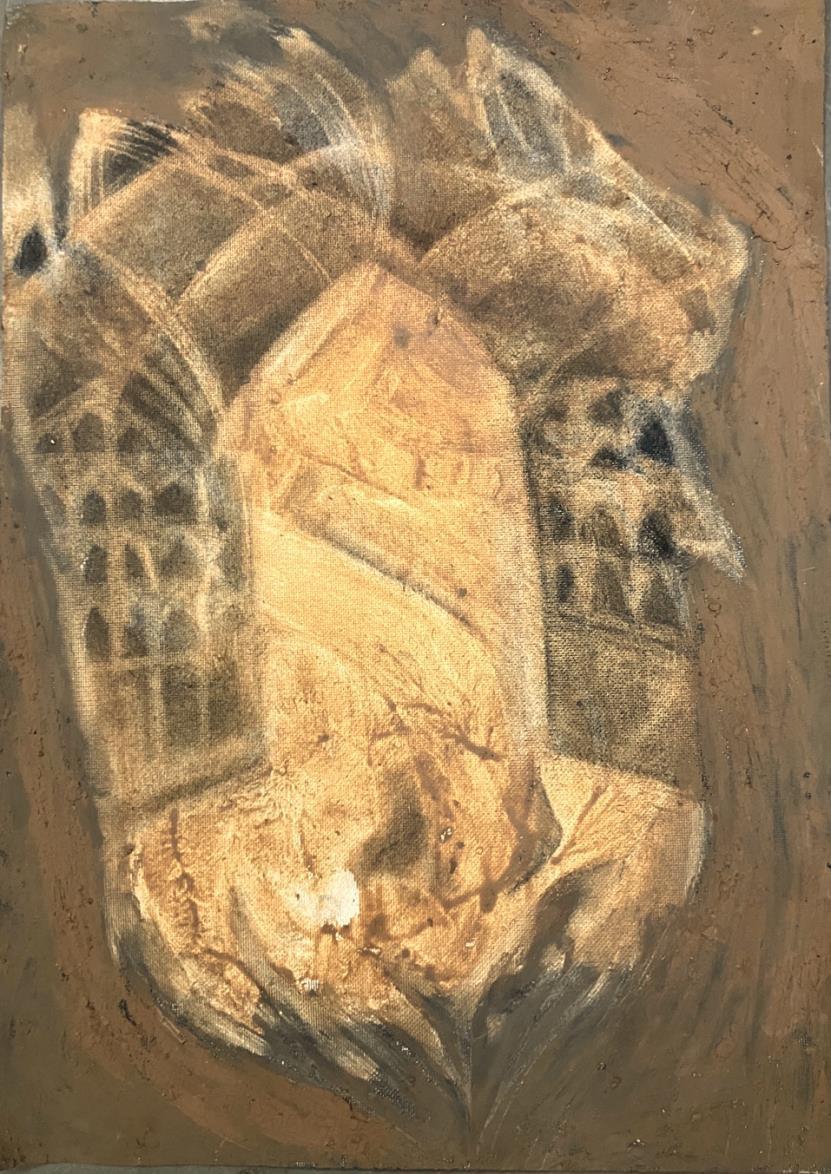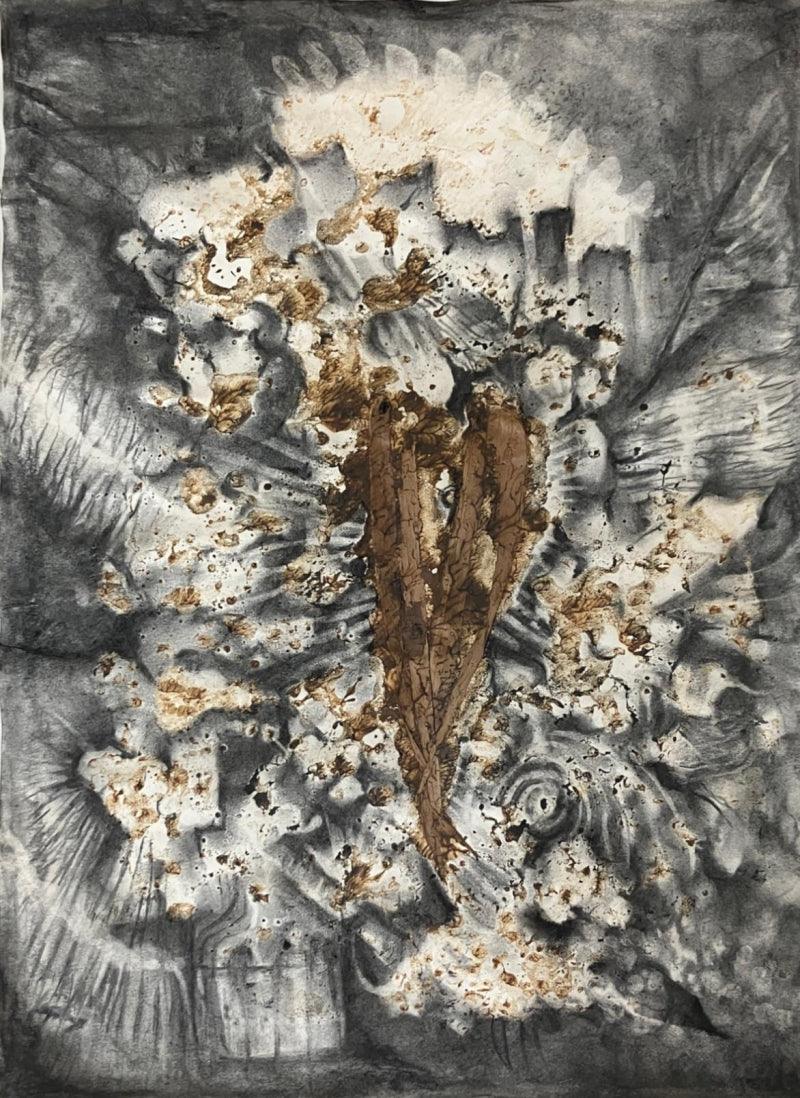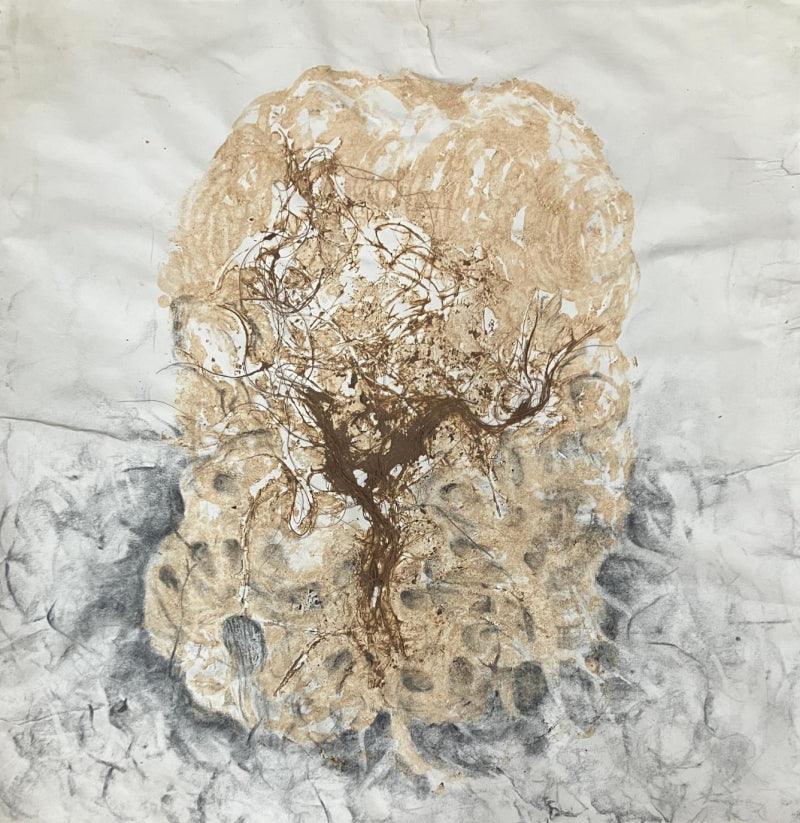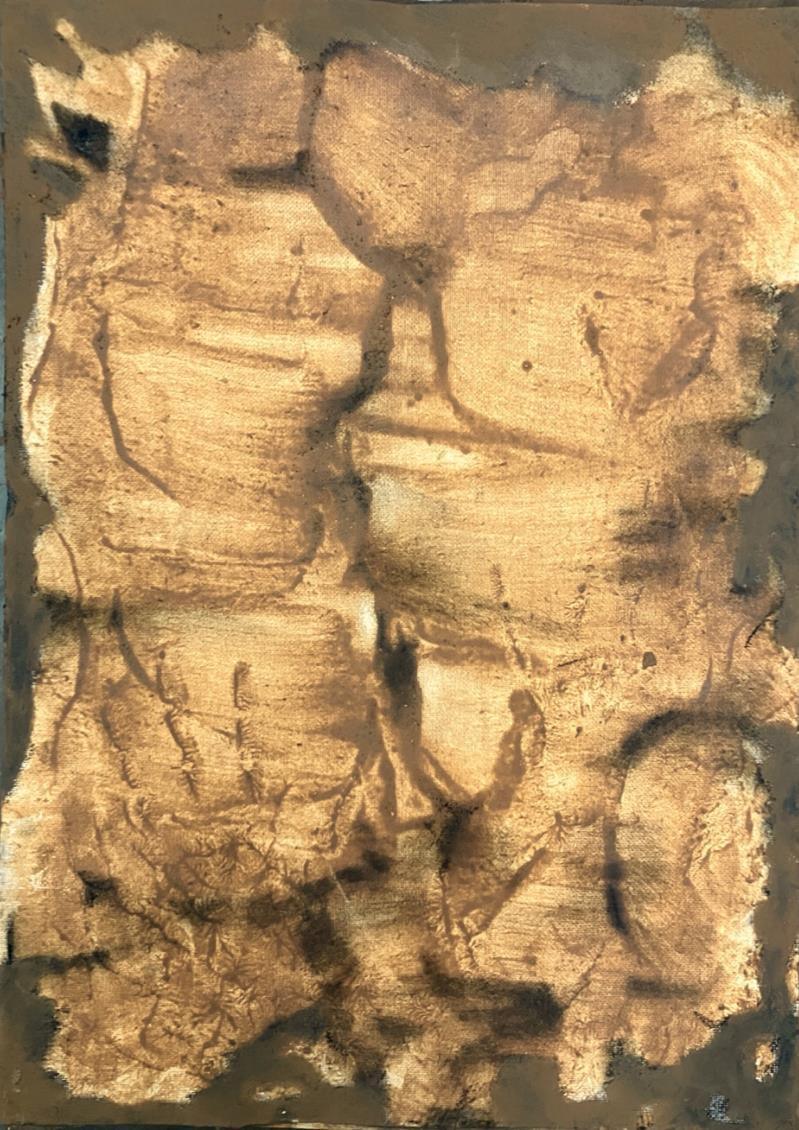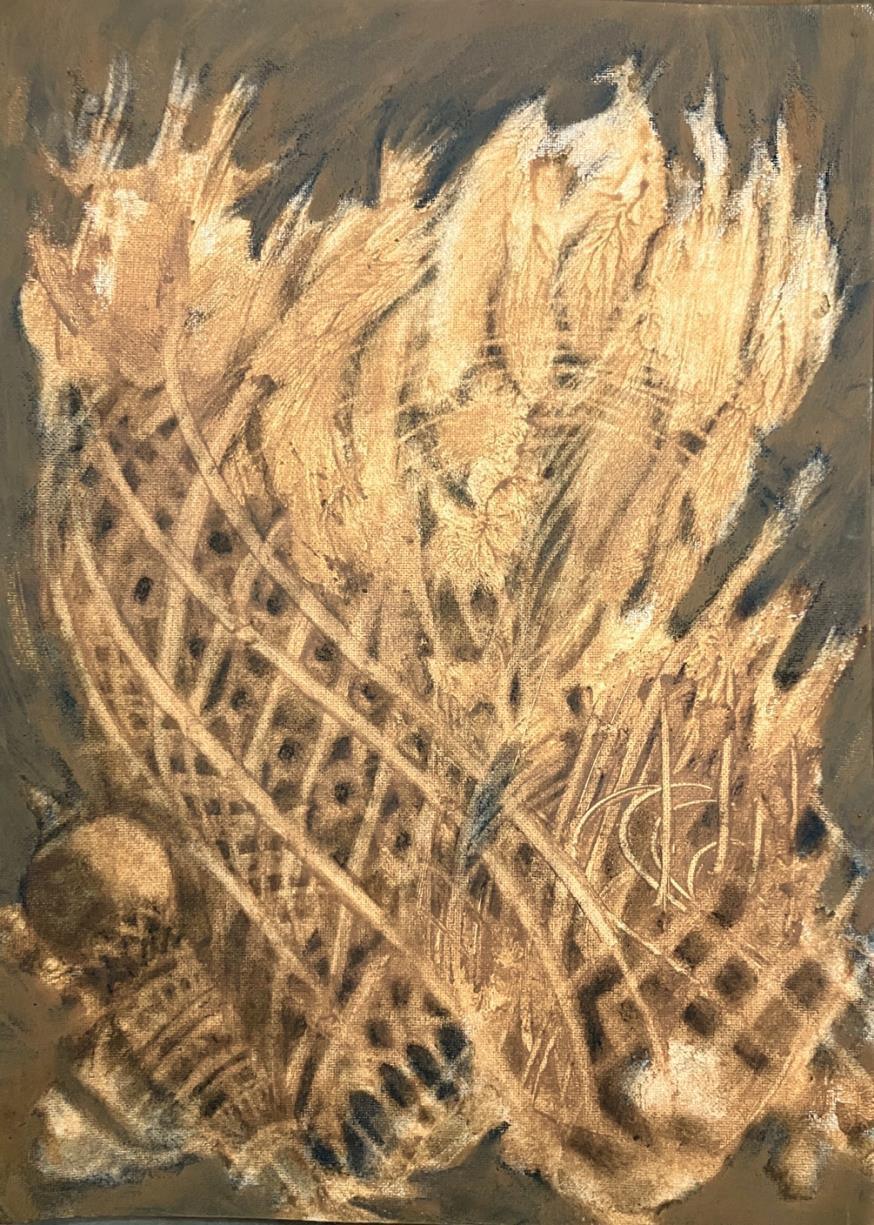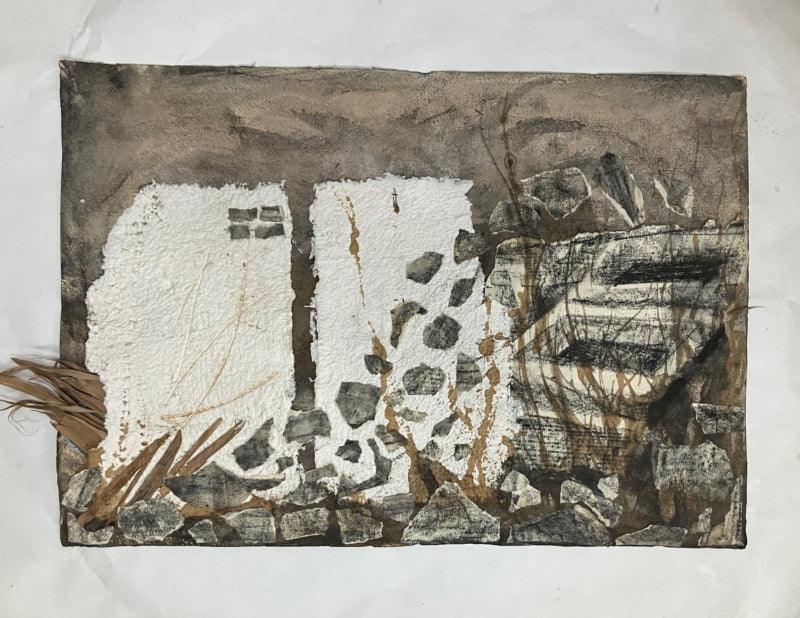
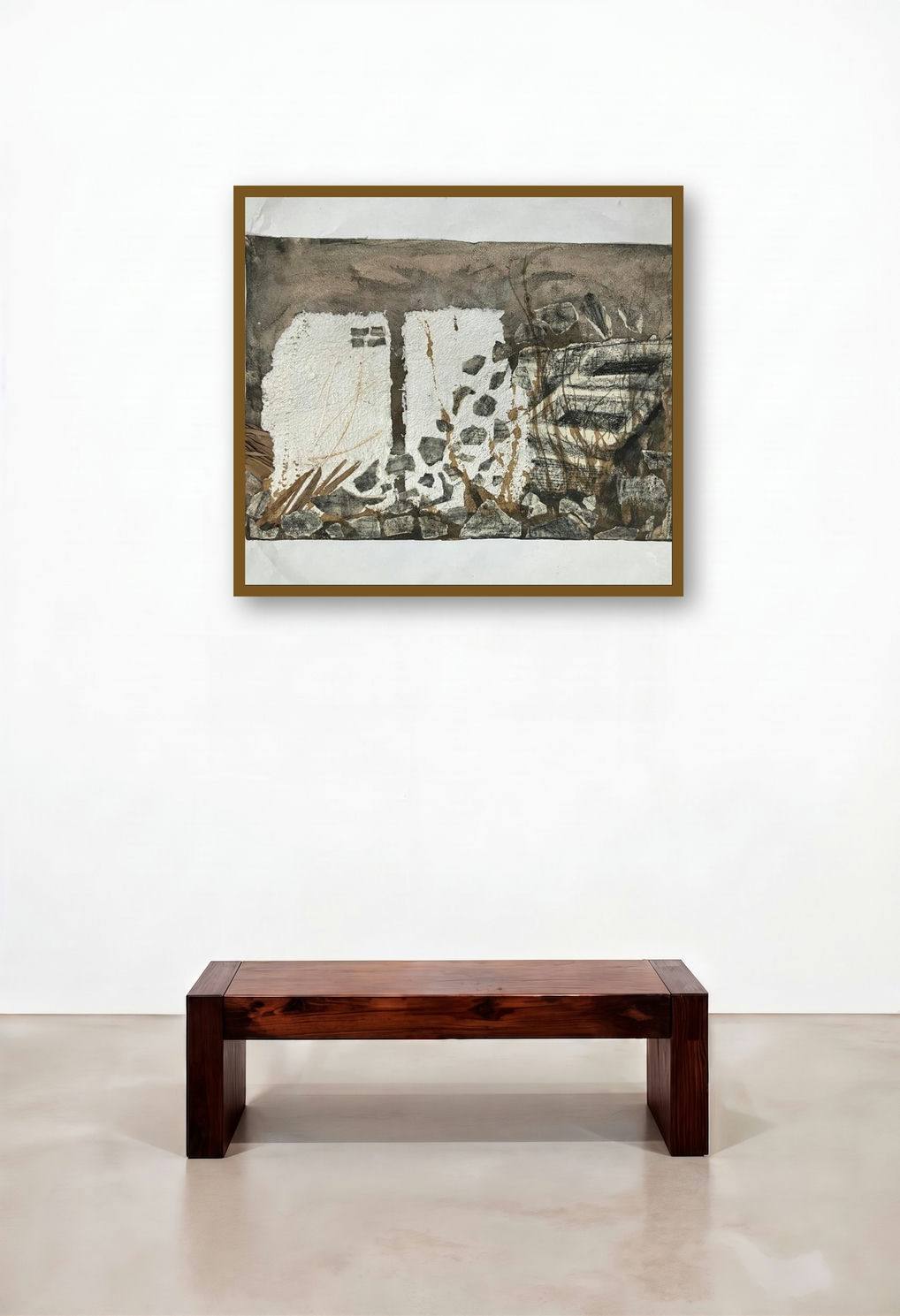
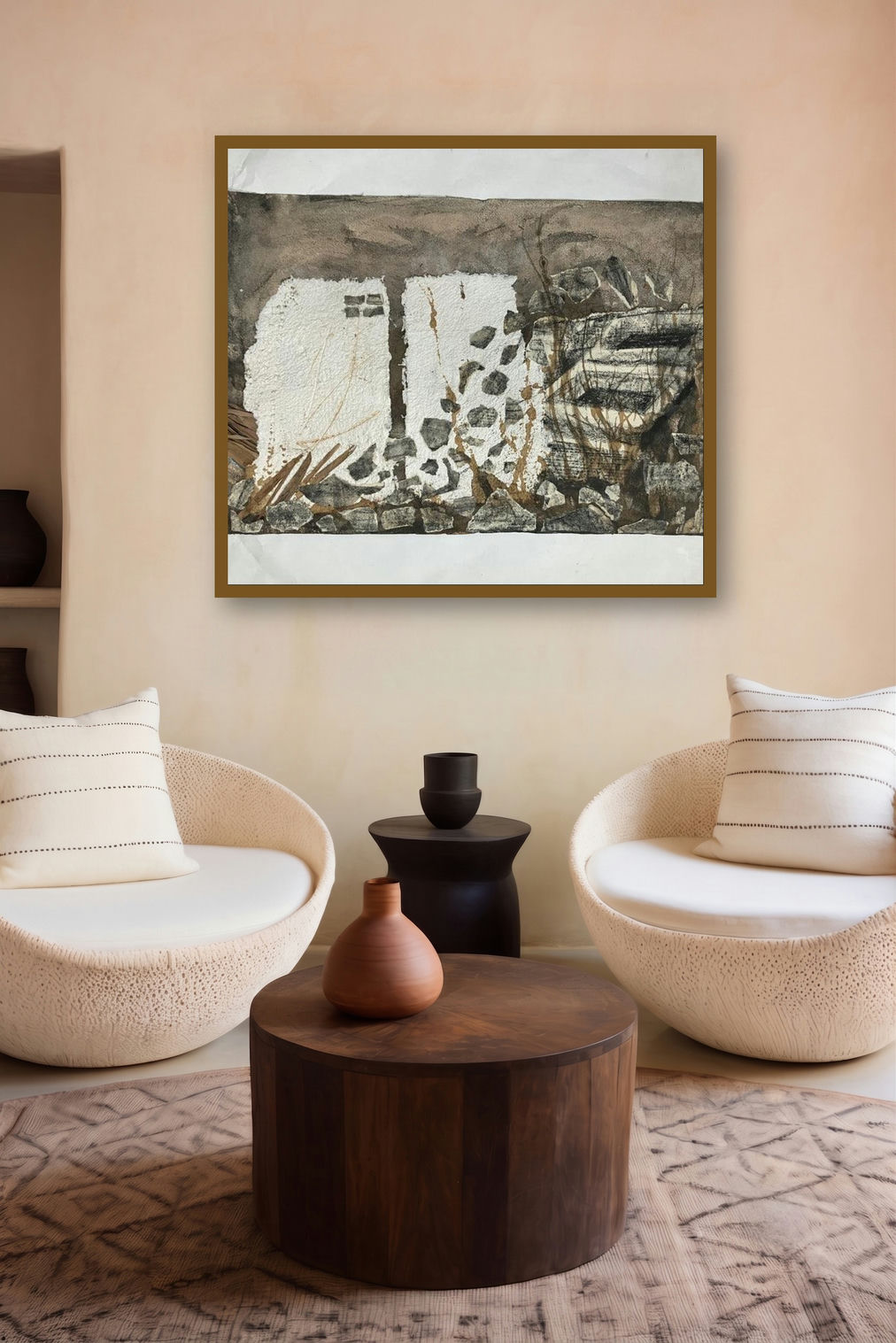
Metamorphosis 10 (Forgotten Ruins)
This work reads like an archaeological fragment of a lived space—two pale, plaster-like planes stand as quiet monoliths while a scatter of pebble forms and gridded marks suggests rubble, memory, and rebuilding in the same breath. The restrained palette of ash, sand, and smoke lets light function as a material: whiteness becomes both refuge and erasure, while the darker ground presses in with the weight of weather and time. On the right, the compressed lattice of charcoal lines hints at an architectural body—half facade, half cage—binding the composition with a tense, urban claustrophobia. In its layered surfaces and hesitant boundaries, the piece meditates on how structures persist after collapse, and how the mind organizes fragments into a provisional sense of home.
Delivery
You may also like