Lamkakadiwala
₹176,000
Out of stock · ★ 5.0 (12)checking live price…
Size
48x48Type
OriginalMaterial
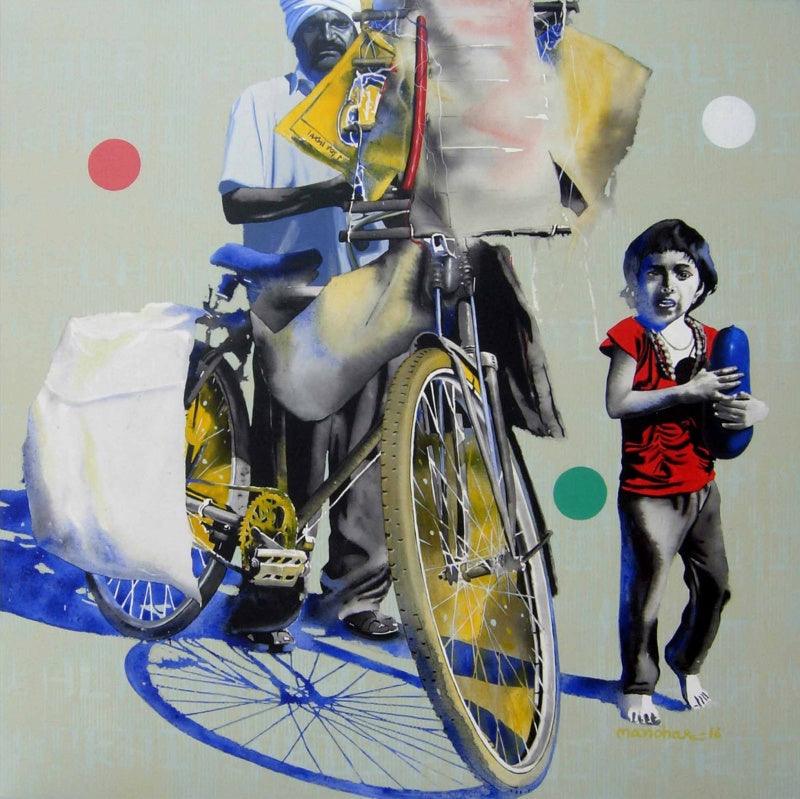
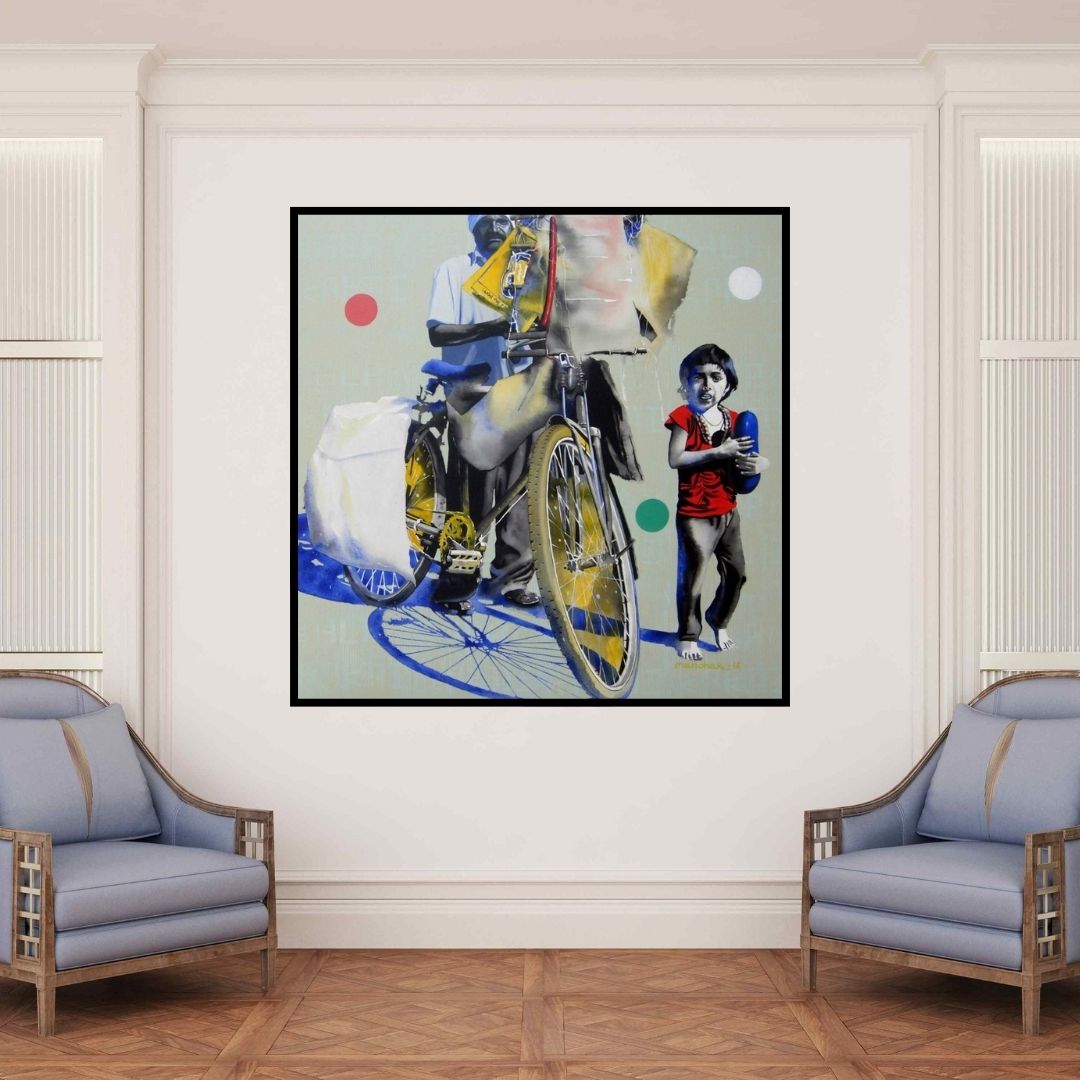
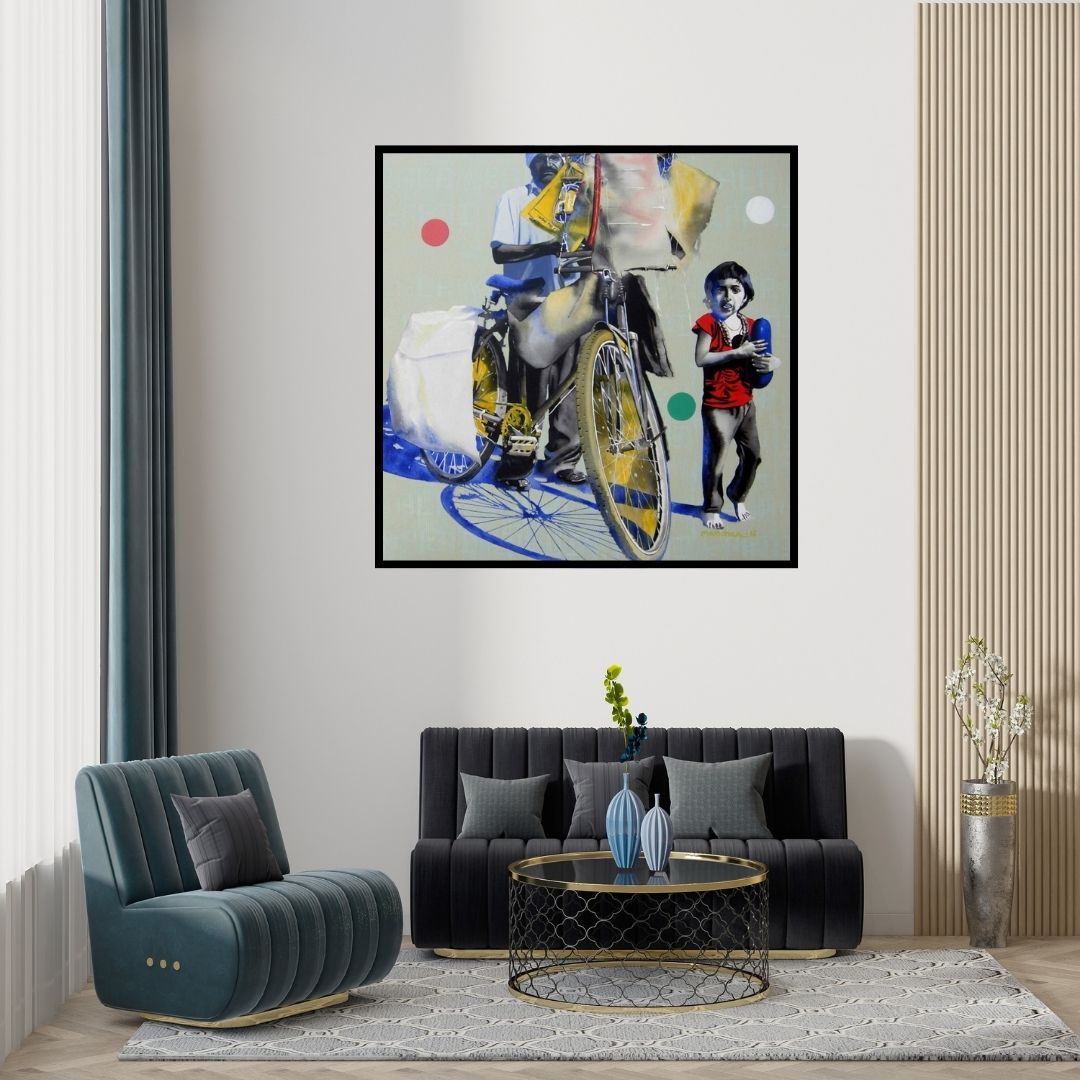
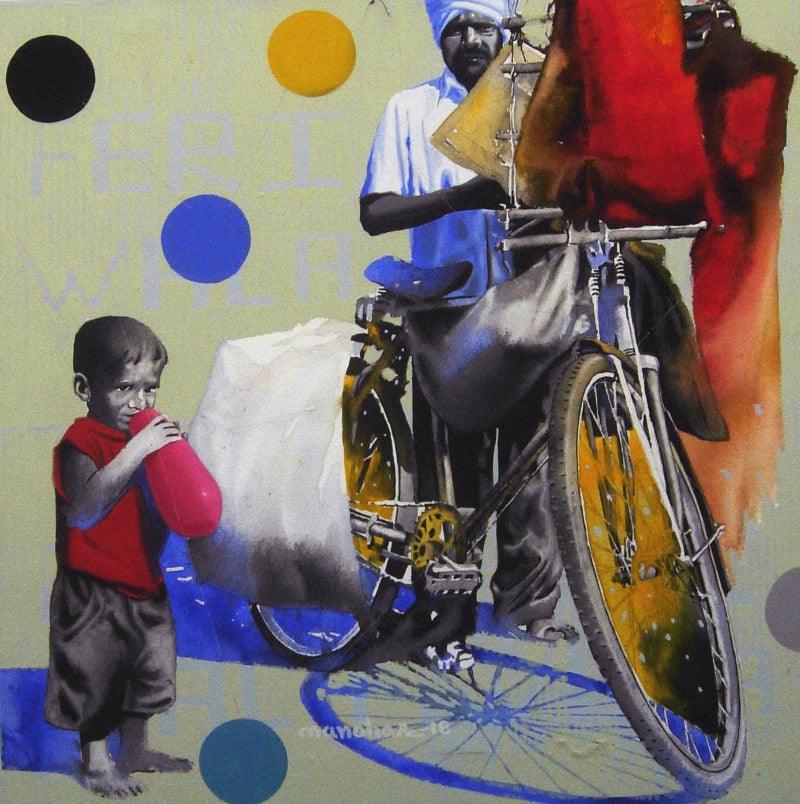
CanvasThis work stages an everyday street encounter as a quiet theatre of absence and burden: the cyclist’s body is partly erased into washed, drifting pigment, while the bicycle’s wheel—drawn with almost forensic clarity—anchors the scene like an emblem of labor that must keep turning. Against the flattened ground, the bright geometric dots read as both playful signage and indifferent markers, amplifying the contrast between a child’s vulnerable, watchful gaze and the adult’s faceless endurance. The restrained greys, pierced by urgent reds and acidic blues, transform realism into social memory—suggesting how ordinary lives are simultaneously visible and overlooked, carried forward by motion rather than choice.
Delivery
You may also like
Mithaiwala 08
Artzolo
₹176,000
out of stock
★ 4.0 (14)
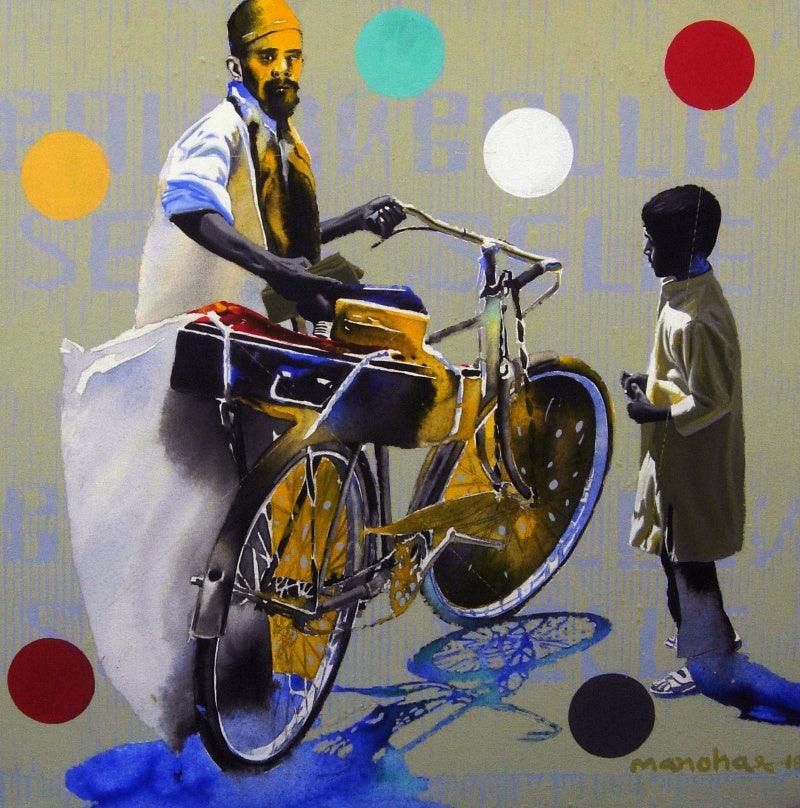
Icewala
Artzolo
₹50,000
out of stock
★ 4.0 (15)
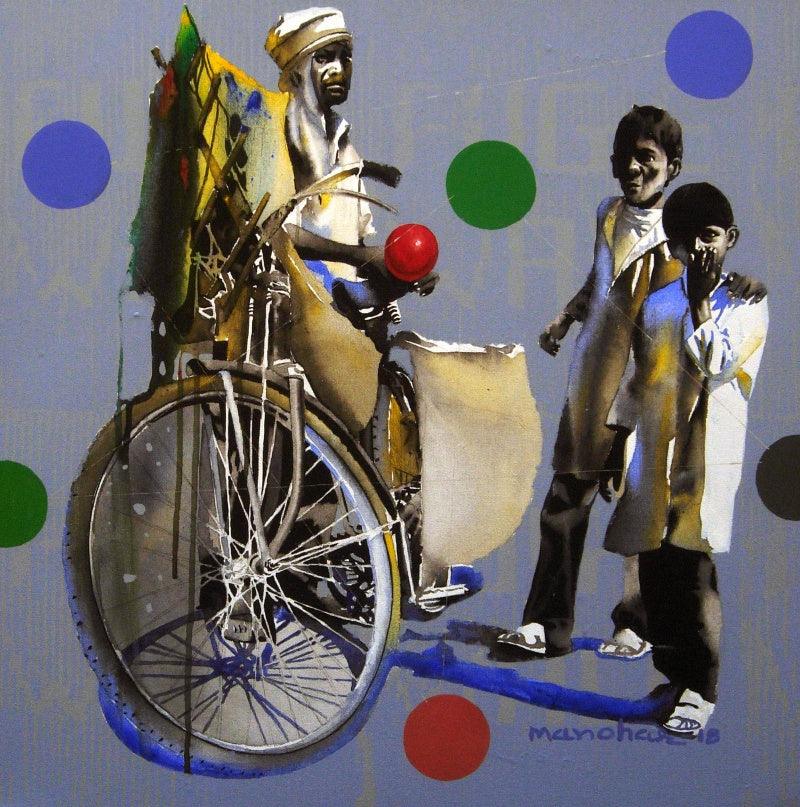
Balloon Seller 11 (Balloon Seller with Two Children)
Artzolo
₹50,000
out of stock
★ 4.0 (13)
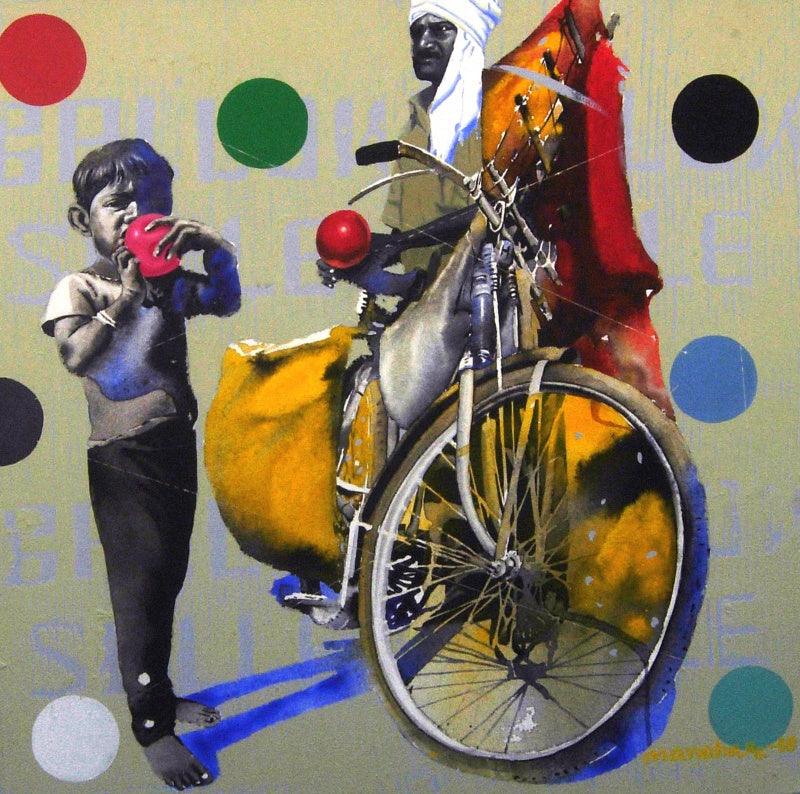
Balloon Seller 3 (Street Scene with Child and Balloon Seller)
Artzolo
₹50,000
out of stock
★ 5.0 (14)
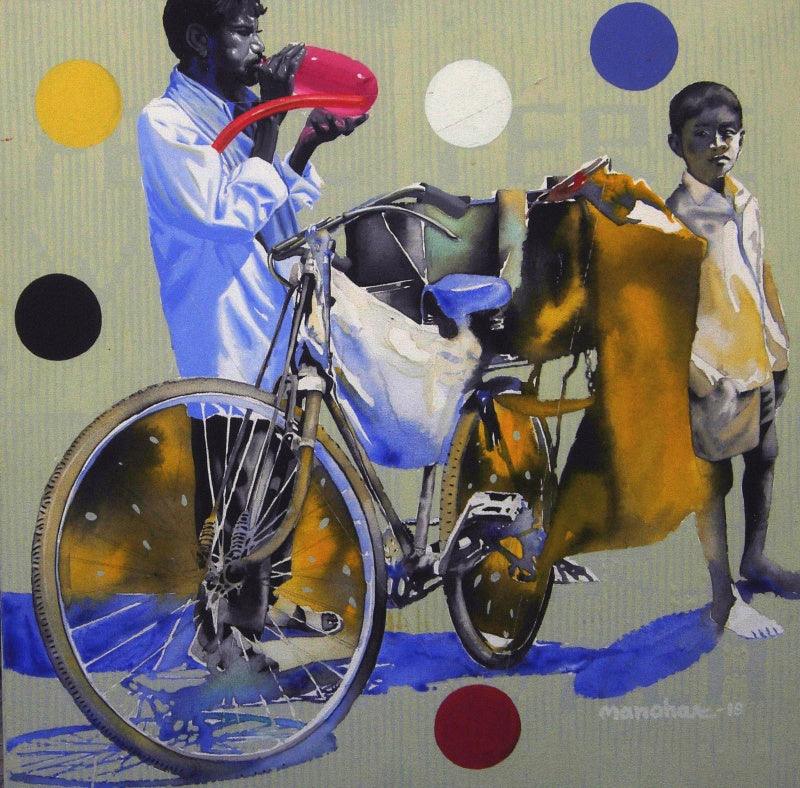
Balloon Seller 1
Artzolo
₹50,000
out of stock
★ 5.0 (15)
Balloon Seller 2 (Boat in River Ganga)
Artzolo
₹50,000
out of stock
★ 5.0 (9)
Feriwala
Artzolo
₹250,000
out of stock
★ 4.0 (12)
A Boy With Red Ballon
Artzolo
₹82,500
out of stock
★ 4.0 (14)