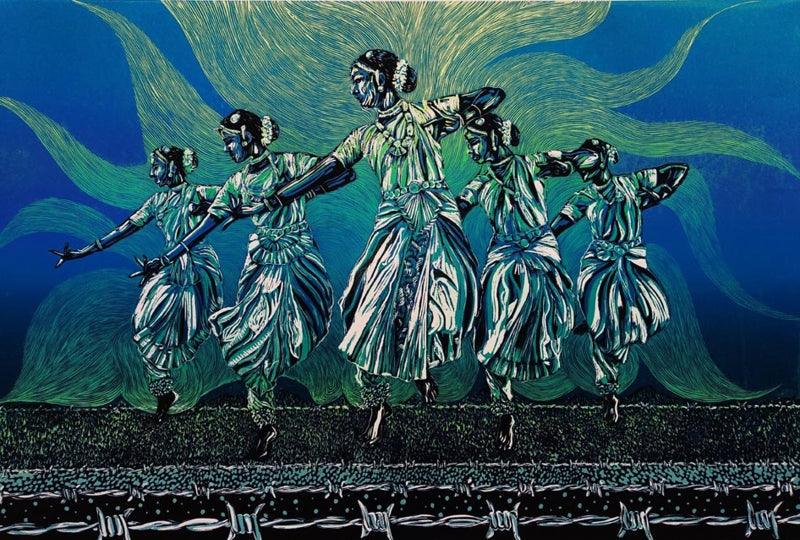
Soul In Pain 2 (Dancing Figures)
₹51,000
● In stock · ★ 4.0 (9)checking live price…
Size
24x36Type
OriginalMaterial
Wood CutArrayed in a rhythmic frieze, the dancers become both individual presences and a single, braided current, their outstretched arms stitching space into a shared pulse of devotion and discipline. The cool, saturated blues and teals press like night air against the luminous, carved whites of the costumes, while the sweeping, leaf-like vortex behind them reads as breath, aura, or ancestral wind—an invisible force animating the choreography. Line dominates as a moral and musical instrument: etched contours and repeated folds turn movement into pattern, suggesting that tradition is not static heritage but a living geometry carried forward step by step.
Delivery
You may also like
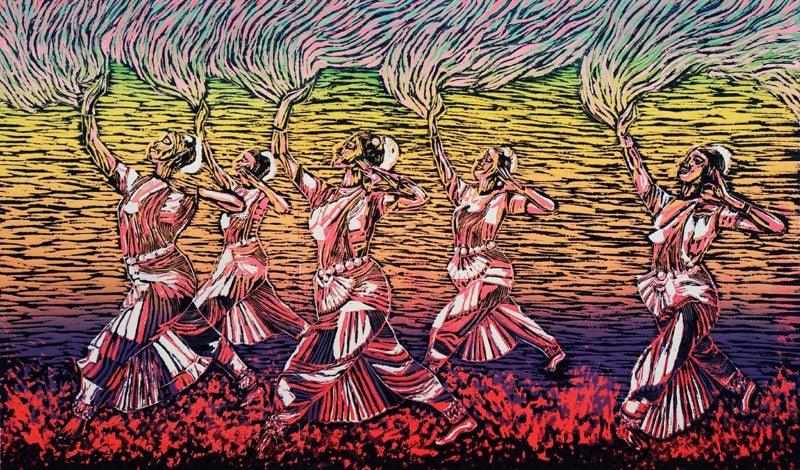
Surfing On Burning Balls
Artzolo
₹41,000
★ 5.0 (13)
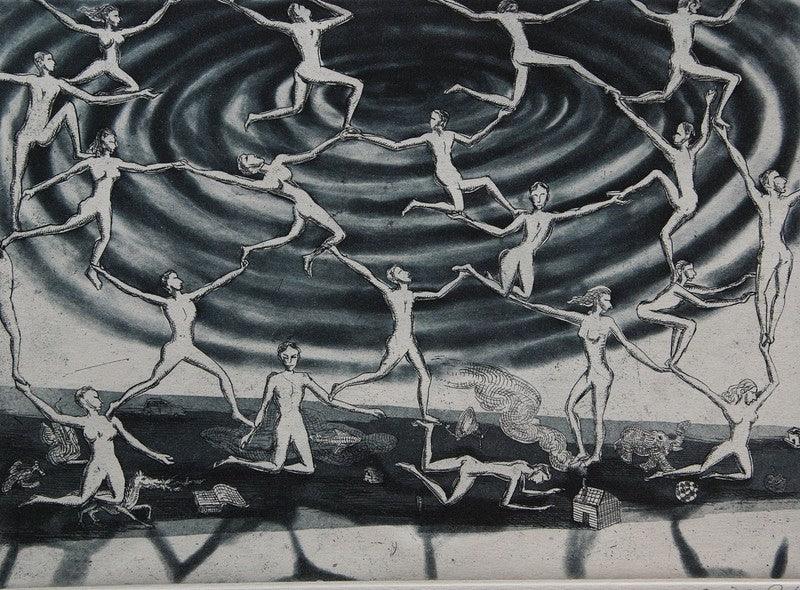
Chain (Dance of the Void)
Artzolo
₹18,000
★ 4.0 (8)
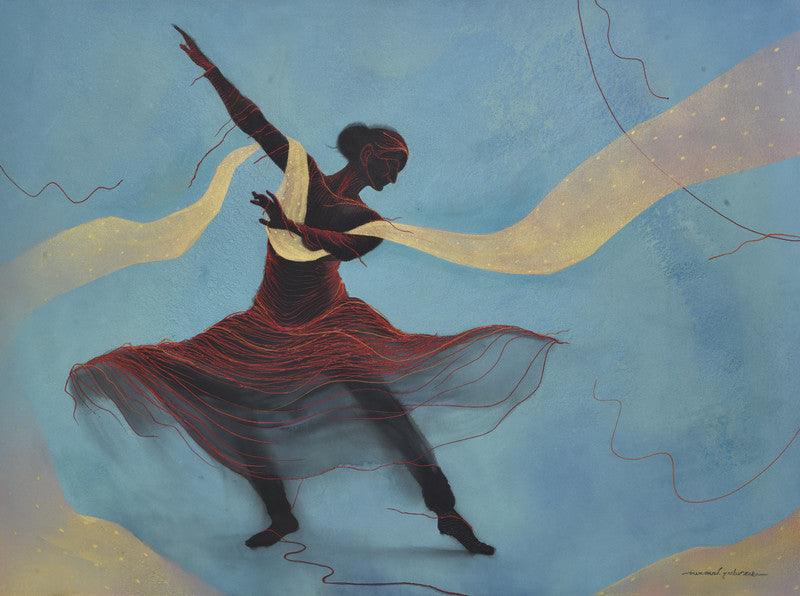
The Dancing Lady (Solitary Glow)
Artzolo
₹180,000
★ 4.0 (15)
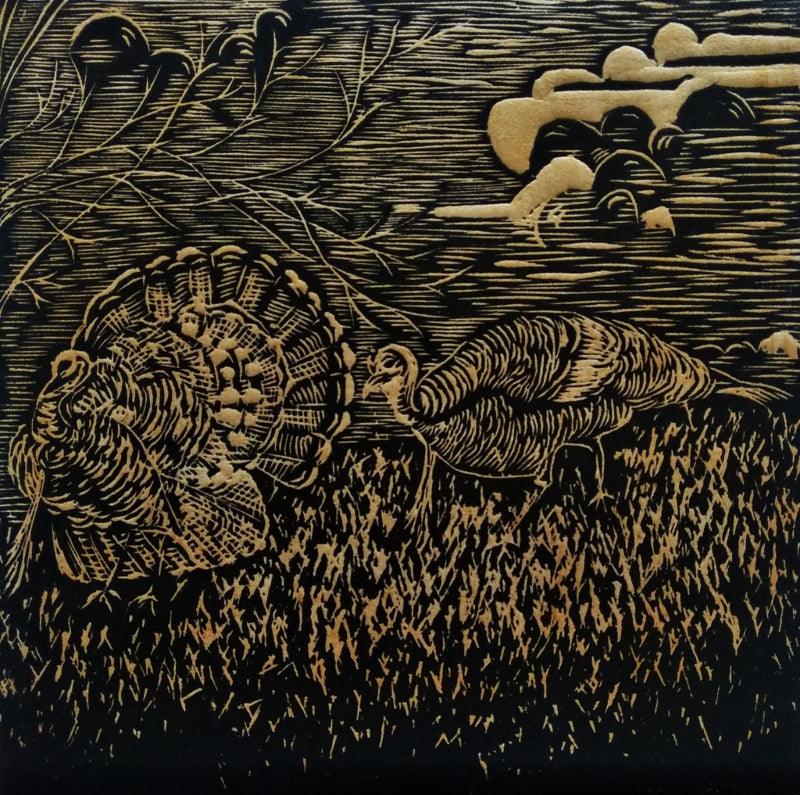
Joy Of Life Ii (Turkeys in the Wild)
Artzolo
₹10,000
★ 5.0 (10)
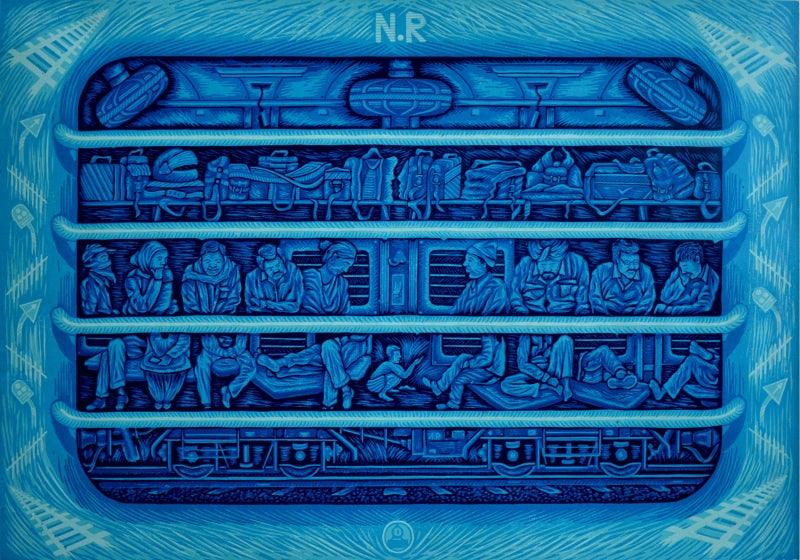
Untitled 4 (The Train Journey)
Artzolo
₹42,000
★ 4.0 (11)
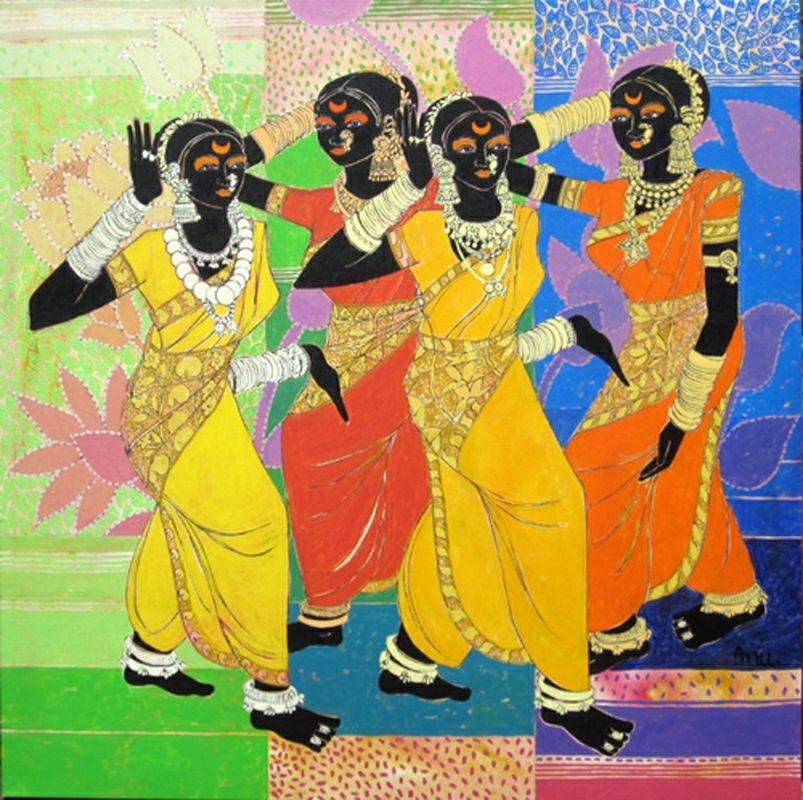
Rhythm 40 (Dancing Women)
Artzolo
₹230,000
★ 5.0 (11)
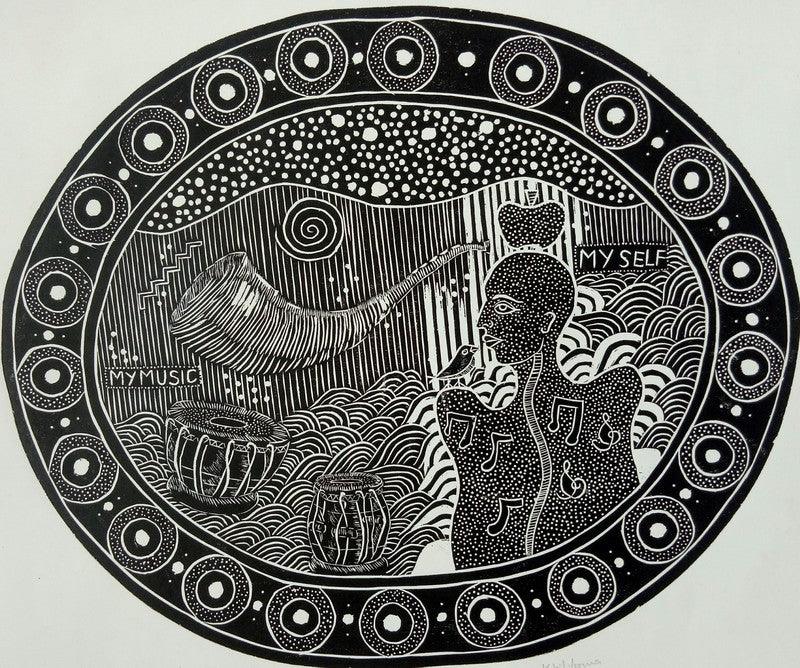
Music (The Soul of Music)
Artzolo
₹26,000
★ 4.0 (8)
Mother Nature (Swarm)
Artzolo
₹10,000
★ 4.0 (8)