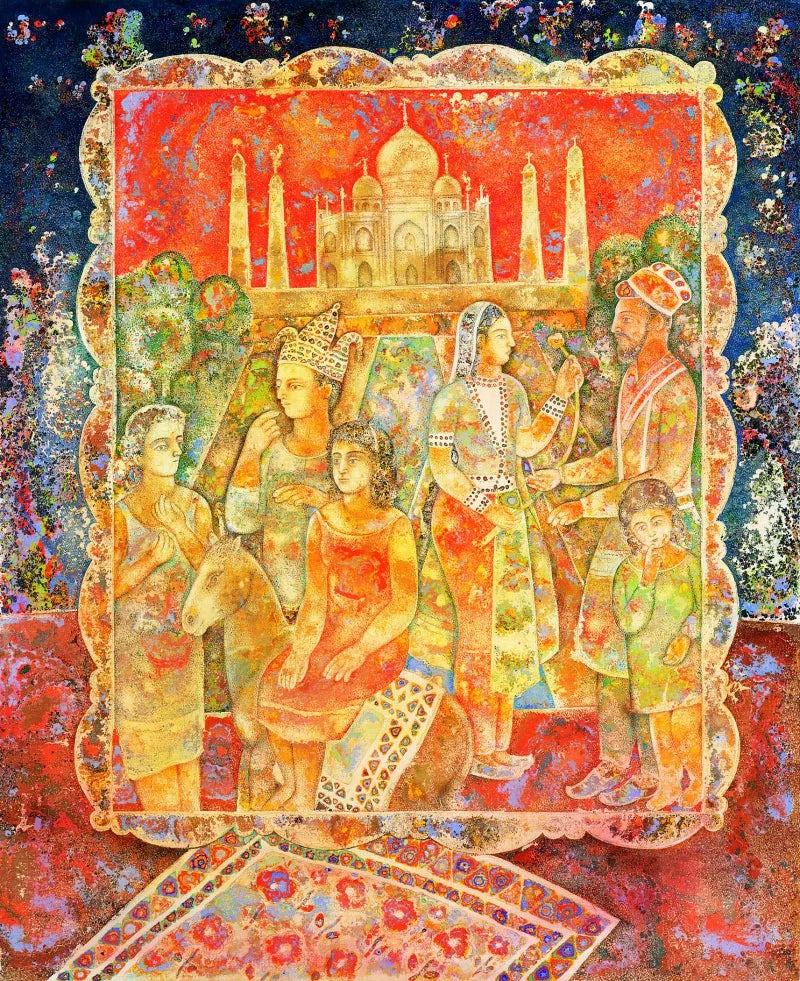
Legends Of Love (Mughal Court and the Taj Mahal)
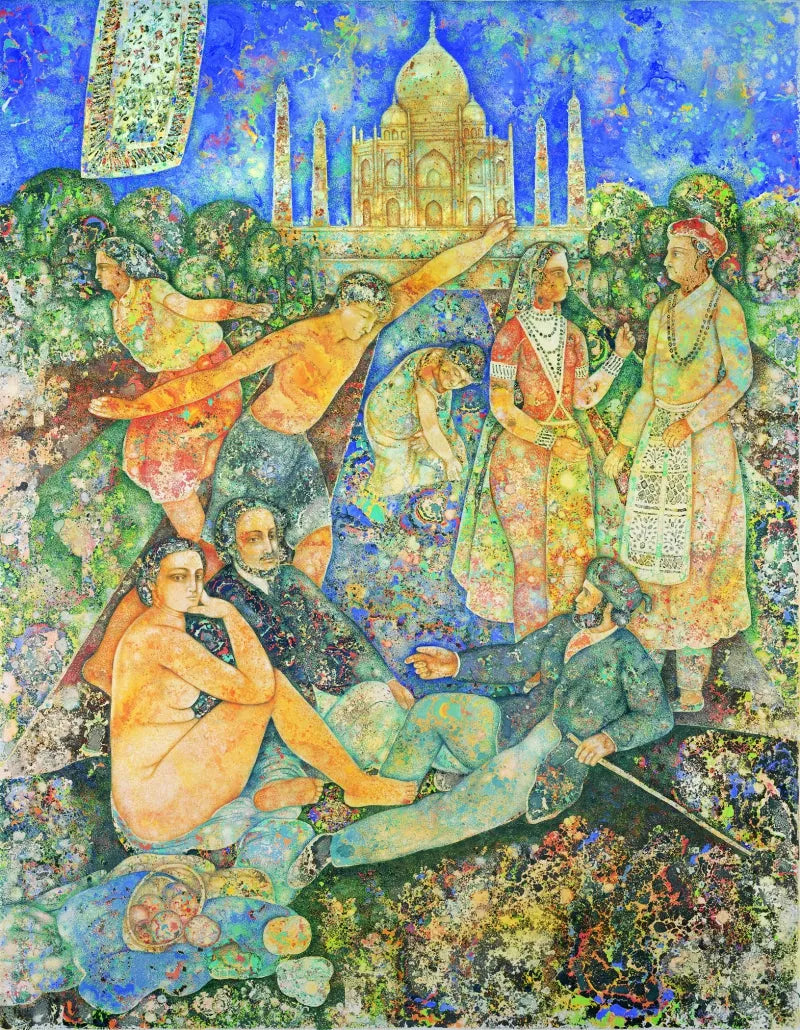
Set within an ornate, tapestry-like frame, the Taj Mahal rises as both monument and mirage, its pale symmetry held against a field of incandescent reds and embered golds that feel like memory heated into pigment. The figures—courtly, familial, and slightly theatrical—hover between intimacy and ceremony, their gestures reading as an exchange of vows, gifts, and quiet power while a small horse and patterned carpet anchor the scene in lived ritual. Speckled, cosmic splatters and granular textures dissolve strict outlines, suggesting that history here is not documented but continually retold—an empire refracted through devotion, spectacle, and longing. The composition ultimately becomes a pageant of belonging, where architecture stands as witness and the human tableau becomes the true mausoleum: a preservation of tenderness inside grandeur.
Delivery
You may also like