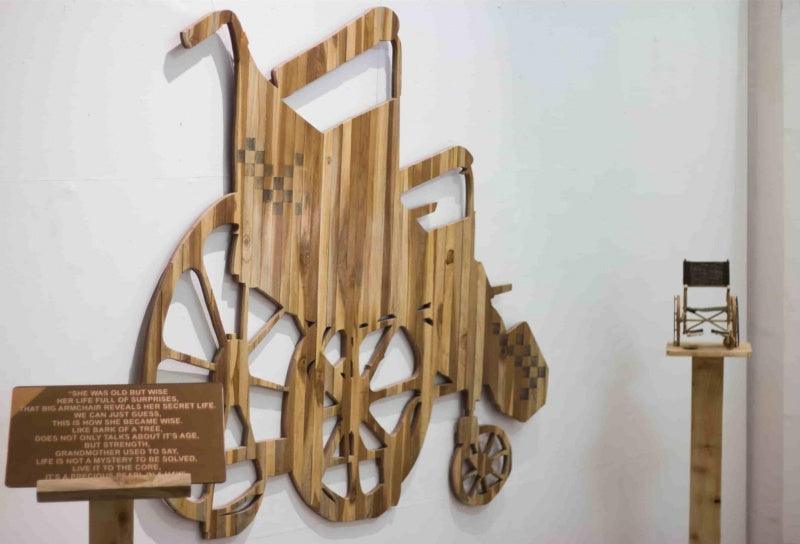
Footprints Of My Grandmother (The Weight of Memories)
₹135,000
● In stock · ★ 5.0 (6)checking live price…
Size
60x48x2Type
OriginalMaterial
Wood, GlassA monumental wooden silhouette—part bicycle, part carriage—unfurls across the wall like a memory enlarged, its cut-out spokes and negative spaces letting the white room breathe through the body of the object. The alternating grains and checkerboard joins read as a quiet record of labor and repair, suggesting lineage and handwork more than speed, while the crisp shadows turn the piece into a second drawing that shifts with the light. Set beside a small wheelchair perched on a plinth and a text panel that reads like testimony, the work becomes a tender meditation on mobility and dependence—how vehicles carry not only bodies, but stories, dignity, and the fragile engineering of everyday survival.
Delivery
You may also like
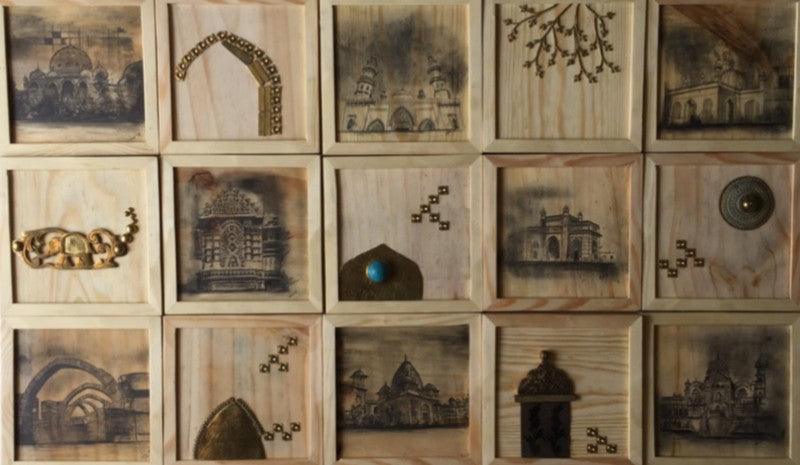
City Queen (Urban Grid)
Artzolo
₹90,000
★ 5.0 (13)
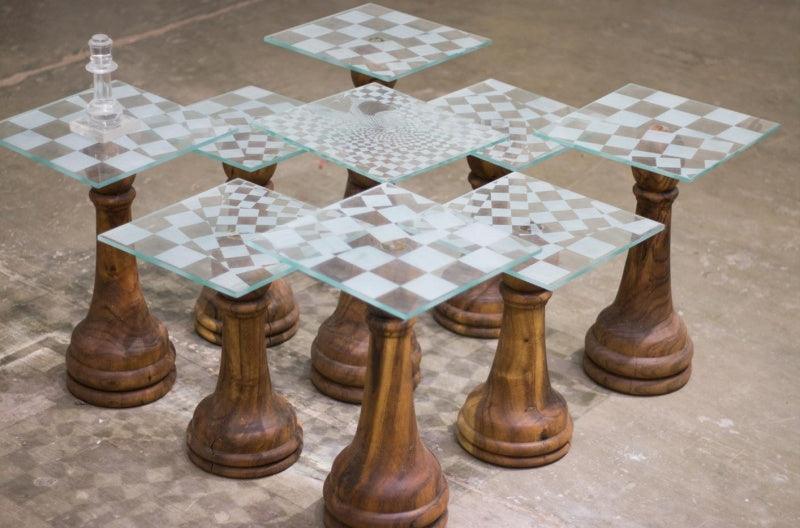
Promotion (Chessboard Conundrum)
Artzolo
₹100,000
★ 5.0 (12)
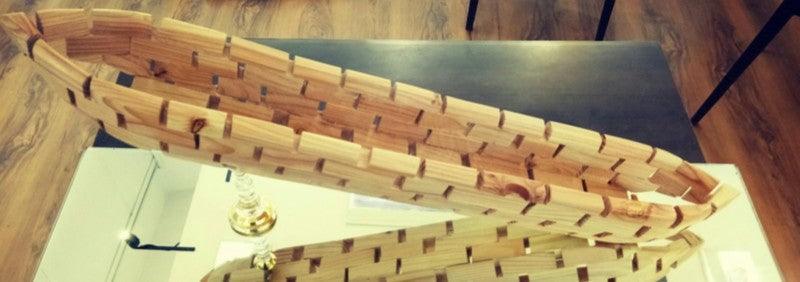
Journey 2 (Vessel of Dreams)
Artzolo
₹75,000
★ 5.0 (7)
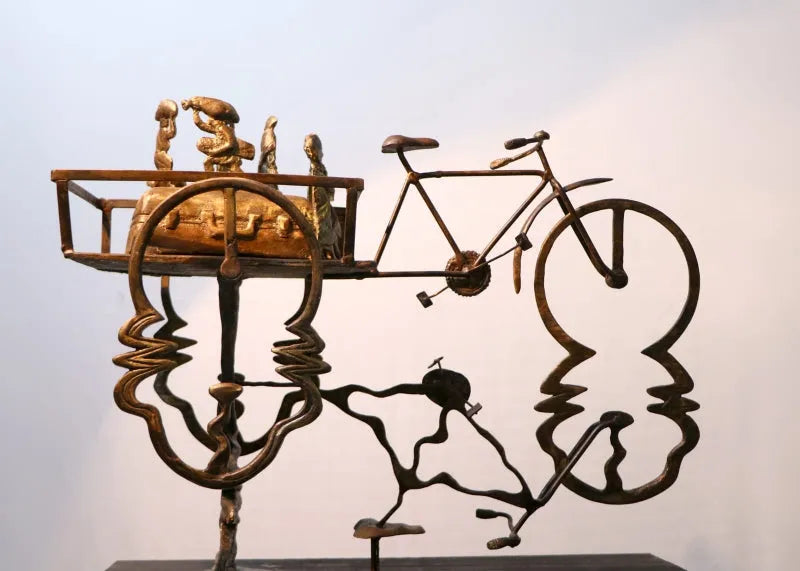
The Story Of Immigrants
Artzolo
₹83,000
out of stock
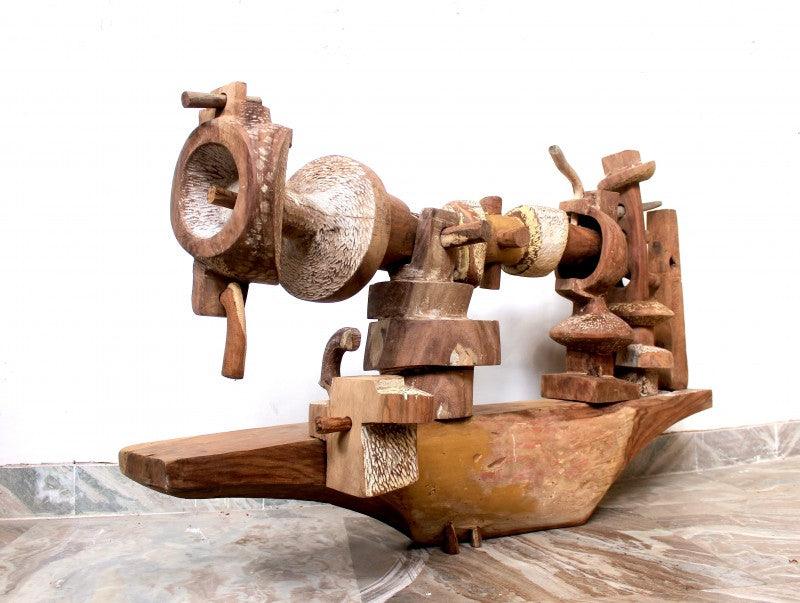
Swing Machine
Artzolo
₹95,000
out of stock
★ 4.0 (10)
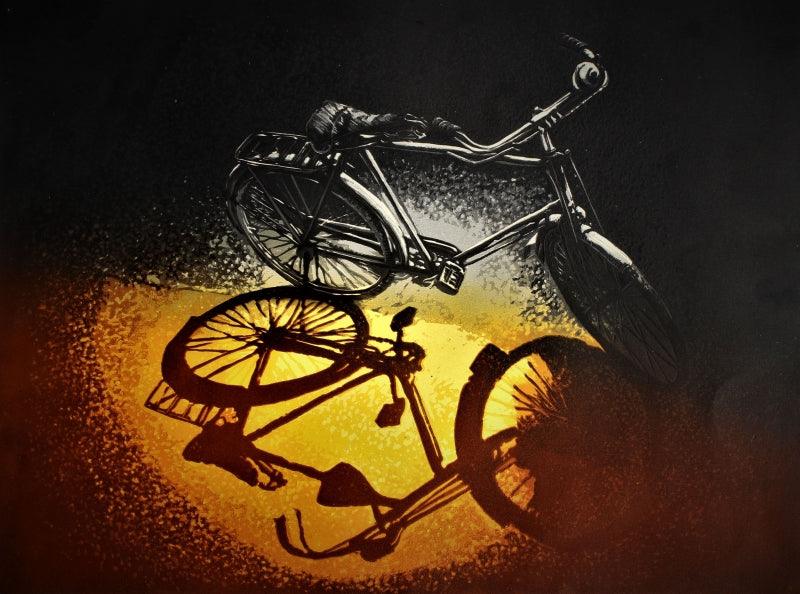
Negative And Positive (Shadow Play)
Artzolo
₹13,000
★ 5.0 (15)
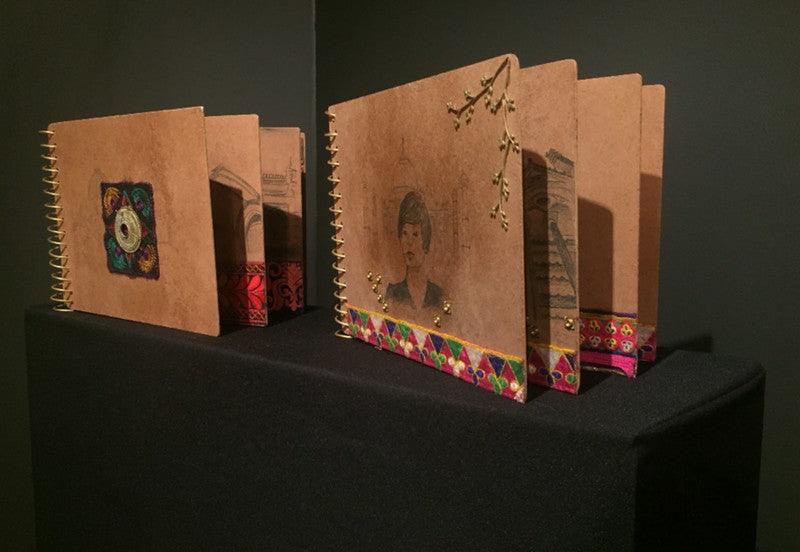
Journey 3 (Twisted Thoughts)
Artzolo
₹100,000
★ 5.0 (14)
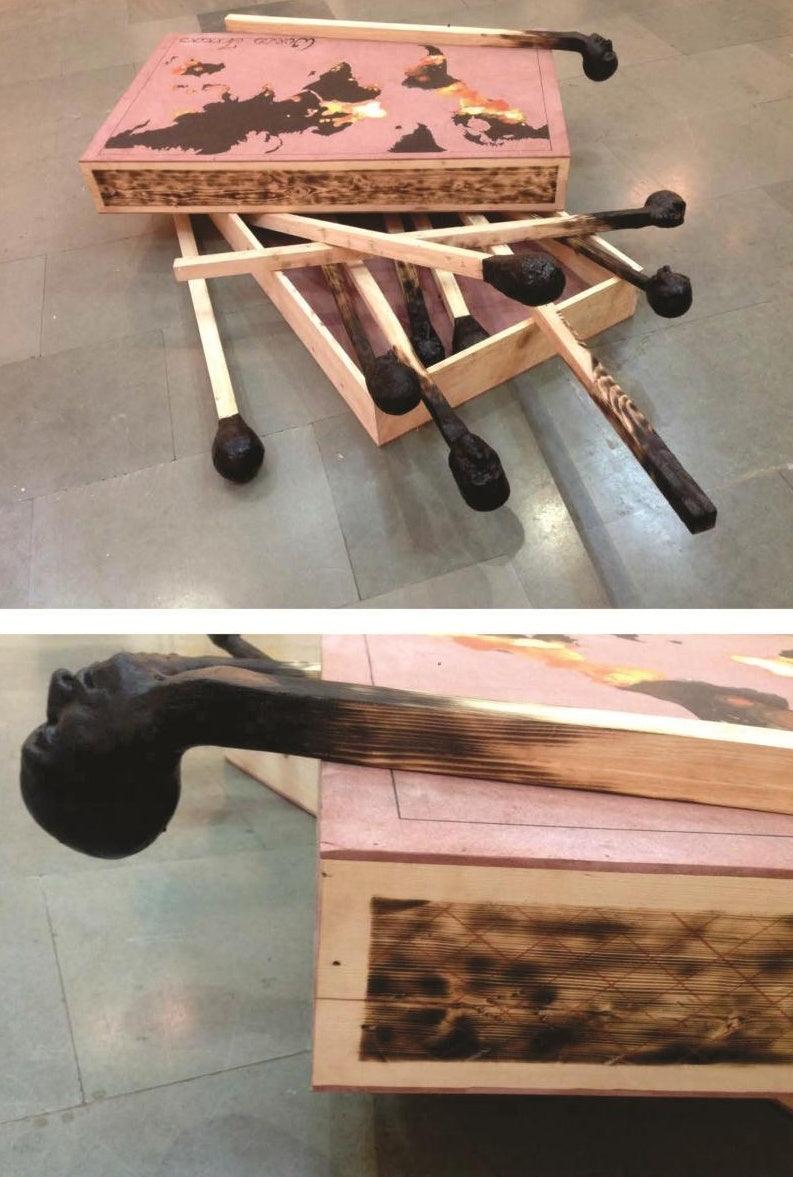
Untitled 2 (The World on Fire)
Artzolo
₹123,000
★ 5.0 (13)