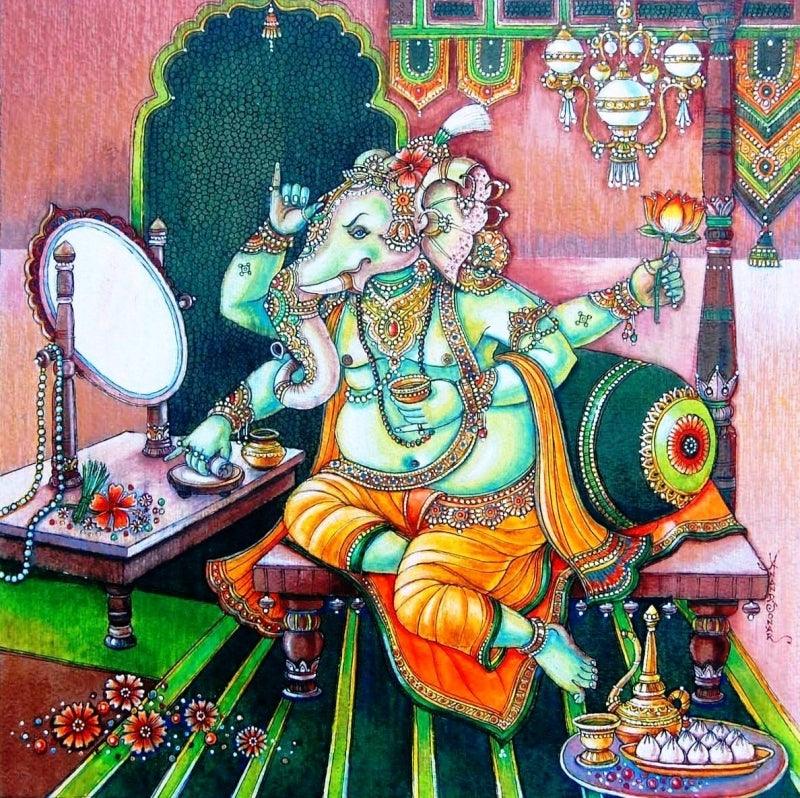


Shree Ganesha (Divine Reflection)
In this intimate chamber scene, Ganesha is rendered not as a distant icon but as a sovereign presence at ease—adorned with ornament and ritual luxury, yet softened by a domestic stillness that invites devotion as companionship. The composition orchestrates a gentle theater of opulence: the arched niche frames the deity like a sanctum, while the mirror, jewels, and brass vessels echo a cycle of reflection and offering, suggesting that reverence is also a form of self-recognition. Saturated greens and warm pinks braid serenity with sensuality, and the lotus—held aloft like a quiet promise—becomes a luminous counterpoint to the dense decorative detail, signifying purity rising from abundance. Through its meticulous patterning and ceremonial light, the work speaks of prosperity as an inner discipline: grace made visible through attention, care, and the deliberate ordering of space.
Delivery
You may also like