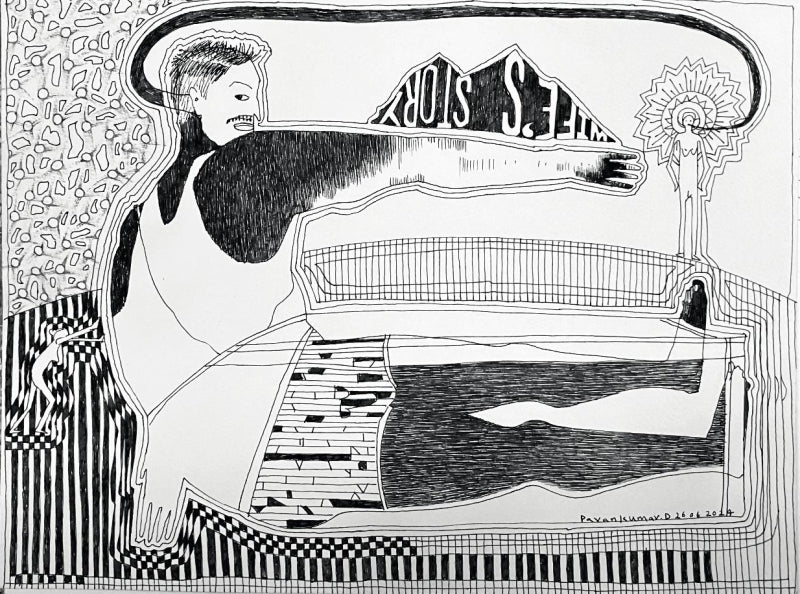
Empathy 3
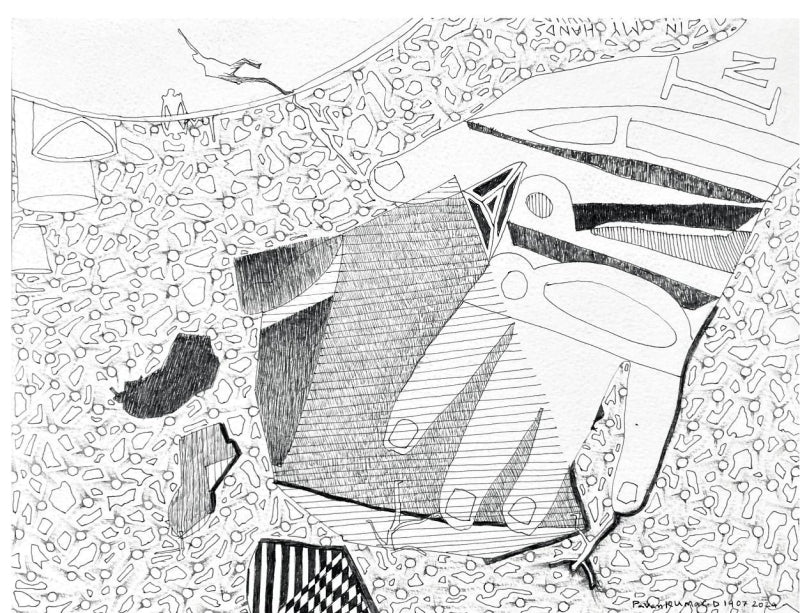
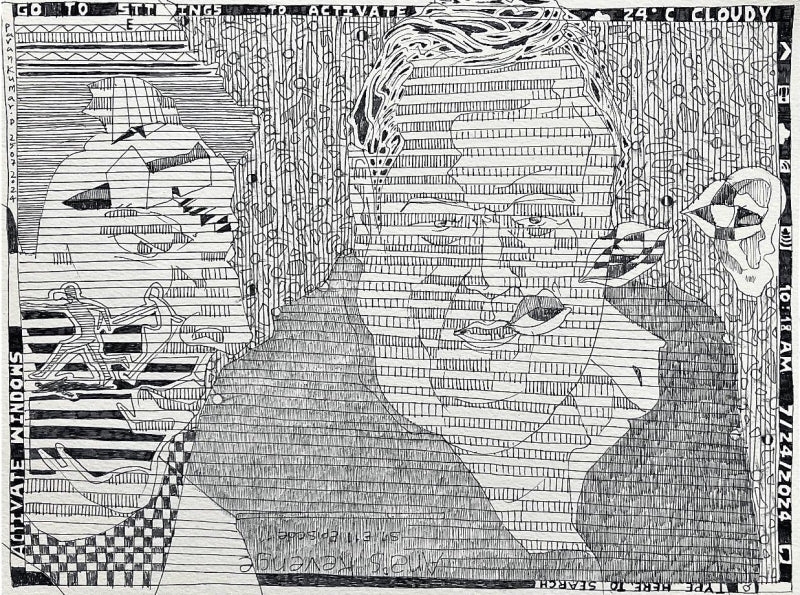
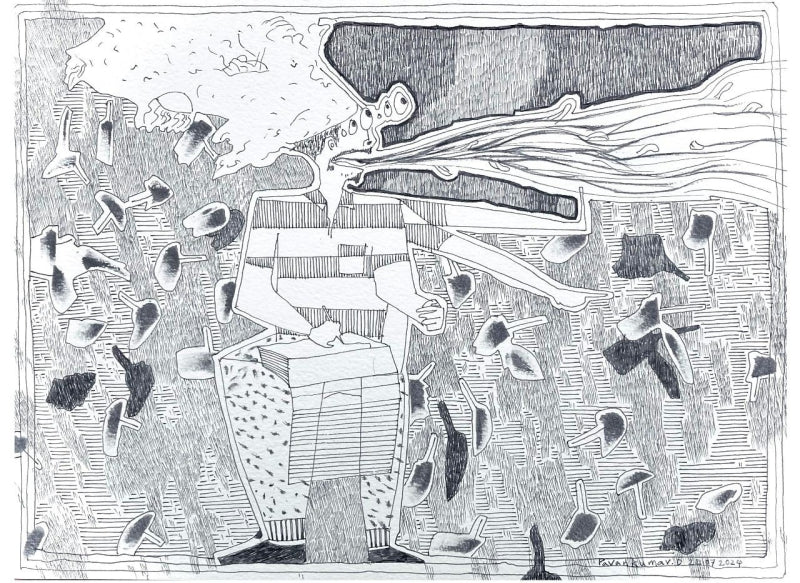
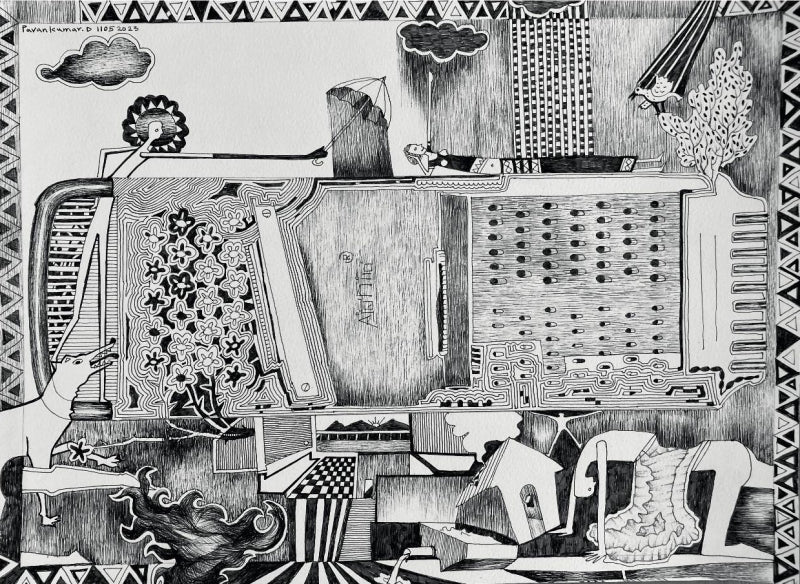
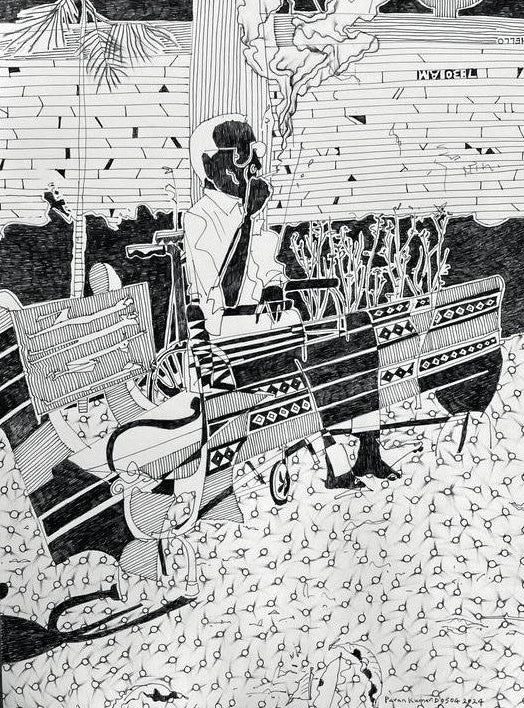
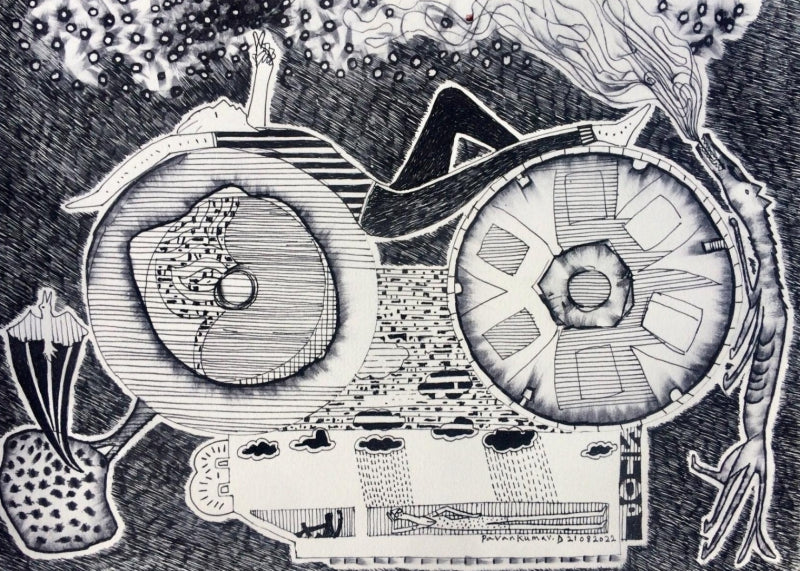
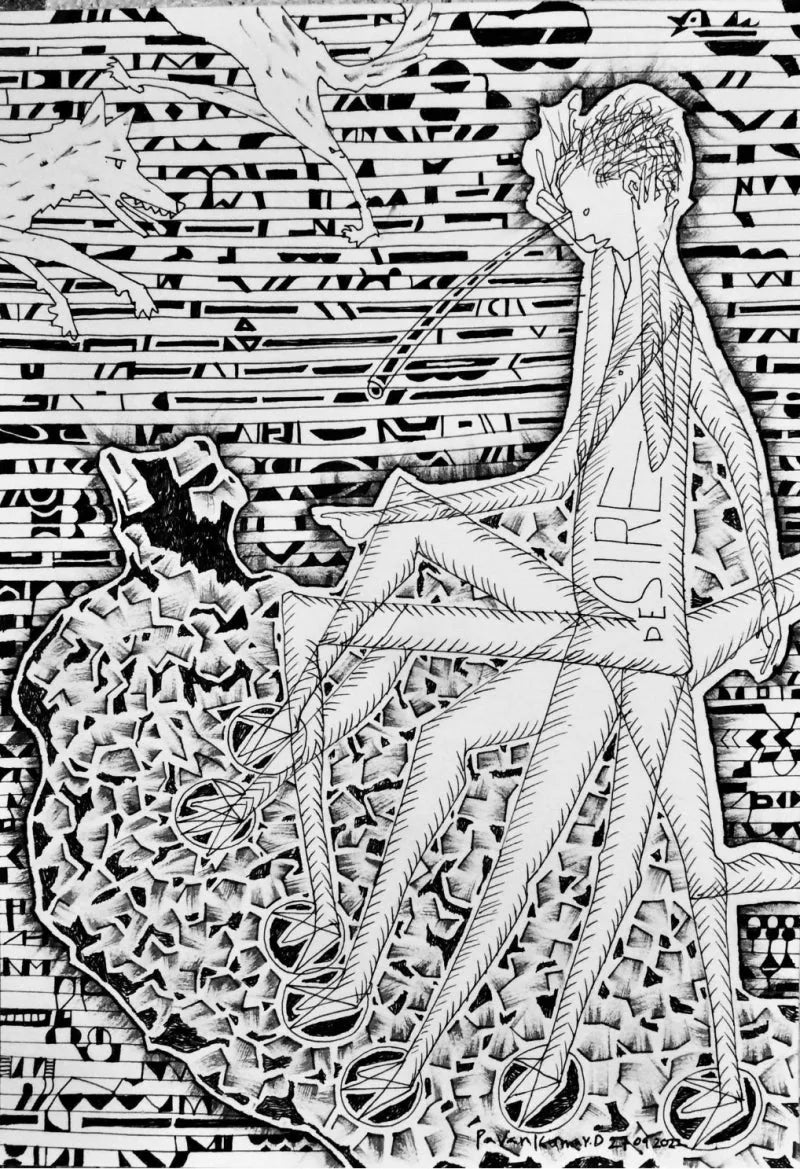
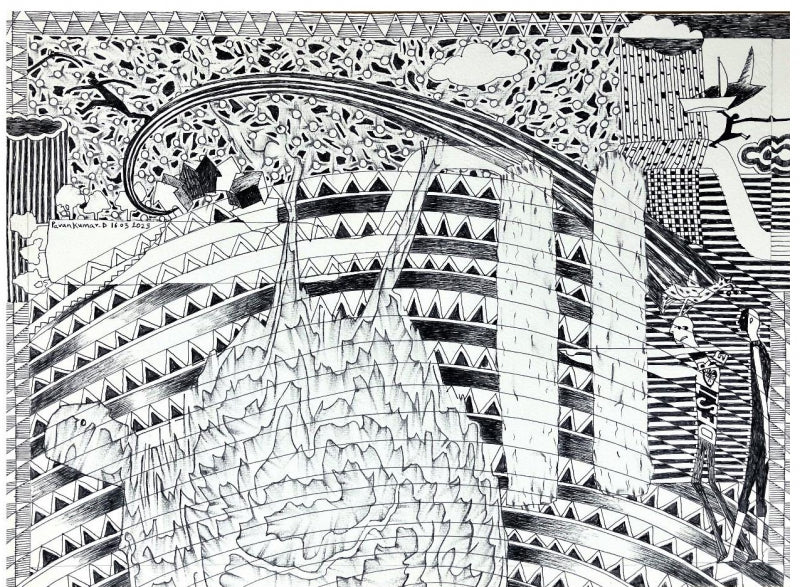
Rendered in stark black-and-white, the drawing stages a tense encounter between the intimate scale of a human body and the blunt architecture of the built world: an arm extends across the picture plane like a barrier, an accusation, or a desperate attempt to reach what remains just beyond grasp. Patterned textures—stripes, checkerboard, and rippling fields—fracture the space into competing registers, turning the environment into a psychological map where control and disorientation coexist. The haloed, diminutive figure at the edge reads as an icon of promise or conscience, set against signage and hard horizons that suggest consumption and spectacle, as if the sacred must survive inside a noisy, commercial landscape. In this compressed tableau, gesture becomes the narrative engine, proposing that protection and possession are perilously close, and that longing can look indistinguishable from restraint.