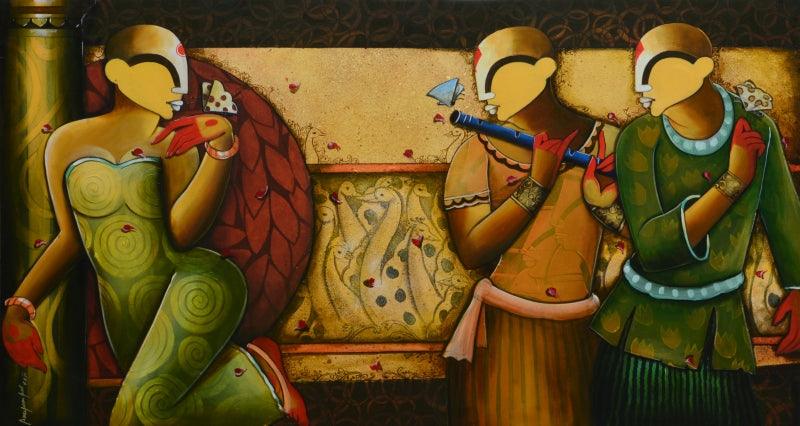
Celestial Beauty (Divine Love The Enchanting Flute Player)
₹100,000
Out of stock · ★ 5.0 (8)checking live price…
Size
66x36Type
OriginalMaterial
CanvasThis scene stages an intimate theater of desire and hesitation, where three faceless figures become archetypes rather than individuals—seduction, song, and complicity—circulating in a closed, ornamental world. Warm ochres and mossy greens glow like aged fresco, while the rhythmic curves of drapery and the patterned wall compress space, turning the balcony into a psychological chamber. The flute’s slender line functions as both bridge and barrier, its music implied as the invisible force that stirs the scattered petals into a quiet choreography of longing. In withholding facial features, the artist shifts emotion into gesture and color, suggesting love not as portraiture but as a timeless, stylized ritual.
Delivery
You may also like

Celestial Beauty And Her Musical Trance
Artzolo
₹98,000
out of stock
★ 4.0 (6)
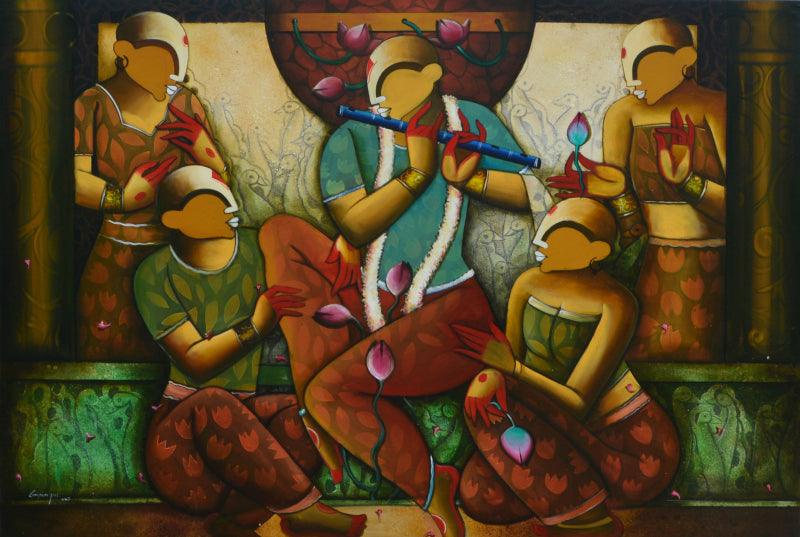
Tunes Of Flute 10 (Melodious Gathering) (Flute Symphony)
Artzolo
₹150,000
out of stock
★ 4.0 (8)
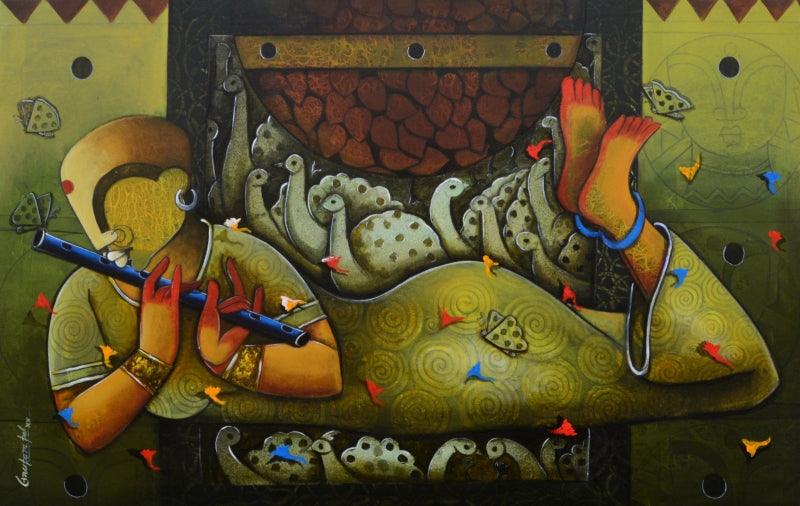
Celestial Beauty
Artzolo
₹49,000
out of stock
★ 5.0 (11)
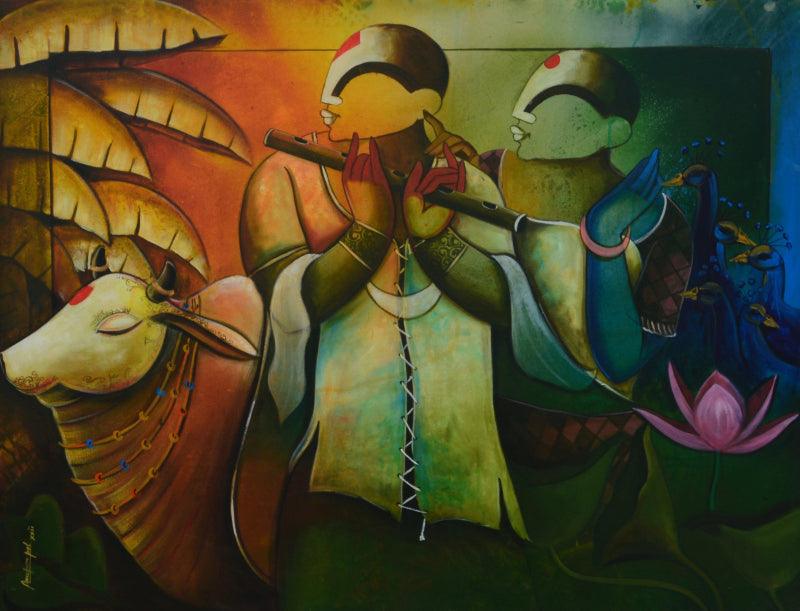
Tunes Of Flute (Pastoral Symphony) (Krishna and Radha Divine Harmony)
Artzolo
₹65,000
out of stock
★ 4.0 (9)
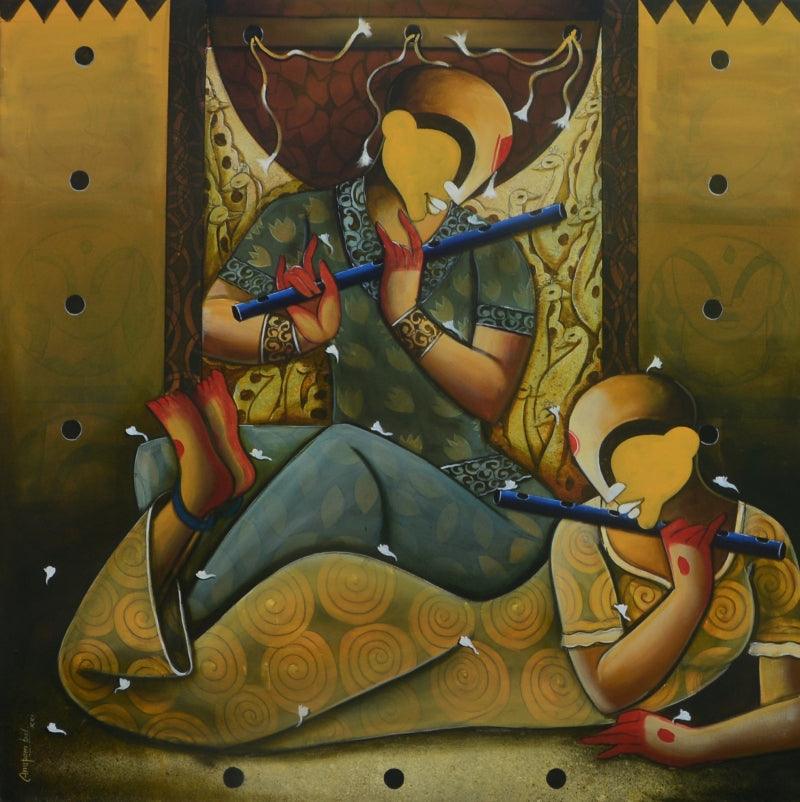
Tunes Of Flutes (The Melody of Love)
Artzolo
₹115,000
out of stock
★ 4.0 (10)
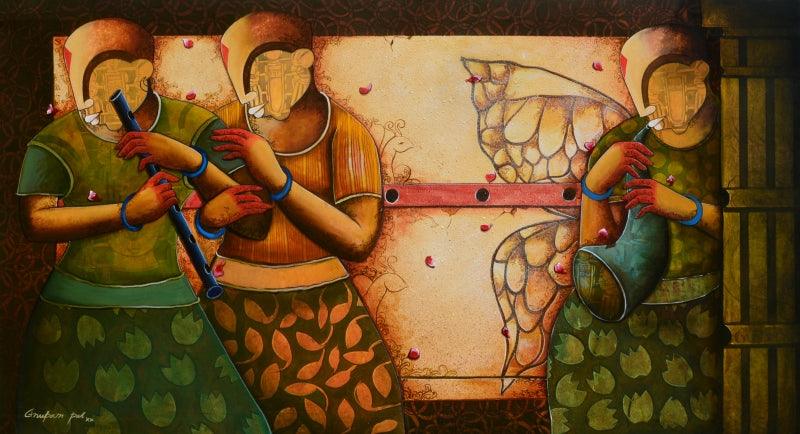
Rhythmic Conversation 35
Artzolo
₹95,000
out of stock
★ 4.0 (8)

The Mesmerizing Tunes (The Enchanting Flute)
Artzolo
₹110,000
out of stock
★ 5.0 (15)
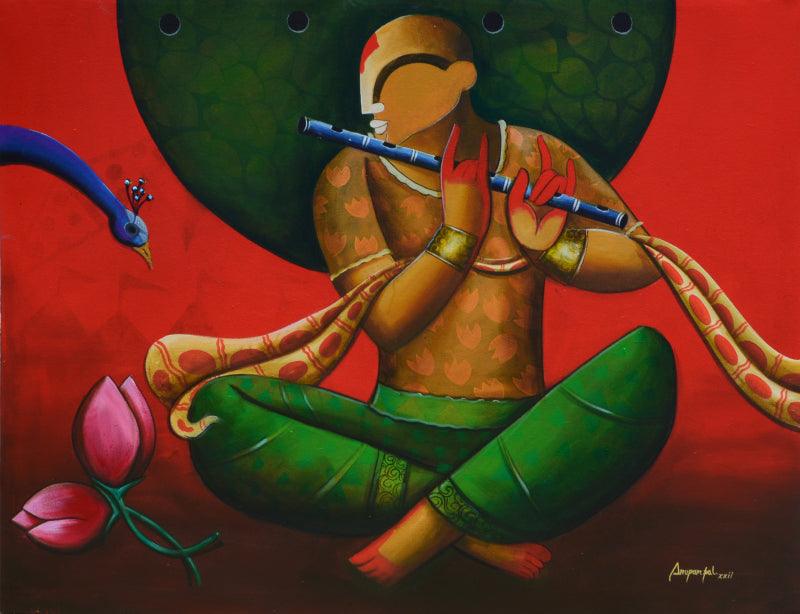
The Mesmerizing Tunes 18 (Divine Melody) (Flute Melody Crimson Sky)
Artzolo
₹70,000
out of stock
★ 4.0 (12)