Rituals Of Shakti
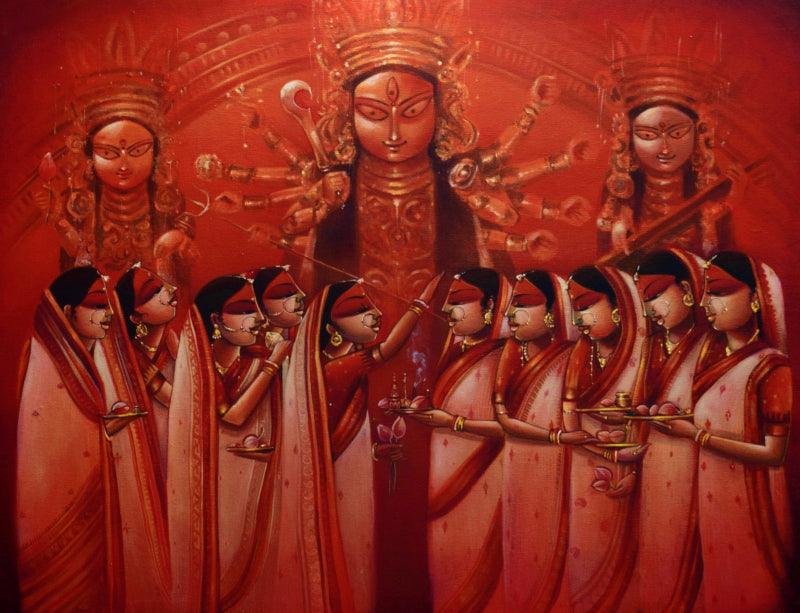
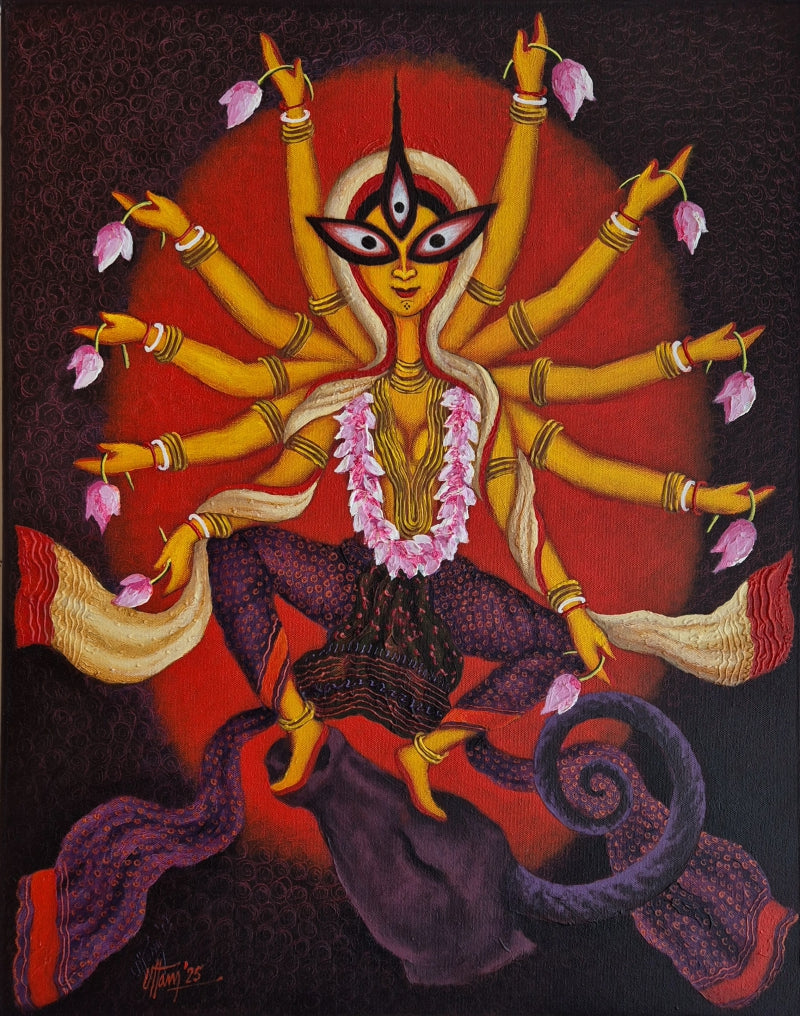
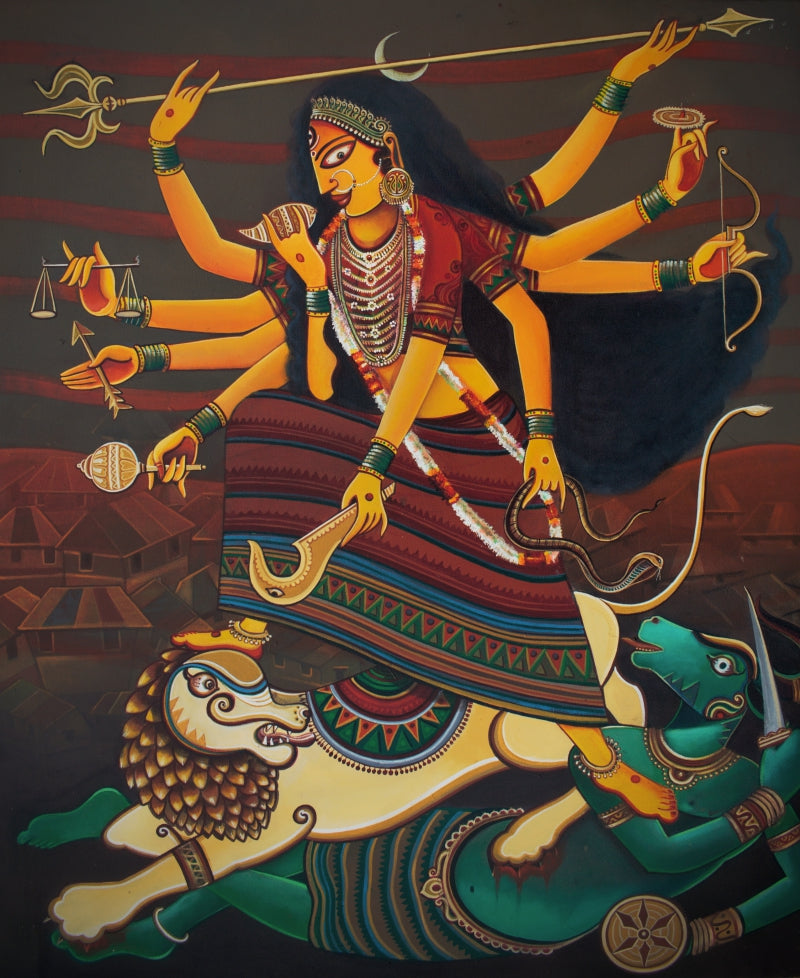
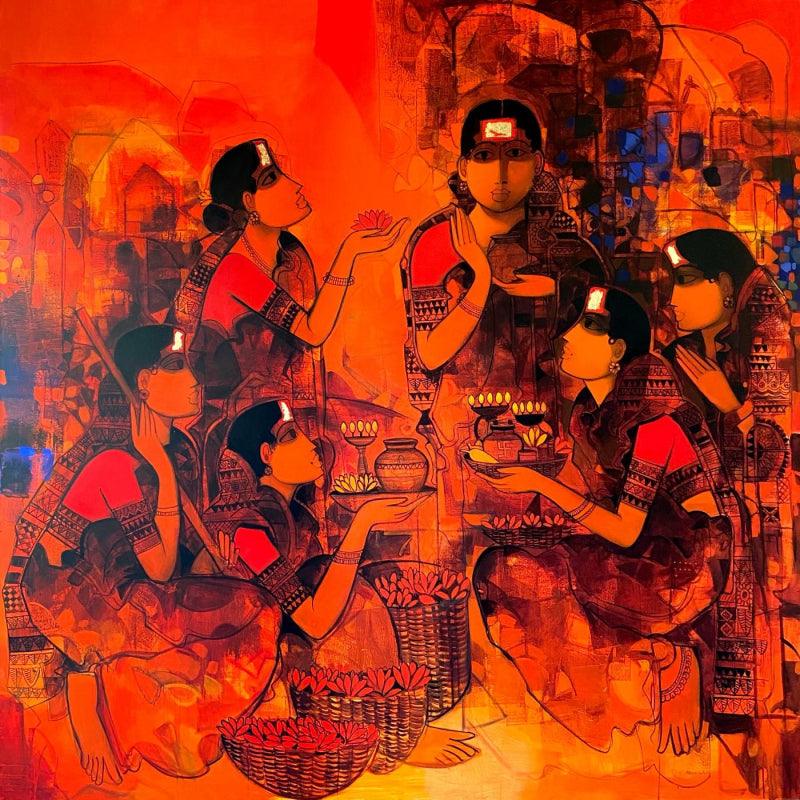
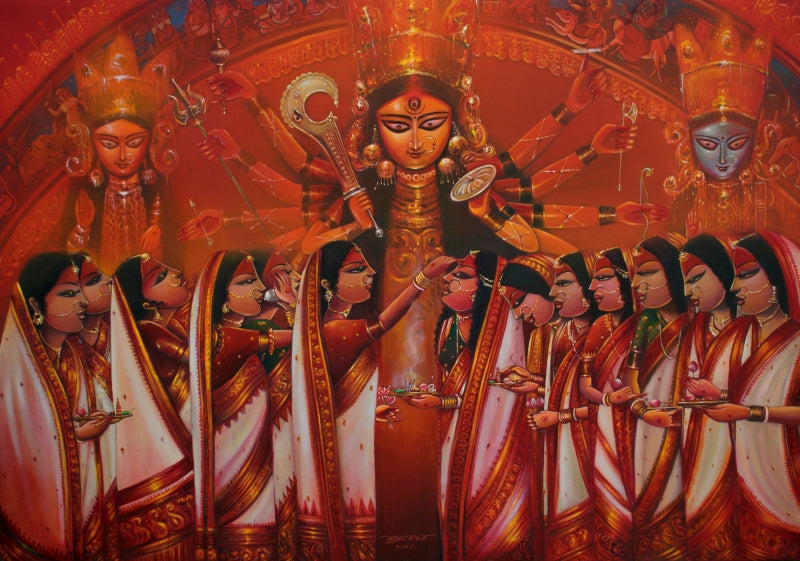
Set within a furnace of vermilion and gold, the central goddess presides like an axis of resolve, her many arms radiating outward to hold both protection and judgment in a single, unwavering gaze. The procession of women in white-and-red saris forms a rhythmic human mandala, their repeated profiles and offerings turning devotion into choreography, as if the community’s breath itself sustains the sacred. Light is treated less as illumination than as aura—glinting off ornaments, weapons, and ritual objects—so that the scene reads as an invocation where identity, tradition, and collective courage are fused into one continuous rite. Beneath the ceremonial symmetry, the painting suggests a deeper balance: power is not solitary here, but shared, witnessed, and reaffirmed through communal presence.
Delivery
You may also like