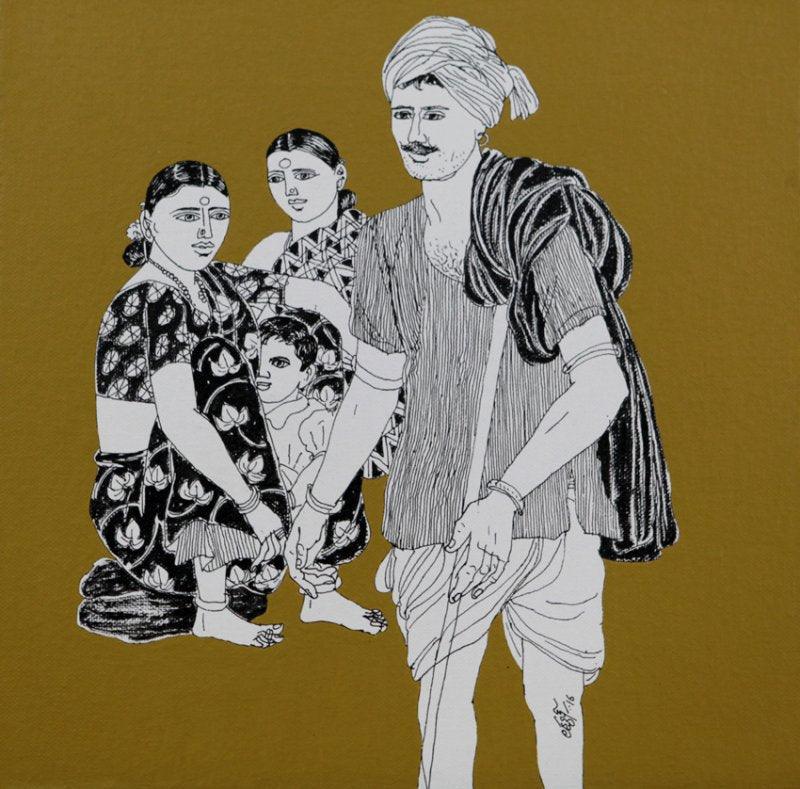
Song Of Village 12
₹45,000
Out of stock · ★ 5.0 (10)checking live price…
Size
12x12Type
OriginalMaterial
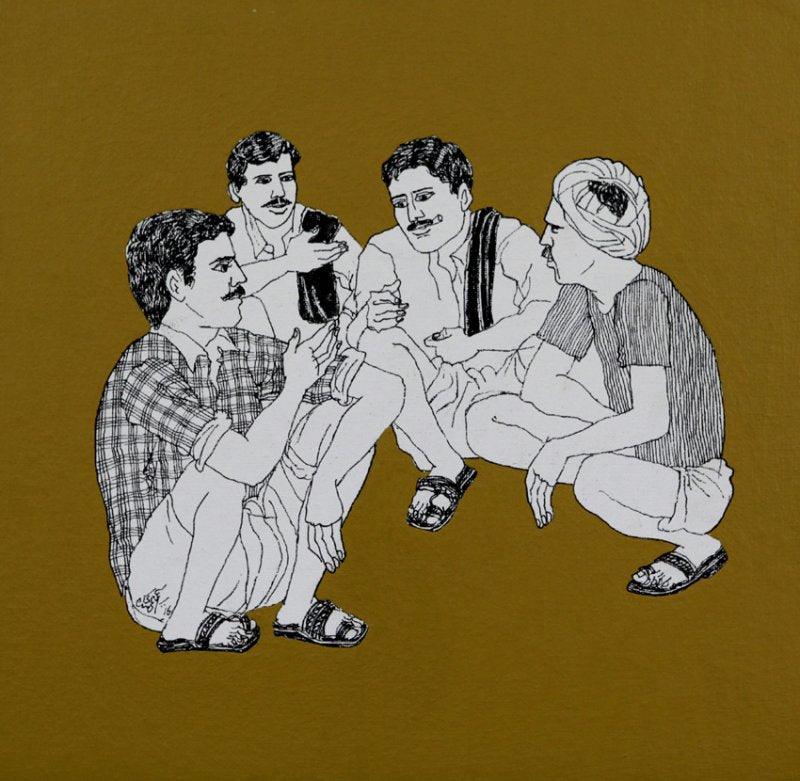
CanvasRendered in spare black-and-white line against a dense ochre field, the figures read like memory made visible—both intimate and slightly distant, as if overheard through time. The confident forward stance of the man anchors the composition, while the clustered women and child behind him create a quiet counterweight of care, continuity, and unspoken labor. Patterned textiles and repeated motifs become a second language, describing social identity and domestic rhythm more eloquently than facial expression. The flattened space refuses spectacle, turning the scene into a meditation on everyday dignity and the tender tension between movement outward and the home’s gravitational pull.
Delivery
You may also like
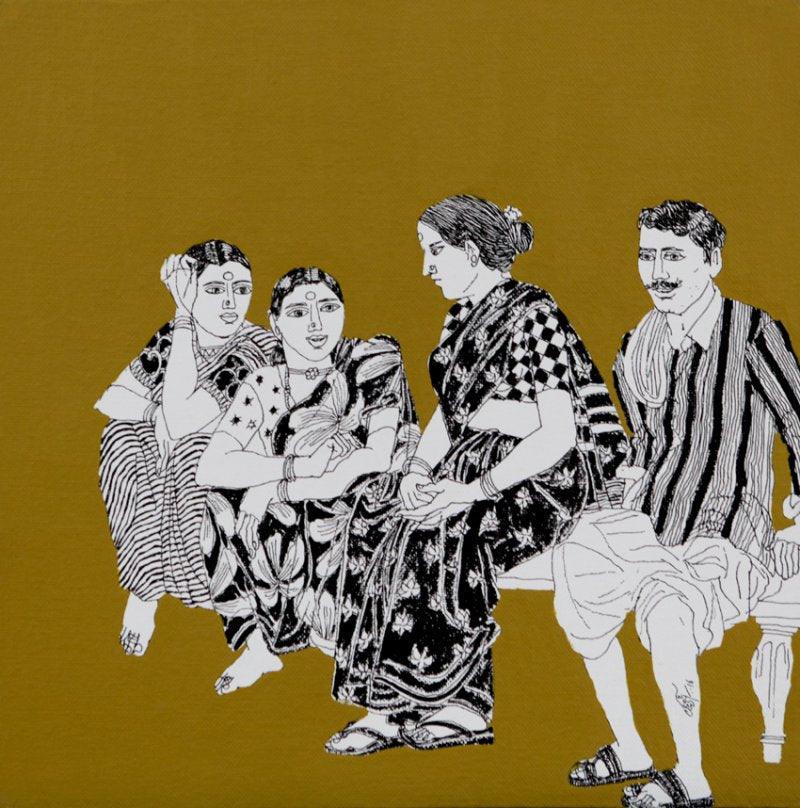
Song Of Village 13
Artzolo
₹45,000
out of stock
★ 5.0 (7)
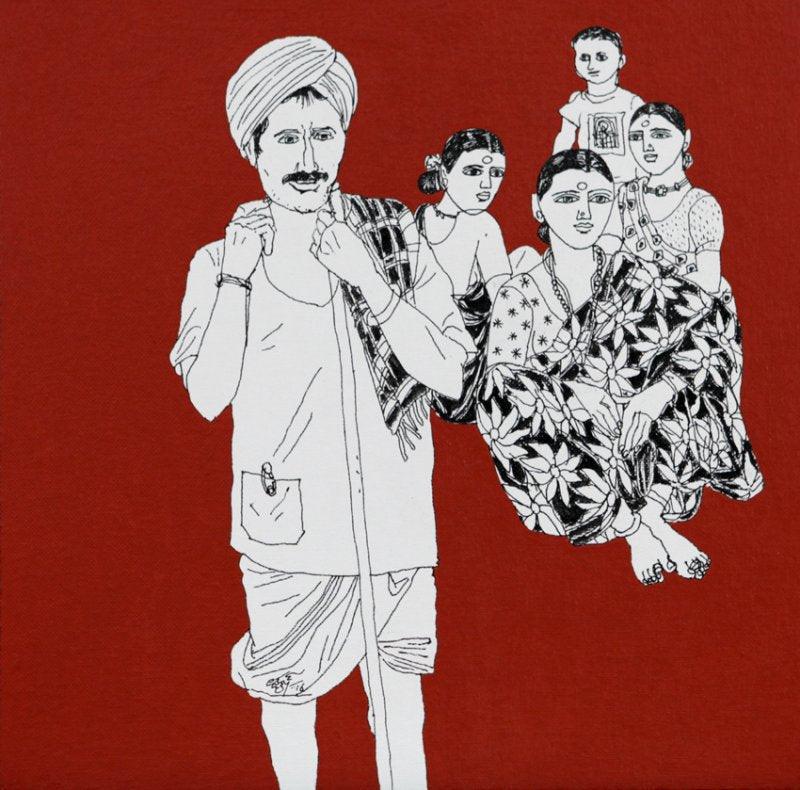
Song Of The Village 3
Artzolo
₹45,000
out of stock
★ 4.0 (13)
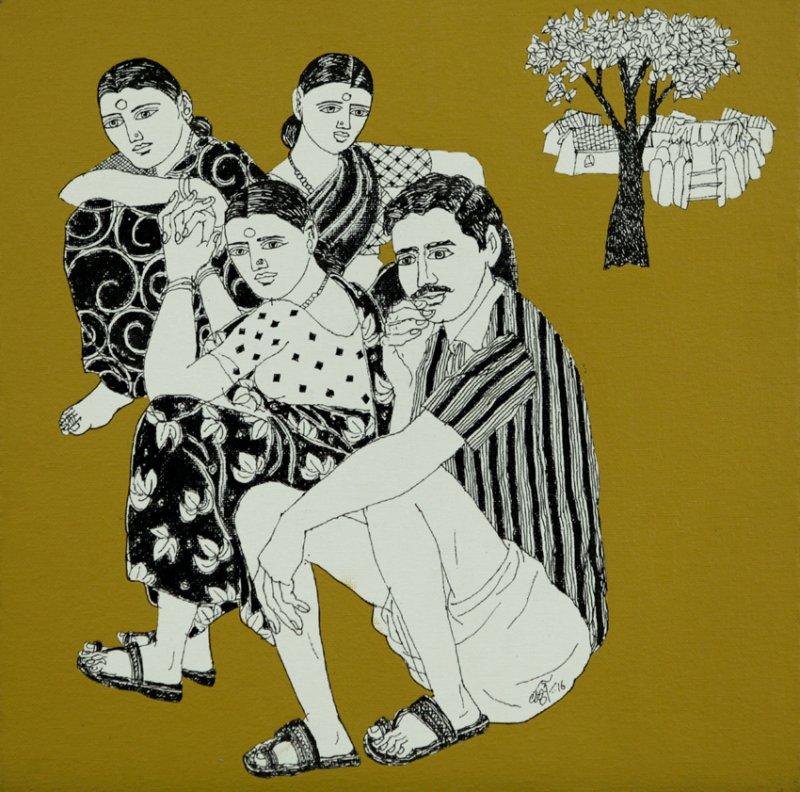
Song Of The Village 8
Artzolo
₹45,000
out of stock
★ 4.0 (7)
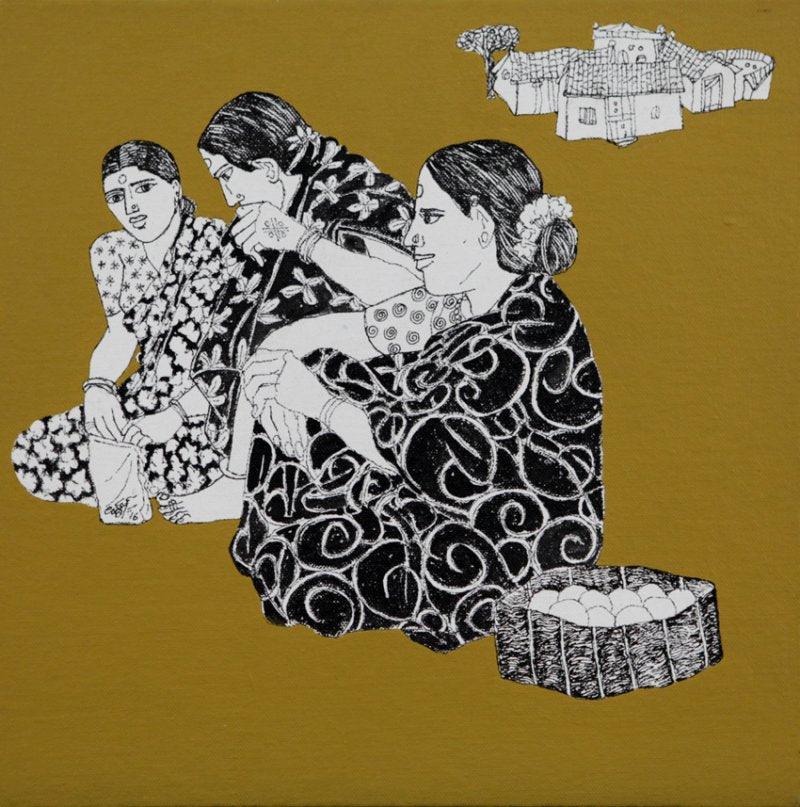
Song Of The Village 5
Artzolo
₹45,000
out of stock
★ 4.0 (11)
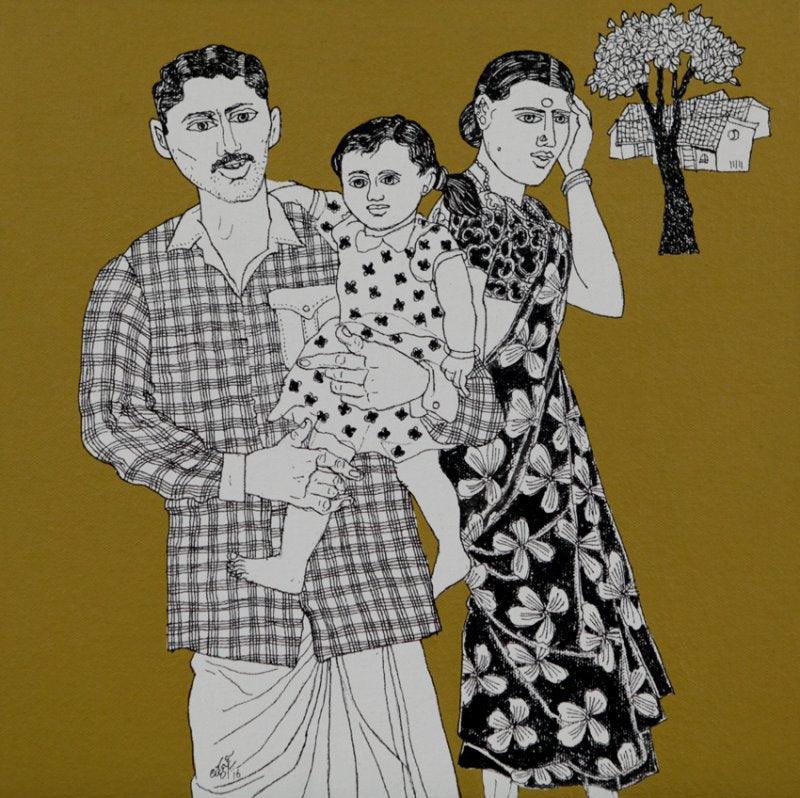
Song Of Village 11
Artzolo
₹45,000
out of stock
★ 4.0 (13)
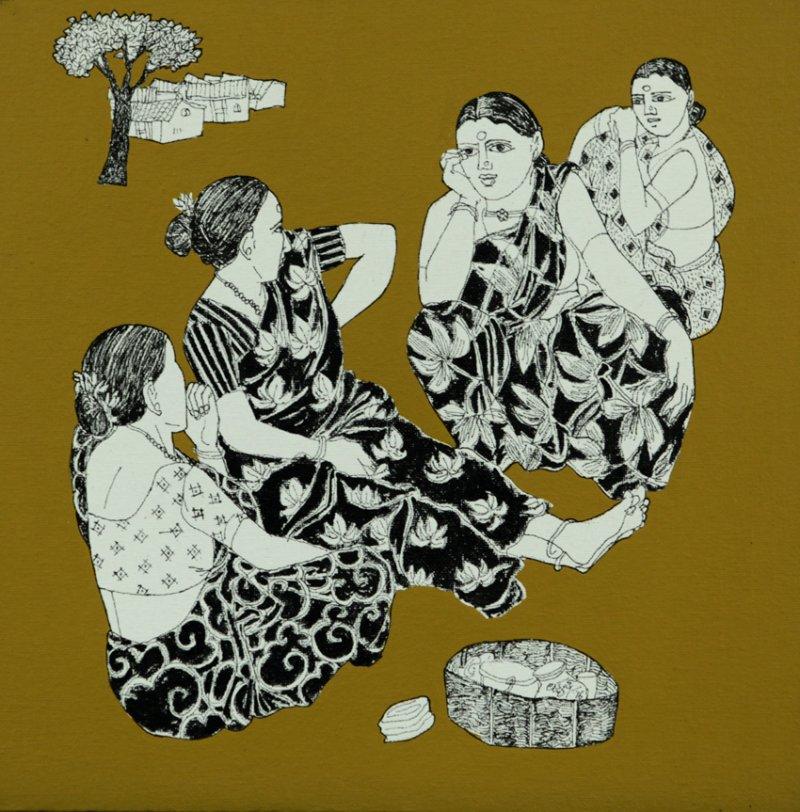
Song Of The Village 10
Artzolo
₹45,000
out of stock
★ 5.0 (12)
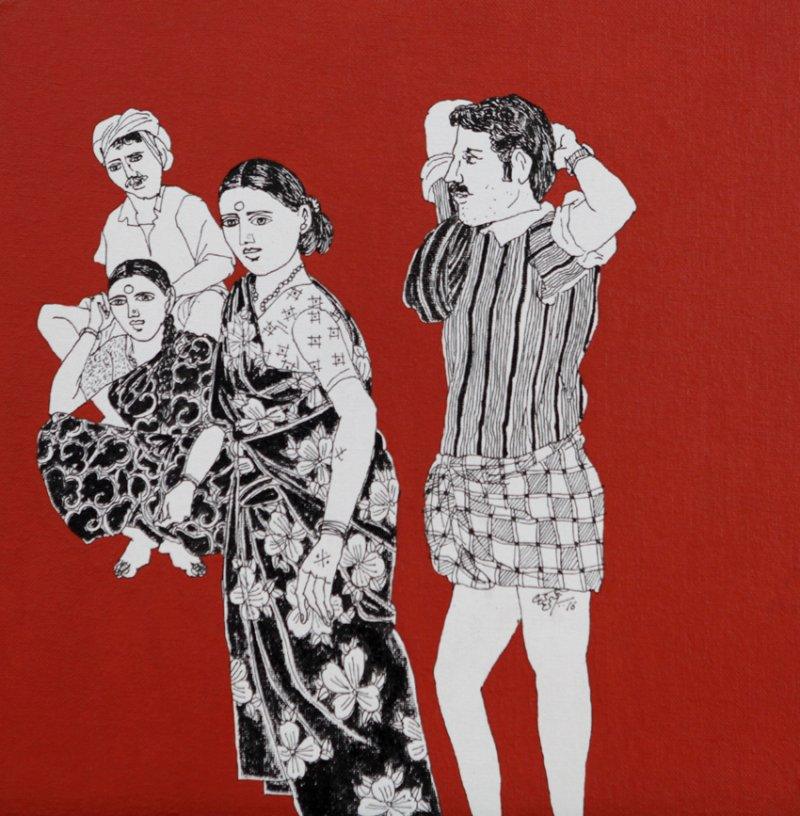
Song Of The Village 4
Artzolo
₹45,000
out of stock
★ 4.0 (6)
Song Of The Village 7
Artzolo
₹45,000
out of stock
★ 5.0 (9)