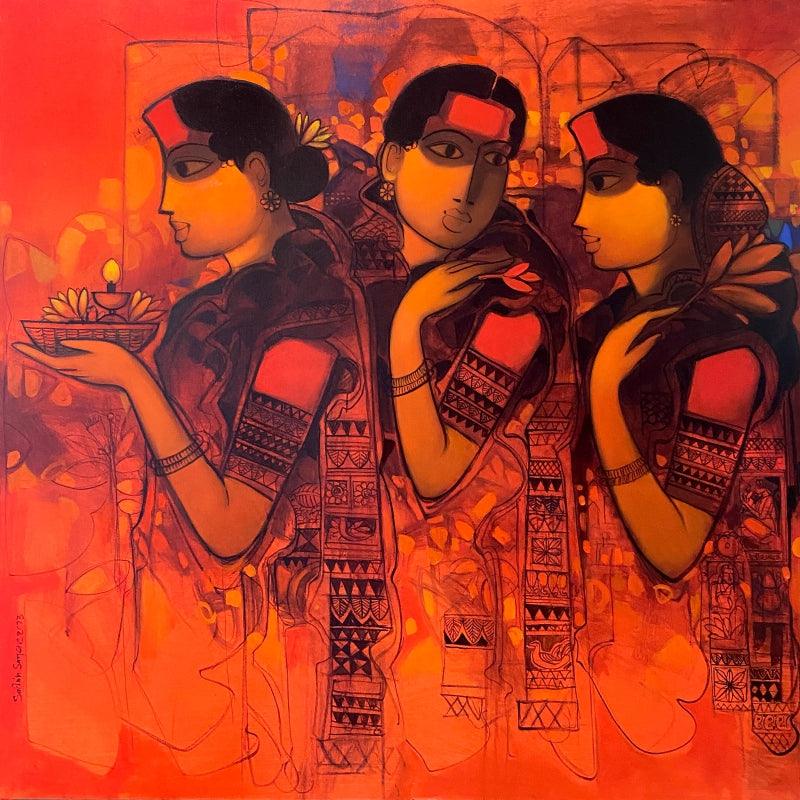
Women In Group 11
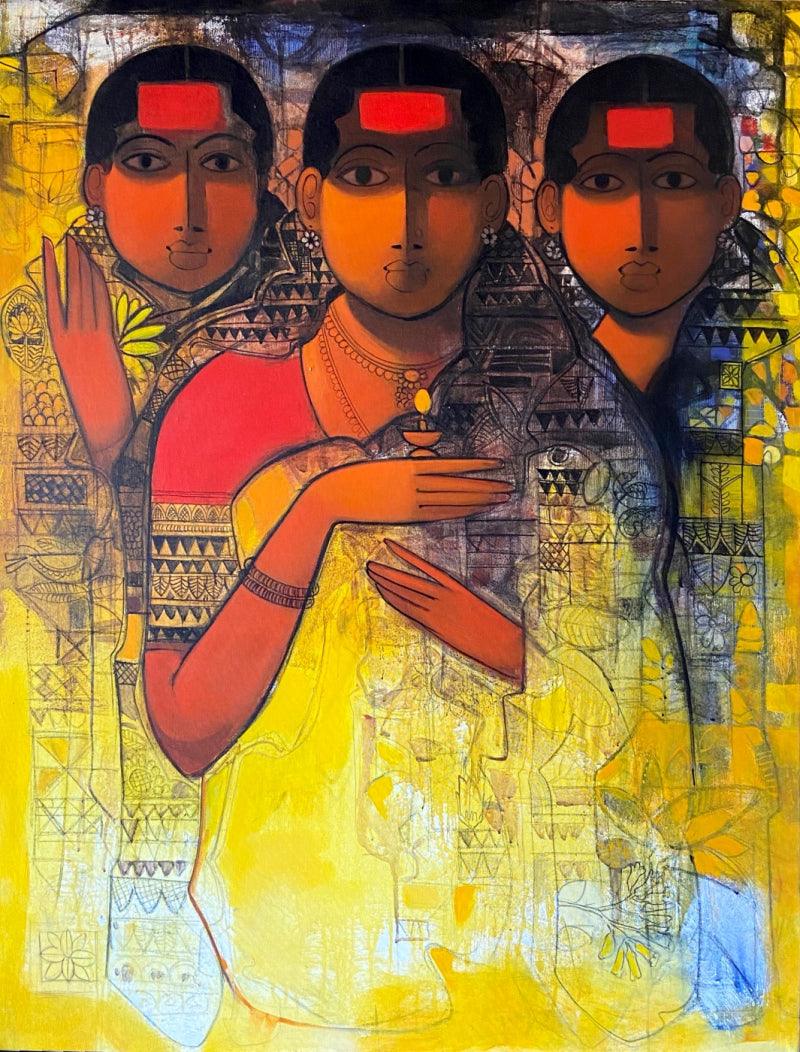
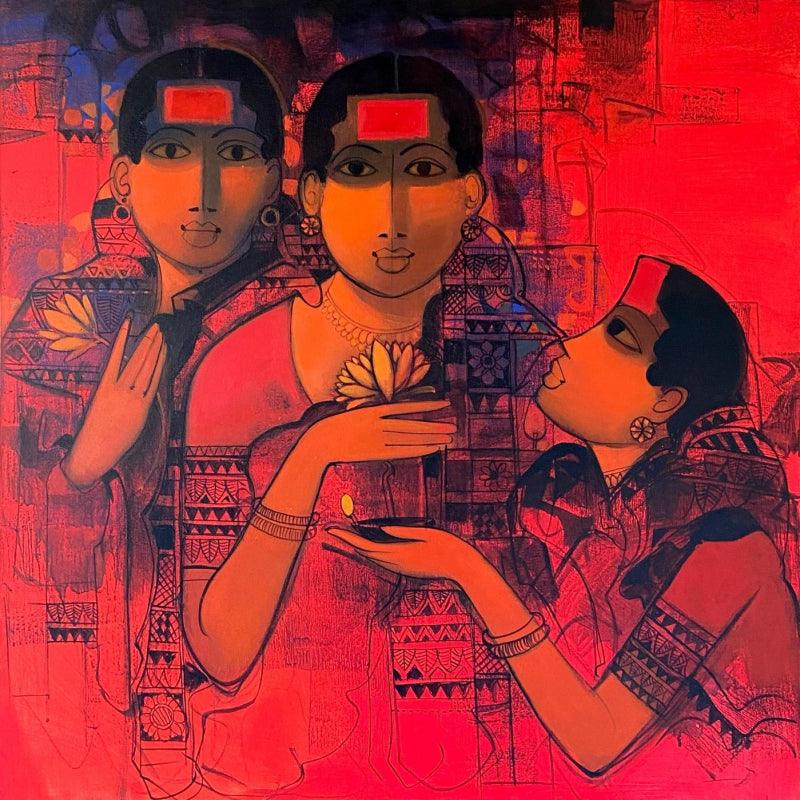
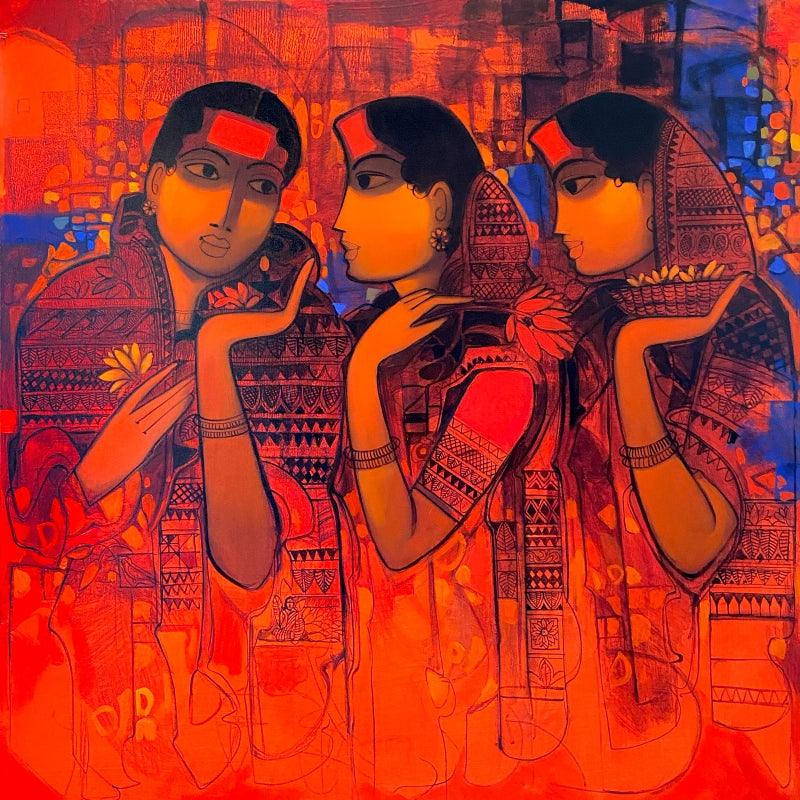
Bathed in a fervent field of vermilion and ember, three women appear like successive phases of one presence—turned outward, inward, and toward the other—so that portraiture becomes a meditation on continuity and choice. The diya’s small flame, cradled in ritual steadiness, acts as the painting’s moral compass: a quiet point of light against the crowding warmth, suggesting devotion as both offering and self-illumination. Ornamental textiles and patterned bands read as memory made visible, anchoring the figures in lineage while their elongated profiles and softened edges dissolve into the surrounding glow, as if identity is always in the act of becoming. The composition’s gentle procession—left to right, gaze to gaze—carries a narrative of communal belonging tempered by solitude, where tradition is not static but tenderly negotiated.
Delivery
You may also like